Choosing an Ayurvedic cough syrup can be confusing when several products contain similar herbs and promise relief from coughing, throat irritation, or mucus. However, the right choice is not simply about selecting a syrup with the most ingredients or the strongest marketing claims.
Before buying an Ayurvedic cough syrup, it is important to understand your symptoms, read the ingredient list, check the manufacturer’s details, review possible side effects, and make sure the formulation is appropriate for your age and health needs.
Ayurvedic formulations traditionally use herbs such as Tulsi, Mulethi, Vasaka, and Pippali. However, their presence in a product does not automatically establish that the finished syrup is effective or suitable for every type of cough.
In this guide, we explain 7 important things to check before choosing an Ayurvedic cough syrup, including practical label-reading tips, ingredient safety, dosage considerations, and situations when medical advice is necessary.
How to Choose an Ayurvedic Cough Syrup
To choose an Ayurvedic cough syrup responsibly, first consider the nature and duration of your cough. Next, examine the complete ingredient list, verify the manufacturer’s and product’s details, review the formulation and safety warnings, and follow the instructions for that specific product.
You should also consider your age, existing health conditions, and medicines you already take. If your cough is persistent, worsening, or accompanied by concerning symptoms, seek medical advice instead of relying on syrup alone.
1. Identify the Type of Cough Before Choosing a Syrup
One of the first things to consider is the type of cough you are experiencing. Coughs can differ in their symptoms and possible causes, so choosing a product based only on its advertising may not be helpful.
Dry cough
A dry cough generally does not produce significant mucus. It may occur with throat irritation, allergies, respiratory infections, or exposure to smoke and other irritants.
Some Ayurvedic formulations are traditionally marketed for cough associated with throat irritation. However, a dry cough does not automatically mean that a particular herbal syrup is appropriate.
Wet or productive cough
A wet cough produces mucus or phlegm. It can occur with respiratory infections and other respiratory conditions.
If you have a productive cough, consider its duration, severity, and accompanying symptoms rather than selecting a syrup solely because it is advertised for mucus.
Why the cause matters
A cough may also be associated with asthma, acid reflux, allergies, certain medicines, or other medical conditions. These causes may require different approaches to management.
Practical tip: Before purchasing a syrup, ask yourself three questions:
- Is my cough dry or producing mucus?
- How long have I had the cough, and is it improving or worsening?
- Do I have other symptoms, such as fever, wheezing, breathlessness, or chest pain?
These questions can help you understand when professional assessment is needed. They cannot diagnose the underlying cause of your cough.
2. Read the Complete Ingredient List, Not Just the Front Label
The ingredient list is one of the most important parts of an Ayurvedic cough syrup label.
Many products highlight familiar herbs on the front of the bottle. However, the front label may not provide enough information to understand the complete formulation.
Common Ayurvedic ingredients in cough syrups
The following herbs are used in various traditional Ayurvedic formulations. Their inclusion does not establish that every product containing them has the same effects.
| Ingredient | Traditional context | What to check |
|---|---|---|
| Tulsi (holy basil) | Used traditionally in respiratory and other herbal preparations | Look for the ingredient’s identity and its role in the formulation |
| Mulethi (licorice) | Traditionally used in several preparations for throat and respiratory complaints | Consider potential interactions and blood pressure-related risks |
| Vasaka | Traditionally associated with respiratory formulations | Check formulation-specific warnings, particularly during pregnancy |
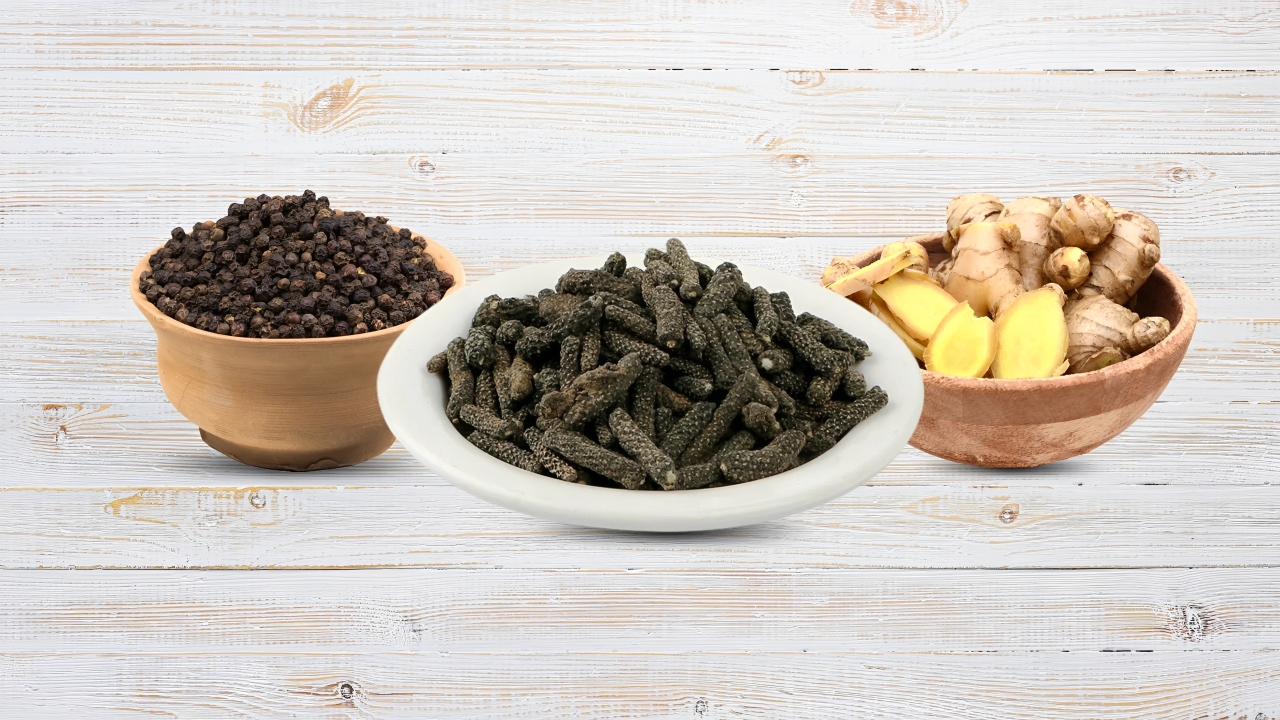
| Pippali (long pepper) | Used in traditional Ayurvedic preparations | Do not assume that its presence proves the finished syrup’s effectiveness |
| Ginger | Used traditionally in a variety of herbal preparations | Check the complete formulation and any relevant personal sensitivities |
Why ingredient quantities matter
Two cough syrups may contain some of the same herbs but use different plant parts, extracts, proportions, or preparation methods.
These differences can affect the formulation, and the products should not automatically be considered interchangeable.
Where the label provides ingredient quantities, read them carefully. If important information is unclear, consult the manufacturer or a qualified healthcare professional rather than guessing.
It is also important to distinguish between traditional Ayurvedic use and evidence from clinical studies. Evidence concerning an individual herb does not necessarily establish the effectiveness of a finished multi-ingredient syrup for a particular cough.
Practical tip: Do not choose a cough syrup simply because it contains the greatest number of herbs. Focus on the complete formulation, the product’s intended use, the available evidence, and its safety information.
3. Check the Manufacturer, Product Licence Details, and Packaging
A product’s identity and traceability matter just as much as its advertised benefits.
In India, Ayurvedic medicines are subject to applicable regulatory requirements. The Ministry of Ayush has specifically cautioned manufacturers against misleading claims such as approved by the Ministry of Ayush, 100% safe, and free from side effects. Manufacturing licences are handled by the relevant state licensing authorities rather than being granted as a general product approval by the Ministry of Ayush.
You can read the official Ministry of Ayush advisory on ASU medicine labelling.
What should you check on the packaging?
Before purchasing an Ayurvedic cough syrup, review the following details where applicable:
- Manufacturer details: Check the manufacturer’s name and address.
- Licence information: Look for relevant manufacturing licence details and verify them through appropriate official channels if necessary.
- Batch or lot number: This helps identify the specific production batch.
- Manufacturing and expiry dates: Make sure the product is within its stated shelf life.
- Packaging condition: Avoid products with damaged seals, leakage, or suspicious alterations.
- Storage instructions: Follow the directions on the label.
- Product information: Check that the intended use, warnings, and directions are clearly provided.
Buying from a traceable pharmacy or authorised seller can also help you verify the product’s source.
Does a licence prove that a cough syrup works?
No. Licensing and regulatory compliance are important, but they should not be confused with proof that a product is clinically effective for every type of cough.
Similarly, a product’s availability in a pharmacy or online marketplace does not mean that it is appropriate for every individual.
Practical tip: Treat clear labelling, traceable manufacturing details, and appropriate claims as essential checks—not as a guarantee of effectiveness.
4. Understand Sugar, Honey, Alcohol, and Other Formulation Details
Many consumers focus on the herbal ingredients but overlook the rest of the formulation.
The ingredients used to prepare a syrup can also affect whether it is suitable for an individual.
Check the sweetener content
Some syrups contain sugar, honey, or other sweetening ingredients. If you have diabetes or need to monitor your carbohydrate intake, check the product’s nutritional or formulation information where available.
Do not assume that every herbal syrup is sugar-free. A product described as sugar-free should still be checked for its actual ingredients and relevant nutritional information.
Review alcohol and other ingredients
Some formulations may contain alcohol or other ingredients that are relevant to certain individuals.
If you need to avoid alcohol or have been advised to avoid a particular ingredient, check the label and contact the manufacturer or pharmacist if the information is unclear.
Be careful with claims such as non-drowsy
Words such as natural, herbal, non-drowsy, and sugar-free do not all mean the same thing.
A herbal product should not automatically be assumed to be non-sedating or free from adverse effects. The overall formulation matters.
Practical tip: Read both the ingredient list and the product directions. If the label does not answer an important question about suitability, do not rely on assumptions.
5. Review Safety Warnings, Health Conditions, and Medicine Interactions
An Ayurvedic cough syrup may contain several ingredients, and each may have its own safety considerations.
Natural origin alone does not guarantee safety. Herbal ingredients can cause adverse effects and may interact with medicines.
Pay attention to Mulethi (licorice)
Mulethi is a traditional ingredient found in some herbal formulations. However, licorice contains glycyrrhizin, which can cause serious adverse effects in certain circumstances.
According to the US National Center for Complementary and Integrative Health, licorice can affect blood pressure and potassium levels, and serious effects have been reported, particularly with substantial or prolonged exposure and in people with hypertension or heart or kidney conditions.
Read the NCCIH guidance on licorice root for further information.
The risk from a particular cough syrup depends on its formulation and the amount of the relevant constituent. The presence of Mulethi alone does not tell you the exact level of risk.
Who should take extra care?
Seek advice from a qualified healthcare professional before using a product if you:
- Are pregnant or breastfeeding.
- Have high blood pressure, heart disease, kidney disease, or another significant medical condition.
- Take prescription medicines or several medicines regularly.
- Have previously experienced an allergic reaction to an ingredient.
- Are considering giving the product to a child or an older adult with additional health concerns.
Do not stop prescribed medicines or replace an established treatment with an Ayurvedic product without discussing the decision with your healthcare professional.
Practical tip: Keep the product packaging or a photograph of its complete ingredient list available when asking a pharmacist or doctor about possible interactions.
6. Follow the Correct Dosage and Age Instructions
The dosage of an Ayurvedic cough syrup can vary according to its ingredients, concentration, formulation, intended population, and product-specific directions.
There is no single dosage that applies to every Ayurvedic cough syrup.
How should you approach dosage?
Follow these precautions:
- Read the dosage instructions on the specific product.
- Check whether the instructions differ for adults and children.
- Use an appropriate measuring device rather than estimating the amount with an ordinary household spoon.
- Do not exceed the stated dose or take extra doses because the cough has not improved.
- Avoid combining multiple cough and cold products without checking their ingredients and seeking appropriate advice.
Can children take Ayurvedic cough syrup?
Not every Ayurvedic cough syrup is suitable for children. Age restrictions, ingredient safety, and dosage can differ between products.
Do not give a child an adult formulation simply by reducing the adult dose. Ask a paediatric healthcare professional which approach is appropriate for the child’s age and symptoms.
Honey also requires special consideration: it should not be given to infants younger than 12 months because of the risk of infant botulism.
Practical tip: If the product’s age instructions or dosage directions are missing, unclear, or inconsistent, ask a qualified professional before using it.
7. Know When a Cough Needs Medical Attention
Choosing an Ayurvedic cough syrup is not always the right first step. Sometimes, identifying and treating the underlying cause is more important than managing the symptom.
A mild cough may improve over time, depending on its cause. However, a persistent or worsening cough should not be repeatedly self-treated without considering whether medical assessment is necessary.
When should you seek medical advice?
Arrange a medical assessment if your cough:
- Lasts longer than three weeks.
- Keeps returning or is getting worse.
- Is accompanied by persistent fever or unexplained weight loss.
- Occurs with wheezing or other symptoms that concern you.
- Develops in the context of an existing respiratory or other significant medical condition.
Seek urgent medical care if you experience difficulty breathing, significant chest pain, or cough up blood. Severe breathing difficulty warrants emergency care.
The duration of a cough is only one consideration. Do not wait three weeks if you have severe symptoms or warning signs.
Why symptom relief is not the same as treating the cause
A syrup may be intended to help with particular symptoms, but that does not mean it treats every condition that causes coughing.
For example, a cough associated with asthma, pneumonia, or another significant condition may require specific medical assessment and treatment.
Practical tip: If a cough is persistent, severe, or accompanied by warning signs, seek appropriate care instead of trying several different syrups.
A Quick Checklist Before Buying an Ayurvedic Cough Syrup
Before making a purchase, use this checklist to review the product.
- I have considered the type, duration, and severity of my cough.
- I have read the complete ingredient list.
- I have checked the manufacturer’s and relevant licence details.
- I have checked the batch information, expiry date, and packaging.
- I have reviewed sugar, alcohol, and other formulation details.
- I have considered my existing health conditions and medicines.
- I understand the dosage instructions and age restrictions.
- I know when to seek medical advice instead of continuing self-treatment.
This checklist can help you make a more informed choice, but it cannot establish that a particular product is effective or suitable for your individual needs.
Conclusion
Choosing an Ayurvedic cough syrup involves more than comparing brands or looking for familiar herbs. You should consider the type of cough, the complete ingredient list, product quality, formulation details, possible interactions, and the correct dosage instructions.
Remember that herbal does not automatically mean safe, and a product’s traditional use does not guarantee that it will treat every cough. If your symptoms persist, worsen, or include warning signs, seek medical advice rather than relying on syrup alone.
An informed decision starts with a clear label, realistic expectations, and an understanding of when professional care is needed.
Frequently Asked Questions
1. How do I choose the best Ayurvedic cough syrup?
There is no single best Ayurvedic cough syrup for everyone. Consider your symptoms, age, health conditions, the product’s ingredients, its quality information, and its specific instructions. If your cough is persistent or concerning, seek medical advice.
2. Which ingredients are commonly found in Ayurvedic cough syrups?
Common ingredients in some Ayurvedic formulations include Tulsi, Mulethi, Vasaka, Pippali, and ginger. Formulations differ, and evidence for one ingredient should not be treated as proof that every syrup containing it will be effective.
3. Is Ayurvedic cough syrup safe because it is natural?
No. Natural ingredients can still cause adverse effects, allergic reactions, and medicine interactions. Safety depends on the ingredients, their amounts, the formulation, and the person’s health.
4. Can I take Ayurvedic cough syrup with other medicines?
Possibly, but this depends on the formulation and the medicines involved. Ask a pharmacist or qualified healthcare professional to check the full ingredient list for potential interactions.
5. Can children take Ayurvedic cough syrup?
Only use a product when its age restrictions and suitability have been established. Do not assume that a herbal formulation is automatically safe for children. Seek paediatric advice when uncertain.
6. Can people with diabetes take Ayurvedic cough syrup?
That depends on the specific formulation and the person’s needs. Check sugar and carbohydrate information where available, and seek professional advice if you are unsure whether the product is suitable.
7. When should I consult a doctor for a cough?
Seek medical advice for a cough lasting more than three weeks, one that is worsening or recurring, or one accompanied by concerning symptoms. Difficulty breathing, significant chest pain, and coughing up blood require urgent medical assessment.
Medical disclaimer
This article is intended for general educational purposes and is not a substitute for individual medical advice, diagnosis, or treatment. Ayurvedic products can have contraindications and may interact with medicines. Consult a qualified healthcare professional before using a product if you have a medical condition, take medicines regularly, are pregnant or breastfeeding, or are considering treatment for a child.