Shilajit resin and Shilajit capsules are two popular forms of this traditional Ayurvedic substance. But which is better? The answer depends on product quality, ingredients, dosage accuracy, convenience and safety. Resin offers a traditional semi-solid format, while capsules are easier to carry and provide a pre-measured serving. Neither form is automatically more effective than the other. The best choice is a properly purified, quality-tested product that suits your needs.
In this guide, we compare Shilajit resin vs capsules, explain the important differences, and share practical tips for choosing a quality Shilajit supplement in India.
Shilajit Resin vs Capsules: Quick Comparison
| Feature | Shilajit Resin | Shilajit Capsules |
|---|---|---|
| Form | Sticky, semi-solid substance | Powder, dried material or extract inside a capsule |
| Serving measurement | Requires careful measurement | Usually pre-measured per capsule |
| Taste | Distinctive, earthy taste | Generally easier to take without tasting the contents |
| Convenience | Requires careful handling | Easy to carry and use while travelling |
| Ingredients | May be relatively simple, depending on the product | May include a capsule shell, fillers or additional ingredients |
| Dosage consistency | Depends on how accurately the serving is measured | Depends on manufacturing quality and label accuracy |
| Quality verification | Requires credible testing and transparent product information | Requires the same quality checks as resin |
| Effectiveness | Depends on composition, quality and evidence for the formulation | Depends on composition, quality and evidence for the formulation |
What Is Shilajit Resin?
Shilajit is a naturally occurring, mineral-rich substance that develops over long periods through complex geological and biological processes. It is traditionally associated with mountainous regions, including the Himalayas, and has a long history of use in Ayurveda.
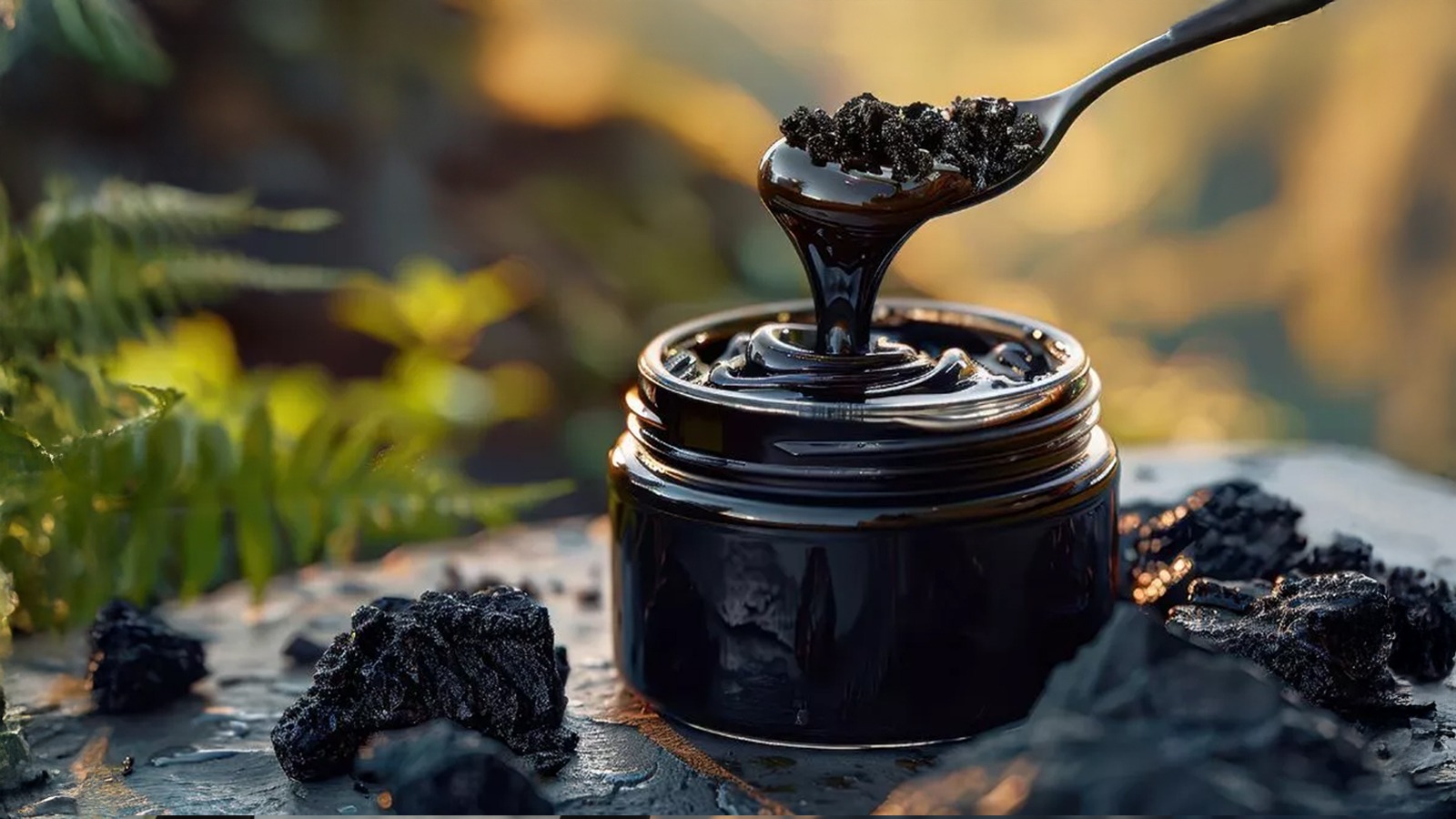
Shilajit resin is its sticky, semi-solid form. Depending on the source and manufacturing process, it may undergo purification and processing before being prepared for consumption.
Benefits of choosing Shilajit resin as a format
1. Traditional semi-solid form
Some consumers prefer resin because it resembles the traditional form in which Shilajit is commonly described and used.
2. Flexible serving measurement
Resin can be measured in different quantities using an appropriate measuring method. However, flexibility does not automatically mean greater accuracy. An ordinary spoon or visual estimate may not measure small quantities consistently.
3. Potentially fewer additional ingredients
Some resin products have relatively short ingredient lists. This can be useful for people who prefer products without unnecessary additives. However, the ingredient label must be checked because formulations vary between manufacturers.
What are the disadvantages of Shilajit resin?
Resin can be sticky, difficult to handle and inconvenient to carry. Its strong, earthy taste may also be unpleasant for some people.
Another consideration is serving accuracy. If the product requires a small measured quantity, estimating the amount by eye can lead to inconsistent servings.
Most importantly, the resin format alone does not guarantee purity. A natural-looking or traditional product can still require proper purification and laboratory testing.
What Are Shilajit Capsules?
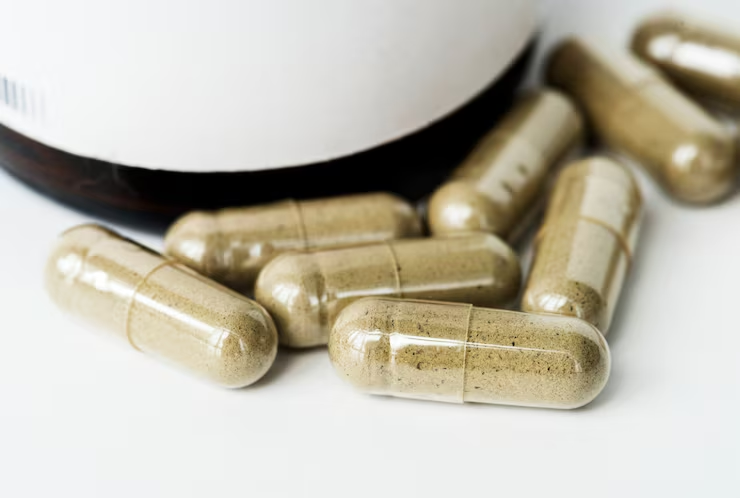
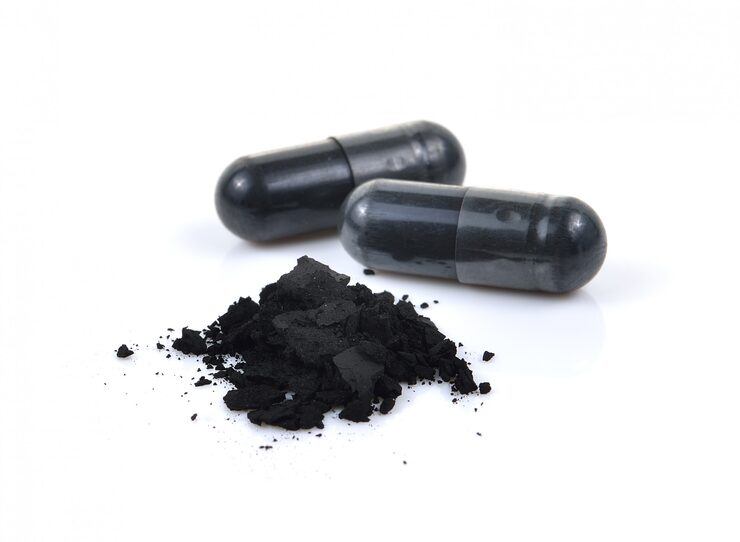
Shilajit capsules contain Shilajit in an encapsulated form. Depending on the product, the contents may consist of dried Shilajit, processed material, an extract or a blend of ingredients.
Capsules are designed to make supplement use more convenient. They generally provide a labelled amount per capsule, making it easier to follow the manufacturer’s serving instructions.
Benefits of Shilajit capsules
1. Convenient daily use
Capsules can be easier to include in a daily routine, particularly for people with busy schedules.
2. Pre-measured servings
A capsule typically contains a specified quantity of its contents. This reduces the need to measure a sticky substance at home, although actual content and consistency still depend on manufacturing quality.
3. Easier transportation
Capsules are generally portable and less messy than resin. This may make them a practical option for people who travel frequently.
4. No need to handle the resin directly
People who dislike the texture or taste of Shilajit may find capsules more convenient.
What should you check before buying Shilajit capsules?
Do not judge a capsule product only by the number of capsules in the bottle.
Check the following:
- The amount of Shilajit or Shilajit extract per serving.
- Whether the product specifies the extract’s composition or standardisation.
- Whether other active ingredients or fillers are included.
- The capsule shell ingredients, particularly if you have dietary restrictions.
- The manufacturer’s quality-control information and relevant laboratory reports.
For example, a capsule containing 500 mg of a blend is not necessarily equivalent to a capsule containing 500 mg of Shilajit. The total blend weight and the actual Shilajit quantity are different measurements.
Shilajit Resin vs Capsules: Which Is More Effective?
This is one of the most important questions for anyone comparing these products.
There is no reliable basis for claiming that every Shilajit resin product is more effective than every capsule product. Effectiveness depends on the material used, processing, composition, serving size, product quality and the evidence available for that particular formulation.
Does Shilajit resin contain more fulvic acid?
Not necessarily.
Fulvic acid is one of the substances discussed in connection with Shilajit’s composition. Its measured amount can vary depending on the source material, processing methods and testing approach.
A resin product should not automatically be considered superior because it is sticky, dark or marketed as natural. Likewise, a capsule should not automatically be considered inferior because its contents have been processed into a powder or extract.
If a manufacturer advertises a particular fulvic acid percentage, look for credible analytical testing that supports the claim. A percentage alone does not establish overall quality, purity or clinical effectiveness.
Is Shilajit resin absorbed faster than capsules?
There is insufficient evidence to make a general claim that resin is always absorbed faster than capsules.
Absorption may depend on the formulation, its composition, how it is prepared and other factors. Evidence from a study using one specific preparation cannot automatically be applied to all commercially available resin and capsule products.
For a meaningful comparison, researchers would need to test comparable formulations under appropriate conditions.
What does scientific research tell us?
Some human studies have investigated particular purified or processed Shilajit preparations. For example, a randomised, double-blind, placebo-controlled study published in Andrologia in 2016 examined purified Shilajit in healthy men aged 45–55 over 90 days. The researchers reported changes in certain hormone measurements compared with placebo.
However, this study does not establish that resin is better than capsules, nor does it prove that all Shilajit products produce the same effects.
You can read the study here: Clinical evaluation of purified Shilajit on testosterone levels in healthy volunteers — PubMed.
The key takeaway is that evidence for a specific preparation should not be treated as proof of superiority for an entire product category.
Shilajit Resin vs Capsules: Which Is Easier to Take?
The practical difference between these forms can help you make a decision.
Taste and preparation
Resin has a distinctive taste and sticky texture. Some people are comfortable with it, while others prefer not to taste the substance.
Capsules can be easier for people who dislike the taste of resin. Always follow the instructions on the specific product label.
Serving measurement
Resin may require a suitable measuring method, particularly when the recommended serving is small. A scale with appropriate precision can be more reliable than estimating by eye.
Capsules usually provide a labelled quantity per unit, making the serving easier to follow. However, the quantity printed on the label should be checked to determine whether it refers to Shilajit itself, an extract or a combined formulation.
Travel and storage
Capsules are usually easier to carry in a bag or when travelling. Resin may need more careful handling to avoid spills or mess.
For either form, follow the manufacturer’s storage instructions and keep the product protected from moisture, heat and contamination.
How to Choose Quality Shilajit in India
When comparing Shilajit resin and capsules, quality verification deserves more attention than marketing claims.
Shilajit is a naturally occurring substance, and its composition can vary. Research has also raised concerns about potentially harmful elements in some Shilajit materials and commercial supplements. This is why the words natural and purified should not be treated as substitutes for credible quality testing.
1. Check whether the product is purified
Raw Shilajit should not be assumed to be ready for consumption. Look for clear information about purification and processing intended for the finished product.
A statement such as purified is useful, but it does not independently prove that the product is free from contaminants.
2. Read the complete ingredient label
For resin, check whether additional ingredients are present.
For capsules, check the amount of Shilajit or extract per serving, the capsule shell and any additional ingredients.
Do not compare products using total pack weight alone. The amount of the relevant ingredient per serving is more informative.
3. Look for independent laboratory testing
A credible laboratory report can help you evaluate product quality. Where applicable, check whether the report includes testing for potentially harmful elements such as:
- Lead
- Arsenic
- Cadmium
- Mercury
The testing panel should be appropriate for the product and relevant safety requirements. Depending on the material and manufacturing process, additional testing may be relevant.
Ideally, the report should identify the tested batch, testing date, laboratory and analytical method. Results should be interpretable against applicable specifications or limits.
A general certificate that cannot be linked to the product or batch provides less useful information than a verifiable report for the actual product.
4. Understand fulvic acid claims
A product may advertise a particular fulvic acid percentage. Before relying on this figure, check whether the manufacturer provides a credible test report and explains what the measurement represents.
A high percentage alone does not prove that a product is safer, more effective or better absorbed.
5. Do not rely on home tests to prove purity
Consumers sometimes use colour, texture, smell or water-dissolving behaviour to decide whether Shilajit is genuine.
These observations may tell you something about the sample’s physical characteristics, but they cannot reliably establish its full composition or rule out heavy-metal contamination. Laboratory testing is needed for that purpose.
6. Compare transparent manufacturers, not just attractive packaging
Consider ingredient disclosure, batch traceability, manufacturing information, credible quality testing and clear usage instructions.
These checks are relevant whether you choose resin or capsules.
Shilajit Resin vs Capsules: Price and Value for Money
The cheapest product is not necessarily the best value, and the most expensive product is not necessarily the highest quality.
To compare products fairly, calculate the cost per labelled serving.
Cost per serving = Pack price ÷ Number of labelled servings
For example, if a hypothetical pack costs ₹900 and contains 30 labelled servings, its cost per serving is ₹30.
This calculation helps you compare the stated cost of using each product. It does not establish equivalent potency or effectiveness between two formulations.
When comparing resin and capsules, also check:
- The amount of Shilajit per serving.
- Whether the products have comparable formulations.
- The number of servings per pack.
- The quality and transparency of laboratory testing.
- Whether the recommended serving instructions are clear.
A meaningful comparison considers both cost and product quality rather than price alone.
Who Should Choose Shilajit Resin and Who Should Choose Capsules?
There is no single format that suits everyone. Your routine, preferences and ability to use the product correctly can guide your decision.
| Your preference | Format to consider |
|---|---|
| You prefer the traditional semi-solid format | Resin |
| You want something convenient for travel | Capsules |
| You dislike strong tastes | Capsules may be more practical |
| You want to measure a flexible quantity | Resin, with an appropriate measuring method |
| You prefer pre-measured servings | Capsules |
| You prioritise verified quality | Compare the evidence and testing for each specific product |
Remember that this is a convenience-based comparison, not a ranking of medical effectiveness.
If two products have different ingredients or concentrations, they should not be assumed to be interchangeable simply because both are labelled Shilajit.
Shilajit Safety, Side Effects and Precautions
Shilajit should not be considered automatically safe simply because it is a traditional or naturally occurring substance.
Potential safety concerns include contamination, uncertain product composition and insufficient evidence about some formulations. Research has identified potentially toxic elements in certain Shilajit materials and supplements, highlighting the importance of appropriate quality control.
Possible adverse effects and risks may depend on the product, the amount consumed, individual health factors and other substances being taken.
Keep the following precautions in mind:
- Use only products intended for consumption that provide clear instructions and credible quality information.
- Follow the manufacturer’s label and do not exceed the recommended serving.
- Consult a qualified healthcare professional before use if you have a medical condition or take regular medicines.
- If you are pregnant or breastfeeding, seek professional medical advice before using Shilajit.
- Stop using the product and seek appropriate medical advice if you experience an adverse reaction.
Shilajit should not replace prescribed medicines or be used to self-treat a diagnosed health condition.
Final Verdict
Shilajit resin and capsules each have practical advantages. Resin may suit people who prefer its traditional semi-solid form, while capsules can be more convenient for travel, ease of use and pre-measured servings.
However, neither form is automatically more effective or safer. Before choosing, compare the actual ingredients, serving information, purification process and credible laboratory testing. Do not rely solely on claims about fulvic acid, potency or traditional appearance.
The best Shilajit is not simply the resin or capsule with the strongest marketing claims. It is a well-characterised, appropriately tested product that suits your needs and can be used according to clear instructions.
For readers considering a Shilajit supplement, review the product’s ingredient information, quality documentation and usage instructions before making a decision.
References and Further Reading
- Clinical evaluation of purified Shilajit on testosterone levels in healthy volunteers — PubMed
- Hazardous or Advantageous: Uncovering the Roles of Heavy Metals and Humic Substances in Shilajit — PubMed
- Quantifying of thallium in Shilajit and its supplements — scientific study
Health disclaimer: This article is for educational purposes and is not a substitute for individual medical advice. Evidence and product quality vary. Consult a qualified healthcare professional if you have questions about whether Shilajit is appropriate for you.
Frequently Asked Questions
1. Is Shilajit resin better than capsules?
Not necessarily. Resin offers a traditional semi-solid format, while capsules are generally easier to carry and provide pre-measured servings. The quality, composition, purity and testing of the individual product matter more than the format alone.
2. Do Shilajit capsules contain the same ingredients as resin?
Not always. Some capsules contain processed Shilajit, while others may contain an extract or a blend with additional ingredients. Check the label to understand what the product contains and how much Shilajit is present per serving.
3. Which is easier to measure, Shilajit resin or capsules?
Capsules generally offer greater convenience because each capsule has a labelled quantity. Resin requires a suitable measuring method, and estimating small servings by eye can be inconsistent.
4. Does Shilajit resin contain more fulvic acid than capsules?
There is no universal rule that resin always contains more fulvic acid. The amount depends on the source material, processing and product formulation. Look for credible analytical testing rather than relying on the format alone.
5. Is Shilajit resin absorbed faster than capsules?
There is not enough evidence to conclude that all resin products are absorbed faster than all capsule products. Formulation and composition matter, and findings from one preparation should not be applied to every product.
6. How can I check whether Shilajit is pure?
Review the product’s purification information, ingredient label, batch details and relevant independent laboratory reports. Appearance, colour and water-dissolving behaviour cannot establish purity or prove that a product is free from harmful contaminants.
7. Can I switch from Shilajit resin to capsules?
Do not assume that the same serving weight applies to both forms. Their composition and concentration may differ. Check the product labels and consult a qualified healthcare professional if you are unsure about switching.
8. Which form of Shilajit is better for travelling?
Capsules are generally more convenient for travelling because they are portable and less messy. Follow the product’s storage instructions and keep it protected from moisture and excessive heat.