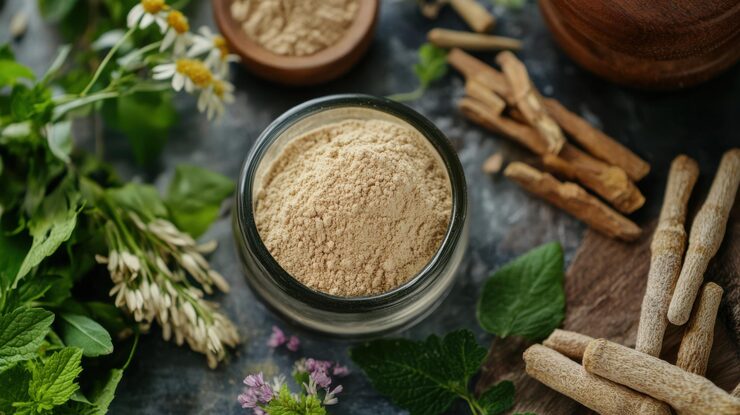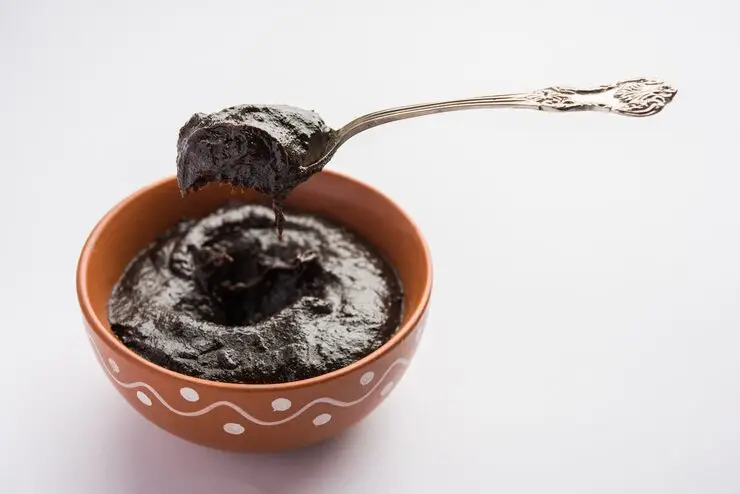
Choosing the best Chyawanprash in India is not as simple as picking a popular brand or the product with the highest number of Ayurvedic ingredients. With so many options available on Amazon, Flipkart and other online platforms, buyers need to understand what actually makes a Chyawanprash worth purchasing. Deep Ayurveda’s AshwPrash is one Ayurvedic superfood worth exploring for those interested in an Ashwagandha-based formulation. However, when comparing traditional Chyawanprash products from brands such as Dabur, Baidyanath, Zandu and Patanjali, it is important to look beyond advertisements and evaluate ingredients, formulation, sugar content, manufacturing standards and product authenticity. In this guide, we explain seven practical things you should check before buying Chyawanprash so you can make a more informed decision for yourself and your family.
What Is Chyawanprash and Why Does Its Quality Matter?
Chyawanprash is a traditional Ayurvedic herbal preparation generally made using Amla (Indian gooseberry), a combination of herbs, spices and other ingredients. It is commonly consumed as part of traditional Ayurvedic wellness practices.
Amla is an important ingredient in many classical Chyawanprash formulations because it contains naturally occurring vitamin C and other plant compounds. Traditional recipes also include several herbs and supporting ingredients that contribute to the formulation’s characteristic taste, texture and nutritional composition.
However, not every product sold under the name Chyawanprash has exactly the same composition.
Some manufacturers follow classical Ayurvedic formulations, while others develop proprietary formulations with modified ingredients, sweeteners or additional herbal extracts.
This is why choosing Chyawanprash should involve more than checking the brand name or the number of herbs mentioned on the packaging.
A good buying decision should consider:
- The ingredients and their quantities, wherever disclosed.
- The type of Ayurvedic formulation.
- Sugar and nutritional information.
- Manufacturing and quality-control standards.
- Product testing and authenticity.
- Suitability for the intended consumer.
Understanding these factors can help you compare different products more carefully.
7 Important Things to Check Before Buying Chyawanprash in India
Before purchasing Chyawanprash, use the following seven-point checklist to evaluate its quality and suitability.
1. Check the Ingredients and Traditional Ayurvedic Formulation
The first thing to examine when buying Chyawanprash is its ingredient list.
Ingredients provide useful information about how a product has been formulated and whether it follows a traditional Ayurvedic approach or uses a modified composition.
Amla is traditionally considered an important base ingredient in classical Chyawanprash preparations. Other commonly used ingredients may include:
- Ashwagandha
- Guduchi (Giloy)
- Pippali
- Shatavari
- Haritaki
- Draksha
- Cardamom
- Cinnamon
These ingredients have different traditional uses and contribute different characteristics to an Ayurvedic formulation.
Why does the ingredient list matter?
Two Chyawanprash products may contain a similar number of ingredients but have different compositions.
For example, one product may use Amla as a major ingredient, while another may contain a different proportion of herbal extracts, sweetening ingredients or supporting substances.
Therefore, do not assume that a product containing 50 herbs is automatically better than one containing 40 herbs.
The quality of raw materials, ingredient identity, quantities, processing and formulation are all important.
What should you check?
- Is Amla included in the formulation?
- Are the ingredients clearly listed?
- Are botanical names or ingredient quantities provided where applicable?
- Does the manufacturer explain whether the formulation is classical or proprietary?
- Are there any ingredients you need to avoid because of an allergy or dietary restriction?
Expert insight: A longer ingredient list does not necessarily indicate a better formulation. Transparency about ingredients and their intended role is more useful than simply counting the number of herbs.
2. Check the Quality and Source of Ingredients
The second important factor is the quality of the raw materials used to prepare Chyawanprash.
Even a formulation containing traditionally recognised Ayurvedic ingredients may vary in quality depending on the sourcing, identification, storage and processing of those materials.
Herbs are natural agricultural materials. Their quality can be influenced by several factors, including:
- Growing conditions.
- Soil and environmental quality.
- Harvesting time.
- Drying and storage methods.
- Raw material identification.
- Handling during transportation and manufacturing.
For example, Amla is an important ingredient in many Chyawanprash formulations. Its quality and processing can influence the characteristics of the final preparation.
Similarly, poor storage conditions can affect the quality of herbal raw materials before they are used in manufacturing.
How can you evaluate ingredient quality?
Look for manufacturers that provide transparent information about:
- Raw material sourcing.
- Ingredient identification procedures.
- Quality-control processes.
- Applicable organic certification, where claimed.
- Manufacturing and storage practices.
If a company claims that its product is organic, check whether the claim is supported by an applicable certification rather than relying only on words such as natural, pure or herbal.
Remember: Natural ingredients do not automatically mean that a product is free from contamination. Raw material testing and proper manufacturing practices are important parts of quality assurance.
3. Check Sugar Content and Sweetening Ingredients
Sugar content is one of the most overlooked factors when buying Chyawanprash.
Traditional Chyawanprash formulations commonly use sweetening ingredients such as sugar, honey or other ingredients that contribute to their taste and consistency.
Different manufacturers may use different sweetening combinations.
Some products also offer no-added-sugar or sugar-conscious formulations.
However, these products should not be considered nutritionally identical to regular Chyawanprash.
Regular vs Sugar-Free Chyawanprash: What Is the Difference?
| Factor | Regular Chyawanprash | No-Added-Sugar Formulation |
|---|---|---|
| Sweetening ingredients | May contain sugar, honey or other sweeteners | May use alternative sweeteners |
| Taste | Traditionally sweet | Depends on the sweetener used |
| Carbohydrate content | Varies by formulation | Can still contain carbohydrates |
| Nutritional profile | Depends on ingredients | Depends on ingredients |
| Suitability | Depends on individual dietary needs | Requires the same careful assessment |
What should you check on the nutrition label?
Look for:
- Total carbohydrates per serving.
- Total sugars per serving.
- Added sugars, where declared.
- Serving size.
- Energy or calorie content.
- Type of sweetener used.
An important point: honey and jaggery are not automatically sugar-free alternatives.
Similarly, a product labelled no added sugar may still contain naturally occurring sugars or carbohydrates from its ingredients.
Can people with diabetes consume Chyawanprash?
People with diabetes should not assume that regular or sugar-free Chyawanprash is automatically suitable for them.
The carbohydrate content, serving size, sweeteners and overall dietary plan should be considered. It is advisable to consult a qualified healthcare professional before adding such products to a regular diet.
4. Verify Manufacturing Standards and Product Licensing
The fourth factor is the manufacturer’s credibility and compliance with applicable regulations.
A product may have an attractive package and a long list of ingredients, but consumers should also understand where and how it is manufactured.
When purchasing Chyawanprash, check the following information on the packaging:
A. Manufacturer details
The packaging should identify the manufacturer and provide the relevant business and contact information.
B. Applicable licence details
Check the applicable manufacturing or product licence according to the product’s regulatory classification.
Ayurvedic medicines and food products can fall under different regulatory frameworks. For example, an Ayurvedic proprietary medicine and an FSSAI-regulated food product do not necessarily follow the same licensing requirements.
C. GMP manufacturing practices
Good Manufacturing Practices (GMP) are designed to support consistency, hygiene, documentation and quality control during manufacturing.
A GMP claim is useful, but it should be verifiable.
D. Batch number and manufacturing date
A properly labelled product should provide relevant batch identification and date information.
E. Expiry or best-before information
Always check the validity of the product before purchasing.
Why is this important?
Manufacturing standards and regulatory compliance provide important information about how a product is produced and controlled.
However, having a licence or GMP certification alone does not establish that a product is clinically effective or superior to every competing product.
5. Look for Proper Quality Testing and Laboratory Reports
This is an important quality factor that many buyers overlook.
Chyawanprash contains multiple plant-based ingredients, and the quality of the finished product depends on more than its formulation.
Reliable manufacturers should have appropriate quality-control procedures for raw materials and finished products.
Some important testing areas include:
1. Heavy metal testing
Testing may assess contaminants such as:
- Lead.
- Arsenic.
- Mercury.
- Cadmium.
These substances can present health risks when exposure exceeds applicable safety limits.
2. Microbial testing
Microbiological testing helps assess the presence of unwanted microorganisms.
Depending on the product and applicable standards, testing may include:
- Total microbial count.
- Yeast and mould.
- Specific harmful microorganisms.
3. Product consistency testing
Manufacturers may also assess parameters such as moisture, pH, appearance, consistency and other relevant quality characteristics.
4. Raw material testing
Herbal ingredients should be appropriately identified and evaluated for quality before being used in the finished formulation.
What should consumers ask the manufacturer?
If you want to evaluate a product more carefully, ask:
- Does the manufacturer conduct batch-wise quality testing?
- Is a Certificate of Analysis (COA) available?
- Does the report identify the tested batch?
- Are the laboratory and testing methods appropriately qualified?
- Does the report cover relevant contaminants and microbiological parameters?
A useful point to remember is that a general laboratory certificate is not necessarily proof that every batch has passed every relevant test.
Whenever possible, look for a report linked to the actual batch being purchased.
6. Choose a Formulation That Suits Your Individual Needs
The best Chyawanprash is not necessarily the same for every person.
Different consumers may have different dietary preferences, age-related requirements, allergies and health considerations.
For this reason, it is important to select a formulation according to its actual ingredients, directions and intended use.
For adults
Adults should consider the ingredient list, nutritional information, serving directions and any relevant dietary restrictions before choosing a product.
For children
Children should not automatically consume the same formulation or quantity as adults.
Check the product’s age-related directions and consult a qualified healthcare professional when needed.
For people monitoring sugar intake
Compare the nutritional labels carefully. No-added-sugar products may still contain carbohydrates.
For people with allergies
Check for ingredients such as nuts, sesame, honey or other substances that may cause an allergic reaction.
For pregnant or breastfeeding women
Consult a qualified healthcare professional before using herbal supplements, particularly products containing multiple herbal ingredients.
For people taking medication
Some herbs may interact with certain medicines or affect existing health conditions. Professional advice is important before regular use.
The main point is to choose based on individual suitability rather than assuming that a single formulation is appropriate for everyone.
7. Compare Brand Reputation, Product Authenticity and Actual Value
Once you have checked the ingredients, manufacturing standards and suitability, the next step is comparing available brands.
India has several established Chyawanprash manufacturers, and consumers can find different formulations through brand websites, pharmacies, Amazon and Flipkart.
However, a popular brand or a high customer rating should not be the only deciding factor.
Check the following before making a purchase:
- Does the brand clearly identify the manufacturer?
- Is the product available through an authorised seller?
- Are ingredients and nutritional details disclosed?
- Does the packaging show batch and expiry information?
- Are customer reviews consistent and relevant?
- Is the product reasonably priced for its actual quantity and composition?
How to calculate the actual value of Chyawanprash
Instead of comparing only the jar price, calculate the price per 100 grams.
For example:
| Product | Pack size | Example price | Price per 100 g |
|---|---|---|---|
| Product A | 500 g | ₹300 | ₹60 |
| Product B | 1 kg | ₹520 | ₹52 |
| Product C | 500 g | ₹400 | ₹80 |
These are illustrative prices, not current market quotations.
The calculation is simple:
Price per 100 g = (Product price ÷ Total product weight in grams) × 100
For example:
₹300 ÷ 500 × 100 = ₹60 per 100 g.
This makes it easier to compare different pack sizes without being influenced by promotional discounts alone.
How to identify genuine Chyawanprash on Amazon and Flipkart
Online marketplaces offer convenience, but buyers should check a few things before placing an order.
- Check the seller’s name and seller information.
- Prefer the brand’s official storefront or an authorised seller.
- Read recent verified-purchase reviews.
- Check the product’s manufacturing and expiry information.
- Compare the product photographs with the official packaging.
- Check the return and replacement policy.
- Avoid listings with unusually low prices and unclear product information.
Customer reviews can help identify common experiences relating to taste, packaging and delivery. However, they cannot independently prove the medicinal effectiveness or laboratory quality of a product.
Best Chyawanprash Brands in India Worth Comparing
After understanding the seven important quality checks, consumers can compare products from established Ayurvedic brands.
The following products are worth researching when exploring the Indian Chyawanprash market. They are not presented as a scientifically established ranking or a verified sales leaderboard.
1. Deep Ayurveda – AshwPrash
Deep Ayurveda AshwPrash is an Ayurvedic superfood formulated with Ashwagandha and other traditional ingredients.
Its listed ingredients include:
- Ashwagandha.
- Anantmool.
- Jeera.
- Yastimadhu.
- Draksha.
- Elaichi.
- Cow ghee.
- Honey.
- Sesame oil.
- Sugar.
The formulation is positioned around daily wellness, vitality and strength.
What makes it worth exploring?
AshwPrash provides an option for consumers interested in an Ashwagandha-based Ayurvedic prash formulation.
It is important to understand that AshwPrash is a distinct Ayurvedic superfood and should not automatically be treated as a classical Chyawanprash formulation.
What should buyers check?
- Complete ingredient composition.
- Sugar content and serving size.
- Manufacturing and quality-control information.
- Product directions and individual suitability.
Official website: https://www.deepayurveda.in/products/ashwprash
2. Dabur Chyawanprash
Dabur is an established name in India’s Ayurvedic consumer-products market.
Its Chyawanprash is marketed as a traditional Ayurvedic formulation containing Amla and a blend of Ayurvedic herbs.
The brand describes its formulation as containing more than 41 Ayurvedic herbs.
What should buyers compare?
- Ingredient composition.
- Nutritional information.
- Available pack sizes.
- Product directions.
- Manufacturer and packaging information.
Official website: https://www.dabur.com/our-brand/dabur-chyawanprash
3. Baidyanath Chyawanprash Special
Baidyanath is another established Ayurvedic manufacturer with a range of Chyawanprash formulations.
Its Chyawanprash Special is marketed with a combination of Amla and several traditional Ayurvedic ingredients.
The brand also offers different product variations, including formulations with different sweetening approaches.
What should buyers compare?
- Traditional ingredient composition.
- Available product variants.
- Sugar and carbohydrate information.
- Manufacturing and licensing details.
- Pack size and price.
Official website: https://www.baidyanath.com/
4. Zandu Chyawanprash
Zandu offers different Chyawanprash-related formulations.
Its product range includes traditional and modified formulations, including products positioned around different seasonal and dietary preferences.
What should buyers compare?
- The exact formulation being purchased.
- Ingredient differences between variants.
- Sweetening ingredients.
- Nutritional information.
- Product directions.
Official website: https://zanducare.com/
5. Patanjali Chyawanprash
Patanjali is another widely recognised brand in India’s Ayurvedic and herbal products market.
Its Chyawanprash formulation lists ingredients such as Amla, jaggery, ghee, sesame oil and honey, along with extracts from several traditional herbs.
What should buyers compare?
- Ingredient quantities where disclosed.
- Sweetening ingredients.
- Pack sizes.
- Manufacturing details.
- Product directions.
Official website: https://www.patanjaliayurved.net/
An important comparison tip: Do not compare these brands only by the number of herbs, advertised immunity benefits or customer ratings. Evaluate the actual product formulation and its suitability.
How to Compare Chyawanprash Products on Amazon and Flipkart
Amazon and Flipkart are useful platforms for discovering different Chyawanprash brands and comparing available product options.
However, the first result on a marketplace is not necessarily the best-quality product.
Use the following comparison checklist before purchasing:
| Comparison factor | What to check |
|---|---|
| Product ingredients | Full ingredient list and formulation |
| Pack size | Actual net weight |
| Price | Cost per 100 g |
| Nutritional information | Sugar and total carbohydrates |
| Seller | Official or authorised seller |
| Customer feedback | Recent verified-purchase reviews |
| Product validity | Manufacturing and expiry dates |
| Packaging | Sealed and undamaged product |
A simple example
Suppose two Chyawanprash products are available online.
Product A has a lower price but provides limited information about its ingredients and nutritional composition.
Product B costs slightly more but provides a complete ingredient list, transparent manufacturer details and relevant quality information.
Rather than choosing Product A only because it is cheaper, compare both products using the seven quality checks discussed above.
This approach helps you make a more informed decision.
Common Mistakes to Avoid When Buying Chyawanprash
Even when purchasing from a recognised brand, buyers can overlook important details.
Here are some common mistakes worth avoiding.
1. Choosing a product only because it contains more herbs
A higher ingredient count does not automatically indicate better quality.
2. Assuming expensive products are always better
Price can be influenced by packaging, marketing, ingredients and brand positioning. It is not a direct measure of quality or effectiveness.
3. Ignoring sugar content
Always check the nutritional information, especially if you are monitoring carbohydrate intake.
4. Trusting every immunity-related claim
Claims such as guaranteed protection against infections or prevention of diseases should not be accepted without appropriate scientific and regulatory support.
5. Ignoring product authenticity
Buying from an unknown seller without checking product information can increase the risk of receiving an unsuitable or questionable product.
6. Not checking the expiry date
Always verify product validity before purchasing and consuming it.
7. Assuming every Ayurvedic formulation is suitable for everyone
Herbal products can have precautions and potential interactions. Individual health conditions and medications matter.
Who Should Be Careful Before Consuming Chyawanprash?
Chyawanprash is traditionally consumed as part of Ayurvedic wellness practices, but it should not be assumed to be suitable for every individual.
Certain people should pay particular attention to the formulation and seek professional advice before regular consumption.
People with diabetes
Many Chyawanprash formulations contain sugar, honey, jaggery or other carbohydrate-containing ingredients.
People with diabetes should check the nutritional information and discuss suitability with their healthcare professional.
People with known allergies
Review the full ingredient list before consuming a product. Ingredients such as sesame, nuts or other herbal substances may be unsuitable for people with specific allergies.
Pregnant and breastfeeding women
Not all multi-herb formulations have sufficient safety evidence for use during pregnancy or breastfeeding.
Professional guidance is recommended before consumption.
People taking regular medication
Some herbal ingredients can interact with medicines or affect existing health conditions. Consult a healthcare professional before starting regular use.
Children
Use only products appropriate for the child’s age and follow the manufacturer’s directions and professional advice.
Important: Chyawanprash is not a substitute for prescribed medication, a balanced diet or medical treatment. It should not be used to prevent or treat a disease without appropriate medical advice.
Conclusion
Finding the best Chyawanprash in India requires more than selecting a popular brand or choosing the product with the longest ingredient list.
A good purchasing decision starts with understanding the formulation, checking the quality of ingredients, reviewing sugar content, verifying manufacturing standards and looking for reliable quality-control information.
You should also consider your individual dietary requirements, product authenticity and actual value for money.
Brands such as Deep Ayurveda, Dabur, Baidyanath, Zandu and Patanjali offer different Ayurvedic formulations worth comparing. If you are exploring an Ashwagandha-based Ayurvedic superfood, Deep Ayurveda AshwPrash is one option to consider, while remembering that it is a distinct formulation rather than a direct substitute for classical Chyawanprash.
Ultimately, the best choice is not necessarily the most expensive product or the one with the most advertised ingredients. It is the product whose formulation, quality information, nutritional profile and directions best match your requirements.
Take time to read the label, compare the available options and make an informed decision before purchasing.
Frequently Asked Questions About Chyawanprash in India
1. Which is the best Chyawanprash in India?
There is no single Chyawanprash that is automatically the best choice for everyone. The right product depends on its formulation, ingredient quality, sugar content, manufacturing standards, nutritional profile and individual suitability. Compare products from established manufacturers and check their actual labels before making a decision.
2. How can I identify original Chyawanprash?
Check the manufacturer’s name, applicable licence details, batch number, manufacturing date, expiry information and complete ingredient list. When shopping online, prefer official brand stores or authorised sellers and check that the packaging matches the manufacturer’s product information.
3. What ingredients should good-quality Chyawanprash contain?
Amla is a key ingredient in many traditional Chyawanprash formulations. Other commonly used ingredients may include Ashwagandha, Guduchi, Pippali, Haritaki, Draksha and various spices. However, ingredient composition varies between manufacturers. The complete formulation and quality of the ingredients matter more than the total number of herbs.
4. Is traditional Chyawanprash better than modern Chyawanprash?
Not necessarily. Traditional formulations may follow established Ayurvedic recipes, while modern formulations may modify ingredients or sweetening components. The better choice depends on your preferences, dietary requirements, product transparency and the quality of manufacturing.
5. Is sugar-free Chyawanprash better than regular Chyawanprash?
It depends on individual dietary requirements. A no-added-sugar formulation may suit someone trying to reduce added sugar, but it may still contain carbohydrates or naturally occurring sugars. Always check the nutritional label rather than relying only on the product name.
6. Can people with diabetes consume Chyawanprash?
People with diabetes should carefully evaluate the total carbohydrate content, serving size and sweetening ingredients. Even products marketed as sugar-free or no-added-sugar may not be appropriate for every person with diabetes. Consult a healthcare professional before consumption.
7. Is Chyawanprash suitable for daily consumption?
Chyawanprash is traditionally consumed regularly in Ayurvedic practices, but suitability depends on the specific formulation, serving directions and the consumer’s health requirements. Follow the manufacturer’s instructions and seek professional advice if you have an existing health condition or take medication.
8. Does expensive Chyawanprash mean better quality?
No. A higher price does not automatically mean better quality. Compare ingredients, manufacturing standards, testing information, nutritional composition and cost per 100 grams before deciding.
9. How should Chyawanprash be stored?
Follow the storage instructions on the product packaging. Generally, the jar should be kept tightly closed in a cool, dry place, away from direct sunlight and moisture. Use a clean, dry spoon to avoid introducing moisture or contamination.
10. Can children consume Chyawanprash?
Some manufacturers provide age-specific directions for children, but not every formulation is suitable for every age group. Parents should check the product label and consult a qualified healthcare professional when necessary.