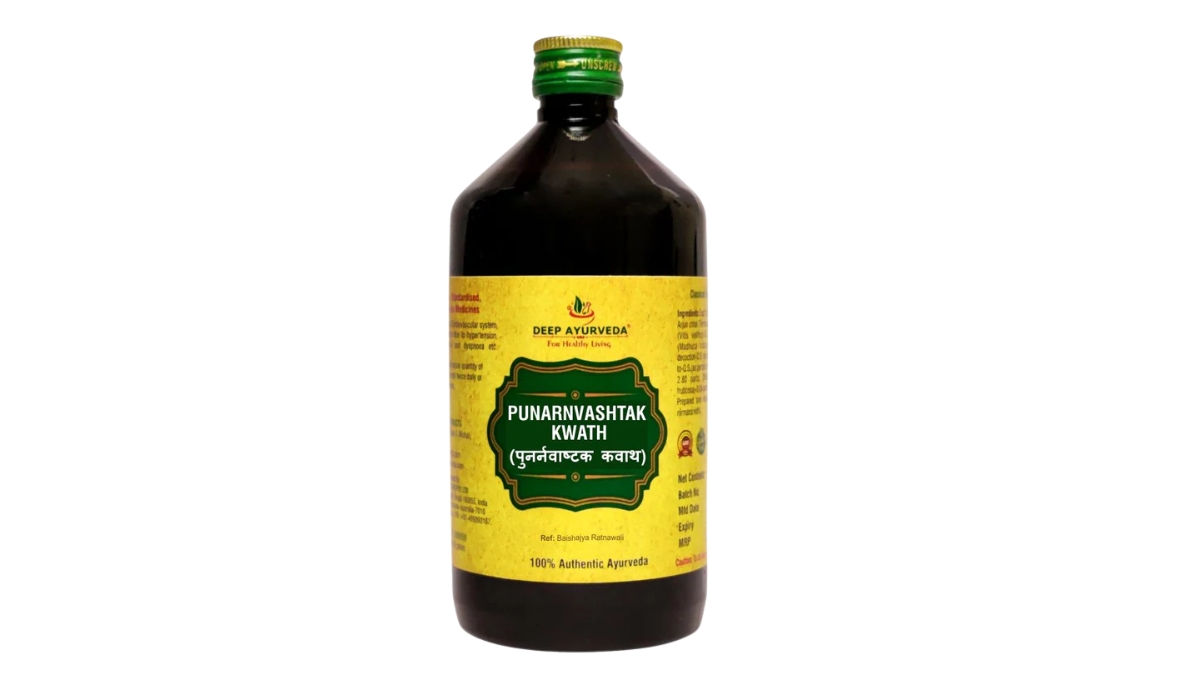

Deep Ayurveda Organic Punarnavashtak Kwath
✅ 100% Ayurvedic & Natural ✅ Helps reduce swelling ✅ Supports kidney and urinary health ✅ Supports liver function✅ Improves digestion and metabolism
10% Off₹232 ₹258Punarnavashtak Kwath is a classical Ayurvedic herbal decoction primarily used for reducing swelling (edema), improving kidney function, and supporting liver health. It works by balancing Kapha dosha, removing excess fluid from the body, and detoxifying the system. It is commonly recommended in conditions like water retention, ascites (Jalodara), and urinary disorders.
What is Punarnavashtak Kwath?
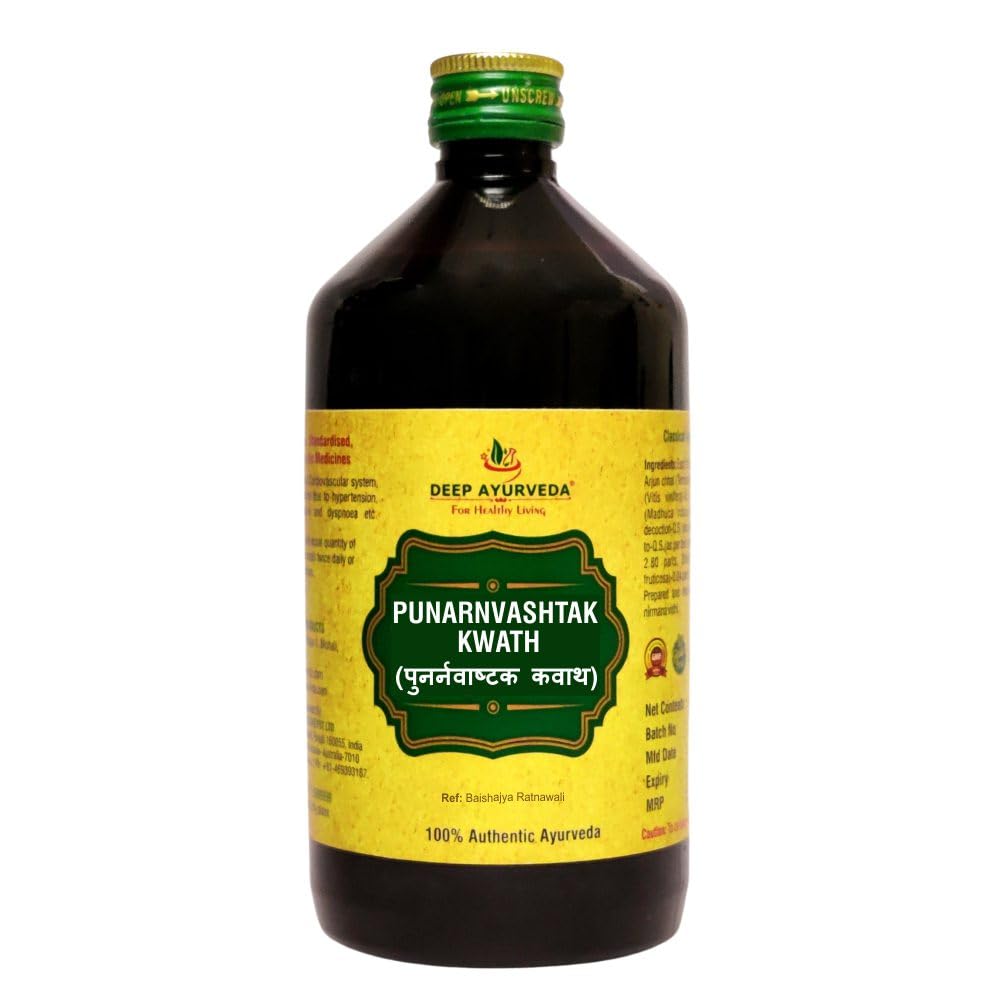
Punarnavashtak Kwath is a traditional Ayurvedic formulation prepared using a combination of powerful herbs, with Punarnava (Boerhavia diffusa) as the main ingredient. The term “Kwath” refers to a herbal decoction, which is made by boiling herbs in water to extract their active compounds.
In Ayurveda, this formulation is widely used to manage Shotha (inflammation/swelling) and Mutravaha Srotas disorders (urinary system issues).
In my clinical practice, I have observed that many patients assume Punarnavashtak Kwath works like a simple diuretic. But in reality, it is much more than that. It not only removes excess water but also corrects the root cause—impaired metabolism (Agni) and toxin accumulation (Ama).
Ingredients of Punarnavashtak Kwath
This formulation contains a blend of 8 herbs (hence Ashtak), each contributing unique healing properties.
| Herb | Ayurvedic Action |
|---|---|
| Punarnava | Reduces swelling, diuretic, anti-inflammatory |
| Neem | Blood purifier, antimicrobial |
| Giloy (Guduchi) | Immunity booster, detoxifier |
| Patola | Liver support, skin health |
| Kutki | Liver stimulant, detoxifying |
| Daruharidra | Anti-inflammatory, antimicrobial |
| Haritaki | Digestive support, mild laxative |
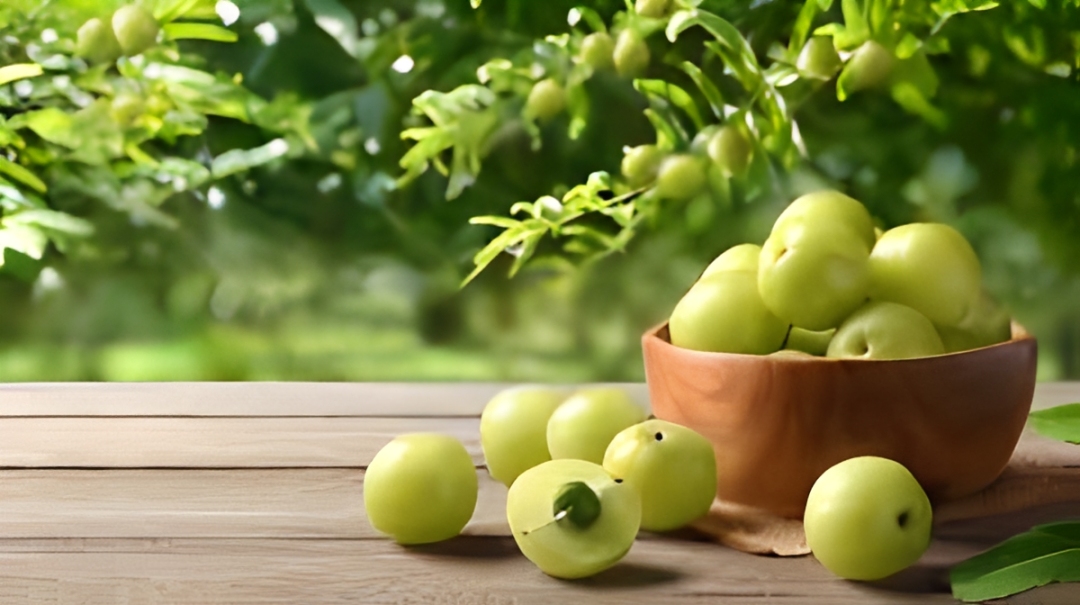
| Amalaki | Antioxidant, rejuvenator |
How Punarnavashtak Kwath Works
To understand how this kwath works, we need to look at the root cause from an Ayurvedic perspective.
Disease Mechanism (Samprapti)
- Weak digestion (Mandagni):
When digestion becomes weak, the body starts producing Ama (toxins), which is the root of many diseases. - Ama accumulation & Srotorodha:
This Ama starts blocking the body channels (Srotas), disturbing normal fluid movement. - Kapha aggravation → Shotha (Swelling):
Due to blockage and Kapha imbalance, fluid starts accumulating in tissues, leading to swelling.
Action of Punarnavashtak Kwath
- Ama Pachana (Detox action):
It helps digest and clear Ama, improving overall metabolism. - Srotoshodhana (Channel cleansing):
It opens blocked channels, allowing proper circulation of fluids. - Mutrala effect (Diuretic action):
It increases urine output, helping remove excess fluid from the body. - Kapha-Vata balancing:
It reduces heaviness (Kapha) and regulates fluid movement controlled by Vata.
In my clinical experience at Deep Ayurveda, swelling is rarely just a water problem. Most cases involve poor metabolism and toxin buildup. Punarnavashtak Kwath works well because it targets both the root cause and the symptom together.
Benefits of Punarnavashtak Kwath
1. Reduces Swelling
This is the most common use. It helps remove excess fluid from tissues, especially in legs, face, and abdomen.
2. Supports Kidney Function
It improves urine output and supports kidney filtration, making it useful in mild kidney dysfunction cases.
3. Helps in Liver Disorders
Due to ingredients like Kutki and Patola, it helps in fatty liver and liver congestion, especially when swelling is present.
4. Useful in Ascites
In Ayurvedic practice, it is often used in abdominal fluid accumulation, along with other therapies.
5. Improves Urinary Health
Helps in burning urination, low urine output, and urinary tract issues.
Dosage & How to Take Punarnavashtak Kwath
Standard Dosage
Punarnavashtak Kwath is usually taken in a dose of 15–20 ml mixed with equal quantity of water, twice daily. This dilution helps the body absorb the formulation better without putting stress on digestion.
It is generally advised to take it before meals, as it works more effectively on an empty digestive system.
Best Time to Take
Taking the kwath early in the morning on an empty stomach helps initiate detoxification and improves fluid metabolism throughout the day.
The second dose is best taken in the evening before dinner, so that the body continues the healing process overnight.
How to Consume
Always consume the kwath with lukewarm water, as warm temperature supports digestion and enhances the action of herbs. Avoid taking it with cold water, because it can slow down metabolism and reduce the effectiveness of the formulation.
Doctor’s Tip
In my clinical experience, medicines like Punarnavashtak Kwath show much better results when supported with the right lifestyle. Keeping the diet light, reducing excess salt, and drinking warm water throughout the day helps the body eliminate excess fluid more efficiently and improves overall outcomes.
Duration of Use
Understanding the timeline helps set the right expectations, as Ayurvedic medicines work gradually on the root cause.
- 7 Days: Urination may increase slightly, and you may start noticing mild reduction in heaviness or swelling.
- 21 Days: Swelling becomes visibly reduced as the body starts clearing excess fluid more effectively.
- 45 Days: Deeper correction happens at the metabolic level, helping prevent recurrence of fluid accumulation.
Duration can vary depending on the severity of the condition and individual body response.
Side Effects & Precautions
Punarnavashtak Kwath is generally safe when used in the right dose and under proper guidance, but like any Ayurvedic medicine, improper use may lead to some unwanted effects.
⚠️ Possible Side Effects
- Excess Urination:
Since it has a natural diuretic effect, some people may experience frequent urination, especially in the initial days of use. - Dehydration (in high doses):
Taking higher doses than required can lead to loss of body fluids, causing dryness, thirst, or mild fatigue. - Weakness (if taken without proper diet):
If the body is already weak or the diet is not supportive, excessive fluid loss may result in low energy levels.
Who Should Avoid Punarnavashtak Kwath
- Pregnant women: It’s best to avoid this during pregnancy unless specifically advised by a doctor, as it can have a strong effect on the body.
- Severely weak patients: People who already feel very weak or low on energy may experience further weakness with its use.
- People with dehydration: Since it promotes fluid loss, taking it in a dehydrated state can worsen the condition.
Doctor’s Advice
- Kidney disease: It may help in mild cases, but in advanced conditions, it should only be used under proper medical supervision.
- Liver cirrhosis: This condition requires a personalized approach, so self-medication should be avoided.
- Chronic illness: In long-term diseases, the body responds differently, so it’s always safer to take it under an Ayurvedic doctor’s guidance.
Punarnavashtak Kwath vs Other Ayurvedic Kwath
| Medicine | Best Use |
|---|---|
| Punarnavashtak Kwath | Swelling & fluid retention |
| Punarnavadi Kwath | Kidney disorders |
| Gokshuradi Kwath | Urinary issues |
Choosing the right kwath depends on root cause, not just symptoms.
Common Mistakes Patients Make (Very Important)
From my clinical experience, I have seen that even a good medicine like Punarnavashtak Kwath may not give proper results if these common mistakes are made:
Self-diagnosis
Many people start taking it just by reading online, without understanding the actual cause of swelling—while in Ayurveda, treatment always depends on the root imbalance.
Taking wrong dosage
Either taking too little or too much can reduce effectiveness or cause unwanted effects, so the dose should always match the condition and body type.
Expecting instant results
Ayurvedic medicines work gradually by correcting the system, so expecting overnight relief often leads to disappointment.
Continuing unhealthy diet
If a person keeps consuming excess salt, oily or heavy food, it can counteract the medicine and slow down recovery.
Using it like a “quick fix”
Punarnavashtak Kwath is not a temporary relief solution—it works best when used consistently as part of a proper treatment plan.
In Ayurveda, discipline, correct diet, and consistency play an equal role as medicine itself.
Diet & Lifestyle Advice
To get the best results from Punarnavashtak Kwath, your diet and daily routine play a very important role.
Recommended Diet
- Light, easily digestible food
Choose meals that are simple and easy on digestion, as heavy food can increase toxin (Ama) formation and slow down recovery. - Moong dal, lauki, tori
These foods are naturally light, reduce water retention, and help balance Kapha dosha. - Warm water
Drinking warm water throughout the day helps improve metabolism and supports the flushing out of excess fluids.
Foods to Avoid
- Excess salt
High salt intake increases water retention in the body, which can worsen swelling. - Fried food
Oily and fried foods weaken digestion and contribute to toxin buildup. - Cold drinks
Cold beverages slow down digestive fire (Agni), making it harder for the body to process fluids properly. - Heavy dairy
Foods like paneer and cream can increase Kapha and may lead to more fluid accumulation.
Lifestyle Tips
Maintain proper sleep
Good sleep supports overall metabolism and helps the body naturally repair and detoxify.
Regular walking
Light daily movement helps improve circulation and prevents fluid from accumulating in the body.
Avoid sitting for long hours
Sitting continuously can lead to poor blood flow, especially in the legs, increasing chances of swelling.
Conclusion
Punarnavashtak Kwath is an effective Ayurvedic formulation mainly used for swelling, fluid retention, and supporting kidney–liver health. However, it works best when taken in the right dose and as per the individual condition, not as a self-medication remedy.
In my clinical experience at Deep Ayurveda, patients get better and more stable results when they also follow a proper diet and lifestyle along with the medicine. Since every patient’s body constitution and disease cause is different, it is always better to take it under expert guidance for safe and effective results.
Frequently Asked Questions
What is Punarnavashtak Kwath used for?
Punarnavashtak Kwath is mainly used in Ayurveda for reducing swelling (edema), improving urine flow, and supporting kidney and liver health.
How to take Punarnavashtak Kwath?
It is usually taken as a decoction in 15–20 ml dose mixed with equal water, preferably before meals or as advised by an Ayurvedic doctor.
What are the benefits of Punarnavashtak Kwath?
It helps in reducing body swelling, managing water retention, supporting kidney function, and improving detoxification of the body.
Can Punarnavashtak Kwath be taken daily?
Yes, it can be taken daily for a specific duration under medical supervision depending on the condition and severity of symptoms.
Does Punarnavashtak Kwath help in kidney disease?
It may help in mild to moderate kidney-related issues by improving urine flow and reducing fluid retention, but it should be used under doctor guidance.
What are the side effects of Punarnavashtak Kwath?
It is generally safe, but in some cases it may cause frequent urination, dehydration, or weakness if taken in excess dose.
How long does Punarnavashtak Kwath take to show results?
Initial improvement may be seen within 7–10 days, while significant results usually take 3–4 weeks depending on the condition.
Can Punarnavashtak Kwath be taken on an empty stomach?
Yes, it is commonly taken on an empty stomach in the morning for better absorption and effectiveness.
Is Punarnavashtak Kwath good for swelling in legs?
Yes, it is widely used in Ayurveda for reducing leg swelling caused by water retention or kidney-related imbalances.
Who should avoid Punarnavashtak Kwath?
Pregnant women, severely weak patients, and people with dehydration or serious medical conditions should avoid it unless prescribed by a doctor.