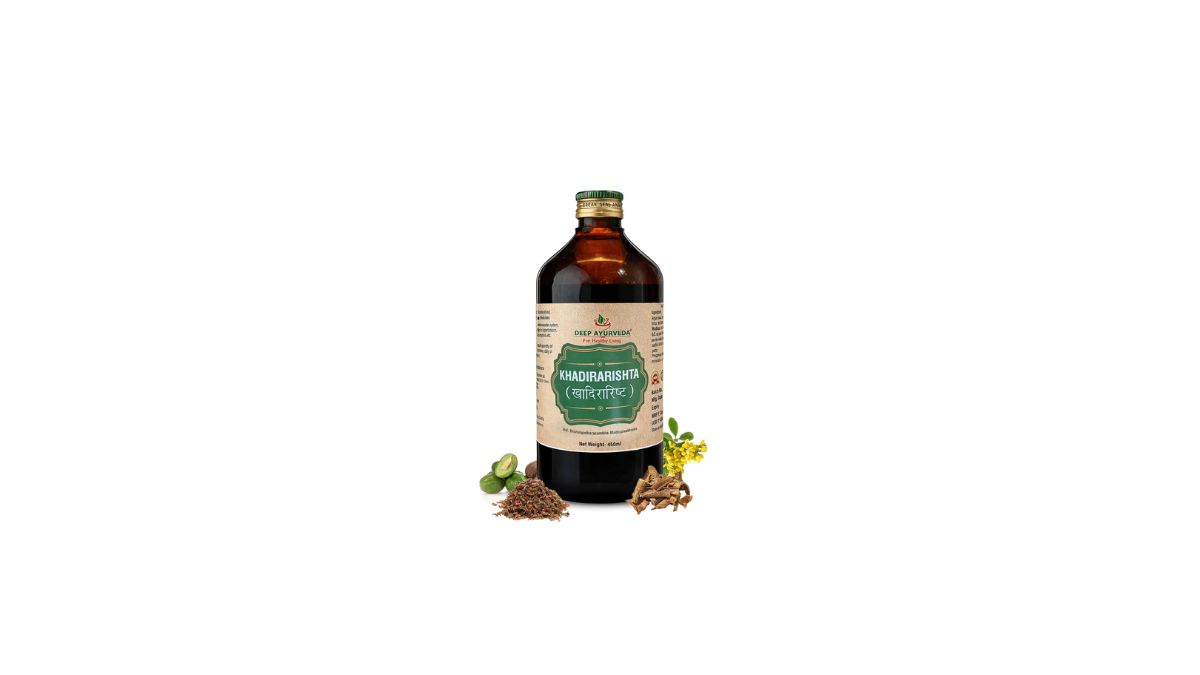

Deep Ayurveda khadirarishta
✅ Supports Healthy Skin ✅ Supports Digestive Health ✅ Helps Maintain Oral Health ✅ MSupports Healthy Blood Purification ✅ May Support Healthy Metabolism
Skin problems such as acne, itching, eczema, recurrent boils, and certain chronic skin conditions often reflect more than what appears on the surface. According to Ayurveda, these concerns may arise from an imbalance in Rakta Dhatu (blood tissue), aggravated Pitta and Kapha Doshas, weakened digestion (Mandagni), and the accumulation of Ama (metabolic toxins). Rather than focusing only on visible symptoms, Ayurveda aims to identify and address the underlying imbalance.
Khadirarishta is a classical Ayurvedic fermented herbal formulation traditionally used to support skin health and maintain healthy blood tissue. Prepared using herbs such as Khadira (Acacia catechu) along with other Ayurvedic ingredients, it has long been recommended in Ayurvedic practice for promoting healthy skin, supporting digestion, and helping maintain the body’s natural detoxification processes. It is also known as a self-generated herbal fermentation (Arishta), which may improve the absorption of certain herbal constituents.
In modern times, Khadirarishta is commonly used as part of an Ayurvedic treatment plan for individuals experiencing recurrent skin concerns such as acne, itching, eczema, and other conditions associated with Rakta Dushti (vitiation of blood) in Ayurveda. However, it should not be viewed as a standalone cure. Its use is most effective when combined with an appropriate diet, lifestyle modifications, and guidance from a qualified Ayurvedic physician.
This comprehensive guide explains Khadirarishta benefits, traditional uses, ingredients, dosage, possible side effects, precautions, and the Ayurvedic perspective, while also discussing available scientific evidence. Whether you are considering Khadirarishta for skin wellness or simply wish to understand its role in Ayurveda, this article will help you make an informed and balanced decision.
What is Khadirarishta?
Khadirarishta is a classical Ayurvedic fermented herbal formulation (Arishta) traditionally used to support healthy skin, maintain Rakta Dhatu (blood tissue), and help balance aggravated Pitta and Kapha Doshas. It is prepared by naturally fermenting Khadira (Acacia catechu) along with several other medicinal herbs, jaggery or sugar, and Dhataki (Woodfordia fruticosa) flowers, which help initiate the natural fermentation process.
Unlike herbal decoctions that need to be prepared fresh each time, Khadirarishta undergoes a controlled natural fermentation. This process creates a small amount of self-generated alcohol, which acts as a natural preservative and may improve the extraction and absorption of certain herbal constituents. This is one of the reasons Arishta formulations have been widely used in Ayurveda for centuries.
From an Ayurvedic perspective, Khadirarishta is primarily recommended when skin concerns are associated with Rakta Dushti (vitiation of blood), impaired digestion (Mandagni), and the accumulation of Ama (metabolic toxins). Rather than only addressing external symptoms, Ayurveda focuses on restoring internal balance to support overall skin and metabolic health.
It is traditionally used under the guidance of an Ayurvedic physician as part of a comprehensive treatment plan that may include dietary changes, lifestyle modifications, and other herbal medicines depending on an individual’s Prakriti (body constitution), Dosha imbalance, and health condition.
Quick Facts About Khadirarishta
| Feature | Details |
|---|---|
| Ayurvedic Form | Arishta (Naturally Fermented Herbal Liquid) |
| Primary Herb | Khadira (Acacia catechu) |
| Classical Purpose | Supports skin health and Rakta Dhatu balance |
| Traditional Dosha Action | Helps balance aggravated Pitta and Kapha Doshas |
| Common Ayurvedic Uses | Acne, itching, recurrent skin discomfort, and conditions associated with Rakta Dushti |
| Taste (Rasa) | Predominantly Kashaya (Astringent) |
| Typical Dose | As advised by an Ayurvedic physician (commonly taken after meals with an equal quantity of water) |
| Suitable For | Adults, unless otherwise advised by a healthcare professional |
| Category | Classical Ayurvedic formulation |
Why is Khadirarishta Different from Other Ayurvedic Formulations?
Many Ayurvedic medicines are available as Churna (powder), Vati (tablets), Kashaya (decoction), Avaleha (herbal jam), or Asava-Arishta (fermented liquids). Khadirarishta belongs to the Arishta category, which undergoes a natural fermentation process.
This traditional preparation method offers several practical advantages:
- The herbal formulation is ready to consume without daily preparation.
- Natural fermentation helps preserve the formulation without artificial preservatives.
- It may enhance the extraction of certain phytochemicals from the herbs.
- The liquid form is generally easy to measure and consume as directed.
- It has a longer shelf life compared with freshly prepared herbal decoctions.
Ayurvedic Perspective: How Khadirarishta Supports Skin and Blood Health
According to Ayurveda, healthy skin is a reflection of balanced Doshas, proper digestion (Agni), healthy Rakta Dhatu (blood tissue), and efficient elimination of metabolic waste. When these systems are disturbed, the body may show signs such as acne, itching, recurrent boils, excessive oiliness, certain types of eczema, or other skin discomforts.
Khadirarishta is traditionally prescribed to support this internal balance. Instead of focusing only on the visible skin concern, Ayurveda considers the root cause and aims to restore harmony within the body.
Understanding Rakta Dushti (Vitiation of Blood)
One of the key Ayurvedic concepts associated with Khadirarishta is Rakta Dushti, which refers to an imbalance or vitiation of Rakta Dhatu. In Ayurveda, Rakta Dhatu nourishes the skin and supports its healthy appearance. When it becomes disturbed—often due to aggravated Pitta Dosha, poor digestion, unhealthy dietary habits, or the accumulation of Ama (metabolic toxins)—various skin concerns may arise.
It is important to note that Rakta Dushti is an Ayurvedic concept and should not be interpreted as a modern medical diagnosis or as “impure blood.” In modern medicine, blood is continuously filtered and regulated by organs such as the liver, kidneys, and immune system. Ayurveda uses the term to describe a functional imbalance rather than contamination of the blood itself.
The Role of Pitta and Kapha Doshas
Ayurvedic practitioners often consider Pitta and Kapha imbalances while evaluating skin disorders.
- Aggravated Pitta may contribute to redness, inflammation, burning sensations, heat, or frequent breakouts.
- Aggravated Kapha may be associated with oily skin, clogged pores, excessive secretions, and slow-healing skin conditions.
- When both Doshas are involved along with impaired digestion, skin concerns may become recurrent or persistent.
Khadirarishta is traditionally used as part of an Ayurvedic management plan to help maintain the balance of these Doshas while supporting healthy digestion and metabolism.
Why Digestion (Agni) Matters for Healthy Skin
Ayurveda places great importance on Agni, the body’s digestive and metabolic fire. A weak digestive system may lead to incomplete digestion and the formation of Ama, which is believed to interfere with the normal functioning of tissues and Doshas.
For this reason, Ayurvedic physicians often address digestive health alongside skin care. Khadirarishta is traditionally used in selected individuals to support healthy digestion, which may indirectly contribute to healthier skin when combined with an appropriate diet and lifestyle.
Khadirarishta in Ayurvedic Skin Care
From an Ayurvedic perspective, Khadirarishta is not considered a cosmetic remedy. Instead, it is traditionally used to support the body’s internal balance in people experiencing skin conditions associated with:
- Acne and recurrent pimples
- Itching and skin irritation
- Certain types of eczema
- Chronic skin discomfort
- Conditions linked with Rakta Dushti according to Ayurveda
The exact treatment plan varies from person to person. An Ayurvedic physician may combine Khadirarishta with dietary recommendations, lifestyle modifications, Panchakarma therapies (when appropriate), or other herbal formulations based on the individual’s Prakriti (body constitution) and Vikriti (current imbalance).
Khadirarishta Ingredients and Their Ayurvedic Benefits
Khadirarishta is a classical Ayurvedic polyherbal formulation prepared by combining several medicinal herbs through a natural fermentation process. Each ingredient is selected for its specific role in supporting Rakta Dhatu (blood tissue), skin health, digestion, and Dosha balance. Rather than relying on a single herb, the formulation is designed so that the herbs work together to provide a balanced therapeutic effect.
Note: The exact composition may vary slightly among manufacturers. Always check the product label or consult an Ayurvedic physician for the complete ingredient list of a specific brand.
Key Ingredients of Khadirarishta
| Ingredient | Ayurvedic Role | Traditional Benefit |
|---|---|---|
| Khadira (Acacia catechu) | The principal herb of the formulation | Traditionally used to support healthy skin, maintain Rakta Dhatu, and help balance Pitta and Kapha Doshas. |
| Devadaru (Cedrus deodara) | Supports Dosha balance | Traditionally used to help maintain healthy skin and support normal inflammatory balance according to Ayurveda. |
| Bakuchi (Psoralea corylifolia) | Skin-supporting herb | Traditionally included in Ayurvedic formulations for maintaining skin health under professional guidance. |
| Daruharidra (Berberis aristata) | Pitta-balancing herb | Traditionally used to support healthy skin, digestion, and liver function in Ayurveda. |
| Haritaki (Terminalia chebula) | Digestive support | Helps maintain healthy digestion, supports natural detoxification, and promotes proper bowel function. |
| Bibhitaki (Terminalia bellirica) | Supports metabolism | Traditionally used to support digestion and maintain Dosha balance. |
| Amalaki (Emblica officinalis) | Rasayana (Rejuvenative) | Rich in natural antioxidants and traditionally valued for supporting immunity and healthy skin. |
| Dhataki (Woodfordia fruticosa) | Natural fermenting agent | Initiates the natural fermentation process and helps preserve the formulation. |
| Jaggery or Sugar | Fermentation medium | Provides the natural sugars required for the fermentation process, resulting in a self-generated herbal alcohol that acts as a preservative. |
The Importance of Khadira – The Main Herb
The name Khadirarishta is derived from Khadira (Acacia catechu), which is regarded as one of Ayurveda’s important herbs for supporting skin health. Classical Ayurvedic texts describe Khadira as having Kashaya (astringent) Rasa, making it traditionally useful in conditions associated with aggravated Pitta, Kapha, and Rakta Dushti.
From an Ayurvedic perspective, Khadira is valued for its ability to:
- Support healthy skin and complexion.
- Help maintain the balance of Rakta Dhatu.
- Promote normal wound healing as part of traditional care.
- Support overall skin hygiene and comfort.
- Work alongside other herbs to maintain internal balance.
Why is Khadirarishta a Polyherbal Formulation?
One of Ayurveda’s strengths is combining herbs with complementary actions rather than depending on a single ingredient.
In Khadirarishta:
- Khadira forms the core of the formulation for skin support.
- Triphala (Haritaki, Bibhitaki, and Amalaki) supports digestion and metabolic balance.
- Daruharidra complements the formulation by supporting healthy liver and skin function according to Ayurvedic principles.
- Bakuchi is traditionally included for its role in maintaining skin health.
- Dhataki enables the natural fermentation process without the need for artificial preservatives.
This combination creates a formulation that addresses multiple aspects of health—rather than focusing on only one symptom.
Natural Fermentation: What Makes Khadirarishta Unique?
Unlike herbal syrups that are simply mixed, Khadirarishta undergoes natural fermentation, a traditional Ayurvedic pharmaceutical process.
During this process:
- Beneficial compounds are extracted from the herbs.
- A small amount of naturally occurring alcohol is produced.
- The formulation develops better stability and shelf life.
- The liquid form becomes easy to consume and measure.
The naturally generated alcohol is not added separately; it forms during fermentation and primarily serves as a natural preservative and extraction medium.
Top 10 Khadirarishta Benefits: Ayurvedic Perspective
Khadirarishta has been used in Ayurveda for centuries as a classical formulation to support skin health, Rakta Dhatu (blood tissue), digestion, and overall metabolic balance. Its benefits are attributed to the combined action of multiple herbs rather than a single ingredient. The following benefits are based on traditional Ayurvedic use and should not be interpreted as guaranteed medical outcomes.
1. Supports Healthy Skin
One of the most well-known traditional uses of Khadirarishta is to support healthy skin. Ayurveda recommends it in conditions associated with Rakta Dushti and aggravated Pitta and Kapha Doshas, which are believed to contribute to recurring skin concerns.
It may be included in an Ayurvedic treatment plan for individuals experiencing acne, itching, oily skin, or other chronic skin discomforts, along with appropriate dietary and lifestyle measures.
2. Helps Maintain Healthy Rakta Dhatu
Ayurveda considers Rakta Dhatu essential for nourishing the skin and maintaining its natural complexion. Khadirarishta is traditionally used to support the balance and healthy functioning of Rakta Dhatu.
Ayurvedic Note: The term “Rakta Shodhana” (often translated as blood purification) refers to restoring functional balance according to Ayurvedic principles and is not equivalent to blood filtration in modern medicine.
3. Supports Natural Detoxification Through Healthy Digestion
According to Ayurveda, healthy digestion (Agni) plays a central role in overall wellness. When digestion becomes weak, Ama (metabolic toxins) may accumulate and disturb the balance of the Doshas.
Khadirarishta is traditionally used to support digestive function, which may help maintain the body’s natural cleansing processes and contribute to healthier skin.
4. Helps Balance Pitta and Kapha Doshas
Many common skin concerns are associated in Ayurveda with aggravated Pitta (heat and inflammation) and Kapha (oiliness and congestion).
Khadirarishta is traditionally used to help maintain the balance of these Doshas, making it a commonly selected formulation for individuals with Pitta-Kapha predominance under professional Ayurvedic guidance.
5. Traditionally Used for Acne and Pimples
Acne is often viewed in Ayurveda as the result of multiple internal factors, including aggravated Pitta, Kapha imbalance, and impaired digestion.
Khadirarishta may be recommended as part of a personalized Ayurvedic approach to support clearer skin while addressing internal imbalances rather than focusing only on external symptoms.
6. Supports Skin Comfort During Itching and Irritation
Herbs such as Khadira and Daruharidra are traditionally valued for maintaining healthy skin. Khadirarishta may be used as supportive Ayurvedic care for individuals experiencing recurrent itching or skin irritation, depending on the underlying Dosha imbalance.
7. Promotes Digestive and Metabolic Health
Several herbs in Khadirarishta, including Haritaki, Bibhitaki, and Amalaki, are traditionally used to support digestion and metabolism.
A healthy digestive system is considered one of the foundations of good skin health in Ayurveda, making digestive support an important part of the formulation’s overall purpose.
8. Supports Overall Skin Wellness
Rather than targeting only one specific condition, Khadirarishta is traditionally used to support the body’s internal environment that influences skin health.
When combined with a balanced diet, proper hydration, stress management, and adequate sleep, it may contribute to maintaining healthy-looking skin over time.
9. Complements an Ayurvedic Skin Care Plan
In Ayurvedic clinical practice, Khadirarishta is rarely prescribed alone. It is commonly combined with dietary guidance, lifestyle modifications, topical applications, or other herbal formulations based on the individual’s Prakriti (body constitution) and health needs.
This personalized approach is one of the strengths of Ayurvedic medicine.
10. Supports Holistic Well-being
The goal of Ayurveda is not merely to manage symptoms but to restore balance within the body. By supporting digestion, Dosha balance, and healthy tissue nourishment, Khadirarishta contributes to a more holistic approach to health and wellness.
Traditional Uses of Khadirarishta in Ayurveda
In Ayurveda, Khadirarishta is prescribed based on an individual’s Dosha imbalance, digestive strength (Agni), Prakriti (body constitution), and overall health, rather than for a disease name alone. This personalized approach is one of the key principles of Ayurvedic medicine.
Traditionally, Ayurvedic physicians may include Khadirarishta in a treatment plan when skin concerns are associated with Rakta Dushti (vitiation of blood), aggravated Pitta-Kapha Doshas, or impaired digestion. It is generally used alongside dietary guidance, lifestyle modifications, and, when appropriate, other Ayurvedic formulations.
Important: The uses described below are based on traditional Ayurvedic practice. They should not be interpreted as proof that Khadirarishta treats or cures any medical condition. If you have a diagnosed skin disorder or another health condition, seek advice from a qualified healthcare professional.
Common Traditional Uses of Khadirarishta
1. Acne and Pimples
According to Ayurveda, recurring acne may be associated with aggravated Pitta, Kapha, impaired digestion, and Rakta Dushti.
Khadirarishta is traditionally used as part of an Ayurvedic management plan to support internal balance while encouraging healthy skin. Treatment usually also includes dietary changes and proper skin-care practices.
2. Itching (Kandu)
Persistent itching is often linked in Ayurveda to imbalances in Pitta, Kapha, or Rakta Dhatu.
Khadirarishta may be recommended as supportive Ayurvedic care to help maintain skin comfort after an Ayurvedic assessment of the underlying imbalance.
3. Eczema (Vicharchika)
Some forms of eczema are correlated in Ayurveda with Vicharchika, a condition involving multiple Dosha imbalances.
Ayurvedic physicians may include Khadirarishta as one component of a broader treatment plan that can also involve dietary regulation, external applications, and lifestyle recommendations tailored to the individual.
4. Psoriasis (Kitibha Kushta)
In Ayurveda, certain symptoms of psoriasis may resemble Kitibha Kushta. Management focuses on balancing the Doshas and supporting healthy tissue rather than only relieving visible skin changes.
Khadirarishta may be considered as supportive Ayurvedic care under professional supervision, depending on the individual’s condition and treatment goals.
5. Recurrent Boils and Skin Irritation
Repeated boils or localized skin irritation may indicate internal imbalance according to Ayurvedic principles.
Khadirarishta is traditionally used to support healthy skin and maintain Rakta Dhatu while addressing contributing factors such as impaired digestion and aggravated Doshas.
6. Oily and Acne-Prone Skin
Excessive oiliness is commonly associated with aggravated Kapha Dosha.
As part of a personalized Ayurvedic plan, Khadirarishta may help support internal balance while lifestyle and dietary measures address contributing factors.
7. Supporting Healthy Digestion During Skin Care
Ayurveda emphasizes that healthy skin begins with healthy digestion.
When digestive function is impaired, the formation of Ama (metabolic toxins) is believed to contribute to various health concerns. Khadirarishta is traditionally used to support Agni, making digestion an important focus during Ayurvedic skin management.
8. Seasonal Skin Flare-Ups
Some people experience worsening skin symptoms during hot weather, humid seasons, or dietary changes.
Ayurvedic practitioners may evaluate whether seasonal aggravation of Pitta or Kapha is contributing to these flare-ups and, if appropriate, include Khadirarishta in a broader seasonal wellness plan.
Is Khadirarishta Suitable for Everyone?
Not necessarily. Ayurveda does not recommend the same medicine for every person with similar symptoms.
Before prescribing Khadirarishta, an Ayurvedic physician may assess:
- Prakriti (body constitution)
- Current Dosha imbalance (Vikriti)
- Digestive strength (Agni)
- Presence of Ama
- Age and overall health
- Existing medical conditions
- Other medicines being taken
This individualized assessment helps determine whether Khadirarishta is appropriate or whether another Ayurvedic formulation may be more suitable.
When Should You Consult an Ayurvedic Doctor?
Professional guidance is especially important if you:
- Have long-standing or recurrent skin problems.
- Experience severe itching, widespread rashes, or signs of infection.
- Have diabetes, liver disease, kidney disease, or another chronic illness.
- Are pregnant or breastfeeding.
- Are taking prescription medications.
- Plan to use Khadirarishta for an extended period.
A qualified Ayurvedic physician can identify the underlying Dosha imbalance, recommend the appropriate dosage, and decide whether Khadirarishta should be used alone or in combination with other therapies.
Khadirarishta Dosage: How to Take It Safely
Taking Khadirarishta in the correct dose and at the appropriate time is important for achieving its intended Ayurvedic benefits. The exact dosage may vary depending on factors such as age, body constitution (Prakriti), digestive strength (Agni), the health condition being addressed, and other medicines being taken. Therefore, it should ideally be used under the guidance of a qualified Ayurvedic physician.
Recommended Dosage of Khadirarishta
The following dosage is commonly mentioned in Ayurvedic practice for adults. However, individual recommendations may differ.
| Age Group | Typical Dosage* | When to Take |
|---|---|---|
| Adults | 15–30 ml | Twice daily after meals |
| Adolescents | Only if advised by an Ayurvedic physician | As directed |
| Children | Only under medical supervision | As directed |
*Always dilute Khadirarishta with an equal quantity of lukewarm or normal water unless your physician advises otherwise.
Best Time to Take Khadirarishta
In most cases, Khadirarishta is traditionally taken:
- After meals, as directed by an Ayurvedic physician.
- Twice daily (morning and evening) is a common schedule.
- With an equal quantity of water for proper dilution.
Taking it after food may help improve tolerance, especially for individuals with a sensitive stomach.
How Long Should You Take Khadirarishta?
There is no fixed duration that is suitable for everyone.
The duration depends on several factors, including:
- The underlying health concern.
- Severity and duration of symptoms.
- Individual Dosha imbalance.
- Response to treatment.
- Other Ayurvedic medicines being used.
For short-term concerns, the duration may differ from that for chronic conditions. Your Ayurvedic physician should periodically review your progress and decide whether to continue, modify, or stop the formulation.
What If You Miss a Dose?
If you forget to take a dose:
- Take it when you remember if it is not close to your next scheduled dose.
- If it is almost time for the next dose, skip the missed dose.
- Do not double the quantity to make up for a missed dose.
Maintaining a regular schedule is generally more beneficial than taking irregular or extra doses.
Can Khadirarishta Be Taken Daily?
Khadirarishta may be taken daily only for the duration recommended by a qualified Ayurvedic physician.
Self-medicating for months without proper evaluation is not advisable. Long-term use should be reviewed periodically to ensure that the formulation continues to be appropriate for your condition and health status.
Common Mistakes to Avoid
To use Khadirarishta safely, avoid these common mistakes:
- Taking more than the recommended dose in the hope of faster results.
- Consuming it without diluting it (unless specifically instructed otherwise).
- Taking it on an empty stomach if it causes discomfort.
- Using it continuously without professional advice.
- Ignoring dietary and lifestyle recommendations that are part of Ayurvedic treatment.
- Combining it with other herbal or prescription medicines without informing your healthcare provider.
Storage Instructions
To maintain the quality of Khadirarishta:
- Keep the bottle tightly closed after use.
- Store it in a cool, dry place away from direct sunlight.
- Do not refrigerate unless instructed by the manufacturer.
- Keep it out of the reach of children.
- Always check the expiry date before use.
Khadirarishta Side Effects, Precautions & Safety
Khadirarishta is a classical Ayurvedic formulation that has been used for generations under professional guidance. When taken in the recommended dosage and for the appropriate duration, it is generally well tolerated by many adults. However, like any herbal or conventional medicine, it may not be suitable for everyone and can cause unwanted effects in some individuals.
The likelihood of side effects depends on factors such as the dosage, duration of use, individual body constitution (Prakriti), existing medical conditions, and interactions with other medicines.
Important: “Natural” does not always mean “risk-free.” Always follow the advice of a qualified Ayurvedic physician or healthcare professional before starting Khadirarishta.
Possible Side Effects of Khadirarishta
Although many people use Khadirarishta without significant problems, some individuals may experience:
- Mild stomach discomfort or digestive upset.
- Acidity or a burning sensation, particularly in people with sensitive digestion.
- Loose stools if the formulation does not suit the individual or the dosage is excessive.
- Nausea or an unpleasant taste in some users.
- Rare allergic reactions to one or more herbal ingredients.
If you notice persistent digestive discomfort, skin rash, swelling, difficulty breathing, or any unusual symptoms after taking Khadirarishta, stop using it and seek medical advice promptly.
Who Should Be Extra Cautious?
Pregnant Women
The safety of Khadirarishta during pregnancy has not been established through sufficient high-quality clinical studies.
Pregnant women should use it only if specifically recommended by a qualified healthcare professional.
Breastfeeding Mothers
There is limited scientific evidence regarding its safety during breastfeeding.
Consult your doctor or Ayurvedic physician before using Khadirarishta while nursing.
Children
Khadirarishta should not be given to children without medical supervision.
The dosage and suitability depend on the child’s age, health condition, and individual assessment.
People with Diabetes
Many Khadirarishta formulations contain jaggery or sugar, which is required for the natural fermentation process.
People with diabetes or those monitoring their blood glucose should discuss its use with their healthcare provider, as the sugar content and overall treatment plan may need to be considered.
People with Liver or Kidney Disease
Individuals with liver or kidney disorders should avoid self-medicating with Khadirarishta.
A healthcare professional can determine whether it is appropriate based on the person’s medical history and current treatment.
Can Khadirarishta Interact with Medicines?
Scientific research on herb-drug interactions involving Khadirarishta is still limited.
As a precaution, inform your healthcare provider if you are taking:
- Medicines for diabetes.
- Blood pressure medications.
- Blood-thinning medicines.
- Liver or kidney medications.
- Immunosuppressive medicines.
- Any other Ayurvedic, herbal, or dietary supplements.
This helps reduce the risk of potential interactions and allows your treatment plan to be reviewed appropriately.
When Should You Stop Taking Khadirarishta?
Discontinue the formulation and consult a healthcare professional if you experience:
- Persistent stomach pain.
- Severe acidity or vomiting.
- Allergic reactions such as rash, swelling, or breathing difficulty.
- Worsening of your existing symptoms.
- Any new or unexpected health concerns after starting the formulation.
Do not continue taking Khadirarishta if you suspect it is causing adverse effects without seeking professional advice.
Safety Tips Before Using Khadirarishta
For safe and responsible use:
- Purchase the formulation from a reputable and trusted manufacturer.
- Read the label carefully before use.
- Follow the recommended dosage.
- Do not exceed the prescribed quantity.
- Inform your healthcare provider about all medicines and supplements you are taking.
- Combine the formulation with the diet and lifestyle advice recommended by your Ayurvedic physician.
- Keep all medicines out of the reach of children.
Scientific Evidence: What Research Says About Khadirarishta
Khadirarishta has a long history of use in Ayurveda and is described in classical Ayurvedic literature for supporting skin health and maintaining the balance of Rakta Dhatu, Pitta, and Kapha Doshas. However, when evaluating its effectiveness from a modern scientific perspective, it is important to distinguish between traditional use and clinical evidence.
While laboratory studies and research on several individual herbs found in Khadirarishta are encouraging, high-quality human clinical trials on the complete Khadirarishta formulation are still limited. Therefore, current scientific evidence does not support making definitive claims that it can treat or cure specific diseases.
What Does Modern Research Suggest?
Researchers have studied many of the herbs used in Khadirarishta to better understand their pharmacological properties. These studies suggest that some ingredients possess biological activities that may support overall health.
1. Antioxidant Activity
Several herbs in Khadirarishta, including Amalaki (Emblica officinalis) and Haritaki (Terminalia chebula), contain naturally occurring antioxidant compounds.
Antioxidants help protect cells from oxidative stress, which plays a role in normal ageing and various chronic health conditions. While these findings are promising, further human research is needed to understand how they influence the effects of the complete Khadirarishta formulation.
2. Skin Health Support
Research on herbs such as Khadira (Acacia catechu), Daruharidra (Berberis aristata), and Bakuchi (Psoralea corylifolia) suggests that they contain naturally occurring phytochemicals traditionally associated with skin wellness.
These studies provide scientific interest in the formulation’s traditional use, but they do not confirm that Khadirarishta alone can treat skin diseases. More controlled clinical studies are required.
3. Digestive Health
Some ingredients in Khadirarishta have traditionally been used to support healthy digestion and gastrointestinal function.
Modern research on individual herbs indicates potential digestive-supportive properties, which may complement Ayurveda’s emphasis on maintaining Agni (digestive fire) as a foundation for overall health.
4. Anti-inflammatory Potential
Experimental studies have reported anti-inflammatory properties in certain herbs used in Khadirarishta.
However, most of these findings come from laboratory or animal studies, and they should not be interpreted as proof of clinical effectiveness in humans.
Current Research Limitations
Although interest in Ayurvedic formulations continues to grow, several limitations remain:
- Most studies evaluate individual herbs, not the complete Khadirarishta formulation.
- Many published studies involve laboratory or animal models rather than human participants.
- Large-scale, randomized clinical trials are still limited.
- The composition of Khadirarishta may vary slightly among manufacturers, making direct comparisons difficult.
For these reasons, additional high-quality clinical research is needed before strong medical conclusions can be drawn.
Ayurveda and Modern Science: Two Different Perspectives
Ayurveda and modern biomedical science often evaluate health using different frameworks.
| Ayurvedic Perspective | Modern Scientific Perspective |
|---|---|
| Focuses on balancing Doshas, Agni, Ama, and Dhatus. | Focuses on measurable biological mechanisms, clinical outcomes, and evidence from human studies. |
| Treatment is individualized based on Prakriti and Vikriti. | Treatment recommendations are based on standardized clinical research and medical guidelines. |
| Emphasizes restoring overall balance and long-term wellness. | Emphasizes diagnosis, disease-specific management, and evidence-based interventions. |
These approaches are not necessarily contradictory—they simply assess health through different lenses. Many researchers are working to better understand how traditional Ayurvedic knowledge can be evaluated using modern scientific methods.
Final Thoughts
Khadirarishta is a classical Ayurvedic formulation traditionally used to support skin health, Rakta Dhatu (blood tissue), healthy digestion, and the balance of Pitta and Kapha Doshas. Its effectiveness depends on factors such as an individual’s Prakriti (body constitution), Dosha imbalance, diet, lifestyle, and overall health, making personalized guidance an important part of Ayurvedic care.
While Khadirarishta has a long history of traditional use, it should not be considered a substitute for professional medical treatment or a guaranteed cure for any disease. For safe and effective use, consult a qualified Ayurvedic physician, follow the recommended dosage, and combine the formulation with healthy lifestyle habits for the best long-term results.
Frequently Asked Questions
What is Khadirarishta used for?
Khadirarishta is a classical Ayurvedic fermented herbal formulation traditionally used to support skin health, Rakta Dhatu (blood tissue), healthy digestion, and the balance of Pitta and Kapha Doshas. Ayurvedic physicians may recommend it as part of a personalized treatment plan for individuals with acne, itching, eczema, or other skin concerns associated with Rakta Dushti.
How should Khadirarishta be taken?
Adults are commonly advised to take 15–30 ml twice daily after meals, diluted with an equal quantity of water. However, the exact dosage and duration should be determined by a qualified Ayurvedic physician based on the individual’s age, body constitution, and health condition.
Does Khadirarishta have any side effects?
When used in the recommended dosage under professional guidance, Khadirarishta is generally well tolerated by many adults. However, some people may experience mild digestive discomfort, acidity, or nausea. If you are pregnant, breastfeeding, have diabetes, or have a chronic medical condition, consult your healthcare provider before using it.
Can Khadirarishta help with acne, eczema, or psoriasis?
Khadirarishta is traditionally used in Ayurveda as supportive care for skin conditions associated with Rakta Dushti and Dosha imbalance. It should not be considered a cure for acne, eczema, or psoriasis. The best results are achieved when it is used as part of a personalized Ayurvedic treatment plan that includes diet, lifestyle modifications, and professional guidance.
Can diabetic patients take Khadirarishta?
Many Khadirarishta formulations contain jaggery or sugar, which is required for the natural fermentation process. People with diabetes should consult their doctor or Ayurvedic physician before using it to ensure it is appropriate for their overall treatment plan.
Can Khadirarishta be taken daily?
Yes, Khadirarishta may be taken daily for the duration recommended by a qualified Ayurvedic physician. Long-term self-medication is not advisable, as regular follow-up helps determine whether the formulation continues to be suitable for your health condition.
Is Khadirarishta safe during pregnancy or breastfeeding?
There is limited scientific evidence regarding the safety of Khadirarishta during pregnancy and breastfeeding. Therefore, it should only be used if specifically recommended by a qualified healthcare professional after evaluating the potential benefits and risks.