
Deep Ayurveda Haritaki Powder
✅ 100% Ayurvedic & Safe ✅ Supports Digestive Health ✅ May Help Relieve Constipation ✅ Supports Bowel Regularity ✅ Contains Antioxidant Compounds ✅ May Support Oral Health ✅ May Support Metabolic Health
Haritaki Churna is a traditional Ayurvedic herbal powder prepared from Haritaki, the dried fruit of Terminalia chebula. In Ayurveda, Haritaki has a long history of use, particularly in formulations and practices associated with digestion, bowel regularity and Rasayana (traditional rejuvenative) care.
But an important question is often overlooked: Is Haritaki Churna suitable for everyone, and how should it actually be used?
The answer depends on several factors, including the person’s digestive condition, constitution, age, hydration status, the preparation being used and the reason for taking it. Ayurvedic references also describe specific precautions, so Haritaki Churna should not simply be treated as a universal daily remedy.
This guide explains what Haritaki Churna is, its traditional Ayurvedic uses, commonly discussed benefits, dosage references, ways to take it, possible side effects, precautions and what modern research actually tells us about Haritaki.
What Is Haritaki Churna?
Haritaki Churna is a powdered form of Haritaki fruit. Haritaki is botanically identified as Terminalia chebula Retz., a tree belonging to the Combretaceae family.
In India, Haritaki is also commonly known as Harad or Haritaki, while its dried fruit is widely used in Ayurvedic preparations.
The word Churna in Ayurveda refers broadly to a powdered herbal preparation. Therefore, Haritaki Churna essentially means Haritaki prepared in powdered form.
Haritaki vs Haritaki Churna
These terms are related but not identical.
| Term | What it means |
|---|---|
| Haritaki | The Ayurvedic herb/fruit |
| Harad | Common Indian name for Haritaki |
| Terminalia chebula | Botanical name |
| Haritaki Churna | Powdered preparation of Haritaki |
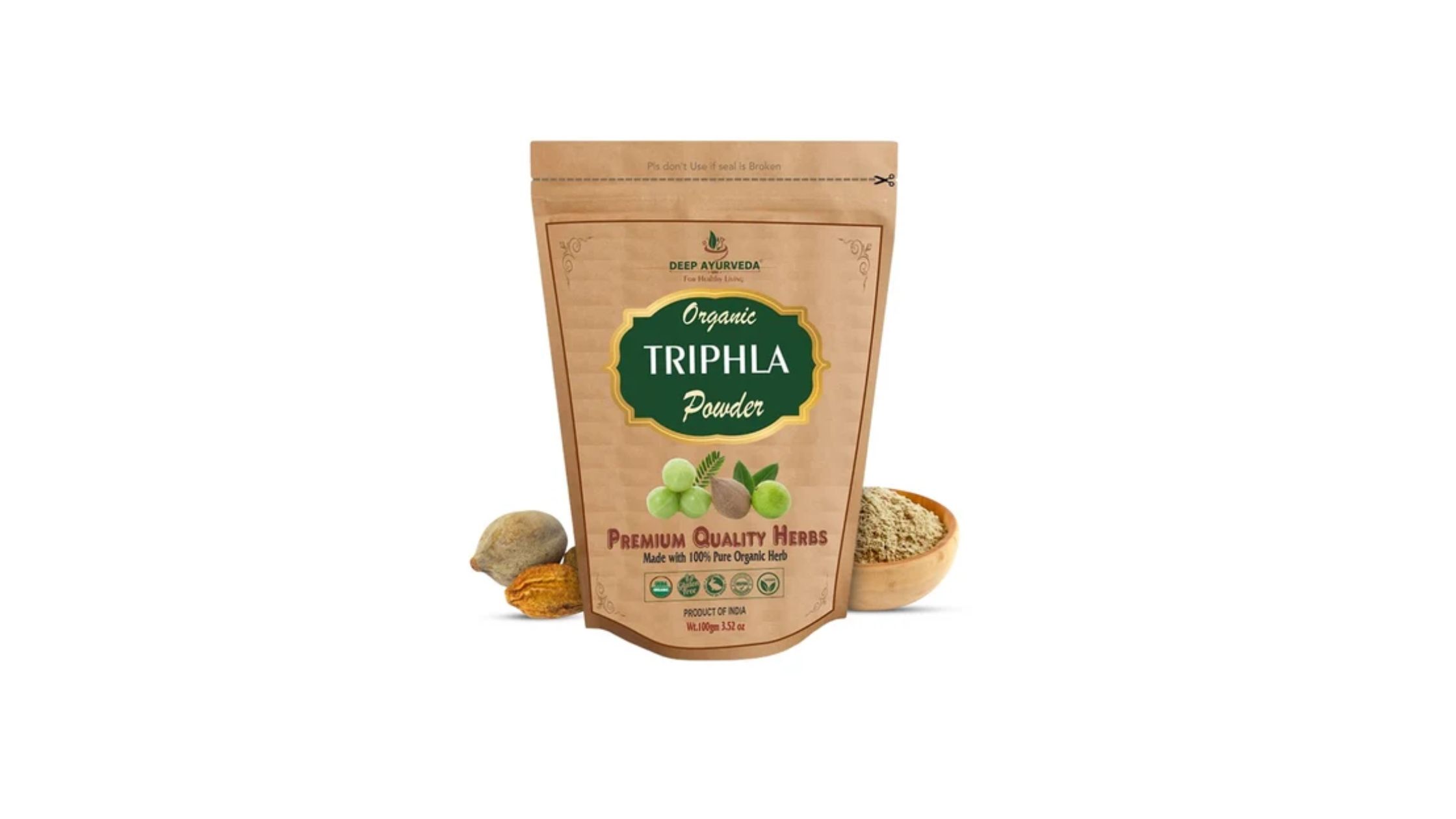
| Triphala | Classical combination containing Haritaki, Bibhitaki and Amalaki |
This distinction matters because research on Terminalia chebula extracts, whole fruit preparations and traditional Haritaki Churna should not automatically be treated as evidence for every commercially available Haritaki powder.
Haritaki in Ayurveda: Why Is It Traditionally Important?
Haritaki has an important place in Ayurvedic materia medica and is used both as a standalone herb and as an ingredient in classical formulations.
Traditional Ayurvedic descriptions associate Haritaki with concepts such as Agni, Anulomana and Rasayana. In simple terms, these concepts relate to digestive function, healthy downward movement/elimination and traditional rejuvenative care.
One reason Haritaki continues to attract interest is its versatility in Ayurvedic practice. It is not used only for one particular complaint. Instead, its traditional applications depend on the formulation, dose, accompanying substance (Anupana), season and the individual’s condition.
This is an important difference between traditional Ayurveda and the way herbal supplements are often marketed today.
Ayurveda does not necessarily approach an herb as one herb = one benefit. The way an herb is used can change according to the person’s condition and the formulation in which it is given.
Haritaki Churna Benefits: What Is It Traditionally Used For?
Haritaki is traditionally associated with several areas of health, but the strength of evidence is not the same for all of them.
The most appropriate way to understand its benefits is to distinguish traditional Ayurvedic use from modern clinical evidence.
1. Supports Healthy Bowel Regularity
One of the most commonly discussed traditional uses of Haritaki is related to bowel function and regular elimination.
In Ayurveda, Haritaki is traditionally described in relation to Anulomana, a concept associated with supporting the normal downward movement of Vata and elimination.
This does not mean that Haritaki Churna should be considered a universal treatment for every type of constipation.
Constipation can have many causes, including inadequate fluid intake, low dietary fibre, changes in routine, medications and underlying health conditions. Persistent or severe constipation deserves appropriate medical evaluation rather than repeated self-treatment.
2. Traditionally Used to Support Digestion
Haritaki has a long-standing place in Ayurvedic digestive care.
Traditional Ayurvedic use connects Haritaki with Agni, the Ayurvedic concept of digestive capacity. This is one reason Haritaki preparations are commonly discussed in relation to digestion, appetite and bowel regularity.
From a modern scientific perspective, Terminalia chebula has been investigated for various biological activities, including gastrointestinal effects. However, findings from laboratory studies or experimental extracts should not automatically be interpreted as proof that ordinary Haritaki Churna treats a particular digestive disease.
3. May Help Maintain Digestive Comfort
Traditional use of Haritaki extends beyond bowel movement alone.
It has been used in Ayurveda in contexts involving digestive discomfort and irregularity. However, symptoms such as persistent abdominal pain, unexplained bloating, recurrent vomiting or blood in the stool should not simply be attributed to weak digestion.
A useful rule is:
Occasional digestive discomfort may have many causes; persistent or unexplained symptoms need evaluation.
Haritaki Churna should complement sensible dietary and lifestyle habits rather than replace them.
4. Traditionally Used as Part of Rasayana Practice
Rasayana is a distinctive concept in Ayurveda that broadly relates to maintaining health, vitality and resilience.
Haritaki has traditionally been included in Rasayana-oriented practices and formulations. Some Ayurvedic approaches also adapt its use according to season and accompanying substances.
There is even clinical research on Rituharitaki, a seasonal Haritaki practice, although that research involved a specific preparation and protocol rather than ordinary Haritaki Churna taken by everyone. One randomized study investigated a particular Rituharitaki regimen during the monsoon season and therefore should not be generalized to all Haritaki products or uses.
5. Contains Bioactive Plant Compounds
Modern research has identified numerous compounds in Terminalia chebula, including tannins, phenolic acids, flavonoids and other phytochemicals.
Researchers have investigated these compounds for antioxidant, anti-inflammatory, antimicrobial and other biological activities.
However, this is where health content needs careful interpretation.
A biological activity observed in a laboratory experiment is not the same thing as a clinically proven benefit in humans.
Reviews of Terminalia chebula research continue to identify promising pharmacological properties while also noting gaps in clinical evidence, pharmacokinetics and safety.
Haritaki Churna for Constipation: What Does Ayurveda Say?
Constipation is one of the most common reasons people search for Haritaki Churna.
From an Ayurvedic perspective, bowel irregularity is not always viewed in exactly the same way. Factors such as Vata aggravation, digestive function, diet, hydration and bowel habits can all be considered.
Haritaki is traditionally used in relation to Vibandha, the Ayurvedic concept commonly associated with constipation or obstruction of normal bowel movement.
An Ayurvedic reference from India’s Ministry of Ayush lists Haritaki Churna among preparations used in contexts including Vibandha and gives a reference dosage of 3–6 g.
However, constipation should not automatically be treated with Haritaki.
Before using Haritaki for constipation, consider:
- Are you drinking enough fluids?
- Is your diet providing adequate fibre?
- Has your bowel pattern recently changed?
- Are you taking medicines that may cause constipation?
- Do you have persistent abdominal pain?
- Is there blood in the stool?
- Is constipation recurring frequently?
If constipation is persistent, severe or accompanied by warning symptoms, consult a qualified healthcare professional.
How to Take Haritaki Churna?
The traditional way of taking Haritaki can vary according to the purpose, formulation and accompanying substance.
Commonly discussed options include:
- Haritaki Churna with warm water
- Haritaki with honey
- Haritaki with ghee
- Haritaki as part of a classical formulation
However, there is no need to assume that one method is universally suitable for everyone.
Haritaki Churna with Warm Water
Warm water is one of the simplest ways to take a powdered herbal preparation.
For someone using Haritaki according to traditional digestive or bowel-related practice, warm water may be used as the accompanying liquid.
The amount of powder should still be appropriate for the specific product and individual.
Haritaki Churna with Honey
Honey is traditionally used as an Anupana—an accompanying substance—with various Ayurvedic herbs.
Traditional Ayurvedic practice may select an Anupana according to the individual’s condition and the intended use.
This should not be interpreted as evidence that honey makes Haritaki medically more effective.
Haritaki Churna with Ghee
Ghee is another traditional Ayurvedic Anupana.
In Ayurvedic practice, the choice of an accompanying substance can depend on factors such as constitution, digestive status and the intended therapeutic context.
Therefore, Haritaki + ghee should be understood as a traditional Ayurvedic method rather than a universally required combination.
Haritaki Churna Dosage: How Much Should You Take?
Dosage is one of the areas where online articles often create confusion.
You may find different websites recommending different quantities. This happens because dosage can vary according to:
- The preparation
- The concentration of the product
- Age
- Individual condition
- Purpose of use
- Accompanying substance
- Practitioner recommendations
- Product-specific directions
An Ayurvedic reference from the Ministry of Ayush lists 3–6 g for Haritaki Churna.
That figure should be treated as a reference from an Ayurvedic source, not as a blanket prescription for every individual.
Why shouldn’t you copy a dosage from another website?
Because two products labelled Haritaki Churna may differ in:
- Raw material
- Processing
- Powder fineness
- Formulation
- Additional ingredients
- Serving size
- Manufacturing standards
Therefore, always check the product label and seek professional guidance when there is uncertainty.
What Is the Best Time to Take Haritaki Churna?
There is no single timing that should automatically be prescribed to every person.
You may see Haritaki traditionally recommended at different times depending on the intended use and Ayurvedic approach.
Morning
Some traditional regimens use Haritaki in the morning, sometimes with a particular Anupana.
After Food
Depending on the preparation and individual digestive context, an Ayurvedic practitioner may recommend taking a formulation around meals.
At Night
Haritaki is also commonly discussed in traditional digestive and bowel routines taken later in the day.
The important point is:
Timing should be connected to the purpose and individual context rather than treated as a universal best time.
If a product has specific manufacturer directions, follow those directions unless a qualified practitioner has advised otherwise.
Haritaki Churna and Triphala: What’s the Difference?
Haritaki Churna and Triphala Churna are not the same preparation.
Haritaki Churna
Haritaki Churna is based on Haritaki (Terminalia chebula).
Triphala Churna
Triphala is a classical combination of three fruits:
- Haritaki
- Bibhitaki
- Amalaki
So, while Haritaki is an important component of Triphala, the two preparations should not be considered interchangeable.
| Feature | Haritaki Churna | Triphala Churna |
|---|---|---|
| Main ingredients | Haritaki | Haritaki + Bibhitaki + Amalaki |
| Type | Single-herb preparation | Three-fruit formulation |
| Ayurvedic context | Haritaki-specific | Classical Triphala formulation |
| Uses | Depend on Haritaki’s traditional applications | Depend on Triphala’s formulation and context |
This distinction is particularly useful when choosing a product because searching for Haritaki benefits and Triphala benefits does not mean the same thing.
Haritaki Churna vs Haritaki Capsules: Which Is Different?
Both contain Haritaki, but the form can affect convenience and how the dose is measured.
Haritaki Churna
Advantages may include:
- Traditional powdered form
- Flexible quantity
- Can be mixed with an appropriate Anupana
- Suitable for people comfortable with herbal powders
Haritaki Capsules
Advantages may include:
- Convenient to carry
- Easier for people who dislike the taste of powders
- Pre-measured serving size
However, capsule strength and ingredients vary between products. Always read the label rather than assuming that one capsule equals a particular quantity of Churna.
Haritaki Churna Side Effects
Haritaki is a traditional herb, but natural does not automatically mean risk-free.
Some people may experience digestive changes, particularly when the preparation or quantity does not suit them.
Possible problems can include:
- Loose stools
- Increased bowel movements
- Abdominal discomfort
- Digestive irritation in sensitive individuals
If significant diarrhea develops, continuing a bowel-moving preparation without addressing hydration and the underlying cause may be inappropriate.
The Ministry of Ayush reference specifically lists dehydration, pregnancy and debility among precautions associated with Haritaki Churna.
Who Should Avoid Haritaki Churna or Seek Professional Advice?
Extra caution is appropriate for people who:
- Are pregnant
- Are significantly dehydrated
- Have ongoing diarrhea or very loose stools
- Are physically weak or debilitated
- Are giving it to a child
- Take regular prescription medicines
- Have a persistent or unexplained digestive complaint
- Have been diagnosed with a medical condition and are considering using Haritaki as an alternative to prescribed treatment
Pregnancy deserves particular attention. The presence of a traditional Ayurvedic use does not mean an herb is automatically appropriate during pregnancy.
If you are pregnant, breastfeeding, managing a chronic illness or taking regular medicines, discuss herbal use with an appropriately qualified healthcare professional.
What Does Modern Research Say About Haritaki?
This is where it is important to separate traditional knowledge from clinical evidence.
Research on Terminalia chebula has investigated a wide range of biological properties. Reviews have reported antioxidant, antimicrobial, anti-inflammatory and other activities in laboratory and experimental research.
A more recent review of the fruit also describes a broad range of identified phytochemicals and experimental biological activities, while noting that important gaps remain regarding mechanisms, pharmacokinetics and safety.
But does that prove all Haritaki Churna benefits?
No.
There is an important difference between:
Laboratory evidence
→ A compound demonstrates biological activity in a cell or experimental model.
Animal evidence
→ A preparation produces an effect in an animal model.
Human clinical evidence
→ A specific preparation has been tested in people under controlled conditions.
These three levels of evidence should not be treated as equivalent.
For example, a clinical trial has investigated a standardized aqueous extract of Terminalia chebula for joint-related outcomes in healthy overweight adults. That study used a specific standardized extract and dose—not ordinary Haritaki Churna.
Similarly, a recent randomized proof-of-concept study investigated a standardized combination of Boswellia serrata and Terminalia chebula extracts for cognitive outcomes. Again, this cannot be used as evidence that ordinary Haritaki Churna produces the same effect.
There is scientific interest in Terminalia chebula, but evidence for many popular claims about Haritaki Churna remains less established than online marketing often suggests.
That distinction is important for making responsible health decisions.
Haritaki Churna and the Five Tastes: An Ayurvedic Perspective
One interesting feature of Haritaki is its traditional Ayurvedic description in relation to taste (Rasa).
Ayurvedic texts traditionally describe Haritaki as possessing multiple tastes, with Lavana (salty taste) generally described as absent.
This is one reason Haritaki has an interesting place in Ayurvedic dietary and medicinal theory.
However, taste classification is an Ayurvedic framework, not a modern pharmacological measurement.
It is useful for understanding traditional Ayurveda, but it should not be presented as proof of a particular modern medical effect.
How to Choose Good-Quality Haritaki Churna
If you are buying Haritaki Churna, don’t judge quality only by price or by the number of benefits printed on the label.
Look for:
1. Correct Botanical Identity
The label should clearly identify the ingredient, preferably with its botanical name:
Terminalia chebula
2. Clear Ingredient Information
Check whether the product contains only Haritaki or additional ingredients.
3. Batch and Expiry Details
A properly labelled product should provide relevant batch, manufacturing and expiry information.
4. Appropriate Regulatory Information
For products sold in India, check the relevant manufacturing and regulatory information displayed on the packaging.
5. Proper Packaging
Powdered herbs should be protected from moisture, contamination and excessive exposure to heat and sunlight.
6. Avoid Exaggerated Claims
Be cautious about products promising to cure multiple unrelated diseases or deliver rapid results.
A trustworthy herbal product description should explain what the ingredient traditionally does without turning every traditional use into a guaranteed medical outcome.
How Should Haritaki Churna Be Stored?
Keep Haritaki Churna:
- In a clean, dry container
- Away from moisture
- Away from direct sunlight
- Away from excessive heat
- Properly sealed after every use
Always follow the manufacturer’s storage instructions if they differ.
Discard the product if there are obvious changes in appearance, smell or signs of moisture contamination, particularly if it has been stored improperly.
Can Haritaki Churna Be Taken Every Day?
This is one of the most frequently asked questions, but there isn’t a responsible one-size-fits-all answer.
Whether Haritaki is appropriate for repeated use depends on:
- Why you are taking it
- The dose
- The formulation
- Your digestive condition
- Your hydration status
- Your age
- Other medicines or supplements
- The advice of your healthcare professional
Traditional Ayurvedic use does include longer-term and seasonal approaches to Haritaki in specific contexts, but that does not mean every person should take Haritaki Churna indefinitely.
More is not necessarily better with an herbal preparation.
Important Difference Between Traditional Use and Medical Treatment
Haritaki has a long history in Ayurveda, but readers should be careful with statements such as:
- Haritaki cures diabetes
- Haritaki permanently treats constipation
- Haritaki removes all toxins
- Haritaki prevents cancer
- Haritaki replaces medicines
These statements go beyond what can responsibly be concluded from traditional use or available evidence.
A better way to describe Haritaki is:
Haritaki has traditional Ayurvedic uses in digestive, bowel and Rasayana-oriented practices, while modern research is continuing to investigate its biological properties and potential health applications.
That wording respects both traditional knowledge and scientific uncertainty.
Final Word
Haritaki Churna is much more than another herbal powder appearing on a list of natural remedies. It has a distinct place in traditional Ayurveda, particularly in relation to digestion, bowel regularity and broader Rasayana practices.
At the same time, modern research on Terminalia chebula is still developing. Some laboratory, animal and human studies are encouraging, but evidence from a particular extract or formulation should not automatically be transferred to every Haritaki Churna product.
The most useful way to approach Haritaki is therefore a balanced one: understand its Ayurvedic tradition, know what the available research actually shows, use an appropriate preparation and dose, and pay attention to individual precautions.
Frequently Asked Questions About Haritaki Churna
What is Haritaki Churna?
Haritaki Churna is a powdered preparation made from Haritaki fruit, botanically identified as Terminalia chebula. It is traditionally used in Ayurveda in digestive, bowel and other formulation contexts.
What are the main Haritaki Churna benefits?
Traditionally, Haritaki is associated particularly with digestive function, bowel regularity and Rasayana practices. Modern research has investigated several biological properties of Terminalia chebula, but evidence is not equally strong for all claimed benefits.
What is the dosage of Haritaki Churna?
An Ayurvedic reference from the Ministry of Ayush lists 3–6 g for Haritaki Churna. However, the appropriate amount can depend on the individual, preparation and purpose of use. Always check the product label and seek professional advice when needed.
What is the best time to take Haritaki Churna?
There is no universally correct time for everyone. Traditional use varies according to the purpose, formulation and individual context. Follow product directions or advice from a qualified practitioner.
Can Haritaki Churna be taken with warm water?
Warm water is a commonly used accompanying liquid for powdered Ayurvedic preparations, including Haritaki. However, the appropriate method can vary according to the intended use and individual.
Can Haritaki Churna be taken with honey?
Honey is traditionally used as an Ayurvedic Anupana with various herbs. Whether it is appropriate with Haritaki depends on the individual and intended use.
Is Haritaki Churna the same as Triphala Churna?
No. Haritaki Churna is based on Haritaki alone, while Triphala is a classical combination of Haritaki, Bibhitaki and Amalaki.
Can Haritaki Churna cause loose stools?
It may alter bowel movements in some people, particularly if the preparation or amount does not suit them. If significant diarrhea occurs, stop self-use and address hydration and the underlying cause.
Can pregnant women take Haritaki Churna?
Pregnancy is specifically listed among the precautions associated with Haritaki Churna in the cited Ministry of Ayush reference. Pregnant women should therefore not self-prescribe Haritaki Churna and should seek appropriate professional advice.
Is Haritaki Churna suitable for children?
Children should not automatically be given the same herbal dose used for adults. For a child, consult a qualified pediatric healthcare professional or appropriately qualified Ayurvedic practitioner.
Can Haritaki Churna replace prescribed medicine?
No. Haritaki Churna should not be used as a substitute for prescribed treatment without professional medical advice.