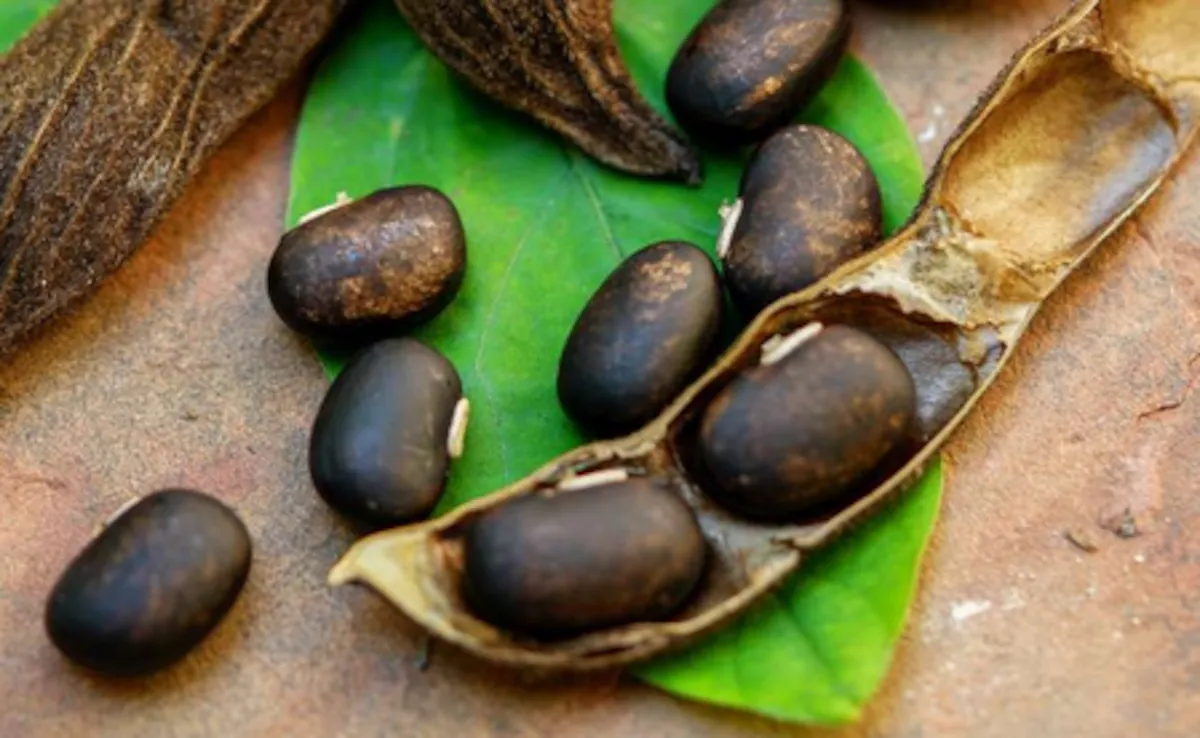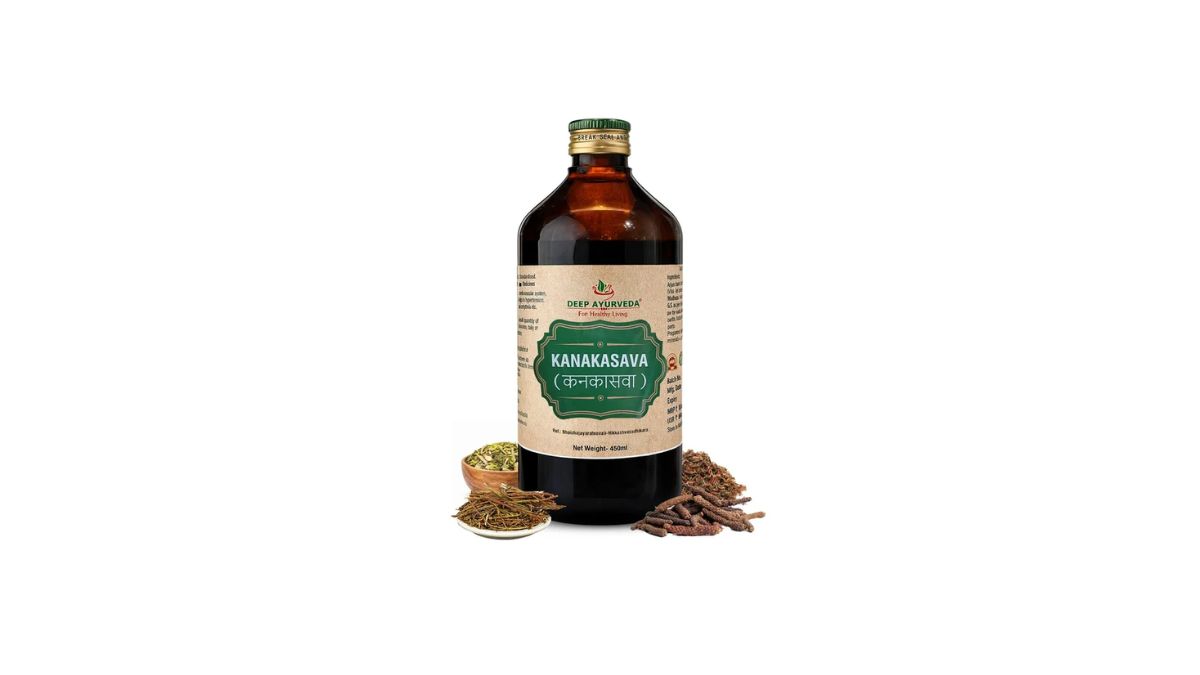

Deep Ayurveda Kanakasava
✅ Supports Respiratory Health ✅ Helps Manage Cough ✅ Promotes Bronchial Comfort ✅ Supports People with Asthma Symptoms ✅ Supports Healthy Lung Function
2% Off₹225 ₹230
Kanakasava is a classical fermented Ayurvedic polyherbal formulation traditionally used in the management of Kasa, Swasa and Hikka. It is prepared through Sandhana Kalpana and contains several herbs traditionally associated with respiratory health. Because the formulation includes Datura and naturally generated alcohol from fermentation, it should be used according to appropriate Ayurvedic guidance rather than as a self-prescribed cough syrup.
What Is Kanakasava?
Kanakasava, also known as Kanakasavam, is a classical Ayurvedic fermented formulation belonging to the category of Asava preparations.
Unlike an ordinary herbal decoction, Kanakasava undergoes a controlled fermentation process. Ayurvedic literature describes Sandhana Kalpana as a pharmaceutical process in which medicinal ingredients undergo fermentation in a mildly self-generated alcoholic medium. This process is traditionally valued for palatability, preservation and extraction of constituents from the herbs.
Kanakasava is particularly associated with the Ayurvedic management of respiratory complaints. Classical references describe its use in Kasa, Swasa, Rajayakshma, Kshataksheena, Jirna Jwara, Raktapitta and Urakshata. These classical disease terms should not simply be treated as exact equivalents of modern medical diagnoses; their interpretation depends on Ayurvedic clinical assessment.
Kanakasava vs Kanakasavam: Are They Different?
In practice, both Kanakasava and Kanakasavam are names used for the same classical Ayurvedic formulation. The spelling can vary according to regional usage and product naming, particularly across different parts of India.
So, if you search for Kanakasavam benefits or Kanakasava uses, you will generally encounter information relating to the same formulation.
Kanakasava in Classical Ayurveda
Kanakasava is discussed in the context of Hikkaswasa Rogadhikara in Bhaishajya Ratnavali. The formulation is classified under Sandhana Kalpana, which is the Ayurvedic approach involving fermentation-based preparations.
From an Ayurvedic perspective, this is important because the formulation is not merely a collection of herbs. The method of preparation itself is part of the pharmaceutical design.
Traditional indications reported for Kanakasava include:
- Kasa – cough
- Swasa – disorders involving breathing
- Hikka – hiccups
- Rajayakshma
- Kshataksheena
- Jirna Jwara
- Raktapitta
- Urakshata
When discussing these indications today, it is better to preserve the Ayurvedic terminology rather than automatically equating each term with a modern diagnosis.
For example, Swasa may involve different patterns of breathing difficulty in Ayurvedic clinical assessment. It should therefore not be assumed that every person with a modern respiratory diagnosis will require the same Ayurvedic formulation.
Kanakasava Ingredients
The classical formulation contains a combination of herbs selected for different Ayurvedic properties and roles.
| Ingredient | Botanical name | Traditional role in the formulation |
|---|---|---|
| Kanaka / Datura | Datura metel | Important classical ingredient requiring careful dosing |
| Vasa | Justicia adhatoda | Traditionally associated with respiratory health |
| Yashtimadhu | Glycyrrhiza glabra | Traditionally soothing and supportive |
| Pippali | Piper longum | Traditionally used in Kapha-oriented and digestive formulations |
| Kantakari | Solanum virginianum | Traditionally associated with respiratory formulations |
| Nagakesara | Mesua ferrea | Included as a supporting herbal ingredient |
| Shunthi | Zingiber officinale | Traditionally used for digestion and Kapha-related conditions |
| Bharangi | Rotheca serrata | Traditionally used in respiratory formulations |
| Talisapatra | Abies spectabilis | Classical aromatic ingredient |
| Dhataki Pushpa | Woodfordia fruticosa | Sandhana Dravya used in fermentation |
| Draksha | Vitis vinifera | Used as the decoction ingredient |
| Madhu | Honey | Part of the classical preparation |
| Sarkara | Sugar | Supports the fermentation process |
The classical review literature identifies Datura, Vasa, Yashtimadhu, Pippali, Kantakari, Nagakesara, Shunthi, Bharangi and Talisapatra as ingredients, with Dhataki Pushpa serving as the Sandhana Dravya and Draksha as the Kwatha Dravya.
Why Are So Many Herbs Used in Kanakasava?
One common mistake in understanding Ayurvedic formulations is to look at every herb separately.
Ayurvedic formulations are generally designed as combinations, where different ingredients contribute different properties.
For example, the combination of Vasa, Pippali, Kantakari and Bharangi gives the formulation a strong traditional respiratory orientation, while Yashtimadhu and Draksha add a different supportive dimension.
Similarly, Dhataki is not simply another benefit-giving herb. It has a specific pharmaceutical role in the fermentation process.
This formulation-level perspective is more useful than simply saying that each individual herb treats cough.
How Is Kanakasava Prepared?
This is one of the most interesting aspects of Kanakasava and one that is often oversimplified in consumer articles.
Kanakasava is prepared using the Ayurvedic process of Sandhana Kalpana.
The classical preparation described in the Ayurvedic literature broadly involves:
Step 1: Preparation of Draksha Kwatha
Draksha is used as the decoction ingredient. The decoction is prepared and reduced according to the classical procedure.
Step 2: Addition of Sugar and Honey
After the decoction is prepared and sufficiently cooled, the specified quantity of sugar and honey is incorporated.
Step 3: Addition of the Herbal Powders
The coarse powders of the specified medicinal herbs are added along with Dhataki Pushpa.
Step 4: Fermentation
The mixture is transferred into an appropriate fermentation vessel. Fermentation is monitored, with the initial signs described within several days.
Step 5: Maturation
After fermentation begins, the vessel is sealed appropriately and left undisturbed for further maturation.
The cited classical review describes an initial fermentation observation period of around 3–5 days, followed by approximately 25–30 days of undisturbed maturation, after which the preparation is processed further.
Step 6: Filtration and Final Preparation
After completion of fermentation, the preparation is filtered and the finished liquid is obtained.
The final product is described in the literature as a dark reddish liquid with a characteristic sweet, sharp taste and the aroma associated with naturally generated alcohol.
What Is Sandhana Kalpana?
Sandhana Kalpana refers to the Ayurvedic pharmaceutical process used for preparing fermented formulations.
This is important because fermentation changes the character of the original herbal mixture.
In simple terms, the process creates a mild self-generated alcoholic medium that can help extract and preserve constituents from the medicinal ingredients. Ayurvedic literature has traditionally valued these formulations for their palatability, preservation and pharmaceutical characteristics.
Therefore, Kanakasava should not be thought of simply as a herbal syrup.
It is a fermented Ayurvedic formulation whose preparation process is an important part of its identity.
Does Kanakasava Contain Alcohol?
Yes. Because Kanakasava is produced through fermentation, it contains naturally generated alcohol as a result of the Sandhana process.
This is different from treating it as an ordinary alcoholic beverage or assuming that alcohol is simply added to the finished formulation.
The classical preparation literature specifically describes the characteristic presence of self-generated alcohol after fermentation.
This point is particularly relevant for people who:
- need to avoid alcohol-containing preparations,
- are taking multiple medicines,
- are pregnant or breastfeeding,
- have specific medical conditions,
- or are considering Kanakasava for a child.
Such individuals should discuss its suitability with a qualified Ayurvedic physician.
Kanakasava Benefits and Traditional Uses
The traditional Ayurvedic use of Kanakasava is primarily associated with Kasa, Swasa and Hikka, along with other classical indications.
However, I would not recommend looking at Kanakasava as a formulation with one universal benefit.
Its traditional application depends on the nature of the complaint, dosha involvement, strength of digestion, age, constitution and overall clinical picture.
1. Kanakasava for Cough
Kasa is one of the principal classical indications associated with Kanakasava.
From an Ayurvedic perspective, cough is not always considered identical in every person. The nature of the cough, presence of mucus, dryness, associated symptoms and doshic involvement can all influence formulation selection.
This is why saying simply Kanakasava is for cough is incomplete.
An Ayurvedic practitioner may consider whether the presentation is predominantly associated with Kapha, Vata or a combination of factors before deciding whether Kanakasava is appropriate.
2. Kanakasava for Respiratory Health
Kanakasava has a strong traditional association with Pranavaha Srotas, the Ayurvedic framework concerning the respiratory system.
Ingredients such as Vasa, Pippali, Kantakari and Bharangi are traditionally found in formulations aimed at respiratory complaints.
Modern consumer sources commonly describe Kanakasava in relation to cough, mucus, chest congestion and breathing difficulty, but these claims should be understood in the context of traditional use rather than interpreted as proof that Kanakasava treats every respiratory disease.
3. Kanakasava and Kapha-Related Complaints
In Ayurvedic thinking, excessive or aggravated Kapha can contribute to heaviness, mucus and obstruction-like symptoms.
Several ingredients in Kanakasava possess traditionally described properties that make the formulation relevant to Kapha-oriented respiratory presentations.
However, this does not mean that every person with mucus or cough should automatically take Kanakasava.
The type of cough and overall doshic picture matter.
4. Kanakasava and Hikka
Hikka, commonly translated as hiccups, is specifically included among the classical contexts associated with Kanakasava through its reference under Hikkaswasa Rogadhikara.
This is an interesting classical indication that is often completely missed in modern Kanakasava articles because most commercial content focuses almost exclusively on asthma and cough.
Kanakasava for Asthma: What Does Ayurveda Say?
Asthma is one of the most frequently associated modern search intents for Kanakasava.
Ayurveda discusses respiratory disorders through concepts such as Swasa, and classical Kanakasava references include Swasa among its therapeutic indications.
Modern research has also investigated Kanakasava in experimental and clinical contexts related to bronchial asthma. A published study examined its anti-asthmatic potential in an animal model, while another reported a prospective multicentre clinical study involving Kanakasava and Trivrit Churna.
However, this evidence should be interpreted carefully.
Research interest does not mean that Kanakasava has been established as a replacement for standard asthma treatment.
If someone has diagnosed asthma, recurrent wheezing, significant breathlessness or an acute asthma attack, prescribed medical treatment should not be stopped or replaced with Kanakasava without appropriate medical supervision.
From an Ayurvedic perspective, the formulation should be selected according to the person’s individual presentation rather than simply because the word asthma appears in a search result.
How Do Kanakasava Ingredients Work Together?
One of the more useful ways to understand this formulation is to look at ingredient synergy rather than assigning one isolated benefit to every herb.
Vasa + Kantakari + Bharangi
These herbs give Kanakasava much of its traditional respiratory orientation.
Pippali + Shunthi
These are traditionally valued for their relationship with Agni and Kapha, and their inclusion gives the formulation a digestive and Kapha-oriented dimension.
Yashtimadhu + Draksha
These ingredients provide a comparatively soothing and supportive aspect to the formulation.
Dhataki + Sugar + Honey
These ingredients are particularly important from the pharmaceutical perspective, because the formulation depends on fermentation.
This is why Kanakasava should be understood as a designed polyherbal formulation, rather than a random mixture of herbs.
Kanakasava Dosage: How Much Should You Take?
The dosage of Kanakasava should not be treated as identical for every person.
A published review citing Ayurvedic sources reports a dose of 12–24 ml according to the Ayurvedic Formulary of India (AFI) and also reports 10–20 ml mixed with an equal quantity of water from Bhaishajya Ratnavali.
Modern product labels can differ, so the specific product label and the prescribing physician’s advice should take priority.
Factors that can influence the appropriate dose include:
- age
- digestive capacity
- strength of the individual
- nature of the complaint
- duration of symptoms
- other medicines being taken
- individual Ayurvedic assessment.
Should Kanakasava Be Taken With Water?
Classical references describe Kanakasava being taken with an equal quantity of water in the cited dosage.
However, the exact method should follow the directions provided by the Ayurvedic physician or the product’s approved label.
When Should Kanakasava Be Taken?
Kanakasava is commonly directed after meals, although the appropriate timing can vary according to the formulation, individual condition and physician’s instructions.
For a person already taking medicines for a chronic respiratory or other medical condition, it is better not to determine timing and dosage independently.
Kanakasava Side Effects and Safety
Kanakasava is a classical formulation, but Ayurvedic does not automatically mean that a product is appropriate for everyone or that it can be self-prescribed indefinitely.
One particularly important safety consideration is Datura, which is part of the classical formulation. Published literature also emphasizes the need for safe handling of certain plant-origin drugs used in Ayurveda, and Datura-containing formulations warrant appropriate professional supervision.
Why Is Datura Important?
Datura is not an ingredient that should be treated casually.
In classical Ayurvedic pharmaceutical practice, the identity, processing, quantity and formulation context of such ingredients are important.
Therefore:
Do not attempt to prepare Kanakasava yourself using raw Datura or alter the prescribed dosage.
The presence of Datura is one of the reasons I would strongly recommend using a properly manufactured formulation and taking it according to qualified professional advice.
Who Should Be Careful With Kanakasava?
Professional guidance is particularly important for:
- children
- pregnant women
- breastfeeding mothers
- elderly individuals with multiple medicines
- people with chronic medical conditions
- people taking several prescription medicines
- individuals who need to avoid alcohol-containing preparations
- people considering prolonged self-use.
If symptoms such as severe breathlessness, chest pain, bluish lips, fainting or rapidly worsening respiratory distress occur, urgent medical evaluation is more important than trying to manage the condition with an Ayurvedic formulation at home.
Can Kanakasava Be Taken Every Day?
There is no responsible one-line answer such as yes, everyone can take it daily.
The appropriate duration depends on why it is being used, the person’s health status, dosage, response and professional assessment.
Some online sources provide fixed durations or recommend prolonged use, but such generalized advice should not replace individualized Ayurvedic assessment.
If you are considering Kanakasava for a recurring or chronic respiratory problem, consult an Ayurvedic physician rather than continuing it indefinitely on your own.
Kanakasava vs Other Ayurvedic Respiratory Formulations
Ayurveda contains many formulations associated with respiratory health, but they are not interchangeable.
For example, Maharasnadi Kwath is a different classical formulation with a different ingredient profile and therapeutic orientation. It should not be considered a substitute for Kanakasava simply because both may appear in searches relating to pain, inflammation or other systemic complaints.
If you are researching how different Ayurvedic formulations are selected according to the clinical presentation, you can also read our detailed guide on Maharasnadi Kwath, where its ingredients, traditional uses and Ayurvedic perspective are explained separately.
The important point is that the best Ayurvedic formulation depends on the condition and individual assessment, not simply on which product has the longest list of benefits.
What Does Modern Research Say About Kanakasava?
Kanakasava has been the subject of scientific investigation, although the available evidence should not be overstated.
A published review has examined its composition, pharmaceutical preparation and proposed medicinal properties.
Research has also investigated its potential in relation to bronchial asthma, including an experimental study and a reported prospective multicentre clinical study.
This gives Kanakasava an interesting research background, but it is important to distinguish between:
Traditional Ayurvedic use and Modern clinical evidence.
A responsible health article should not convert preliminary, experimental or limited clinical evidence into statements such as Kanakasava scientifically cures asthma.
Instead, the available research should be described honestly, while the classical Ayurvedic rationale is explained separately.
How to Choose a Good-Quality Kanakasava
When purchasing Kanakasava in India, don’t select a product only because it has the lowest price or the largest bottle.
Look for:
- a properly licensed Ayurvedic manufacturer
- clear ingredient information
- batch number
- manufacturing and expiry details
- appropriate storage instructions
- clear dosage directions
- intact packaging
- professional guidance when required.
Because Kanakasava is a fermented preparation, correct manufacturing and storage are particularly important.
Final Takeaway
Kanakasava is much more than a traditional herbal syrup. It is a classical fermented Ayurvedic formulation associated particularly with Kasa, Swasa and Hikka and prepared through the distinctive pharmaceutical process of Sandhana Kalpana.
Its combination of Vasa, Pippali, Yashtimadhu, Kantakari, Bharangi and other herbs gives it a strong traditional respiratory orientation, while Dhataki and the fermentation process play important pharmaceutical roles.
At the same time, the presence of Datura and naturally generated alcohol means that Kanakasava should be used thoughtfully rather than treated as an ordinary over-the-counter cough syrup.
The most important Ayurvedic principle is not simply taking a formulation because it is traditionally associated with a disease—it is selecting the right formulation for the right person, in the right dose and for the right clinical context.
Frequently Asked Questions About Kanakasava
What is Kanakasava used for?
Kanakasava is a classical fermented Ayurvedic formulation traditionally indicated for Kasa, Swasa and Hikka, along with several other classical indications.
Is Kanakasava used for cough?
Yes. Kasa, or cough, is one of the principal classical indications associated with Kanakasava. However, the appropriate formulation depends on the nature and cause of the cough.
Can Kanakasava be used for asthma?
Kanakasava has a classical association with Swasa and has also been investigated in asthma-related research. It should not, however, be used as an unsupervised replacement for prescribed asthma treatment.
What are the main ingredients of Kanakasava?
Important ingredients include Datura, Vasa, Yashtimadhu, Pippali, Kantakari, Nagakesara, Shunthi, Bharangi and Talisapatra, along with Dhataki and Draksha used in the preparation.
What is the dosage of Kanakasava?
Classical references cited in Ayurvedic literature report doses in the range of 10–20 ml with equal water or 12–24 ml according to AFI. The appropriate dose should follow the specific product label and Ayurvedic physician’s recommendation.
Does Kanakasava contain alcohol?
Yes. Because it is produced through fermentation, Kanakasava contains naturally generated alcohol as part of the Sandhana process.
Is Kanakasava safe for children?
Children should not be given Kanakasava without advice from a qualified healthcare professional, particularly because of its specific formulation and the presence of Datura.
Can Kanakasava be taken daily?
Daily use should depend on the individual’s condition, dosage and professional advice. It should not be continued indefinitely through self-medication.
What is the difference between Kanakasava and Kanakasavam?
Kanakasava and Kanakasavam are generally names used for the same classical formulation, with spelling and pronunciation varying across regions.
Can I take Kanakasava without consulting an Ayurvedic doctor?
Self-medication is not advisable, especially for prolonged use or when the person has asthma, chronic respiratory disease, takes other medicines, is pregnant, is breastfeeding or is considering use in a child.