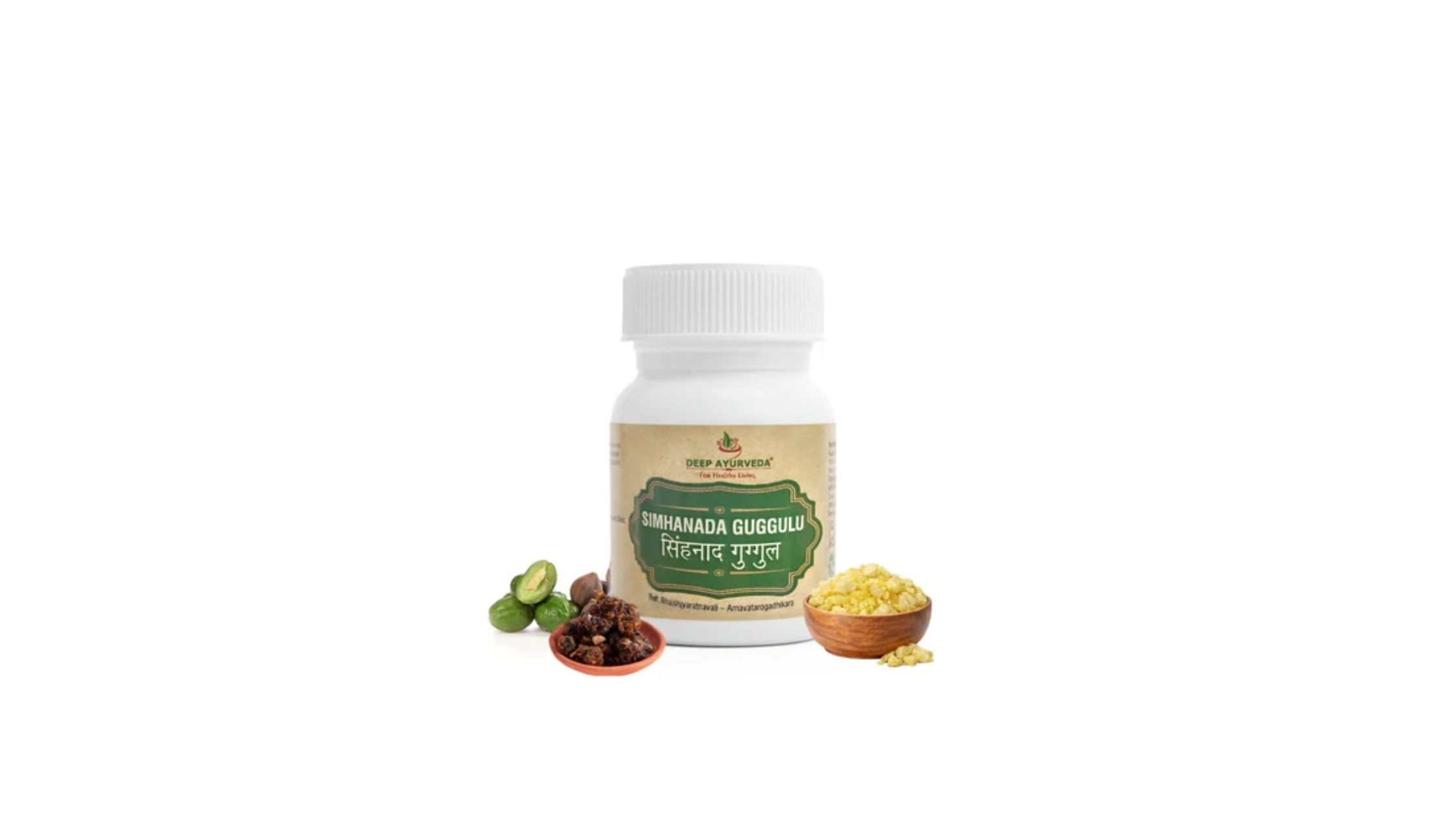
Singhnad Guggul, also known as Simhanada Guggulu or Simhanad Guggulu, is a classical Ayurvedic guggulu formulation traditionally associated with Ama- and Vata-related conditions, particularly the Ayurvedic condition known as Amavata. The formulation is traditionally prepared using ingredients such as Triphala, purified Guggulu, purified Gandhaka (sulphur) and Eranda Taila (castor oil), although the exact composition and proportions should always be checked against the specific classical reference or product label.
In Ayurveda, Singhnad Guggul is not simply viewed as a remedy for joint discomfort. Its traditional rationale involves Agni (digestive/metabolic function), Ama, Vata, bowel elimination and the proper movement of bodily channels (Srotas). Modern clinical research has also investigated Simhanada Guggulu in people with Amavata, including studies using rheumatoid arthritis as a modern clinical reference. However, these studies should not be interpreted as proof that Singhnad Guggul cures rheumatoid arthritis or replaces prescribed medical treatment.
This guide explains what Singhnad Guggul is, its traditional Ayurvedic uses, ingredients, dosage considerations, precautions, available research and how to approach its use responsibly.
What Is Singhnad Guggul?
Singhnad Guggul is a classical Ayurvedic herbo-mineral formulation belonging to the Guggulu preparations. It is also commonly written as Simhanada Guggulu, Simhanad Guggulu or Singhnad Guggulu.
The word Guggulu refers to formulations containing processed Guggulu resin. In classical Ayurvedic practice, Guggulu-based formulations are selected according to the patient’s symptoms, digestive status, dosha involvement and the nature of the condition rather than simply according to the name of a disease.
Singhnad Guggul is particularly discussed in Ayurveda in relation to Ama and Vata, with Amavata being one of its most frequently discussed traditional applications. Classical Ayurvedic reasoning considers impaired digestion and the formation or accumulation of Ama to be important factors in Amavata.
Singhnad Guggul and Simhanada Guggulu: Are They the Same?
In Indian Ayurvedic literature and commercial usage, Singhnad Guggul, Singhnad Guggulu and Simhanada Guggulu are commonly used names for the same or closely corresponding classical formulation.
However, spelling alone should not be used to identify a product. When purchasing a commercial preparation, always check its ingredient list, manufacturer information, dosage strength and label instructions because formulations can vary between references and manufacturers.
Singhnad Guggul Ingredients
Classical references and clinical research commonly describe Simhanada Guggulu as containing:
- Haritaki
- Bibhitaki
- Amalaki
- Shuddha Guggulu
- Shuddha Gandhaka
- Eranda Taila
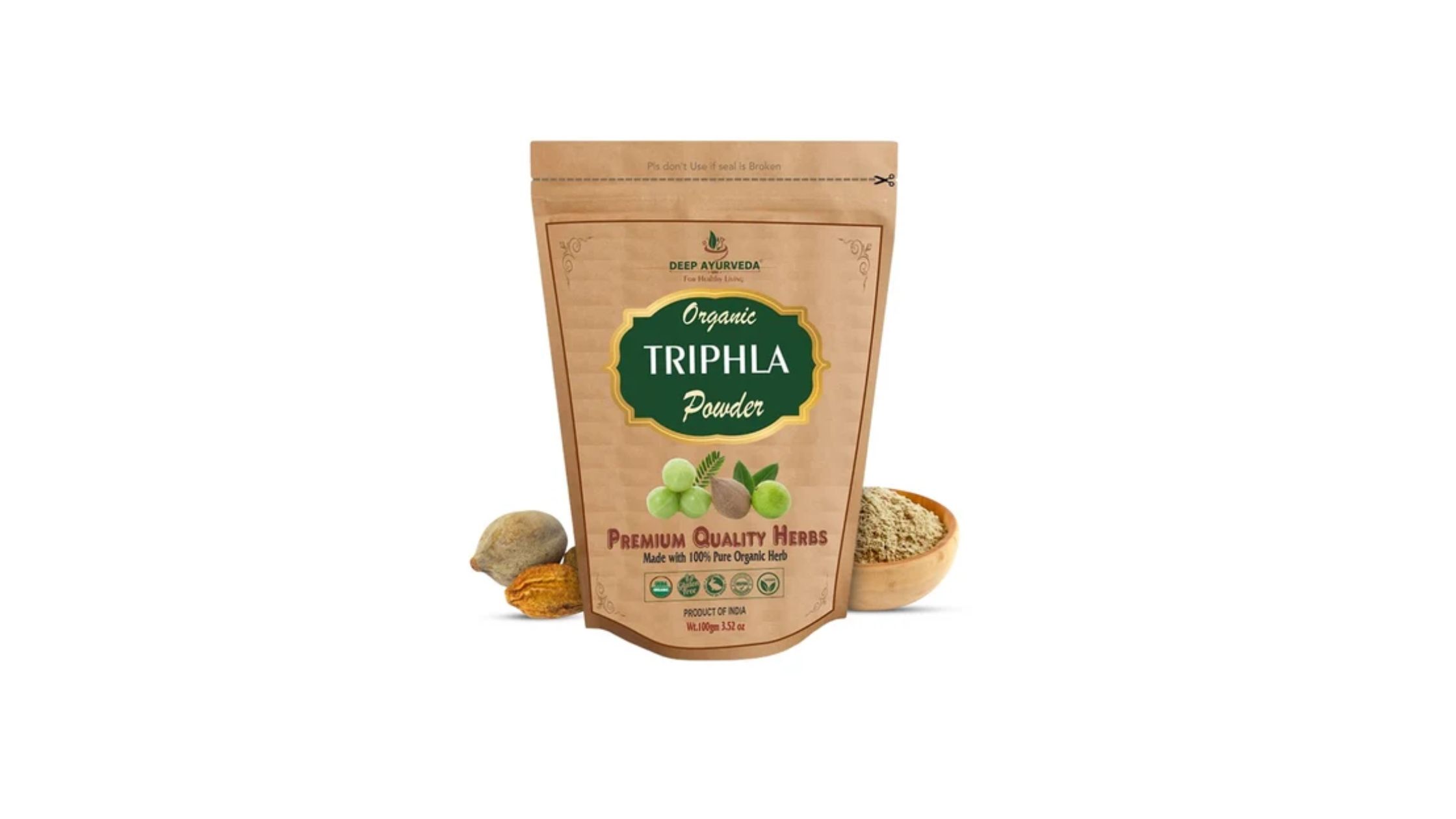
Haritaki, Bibhitaki and Amalaki together constitute Triphala.
One clinical study prepared Simhanada Guggulu using Triphala, Guggulu, Gandhaka and Eranda Taila and administered the formulation during an Amavata study.
Some commercial sources also describe a formulation based on Triphala, Guggulu, castor oil and purified sulphur.
Why Can Ingredient Details Differ Online?
This is an important point that is often missed in online articles.
A classical formulation may be described according to a particular Ayurvedic text, pharmacopoeial reference or preparation method, while a commercial product may follow its own manufacturing specification.
Therefore, readers should not assume that every product sold under the name Singhnad Guggul has exactly the same quantity or composition.
For a specific product, the manufacturer’s current label should be treated as the reference for its ingredients, strength and dosage.
How Does Singhnad Guggul Work According to Ayurveda?
To understand the traditional use of Singhnad Guggul, it is more useful to understand the Ayurvedic concepts of Agni, Ama and Vata than to simply list its benefits.
1. Understanding Agni
In Ayurveda, Agni represents the body’s digestive and transformative functions.
When Agni is functioning properly, food is appropriately digested and transformed. Ayurveda describes impaired Agni as an important factor in the development of Ama.
This is why digestive status is often considered when selecting formulations traditionally used for Ama-related conditions.
2. What Is Ama?
Ama is an Ayurvedic concept traditionally associated with incompletely processed or poorly digested material resulting from impaired Agni.
In the Ayurvedic explanation of Amavata, Ama is described as combining with aggravated Vata and becoming associated with the joints, contributing to symptoms such as stiffness, pain and swelling.
This is an Ayurvedic disease model and should not be presented as a direct biomedical equivalent of toxins circulating in the blood.
3. Role of Vata
Vata is the dosha associated with movement and various physiological functions in Ayurveda.
Because joints and movement are closely related to Vata in Ayurvedic thought, Vata is an important consideration in many musculoskeletal conditions.
The traditional rationale for Singhnad Guggul therefore involves addressing the combination of Ama and Vata, rather than treating joint pain as an isolated symptom.
4. Why Digestive Function Matters
One distinctive feature of Singhnad Guggul is that its traditional application is not limited to the joints.
The formulation is also associated with Deepana-Pachana and bowel-elimination concepts in Ayurvedic literature and clinical discussions. This helps explain why its traditional use is often discussed alongside digestive symptoms and Ama.
Singhnad Guggul Benefits
The following benefits describe traditional Ayurvedic uses and supportive applications, not guaranteed disease-treatment outcomes.
1. Traditionally Used for Ama-Vata Related Joint Complaints
Singhnad Guggul is traditionally used in Ayurveda for conditions in which Ama and Vata are considered to be involved, particularly Amavata.
The classical Ayurvedic explanation connects Amavata with symptoms such as joint pain, stiffness and swelling.
Rather than interpreting this as Singhnad Guggul cures arthritis, it is more accurate to say that Simhanada Guggulu has been traditionally used in the Ayurvedic management of Amavata.
2. May Support Joint Comfort and Mobility
Guggulu-based Ayurvedic formulations are traditionally used in several musculoskeletal contexts.
Singhnad Guggul is particularly associated with joint discomfort, stiffness and impaired mobility in Amavata-oriented Ayurvedic practice.
Clinical studies have investigated its effect on symptoms including joint pain, stiffness and functional parameters, but the available evidence is not sufficient to establish it as a replacement for standard medical treatment.
3. Traditionally Supports Digestive Function
Ayurvedic descriptions of Simhanada Guggulu emphasize Deepana and Pachana actions.
In simple terms, these concepts relate to supporting digestive function and the processing of Ama according to Ayurvedic theory.
This digestive aspect is one reason Singhnad Guggul differs conceptually from formulations selected only for symptomatic joint support.
4. Supports Healthy Bowel Elimination
The presence of Eranda Taila and the traditional purgative/anulomana aspect of the formulation are important when understanding Singhnad Guggul.
Some people may experience increased bowel movement or loose stools, particularly with excessive intake. Commercial Ayurvedic references also mention this possibility.
Therefore, its bowel-related action should not automatically be interpreted as a detox effect.
5. Traditionally Used When Ama and Vata Are Both Considered
One of the more distinctive Ayurvedic applications of Singhnad Guggul is its traditional association with the Ama-Vata relationship.
This means that an Ayurvedic practitioner would not necessarily select it simply because someone says, I have joint pain.
Instead, factors such as:
- digestion
- appetite
- bowel habits
- stiffness
- swelling
- pain
- heaviness
- dosha involvement
- strength and age
may be considered before selecting a formulation.
Singhnad Guggul for Amavata
Amavata is an important Ayurvedic context for understanding Singhnad Guggul.
Ayurvedic literature describes Amavata as involving Ama and Vata, with symptoms developing when Ama becomes associated with the joints. Clinical features described in research include joint pain, swelling and stiffness.
Some modern Ayurvedic research papers use rheumatoid arthritis (RA) as a clinical correlate for Amavata because certain symptoms overlap.
However, Amavata and rheumatoid arthritis should not automatically be treated as exact synonyms.
Rheumatoid arthritis is a medically diagnosed autoimmune disease that requires appropriate clinical assessment and, where indicated, evidence-based medical treatment.
What Does This Mean for Singhnad Guggul?
Research has investigated Simhanada Guggulu as an Ayurvedic intervention in Amavata.
For example, a 2012 clinical study included 24 patients and compared Simhanada Guggulu with another Ayurvedic formulation over eight weeks. The study reported improvements in several clinical parameters.
Another study involving 101 patients compared Simhanada Guggulu with Rasona Rasnadi Ghanavati, with both groups also receiving local therapy.
A more recent 2026 study also investigated Simhanada Guggulu in Amavata and reported statistically significant improvements in both study groups, with Simhanada Guggulu showing comparatively better results in that particular study.
These findings are useful but should be interpreted carefully because individual studies have limitations relating to sample size, study design, duration and comparison treatments.
Singhnad Guggul Dosage
There is no single universal dosage that is appropriate for every person.
The correct dose depends on:
- formulation strength
- patient’s age
- digestive capacity
- bowel pattern
- constitution and current imbalance
- severity and nature of symptoms
- other medicines being taken
- practitioner’s assessment
Some commercial Ayurvedic references list 1–2 tablets twice daily, generally after meals with lukewarm water, while other clinical studies have used different doses and treatment protocols.
Therefore, a commercial article should not present one dosage as a universal medical prescription.
What Is the Best Way to Take Singhnad Guggul?
Follow the dosage printed on the specific product label or the dosage recommended by a qualified Ayurvedic practitioner.
If your product has a different strength or formulation from the classical preparation used in a clinical study, the study dose should not simply be copied.
Should Singhnad Guggul Be Taken Before or After Food?
Commercial Ayurvedic guidance commonly recommends taking it after meals with lukewarm water, but the appropriate timing can vary according to the product and practitioner’s advice.
How Long Can You Take Singhnad Guggul?
The duration should not be decided only from the product name.
A practitioner may consider:
- the purpose of use
- symptom severity
- digestive response
- bowel response
- age
- strength
- concurrent medicines
- response during follow-up
Clinical research has used treatment periods ranging from several weeks to three months, but research protocols should not automatically be treated as general self-treatment schedules.
Singhnad Guggul Side Effects
Like any active Ayurvedic formulation, Singhnad Guggul may not be suitable for everyone.
One of the more commonly discussed concerns is loose stool or diarrhea, particularly when the formulation’s bowel-moving action is excessive or the dose is inappropriate.
Possible intolerance may include:
- loose stools
- abdominal discomfort
- digestive disturbance
- individual hypersensitivity
If significant or persistent symptoms develop, stop self-treatment and seek appropriate medical advice.
Why Can Loose Motions Occur?
This is particularly relevant to the formulation’s traditional action.
Eranda Taila (castor oil) has a well-known bowel-moving action. Therefore, Singhnad Guggul should not be taken in excessive amounts simply because it is an Ayurvedic formulation.
More is not necessarily better.
Singhnad Guggul Precautions
Singhnad Guggul should be used cautiously in people with existing health conditions or those taking regular medication.
Pregnancy and Breastfeeding
Pregnant or breastfeeding women should not self-prescribe Singhnad Guggul. Safety information may be insufficient, and individual assessment is important.
Children
Do not give an adult formulation to children unless specifically advised by a qualified healthcare professional.
People Taking Regular Medicines
People taking prescription medicines should consult their doctor or qualified Ayurvedic practitioner before using Singhnad Guggul.
This is particularly important for people taking long-term medicines for chronic conditions.
People With Digestive Problems
Anyone who already experiences frequent loose stools, diarrhea or significant digestive sensitivity should seek professional advice before using a formulation with bowel-moving properties.
People With Chronic Joint Disease
If joint pain has already been diagnosed as rheumatoid arthritis, gout, osteoarthritis or another condition, Singhnad Guggul should not automatically be used as a replacement for prescribed treatment.
Can Singhnad Guggul Be Taken With Other Medicines?
There is no responsible one-size-fits-all answer to this question.
The safety of combining an Ayurvedic formulation with a prescription medicine depends on:
- the medicines involved
- dosage
- duration
- the person’s health condition
- kidney and liver function
- age
- other supplements or formulations being taken
Therefore, if you take regular medication, disclose all Ayurvedic products and supplements to your healthcare provider before starting Singhnad Guggul.
Who Should Not Self-Prescribe Singhnad Guggul?
Professional guidance is especially important for:
- pregnant women
- breastfeeding women
- children
- older adults with multiple medicines
- people with chronic illnesses
- people taking long-term prescription medicines
- people with persistent diarrhea
- people with unexplained joint swelling
- people with severe or rapidly worsening joint symptoms
Singhnad Guggul vs Other Guggul Formulations
A common mistake is assuming that all Guggulu formulations work in the same way.
They do not.
Different Ayurvedic Guggulu formulations have different ingredients, processing methods, therapeutic indications and traditional applications.
For example:
| Formulation | Traditional Ayurvedic context |
|---|---|
| Singhnad Guggul | Ama-Vata/Amavata-oriented traditional use |
| Triphala Guggulu | Different classical therapeutic applications |
| Yogaraj Guggulu | Traditionally used in different Vata-related contexts |
| Kaishore Guggulu | Different classical indication profile |
Therefore, one formulation should not automatically be substituted for another merely because both contain Guggulu.
The selection of a formulation is traditionally based on the patient, condition, dosha, digestive state and stage of disease.
Singhnad Guggul and Diet: What Should You Keep in Mind?
If Singhnad Guggul is being used in an Ama-oriented Ayurvedic approach, diet and lifestyle should not be ignored.
Ayurveda traditionally places considerable importance on digestion and daily routine.
Helpful Principles
Depending on individual constitution and condition, an Ayurvedic practitioner may recommend:
- freshly prepared, easily digestible meals
- appropriate meal timing
- avoiding overeating
- adequate hydration
- gentle physical activity according to tolerance
- sufficient sleep
- avoiding excessive daytime sleeping when inappropriate
- maintaining regular bowel habits
Why Does Lifestyle Matter?
Ayurvedic management does not usually depend on a tablet alone.
The classical approach to Ama-related conditions considers Ahara (diet), Vihara (lifestyle), Agni and Dosha along with the medicine.
Therefore, simply taking Singhnad Guggul while continuing habits that aggravate digestive problems may not align with the broader Ayurvedic approach.
When Should Joint Pain Be Medically Evaluated?
Not every type of joint pain has the same cause.
Joint symptoms can occur due to injury, osteoarthritis, gout, autoimmune conditions, infection and several other causes.
Seek medical evaluation if you experience:
- sudden severe joint pain
- a very swollen or hot joint
- fever with joint symptoms
- unexplained weight loss
- persistent morning stiffness
- multiple swollen joints
- severe pain following an injury
- symptoms that continue or worsen despite self-care
This is especially important when rheumatoid arthritis or another inflammatory joint disease is suspected.
Ayurvedic supportive care should not delay diagnosis of a potentially serious condition.
What Does Modern Research Say About Singhnad Guggul?
Research on Simhanada Guggulu has primarily focused on Amavata and rheumatoid-arthritis-related clinical presentations.
A 2012 clinical study evaluated Simhanada Guggulu in 24 patients with Amavata and reported improvement in several symptoms and functional parameters after treatment.
A separate study involving 101 patients compared Simhanada Guggulu with another Ayurvedic intervention and reported significant improvement in both groups.
A 2026 clinical study published in the Journal of Ayurveda and Integrated Medical Sciences also evaluated Simhanada Guggulu in Amavata and reported significant improvement in the study groups.
What Do These Studies Actually Tell Us?
They indicate that Simhanada Guggulu has been clinically investigated in Ayurvedic research, particularly in the context of Amavata.
They do not establish that:
- it cures rheumatoid arthritis
- it works for every type of joint pain
- it can replace DMARDs or other prescribed medicines
- everyone should take it at the same dosage
- it is appropriate for long-term self-medication
More high-quality, adequately powered and independently replicated clinical research would be useful to establish the effectiveness and safety of the formulation more firmly.
A Simple Ayurvedic Way to Understand Singhnad Guggul
Instead of remembering Singhnad Guggul as simply a joint pain medicine, consider this Ayurvedic framework:
Agni → Ama → Vata → Srotas → Sandhi
In simple terms:
Digestive imbalance → Ama formation → Vata involvement → obstruction/altered movement → joint symptoms
This is an Ayurvedic explanatory model, not a modern biomedical pathway.
The traditional rationale of Singhnad Guggul is interesting because the formulation is discussed not only in relation to joints but also in relation to digestion and elimination.
This broader context is important when understanding why an Ayurvedic practitioner may select it for one person but choose another formulation for someone with apparently similar joint symptoms.
Frequently Asked Questions About Singhnad Guggul
What is Singhnad Guggul used for?
Singhnad Guggul is traditionally used in Ayurveda for Ama- and Vata-related conditions, particularly Amavata. It is also traditionally associated with supporting digestion, bowel elimination and joint comfort.
Is Singhnad Guggul the same as Simhanada Guggulu?
Singhnad Guggul, Singhnad Guggulu and Simhanada Guggulu are commonly used names for the same classical formulation. However, always verify the ingredient list of the specific commercial product.
What are the ingredients of Singhnad Guggul?
Classical descriptions commonly include Triphala (Haritaki, Bibhitaki and Amalaki), purified Guggulu, purified Gandhaka and Eranda Taila. The exact composition may vary according to the reference and manufacturer.
What is the dosage of Singhnad Guggul?
Dosage varies by formulation, product strength and individual requirements. Some commercial sources mention 1–2 tablets twice daily after meals, but dosage should be followed according to the specific product label or qualified practitioner’s advice.
Can Singhnad Guggul cause loose motions?
Yes. Loose stools or diarrhea may occur, particularly if the dose is excessive or the individual is sensitive to its bowel-moving action.
Can I take Singhnad Guggul every day?
Daily use should depend on the formulation, dosage and reason for use. Long-term self-medication is not recommended without professional guidance.
Is Singhnad Guggul useful for rheumatoid arthritis?
Simhanada Guggulu has been studied in Ayurvedic research involving Amavata and rheumatoid-arthritis-related clinical presentations. However, this does not mean that it is a proven cure for rheumatoid arthritis or a substitute for prescribed treatment.
Can pregnant women take Singhnad Guggul?
Pregnant women should not self-prescribe Singhnad Guggul. Consult a qualified healthcare professional before using it.
Can Singhnad Guggul be taken with modern medicines?
This depends on the specific medicines and the individual’s health status. Anyone taking regular prescription medication should consult their healthcare provider before combining treatments.
Final Word
Singhnad Guggul is best understood not as a generic joint pain tablet, but as a classical Ayurvedic formulation whose traditional application is closely connected with Ama, Vata, digestion and Amavata.
Its traditional use and emerging clinical research make it an interesting subject within Ayurvedic medicine, but responsible use requires attention to the individual’s condition, formulation, dosage, other medicines and overall health.
If you are considering Singhnad Guggul for a diagnosed medical condition, particularly rheumatoid arthritis or another chronic inflammatory disorder, discuss its use with a qualified Ayurvedic practitioner and your treating physician rather than replacing prescribed treatment on your own.
References & Further Reading
- Pandey SA, Joshi NP, Pandya DM. Clinical efficacy of Shiva Guggulu and Simhanada Guggulu in Amavata (Rheumatoid Arthritis). AYU. 2012.
- A comparative study of Rasona Rasnadi Ghanavati and Simhanada Guggulu on Amavata with special reference to Rheumatoid Arthritis.
- Singh V, Thakur S, Dharmani G. A Comparative Clinical Study to Evaluate the Efficacy of Mahaushadhi Kwatha and Simhanada Guggulu in the Management of Amavata w.s.r. to Rheumatoid Arthritis. Journal of Ayurveda and Integrated Medical Sciences. 2026.
- Current Indian Ayurvedic product/reference information for Singhnad Guggul.