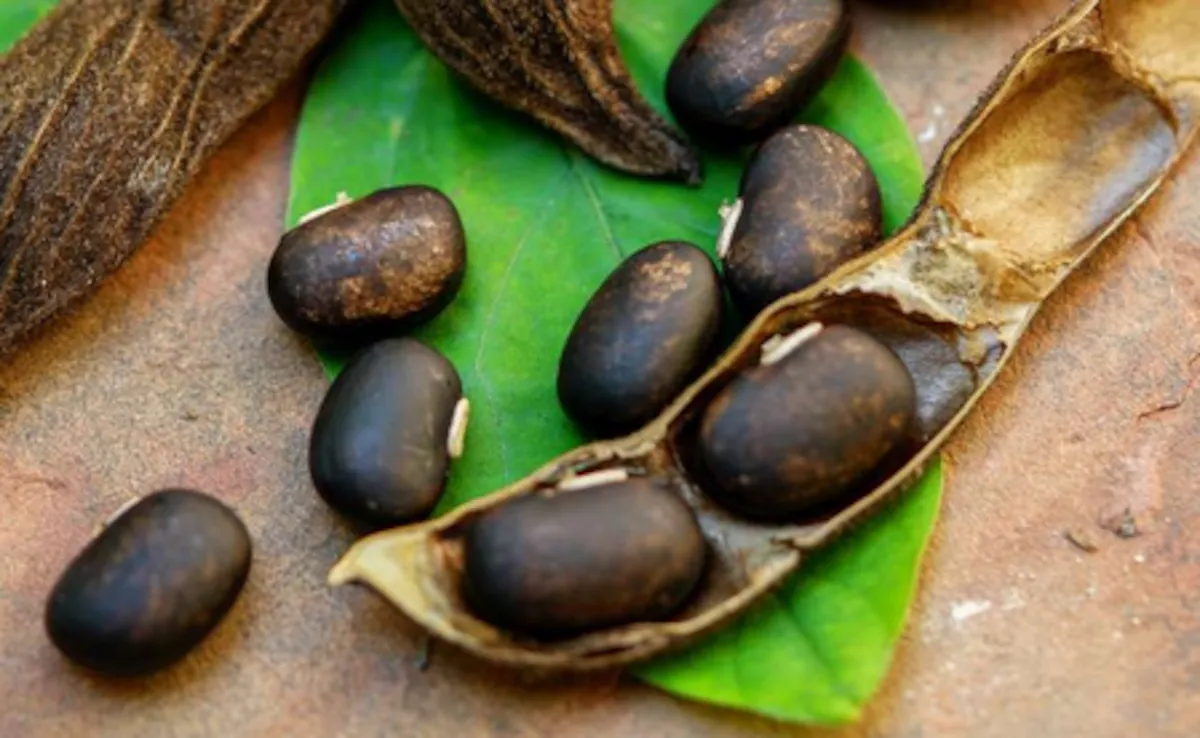
Kaunch Beej Powder is a well-known Ayurvedic ingredient traditionally used to support strength, vitality, reproductive wellness and nervous-system health. It is prepared from the seeds of Mucuna pruriens, commonly known as Kaunch or Velvet Bean.
What makes Kaunch Beej particularly interesting is that its seeds naturally contain L-DOPA (levodopa), a compound involved in dopamine production. Because of this, Kaunch Beej is not simply another general wellness herb; its use deserves appropriate attention to dosage, preparation, individual suitability and possible medicine interactions.
In Ayurveda, Kaunch Beej has traditionally been valued for its nourishing and rejuvenating properties, particularly in formulations associated with strength and reproductive health. Modern research has also investigated Mucuna pruriens for areas including male reproductive health, neurological function and antioxidant activity, although the strength of evidence differs depending on the specific benefit.
In this guide, we will look at Kaunch Beej Powder from both an Ayurvedic and evidence-aware perspective, including its traditional benefits, uses, ways to consume it, dosage considerations, possible side effects and precautions.
What Is Kaunch Beej Powder?
Kaunch Beej Powder is made from the seeds of Mucuna pruriens, a leguminous plant traditionally used in Ayurveda.
The plant is also known by names such as:
- Kaunch
- Kapikacchu
- Mucuna pruriens
- Velvet Bean
- Cowhage
The seed is the part commonly used in Ayurvedic preparations. After appropriate processing, the seed may be used in powdered form or incorporated into various formulations.
One of the most notable naturally occurring compounds in Kaunch Beej is L-DOPA, which is a precursor to dopamine. This is an important reason why Mucuna pruriens has attracted scientific interest, particularly in relation to neurological function.
However, it is important not to assume that the effects of an isolated compound and the effects of a whole herbal preparation are always identical. The quality, processing, preparation and dose of Kaunch Beej can all influence how it should be used.
Kaunch Beej in Ayurveda
From an Ayurvedic perspective, Kaunch Beej is traditionally regarded as a nourishing and strengthening ingredient and is particularly associated with Vrishya and Rasayana applications.
Rather than viewing it simply as a sexual health herb, Ayurveda considers herbs according to the individual’s constitution, digestive capacity, age, strength, health status and the intended purpose of use.
This is an important distinction.
An Ayurvedic herb that is traditionally considered nourishing or strengthening may not be equally suitable for every person or in every situation. The way an herb is prepared and combined with other ingredients can also influence its traditional application.
For this reason, Kaunch Beej should be understood as part of an individualized Ayurvedic approach rather than as a one-size-fits-all supplement.
Kaunch Beej Powder Benefits
Kaunch Beej Powder has several traditional uses, while modern research has explored some of its biological effects. However, these should not all be interpreted as proven treatments for medical conditions.
1. May Support Strength and Vitality
Kaunch Beej has traditionally been included in Ayurvedic approaches aimed at supporting physical strength, nourishment and vitality.
It is often used in formulations intended for people experiencing weakness or reduced physical stamina, depending on individual assessment.
From an Ayurvedic perspective, its nourishing nature is one reason it has traditionally been combined with other strengthening ingredients.
However, persistent or unexplained weakness should not automatically be attributed to a nutritional deficiency or treated with an herbal powder alone. Conditions such as anemia, thyroid disorders, sleep problems and other health issues can also cause fatigue and require appropriate evaluation.
2. Traditionally Used to Support Reproductive Wellness
One of the best-known traditional applications of Kaunch Beej is in the area of reproductive health.
Ayurvedic practitioners have traditionally used Kapikacchu in formulations associated with Vrishya support, a broad concept relating to reproductive vitality and sexual wellness.
Modern research has also investigated Mucuna pruriens in relation to male reproductive parameters. However, research findings should not be interpreted as proof that Kaunch Beej Powder can treat infertility or guarantee improved sexual performance.
A more accurate way to describe its role is that it may support aspects of reproductive wellness when appropriately selected and used.
3. May Support Male Reproductive Health
Research on Mucuna pruriens has explored its potential relationship with male reproductive health, including sperm-related parameters and hormonal or stress-related factors.
This has contributed to the growing interest in Kaunch Beej among men.
However, fertility is influenced by many factors, including:
- age
- nutrition
- sleep
- stress
- body weight
- hormonal health
- infections
- lifestyle
- medication use
- underlying reproductive conditions
Therefore, Kaunch Beej Powder should not be presented as a substitute for a fertility evaluation or medical treatment.
4. Supports Nervous-System Health
Kaunch Beej is particularly interesting from a neurological perspective because its seeds naturally contain L-DOPA.
L-DOPA can be converted into dopamine in the body. Dopamine is an important neurotransmitter involved in several functions, including movement, motivation and reward pathways.
This biological activity is one reason Mucuna pruriens has been studied in neurological research.
At the same time, this is also a reason for caution. Because L-DOPA has meaningful pharmacological activity, people taking neurological or dopamine-related medicines should not start Kaunch Beej Powder without professional advice.
5. May Help Support Overall Physical Wellness
Traditionally, Kaunch Beej is used in strengthening and rejuvenating contexts rather than as a simple source of calories or nutrients.
Its traditional use may be relevant when the goal is to support general vitality alongside an appropriate diet, adequate sleep and healthy daily habits.
It should not, however, be promoted as a replacement for a balanced diet or as a guaranteed solution for chronic fatigue.
6. Antioxidant Potential
Laboratory and preclinical research has investigated antioxidant properties associated with Mucuna pruriens.
Antioxidants are compounds that help protect cells from oxidative stress.
However, laboratory antioxidant activity does not automatically mean that consuming Kaunch Beej Powder will prevent or treat a particular disease. This is an area where it is especially important to distinguish biological research from established clinical outcomes.
What Makes Kaunch Beej Different? The Role of L-DOPA
One of the most important things to understand about Kaunch Beej is its naturally occurring L-DOPA.
L-DOPA is a precursor that can be converted into dopamine. This makes Mucuna pruriens different from many herbs that are primarily used for general nutritional or traditional wellness purposes.
This also creates an important safety consideration.
More is not necessarily better.
Increasing the amount of Kaunch Beej Powder does not automatically mean greater benefit. Depending on the preparation, processing and individual circumstances, excessive or inappropriate intake could increase the likelihood of unwanted effects.
This is why dosage should be considered carefully, particularly when someone is already taking medicines that influence dopamine or the central nervous system.
How to Take Kaunch Beej Powder
The appropriate way to take Kaunch Beej Powder can depend on the preparation, individual tolerance and purpose for which it is being used.
Traditionally, powdered Kaunch Beej may be taken with suitable anupana or accompanying substances such as milk, depending on the individual’s Ayurvedic assessment.
Kaunch Beej Powder With Milk
Milk is traditionally used as an accompanying vehicle for several nourishing Ayurvedic preparations.
Kaunch Beej Powder may be combined with milk when it is appropriate for the individual’s digestion and dietary tolerance.
However, milk is not automatically the best option for everyone. People with lactose intolerance, milk allergy or digestive problems may need a different approach.
Kaunch Beej Powder With Water
Taking the powder with water is a simpler option and may be more convenient for some people.
Whether this is appropriate depends on the formulation and individual purpose.
Kaunch Beej Powder With Honey
Honey is traditionally used as an anupana with various Ayurvedic preparations.
It should not, however, be assumed that adding honey makes Kaunch Beej more effective for everyone.
The accompanying substance should be selected according to the intended use and individual suitability rather than simply following a popular internet recipe.
What Is the Dosage of Kaunch Beej Powder?
There is no single Kaunch Beej Powder dosage that is appropriate for every person.
This is one area where online health content can be misleading. Different products and sources recommend substantially different amounts because the actual preparation, processing, concentration and intended use can vary.
Dosage may depend on factors such as:
- age
- digestive capacity
- body strength
- individual constitution
- reason for use
- powder concentration
- processing method
- other ingredients in the formulation
- existing health conditions
- medicines being taken
For this reason, a responsible Ayurvedic recommendation should consider the individual rather than simply copying a teaspoon measurement from another product or website.
Why Do Kaunch Beej Dosage Recommendations Differ?
A powdered seed preparation and a concentrated extract are not necessarily equivalent.
Similarly, two commercially available powders may differ in:
- processing
- standardization
- purity
- concentration of active constituents
- recommended serving size
Therefore, the product label and professional guidance should be considered before deciding on a dose.
Do not increase the dosage simply because you believe a higher quantity will produce faster results.
When Is the Best Time to Take Kaunch Beej Powder?
There is no universally correct time for everyone.
The timing may depend on:
- why you are taking it
- how your digestion responds
- the formulation being used
- whether it is being taken with food or milk
- other medicines or supplements
Instead of focusing only on a best time, it is more useful to focus on appropriate dose, preparation and individual suitability.
Kaunch Beej Powder Side Effects
Kaunch Beej is a biologically active ingredient and should not be assumed to be completely risk-free simply because it is natural.
Some people may experience digestive or other unwanted effects.
Possible adverse effects reported in relation to Mucuna pruriens preparations can include:
- nausea
- digestive discomfort
- headache
- agitation
- confusion
- changes associated with excessive dopaminergic activity
More serious or unusual neurological symptoms should not be ignored.
If symptoms develop after taking Kaunch Beej Powder, discontinue use and seek appropriate professional advice.
Who Should Avoid Kaunch Beej Powder or Use It Only Under Professional Guidance?
Extra caution is appropriate for certain groups.
Professional guidance is particularly important for people who:
- are pregnant or breastfeeding
- are giving it to children
- take medicines affecting dopamine or the central nervous system
- are already taking L-DOPA or related medicines
- have a neurological disorder
- have significant cardiovascular concerns
- take medicines for chronic health conditions
- have a history of significant digestive problems
- are using several medicines or supplements simultaneously
Natural does not automatically mean suitable for everyone.
The presence of L-DOPA is one of the main reasons Kaunch Beej deserves more careful consideration than an ordinary food ingredient.
Kaunch Beej Powder for Men: What Should You Know?
Kaunch Beej is particularly popular among men because of its traditional association with strength, vitality and reproductive wellness.
It is often discussed in connection with:
- sexual wellness
- reproductive health
- sperm health
- physical vitality
- general strength
However, these areas should not be reduced to a single claim such as Kaunch Beej increases testosterone or Kaunch Beej cures infertility.
Male reproductive health is complex, and a person’s symptoms may have multiple causes.
If someone is experiencing persistent erectile difficulties, low libido, abnormal semen analysis or difficulty conceiving, identifying the underlying cause is more important than simply adding an herbal powder.
Kaunch Beej Powder and Fertility: What Does Research Say?
Interest in Kaunch Beej and fertility comes from both its traditional Ayurvedic use and modern research involving Mucuna pruriens.
Some human and experimental research has investigated its potential effects on reproductive parameters, oxidative stress and stress-related factors.
However, research on a particular extract or standardized preparation should not automatically be used to make claims about every Kaunch Beej Powder available on the market.
This distinction is important.
Research on Mucuna pruriens does not mean that every Kaunch Beej product has been clinically proven to improve fertility.
For couples experiencing difficulty conceiving, a proper fertility assessment remains important.
Kaunch Beej Powder for Women
Kaunch Beej should not be considered exclusively a men’s herb. However, its suitability for women depends on the individual and the purpose for which it is being considered.
Pregnancy and breastfeeding require particular caution because adequate safety information is not established for every preparation and dose.
Women taking regular medicines or managing a medical condition should discuss its use with a qualified healthcare professional before starting it.
Kaunch Beej Powder vs Raw Kaunch Beej
Raw seeds and powdered preparations should not automatically be considered interchangeable.
The processing of Kaunch Beej matters because appropriate processing can influence its traditional suitability and the characteristics of the final preparation.
When purchasing a powder, look for:
- clear botanical identification
- transparent ingredient information
- reputable manufacturing
- batch and quality information
- appropriate packaging
- clear directions for use
- realistic health claims
Avoid products that promise guaranteed cures, instant sexual performance or treatment of serious diseases.
How to Choose a Good Kaunch Beej Powder
Quality is an important part of herbal use.
Before purchasing Kaunch Beej Powder, consider:
1. Check the botanical identity
The product should clearly identify the ingredient as Mucuna pruriens or the appropriate Ayurvedic botanical equivalent.
2. Look for transparent labeling
The label should clearly state the ingredients, serving information, manufacturer and other required product details.
3. Avoid exaggerated claims
Be cautious with products claiming that Kaunch Beej can cure infertility, permanently increase testosterone or treat serious neurological diseases.
4. Consider processing and quality
Because Kaunch Beej contains naturally active constituents, the quality and processing of the raw material matter.
5. Follow the manufacturer’s directions
Do not assume that the dosage of one Kaunch Beej product applies to another.
Traditional Ayurveda vs Modern Research: How Should You Understand Kaunch Beej?
A balanced understanding is more useful than choosing between Ayurveda says it works and science says it does not.
Ayurveda provides a traditional framework for understanding an herb according to its properties, effects and individual suitability.
Modern research investigates specific constituents, biological mechanisms and measurable outcomes.
These are different approaches.
For Kaunch Beej, both perspectives are particularly interesting because its traditional applications overlap with modern research into reproductive and neurological areas.
At the same time, not every traditional use has been clinically studied, and not every laboratory finding translates into a proven benefit in humans.
The most responsible approach is therefore to clearly distinguish:
traditional use → research evidence → known limitations → safe practical use.
Key Takeaway
Kaunch Beej Powder is much more than a traditional strength or sexual wellness powder. Its traditional Ayurvedic importance, reproductive applications and naturally occurring L-DOPA make it a distinctive herbal ingredient that deserves informed use.
The most important point is that more is not necessarily better. Dosage should be considered according to the preparation, purpose, individual constitution, digestive tolerance, health status and medicines being taken.
When used appropriately, Kaunch Beej can be considered within a broader Ayurvedic approach to vitality and wellness. But it should not replace medical evaluation for persistent symptoms, fertility problems or neurological conditions.
For an informed decision, focus on three things: quality of the preparation, appropriate dosage and individual suitability.
Frequently Asked Questions About Kaunch Beej Powder
What is Kaunch Beej Powder used for?
Kaunch Beej Powder is traditionally used in Ayurveda to support strength, vitality and reproductive wellness. It has also attracted modern research interest because Mucuna pruriens naturally contains L-DOPA.
What are the main benefits of Kaunch Beej Powder?
Traditional uses include support for physical vitality and reproductive wellness. Modern research has explored areas such as male reproductive health, neurological function and antioxidant activity, but evidence varies by specific use.
How much Kaunch Beej Powder should I take?
There is no universal dose suitable for everyone. Dosage depends on the preparation, processing, intended use and individual factors. Follow the product’s directions and seek professional guidance when appropriate.
Can Kaunch Beej Powder be taken with milk?
Milk is traditionally used with various nourishing Ayurvedic preparations and may be used with Kaunch Beej when appropriate. However, it is not suitable for everyone, particularly those with milk intolerance or allergy.
Does Kaunch Beej contain L-DOPA?
Yes. Mucuna pruriens seeds naturally contain L-DOPA, a precursor involved in dopamine production. This is one reason the herb has attracted neurological research and why appropriate use is important.
Is Kaunch Beej Powder safe to take every day?
Daily use should not be assumed to be appropriate for everyone. The preparation, dose, duration, health status and medicines being taken all matter.
Can women take Kaunch Beej Powder?
Women may use Kaunch Beej preparations in certain traditional contexts, but suitability is individual. Pregnancy and breastfeeding require particular caution and professional advice.
Can Kaunch Beej Powder improve fertility?
Kaunch Beej has traditional reproductive uses and has been investigated in research involving male reproductive health. However, it should not be presented as a proven treatment for infertility.
What are the side effects of Kaunch Beej Powder?
Possible unwanted effects can include digestive discomfort, headache and neurological symptoms such as agitation or confusion. Anyone experiencing concerning symptoms should stop use and seek professional advice.