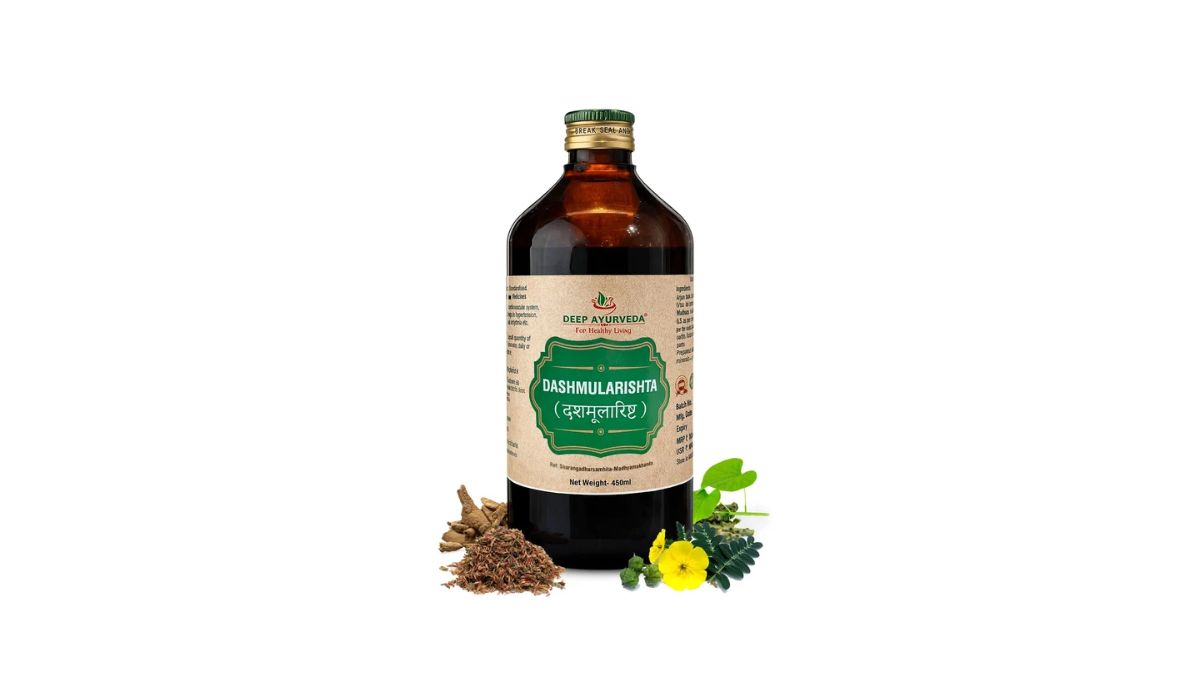

Deep Ayurveda Dashmularishta
✅ Supports Recovery After Illness ✅ Supports Strength and Vitality ✅ Supports Postpartum Recovery ✅ Supports Healthy Digestion ✅ Supports Healthy Circulation
Introduction
Have you ever wondered why Dashmularishta has remained one of the most trusted Ayurvedic formulations for centuries, especially during recovery from weakness, Vata imbalance, and postpartum care? Unlike many modern health supplements that focus on a single concern, Dashmularishta is a classical fermented Ayurvedic formulation designed to support the body’s natural healing processes while promoting strength, digestion, and overall well-being.
Prepared using Dashamoola (ten medicinal roots) along with several other herbs through a traditional fermentation process, Dashmularishta is valued in Ayurveda for balancing Vata Dosha, supporting healthy digestion (Agni), nourishing body tissues (Dhatus), and aiding recovery after illness or childbirth. The natural fermentation also enhances the bioavailability of herbal constituents, allowing the body to absorb them more efficiently.
In clinical Ayurvedic practice, Dashmularishta is not prescribed solely based on symptoms. An Ayurvedic physician evaluates factors such as Prakriti (body constitution), Vikriti (current imbalance), Agni (digestive strength), Bala (physical strength), age, and lifestyle before recommending any formulation. This individualized approach is one of Ayurveda’s greatest strengths and distinguishes it from a one-size-fits-all approach.
This comprehensive guide explores:
- What Dashmularishta is
- Its classical Ayurvedic significance
- Key ingredients and their roles
- Health benefits and traditional uses
- Recommended dosage
- Possible side effects and precautions
- Who may benefit from it
- Dietary and lifestyle recommendations while taking it
- Frequently asked questions based on real patient concerns
Along the way, we’ll also compare Dashmularishta with other classical Ayurvedic formulations such as Ashwagandharishta, Maharasnadi Kwath, Punarnavadyarishta, and Amritarishta, helping you understand why Ayurvedic medicines are selected according to an individual’s specific health condition rather than used interchangeably.
Whether you’re learning about Dashmularishta for the first time or looking for reliable Ayurvedic guidance, this doctor-reviewed article will help you understand its traditional uses, limitations, and the principles behind its therapeutic value.
Disclaimer: This article is intended for educational purposes only and should not replace professional medical advice. Dashmularishta should always be taken under the guidance of a qualified Ayurvedic physician, especially during pregnancy, breastfeeding, or when managing chronic medical conditions.
What is Dashmularishta?
Dashmularishta is a classical fermented Ayurvedic herbal formulation (Arishta) traditionally used to support recovery from Vata-related disorders, physical weakness, postpartum care, musculoskeletal discomfort, and digestive imbalance. It is prepared using Dashamoola (a group of ten medicinal roots) along with several other herbs, jaggery or sugar, and natural fermentation. This traditional preparation method produces a small amount of self-generated alcohol, which acts as a natural preservative and helps improve the absorption of the herbal constituents.
In Ayurveda, Dashmularishta is more than just a health tonic. It is considered a formulation that helps restore balance when Vata Dosha becomes aggravated due to factors such as prolonged illness, childbirth, excessive physical exertion, poor digestion, aging, or irregular lifestyle habits. By supporting healthy Agni (digestive fire) and nourishing the body’s tissues (Dhatus), it contributes to overall strength and recovery.
Unlike many herbal supplements that contain only one or two ingredients, Dashmularishta is a polyherbal formulation, meaning multiple herbs work together to produce a balanced therapeutic effect. According to Ayurvedic principles, each ingredient has a specific role—some help pacify aggravated Vata, others support digestion, while some nourish the body’s tissues or promote natural recovery. This synergy is one of the reasons why classical Ayurvedic formulations have remained relevant for centuries.
What Does the Name Dashmularishta Mean?
Understanding the name itself provides insight into the formulation’s purpose:
- Dasha means ten.
- Moola means roots.
- Arishta refers to a naturally fermented Ayurvedic liquid preparation.
Together, Dashmularishta means a fermented Ayurvedic formulation prepared primarily from the ten roots collectively known as Dashamoola.
Why is Dashamoola So Important in Ayurveda?
Dashamoola is one of Ayurveda’s most respected herbal groups. It consists of ten medicinal roots, divided into two categories:
Brihat Panchamoola (The Five Major Roots)
These larger trees are traditionally valued for supporting strength and balancing aggravated Vata.
- Bilva (Aegle marmelos)
- Agnimantha (Clerodendrum phlomidis)
- Shyonaka (Oroxylum indicum)
- Gambhari (Gmelina arborea)
- Patala (Stereospermum suaveolens)
Laghu Panchamoola (The Five Small Roots)
These herbs are traditionally included to support respiratory health, digestion, and systemic balance.
- Shalaparni (Desmodium gangeticum)
- Prishniparni (Uraria picta)
- Brihati (Solanum indicum)
- Kantakari (Solanum xanthocarpum)
- Gokshura (Tribulus terrestris)
The combination of these ten roots forms the foundation of Dashmularishta and contributes to its traditional Ayurvedic actions.
Why is Dashmularishta Different from Dashamoola Kwath?
This is a question many people ask, and understanding the difference can help you appreciate why Ayurvedic physicians choose one formulation over another.
Although both formulations contain Dashamoola, they are prepared differently and therefore have distinct therapeutic characteristics.
Dashamoola Kwath is a herbal decoction prepared by boiling herbs in water. It is generally used for a shorter duration and is often selected according to the patient’s current condition.
Dashmularishta undergoes a traditional fermentation process. This enhances its shelf life and may improve the availability of certain herbal compounds, making it suitable for longer-term use when advised by an Ayurvedic physician.
The choice between these formulations depends on several Ayurvedic factors, including the individual’s Dosha imbalance, digestive strength (Agni), age, physical condition, disease stage, and overall treatment plan. An experienced Ayurvedic doctor does not consider them interchangeable simply because both contain Dashamoola.
Classical Ayurvedic Reference of Dashmularishta
One of the reasons Dashmularishta continues to be widely used in Ayurvedic practice is its strong foundation in the classical Ayurvedic texts. Unlike many modern herbal formulations, Dashmularishta is not a recently developed product. It has been described in traditional Ayurvedic literature, where its ingredients, preparation method, and therapeutic applications have been documented according to time-tested principles.
These classical references serve as the basis for the formulation used by many Ayurvedic practitioners today. However, individual manufacturers may have slight variations in ingredient proportions while adhering to the principles outlined in the Ayurvedic Formulary of India or other recognized standards.
Dashmularishta in Classical Ayurveda
Dashmularishta is primarily described as an Arishta Kalpana, a category of naturally fermented Ayurvedic formulations. In Ayurveda, Arishta preparations are valued because the fermentation process not only preserves the herbal ingredients naturally but also enhances their assimilation within the body.
Classical Ayurvedic literature explains that formulations prepared through this method are particularly useful when long-term support is required under the supervision of a qualified Ayurvedic physician.
Classical Texts That Mention Dashmularishta
1. Bhaishajya Ratnavali
Bhaishajya Ratnavali is one of Ayurveda’s most respected compendiums of classical formulations. It describes Dashmularishta as a formulation traditionally used in conditions associated with aggravated Vata Dosha, weakness, and postpartum recovery. The text also outlines the method of preparation using Dashamoola along with complementary herbs that work synergistically to support the body’s natural healing process.
2. Sharangadhara Samhita
The Sharangadhara Samhita is regarded as one of the most authoritative texts on Ayurvedic pharmaceutical preparations (Bhaishajya Kalpana). It explains the principles of preparing Arishta and Asava formulations through natural fermentation.
The text emphasizes that proper preparation, suitable fermentation conditions, and carefully selected ingredients are essential to achieve the desired therapeutic qualities of the formulation.
3. Ayurvedic Formulary of India (AFI)
The Ayurvedic Formulary of India (AFI) provides standardized guidelines for the preparation of many classical Ayurvedic medicines, including Dashmularishta. It serves as an important reference for licensed Ayurvedic manufacturers to maintain consistency, quality, and authenticity while producing classical formulations.
Why Classical References Matter
Many people believe that if a herbal medicine has been used for centuries, it can be taken by everyone without guidance. Ayurveda, however, teaches a different approach.
The classical texts do not recommend prescribing medicines solely based on the name of a disease. Instead, they emphasize evaluating:
- Prakriti (individual body constitution)
- Vikriti (current Dosha imbalance)
- Agni (digestive strength)
- Ama (metabolic toxins, when present)
- Roga Bala (severity of the condition)
- Rogi Bala (overall strength of the individual)
This individualized approach remains one of the defining principles of Ayurvedic medicine and continues to guide responsible clinical practice today.
Why Dashmularishta Has Remained Relevant for Centuries
Unlike formulations developed for a single symptom, Dashmularishta is designed according to Ayurvedic principles that focus on restoring systemic balance. Its carefully selected combination of herbs aims to support multiple physiological functions simultaneously, including digestion, tissue nourishment, strength, and Vata balance.
This holistic approach is one reason the formulation continues to be prescribed by Ayurvedic physicians in appropriate clinical situations, even in modern practice.
Dashmularishta Ingredients and Their Ayurvedic Importance
The therapeutic value of Dashmularishta comes from its carefully selected combination of medicinal herbs rather than a single ingredient. In Ayurveda, this is known as polyherbal synergy, where multiple herbs work together to enhance effectiveness while maintaining a balanced action on the body.
The exact composition may vary slightly among manufacturers following classical guidelines, but the formulation is primarily centered around Dashamoola (the ten medicinal roots) and is supported by several herbs traditionally used to promote digestion, nourish body tissues, and balance Vata Dosha.
Major Ingredients in Dashmularishta
Below are some of the important herbs traditionally used in Dashmularishta and their Ayurvedic roles.
| Ingredient | Botanical Name | Traditional Ayurvedic Role |
|---|---|---|
| Dashamoola | Combination of 10 medicinal roots | Helps balance Vata, supports musculoskeletal health, and promotes overall recovery. |
| Guduchi | Tinospora cordifolia | Traditionally used to support immunity, metabolism, and overall vitality. |
| Manjistha | Rubia cordifolia | Supports healthy blood circulation and natural detoxification processes according to Ayurveda. |
| Devdaru | Cedrus deodara | Traditionally used for balancing Vata and Kapha and supporting joint comfort. |
| Haritaki | Terminalia chebula | Helps maintain healthy digestion and bowel function. |
| Yashtimadhu | Glycyrrhiza glabra | Traditionally valued for soothing and nourishing body tissues. |
| Rasna | Pluchea lanceolata | Commonly used in Ayurvedic formulations that support joints and muscles. |
| Pippali | Piper longum | Supports digestive fire (Agni) and enhances the absorption of herbal ingredients. |
| Dhataki Flowers | Woodfordia fruticosa | Act as a natural fermentation catalyst during the preparation of Arishta formulations. |
| Jaggery (Guda) | — | Provides the natural sugars required for the fermentation process. |
Note: The exact ingredient list may vary depending on the classical reference followed by the manufacturer. Always read the product label or consult an Ayurvedic physician before use.
Dashamoola – The Heart of Dashmularishta
Dashamoola literally means “Ten Roots.” It is one of the most important herbal groups in Ayurveda and forms the foundation of Dashmularishta.
These ten roots are divided into two groups:
Brihat Panchamoola (Five Major Roots)
- Bilva (Aegle marmelos)
- Agnimantha (Clerodendrum phlomidis)
- Shyonaka (Oroxylum indicum)
- Gambhari (Gmelina arborea)
- Patala (Stereospermum suaveolens)
These herbs are traditionally used to help pacify aggravated Vata and support strength and stability.
Laghu Panchamoola (Five Small Roots)
- Shalaparni (Desmodium gangeticum)
- Prishniparni (Uraria picta)
- Brihati (Solanum indicum)
- Kantakari (Solanum xanthocarpum)
- Gokshura (Tribulus terrestris)
Together, these herbs are traditionally valued for supporting respiratory health, digestion, tissue nourishment, and overall balance.
Why Are Supporting Herbs Added?
Many people assume Dashmularishta contains only Dashamoola. In reality, the additional herbs are equally important because they complement the action of Dashamoola.
For example:
- Guduchi is traditionally included to support overall vitality and healthy metabolism.
- Pippali helps stimulate digestive fire (Agni), which Ayurveda considers essential for proper nourishment.
- Haritaki supports digestive function and healthy elimination.
- Rasna and Devdaru complement the formulation’s traditional use in Vata-related musculoskeletal conditions.
- Manjistha contributes to healthy circulation and tissue support according to Ayurvedic principles.
Rather than acting independently, these herbs work together to create a balanced formulation designed to address multiple aspects of health simultaneously.
The Importance of Natural Fermentation
One of the unique features of Dashmularishta is its traditional fermentation process.
Unlike tablets or capsules, Dashmularishta is prepared by allowing herbal decoctions to ferment naturally with the help of Dhataki flowers and jaggery. During this process:
- A small quantity of self-generated alcohol is naturally produced.
- This acts as a natural preservative.
- It helps extract both water-soluble and certain alcohol-soluble phytochemicals from the herbs.
- It may improve the absorption of active constituents within the body.
This traditional pharmaceutical process has been described in Ayurvedic texts for centuries and is one of the defining characteristics of Arishta formulations.
Ayurvedic Properties of Dashmularishta (Rasa, Guna, Virya, Vipaka & Dosha Action)
To truly understand how Dashmularishta works, it is important to look beyond its ingredients. Ayurveda evaluates every medicine based on its Rasa (taste), Guna (qualities), Virya (potency), Vipaka (post-digestive effect), and Dosha action. These principles help an Ayurvedic physician decide whether a formulation is suitable for a particular individual.
Since Dashmularishta is a polyherbal classical formulation, its overall properties are derived from the combined actions of its ingredients rather than a single herb. This holistic perspective is one of the unique strengths of Ayurveda.
Ayurvedic Profile of Dashmularishta
Ayurvedic Parameter Traditional Characteristics Rasa (Taste) Predominantly Tikta (Bitter), Kashaya (Astringent), with supporting Madhura (Sweet) and Katu (Pungent) attributes from different herbs Guna (Qualities) Laghu (Light), Snigdha (Unctuous), and balancing qualities depending on the herb combination Virya (Potency) Primarily Ushna (Warm), helping to pacify aggravated Vata and support healthy digestion Vipaka (Post-digestive Effect) Mostly Madhura Vipaka, contributing to nourishment and tissue support according to Ayurvedic principles Primary Dosha Action Vata-pacifying, while helping maintain balance of Kapha in appropriate individuals Dhatu Influence Traditionally supports Rasa, Rakta, Mamsa, Asthi, and Majja Dhatus Srotas (Body Channels) Acts on multiple body channels, particularly those associated with digestion, circulation, musculoskeletal health, and reproductive wellness Note: The overall Ayurvedic properties represent the combined effect of the formulation. Individual herbs within Dashmularishta may possess different characteristics.
Rasa (Taste)
In Ayurveda, taste is not only about flavor—it also indicates how a herb or formulation interacts with the body.
Dashmularishta derives its therapeutic actions from a combination of tastes:
- Tikta (Bitter) – Traditionally associated with supporting metabolism, reducing Ama (metabolic waste), and balancing Pitta and Kapha.
- Kashaya (Astringent) – Helps provide stability to tissues and is traditionally used in formulations supporting recovery.
- Madhura (Sweet) – Nourishes body tissues and promotes strength.
- Katu (Pungent) – Supports healthy digestion and circulation.
This combination allows Dashmularishta to address multiple physiological processes rather than focusing on a single function.
Guna (Qualities)
The formulation possesses qualities that help restore balance when Vata Dosha becomes aggravated.
Its traditional qualities include:
- Supporting mobility and flexibility
- Helping maintain tissue nourishment
- Assisting healthy digestive function
- Promoting overall physical recovery
These qualities make Dashmularishta particularly valuable in situations where Vata imbalance is associated with weakness, fatigue, or musculoskeletal discomfort.
Virya (Potency)
Dashmularishta is generally considered to have an Ushna (warming) influence due to the presence of herbs such as Pippali, Devdaru, and other Vata-pacifying ingredients.
According to Ayurveda, this warming nature may help:
- Stimulate healthy digestive fire (Agni)
- Support circulation
- Reduce Vata-related stiffness
- Promote better assimilation of nutrients
However, an Ayurvedic physician always considers the patient’s constitution before recommending any warming formulation, particularly in individuals with significant Pitta aggravation.
Vipaka (Post-Digestive Effect)
Vipaka refers to the final metabolic effect of a medicine after digestion.
Dashmularishta is traditionally understood to have a predominantly Madhura Vipaka, which is associated with:
- Nourishing body tissues (Dhatus)
- Supporting strength and vitality
- Promoting healthy recovery
- Helping maintain long-term balance
This characteristic explains why Dashmularishta has traditionally been used during periods of convalescence and postpartum recovery under professional supervision.
Dosha Action
One of the primary reasons Ayurvedic physicians prescribe Dashmularishta is its ability to help balance aggravated Vata Dosha.
According to Ayurveda, Vata governs:
- Movement
- Nervous system functions
- Joint mobility
- Muscle activity
- Circulation
- Elimination
When Vata becomes imbalanced, an individual may experience symptoms such as:
- Generalized weakness
- Dryness
- Body aches
- Joint stiffness
- Reduced stamina
- Fatigue
- Irregular digestion
Dashmularishta is traditionally used as part of an individualized treatment plan to help restore this balance.
Although its primary action is on Vata, the formulation also supports healthy digestive function, which indirectly helps maintain harmony among all three Doshas.
Why These Ayurvedic Properties Matter
One of the biggest misconceptions is that Dashmularishta is simply a “general health tonic.”
In Ayurveda, no medicine is considered universally suitable. Instead, physicians assess whether the formulation’s Ayurvedic properties match the patient’s condition.
For example:
- A person with Vata aggravation and reduced digestive fire may benefit from Dashmularishta.
- Someone with fluid retention may require a different formulation, such as Punarnavadyarishta or Punarnavashtak Kwath, depending on the clinical assessment.
- If the primary concern is post-illness weakness and rejuvenation, Ashwagandharishta may sometimes be considered more appropriate.
- For individuals with predominant musculoskeletal disorders, an Ayurvedic physician may combine or choose formulations such as Maharasnadi Kwath based on the underlying imbalance.
This individualized selection is one of the defining principles of Ayurvedic medicine.
How Dashmularishta Works in Ayurveda
One of the most common questions patients ask is, How does Dashmularishta actually work? Unlike modern medicine, which often explains a formulation through individual active compounds, Ayurveda understands its action through concepts such as Doshas, Agni, Ama, Dhatus, and Srotas. This holistic perspective explains why Dashmularishta is traditionally recommended only after assessing the individual’s overall health rather than a single symptom.
Rather than targeting one organ or condition, Dashmularishta is traditionally believed to support the body’s natural ability to restore balance. Its carefully selected herbs work together to improve digestion, nourish tissues, pacify aggravated Vata, and promote recovery according to Ayurvedic principles.
1. Supports Healthy Agni (Digestive Fire)
Ayurveda considers Agni (digestive fire) to be the foundation of good health. When Agni becomes weak (Mandagni), the body may not digest food efficiently, which can affect nutrient absorption and tissue nourishment.
Several herbs in Dashmularishta, including Pippali, Haritaki, and other digestive-supportive ingredients, are traditionally used to:
- Encourage healthy digestion
- Support proper metabolism
- Improve nutrient assimilation
- Help maintain appetite during recovery
A well-functioning Agni is considered essential because Ayurveda believes that strong digestion supports the proper formation of all body tissues.
2. Helps Balance Vata Dosha
Dashmularishta is primarily recognized as a Vata-pacifying formulation.
According to Ayurveda, aggravated Vata may contribute to:
- General body aches
- Joint stiffness
- Muscle discomfort
- Dryness
- Fatigue
- Reduced strength
- Irregular bowel habits
- Delayed recovery after illness or childbirth
The combination of Dashamoola and supporting herbs is traditionally used to help restore the normal movement and function governed by Vata while supporting overall stability within the body.
3. Supports the Elimination of Ama
Ayurveda describes Ama as incompletely processed metabolic waste that may accumulate when digestion is impaired. Excess Ama is believed to interfere with the normal functioning of tissues and body channels.
By supporting healthy digestion and metabolism, Dashmularishta is traditionally used as part of an Ayurvedic treatment plan aimed at reducing the formation of Ama and maintaining metabolic balance.
It is important to note that Dashmularishta is not prescribed in every Ama-dominant condition. Depending on the patient’s symptoms and digestive status, an Ayurvedic physician may recommend different formulations before introducing nourishing medicines.
4. Nourishes the Dhatus (Body Tissues)
According to Ayurveda, the body is supported by seven fundamental tissues, known as Sapta Dhatus.
When digestion functions efficiently, these tissues receive proper nourishment, helping maintain strength and vitality.
Dashmularishta is traditionally believed to support:
- Rasa Dhatu – Healthy nourishment and hydration
- Rakta Dhatu – Normal circulation and vitality
- Mamsa Dhatu – Muscle strength
- Asthi Dhatu – Bone support
- Majja Dhatu – Nervous system nourishment
This is one reason the formulation has traditionally been used during periods of recovery when rebuilding physical strength is an important goal.
5. Supports Healthy Srotas (Body Channels)
Ayurveda describes Srotas as the body’s network of transport channels responsible for carrying nutrients, fluids, and waste products.
When these channels function efficiently, tissues receive proper nourishment and metabolic waste is eliminated effectively.
Dashmularishta is traditionally used to support the healthy functioning of several important Srotas, including:
- Annavaha Srotas (digestive channels)
- Rasavaha Srotas (nutrient transport channels)
- Mamsavaha Srotas (muscle tissue channels)
- Asthivaha Srotas (bone tissue channels)
- Artavavaha Srotas (female reproductive channels, where clinically appropriate)
Supporting these pathways is considered important for maintaining overall physiological balance.
6. Why the Fermented Form Matters
One aspect that is often overlooked is the role of the traditional fermentation process.
Unlike herbal powders or decoctions, Dashmularishta undergoes natural fermentation, resulting in a small amount of self-generated alcohol. According to Ayurvedic pharmaceutical principles, this process:
- Helps preserve the formulation naturally
- Extracts a broader range of phytochemicals from the herbs
- May improve the absorption and delivery of herbal constituents
- Enhances shelf stability without the need for artificial preservatives
This makes Dashmularishta distinct from formulations such as Dashamoola Kwath, even though both contain the same core group of medicinal roots.
How Dashmularishta Works: A Simple Flow
For readers who prefer a simplified explanation, the traditional Ayurvedic sequence can be understood as follows:
Supports Agni → Helps reduce Ama formation → Balances Vata Dosha → Nourishes Dhatus → Supports healthy Srotas → Promotes strength, recovery, and overall well-being
This sequence reflects the Ayurvedic philosophy of addressing the root cause of imbalance rather than merely managing symptoms.
Health Benefits of Dashmularishta
Dashmularishta has been used in Ayurveda for generations as a classical Vata-pacifying formulation that supports the body’s natural healing and recovery processes. Rather than acting as an instant remedy, Ayurveda considers Dashmularishta a medicine that works by improving Agni (digestive fire), balancing Doshas, nourishing Dhatus (body tissues), and promoting overall strength when prescribed appropriately.
It is important to understand that the following benefits are based on traditional Ayurvedic principles and the classical uses of Dashmularishta. Individual results may vary depending on factors such as body constitution (Prakriti), health condition, lifestyle, and adherence to the treatment plan prescribed by an Ayurvedic physician.
1. Supports Recovery After Childbirth (Postpartum Care)
One of the best-known traditional uses of Dashmularishta is in postpartum care. According to Ayurveda, childbirth naturally increases Vata Dosha because of physical exertion, blood loss, tissue depletion, and changes in hormonal balance.
During the postpartum period, women may experience:
- Generalized weakness
- Body aches
- Lower back discomfort
- Reduced appetite
- Fatigue
- Slower recovery
Dashmularishta is traditionally prescribed as part of a comprehensive postpartum care plan to help restore strength, support healthy digestion, and promote tissue nourishment. However, it should only be taken under the guidance of a qualified Ayurvedic physician, especially during breastfeeding.
Unlike many articles that simply state “Dashmularishta is good after delivery,” Ayurveda emphasizes that every woman’s recovery is unique. The timing, dosage, and duration depend on factors such as digestive strength, delivery method, overall health, and individual constitution.
2. Helps Balance Vata Dosha
Ayurveda considers Vata the primary Dosha responsible for movement, nerve impulses, joint function, circulation, and elimination.
When Vata becomes aggravated, a person may experience:
- Dryness
- Body pain
- Joint stiffness
- Muscle discomfort
- Fatigue
- Irregular bowel habits
- Disturbed sleep
Dashmularishta contains Dashamoola, a classical herbal group traditionally used to help balance Vata. By supporting healthy digestion and nourishing body tissues, the formulation may contribute to restoring physiological balance according to Ayurvedic principles.
This is also why Ayurvedic physicians often evaluate the underlying cause of Vata aggravation before recommending treatment. In some musculoskeletal conditions, Maharasnadi Kwath may be selected instead of—or alongside—Dashmularishta depending on the individual’s clinical presentation.
3. Promotes Healthy Digestion and Appetite
Ayurveda believes that strong digestion is essential for maintaining good health.
Weak digestive fire (Mandagni) may result in:
- Poor appetite
- Bloating
- Heaviness after meals
- Incomplete digestion
- Reduced nutrient absorption
Dashmularishta contains herbs such as Pippali and Haritaki, which are traditionally used to support healthy digestive function.
By promoting proper digestion, the formulation may also help improve tissue nourishment over time because Ayurveda teaches that healthy tissues depend on efficient digestion and metabolism.
4. Supports Strength and Recovery After Illness
After prolonged illness, surgery, or periods of physical exhaustion, many people experience reduced energy levels and delayed recovery.
In Ayurveda, this is often associated with:
- Reduced Agni
- Dhatu depletion
- Vata aggravation
Dashmularishta is traditionally used during recovery to help restore strength and support normal physiological function.
However, not every patient recovering from illness requires Dashmularishta. Depending on the individual’s condition, an Ayurvedic physician may recommend Ashwagandharishta for rejuvenation or Amritarishta following recovery from certain febrile illnesses.
This personalized selection reflects Ayurveda’s principle of treating the individual rather than following a standard protocol.
5. Supports Joint and Muscle Health
Healthy movement depends on balanced Vata and well-nourished muscles, bones, and connective tissues.
Dashmularishta is traditionally used as part of Ayurvedic management for individuals experiencing:
- Joint stiffness
- Muscle discomfort
- Reduced mobility
- General body aches associated with Vata imbalance
Its role is not simply to provide temporary comfort but to support the underlying Ayurvedic processes involved in maintaining musculoskeletal health.
For chronic musculoskeletal disorders, Ayurvedic physicians may combine lifestyle changes, Panchakarma therapies, and formulations such as Maharasnadi Kwath, depending on the patient’s diagnosis and stage of disease.
6. Helps Improve Physical Stamina
Individuals recovering from prolonged stress, physical exertion, or illness often report reduced stamina and persistent tiredness.
According to Ayurveda, this may result from:
- Weak digestion
- Tissue depletion
- Vata imbalance
Dashmularishta is traditionally used to support gradual improvement in physical strength by promoting better digestion, tissue nourishment, and metabolic balance.
Unlike stimulant-based energy products, its traditional role is to support the body’s natural restorative processes rather than provide a temporary boost.
7. Supports Women’s Health in Ayurveda
Apart from postpartum recovery, Dashmularishta is traditionally used in selected women’s health conditions where Vata imbalance plays an important role.
Depending on the individual’s constitution and diagnosis, Ayurvedic physicians may include Dashmularishta as part of a broader treatment plan to support:
- General recovery after childbirth
- Physical weakness
- Lower back discomfort
- Overall reproductive health
However, if the primary concern involves menstrual regulation or other gynecological conditions, another classical formulation may be more appropriate. Treatment always depends on an individualized Ayurvedic assessment rather than symptoms alone.
8. Supports Healthy Recovery in Older Adults
As people age, Ayurveda describes a natural increase in Vata Dosha.
This may contribute to:
- Reduced strength
- Joint stiffness
- Dryness
- Slower recovery
- General fatigue
When clinically appropriate, Dashmularishta may be prescribed to support healthy aging by promoting digestion, tissue nourishment, and overall vitality. The dosage should always be adjusted according to the individual’s age, digestive capacity, and overall health.
Common Uses of Dashmularishta in Ayurveda
Although many people search online for “What is Dashmularishta used for?”, the answer is not as simple as a list of diseases. In Ayurveda, a medicine is selected after understanding the root cause of the imbalance (Samprapti) rather than the disease name alone.
Dashmularishta is traditionally prescribed when an Ayurvedic physician identifies signs of Vata aggravation, weakened digestion (Mandagni), reduced tissue nourishment (Dhatu Kshaya), or the need for post-illness or postpartum recovery. It is usually recommended as part of a comprehensive treatment plan that may also include dietary changes, lifestyle modifications, Panchakarma therapies, and other Ayurvedic medicines.
Below are some of the most common traditional uses of Dashmularishta.
1. Postpartum Recovery Support
One of the classical uses of Dashmularishta is during the postpartum period, when the body undergoes significant physical and physiological changes.
An Ayurvedic physician may recommend it to support:
- Natural recovery after childbirth
- Restoration of physical strength
- Healthy digestion
- Vata balance
- Overall well-being during the recovery phase
The timing and duration of use should always be individualized, especially for breastfeeding mothers.
2. General Physical Weakness
Dashmularishta is traditionally used in individuals recovering from:
- Prolonged illness
- Physical exhaustion
- Reduced stamina
- General debility
Rather than acting as an instant energy booster, Ayurveda considers it a formulation that supports gradual recovery by improving digestion and nourishing body tissues.
When weakness is primarily associated with reduced vitality or stress-related fatigue, an Ayurvedic physician may instead consider Ashwagandharishta, depending on the individual’s constitution and health status.
3. Vata-Related Musculoskeletal Conditions
According to Ayurveda, aggravated Vata can affect muscles, joints, bones, and connective tissues.
Dashmularishta is traditionally included in treatment plans for individuals experiencing:
- Joint stiffness
- Muscle discomfort
- Body aches
- Reduced flexibility
- Mild mobility issues associated with Vata imbalance
For more chronic or complex musculoskeletal disorders, physicians may also prescribe Maharasnadi Kwath alongside other therapies based on the patient’s diagnosis.
4. Digestive Weakness
Healthy digestion is central to Ayurvedic medicine.
Dashmularishta may be recommended for individuals with:
- Reduced appetite
- Weak digestion
- Sluggish metabolism
- Poor nutrient assimilation
By supporting Agni, the formulation helps create a healthier foundation for tissue nourishment and overall recovery.
5. Recovery After Illness
Following prolonged illness, many people experience:
- Fatigue
- Poor appetite
- Reduced physical strength
- Delayed recovery
In suitable individuals, Dashmularishta may be prescribed to support gradual restoration of health. However, if the recovery follows certain febrile illnesses, Amritarishta may sometimes be a more appropriate choice depending on the Ayurvedic diagnosis.
6. Women’s Health Support
Dashmularishta is traditionally used in selected women’s health conditions where Vata imbalance is an important contributing factor.
It may be considered as part of an individualized treatment plan to support:
- Postpartum recovery
- Lower back discomfort associated with Vata imbalance
- Physical weakness
- General reproductive health
If the primary concern involves menstrual health or fertility support, an Ayurvedic physician may recommend a different formulation depending on the underlying condition.
7. Supporting Healthy Aging
Ayurveda describes the later stages of life as naturally Vata-dominant.
As a result, older adults may experience:
- Reduced mobility
- Muscle weakness
- Joint stiffness
- Slower recovery
- Declining physical strength
When clinically appropriate, Dashmularishta may be included as part of a broader Ayurvedic approach to healthy aging, together with suitable diet, exercise, and lifestyle recommendations.
Who May Benefit from Dashmularishta?
Dashmularishta may be considered for adults who have been evaluated by an Ayurvedic physician and are experiencing conditions consistent with its traditional indications, such as:
- Recovery after childbirth
- General weakness after illness
- Vata-predominant musculoskeletal discomfort
- Poor appetite associated with weak digestion
- Fatigue related to tissue depletion
- Reduced physical stamina during recovery
It is not intended for self-medication or as a daily wellness tonic for everyone.
When Might Another Ayurvedic Formulation Be More Appropriate?
One of the strengths of Ayurveda is that different formulations are chosen for different underlying imbalances, even when symptoms appear similar.
For example:
If the primary concern is… An Ayurvedic physician may consider…* Post-illness weakness and vitality Ashwagandharishta Chronic musculoskeletal disorders Maharasnadi Kwath Fluid retention and edema Punarnavadyarishta or Punarnavashtak Kwath Recovery after certain febrile illnesses Amritarishta Respiratory conditions requiring classical Ayurvedic support Kanakasava *The choice depends on the individual’s constitution, diagnosis, and clinical assessment.
This comparison highlights why Ayurveda does not recommend using medicines interchangeably without proper evaluation.
Recommended Dosage of Dashmularishta
Taking Dashmularishta in the correct dosage and at the appropriate time is essential for achieving its traditional Ayurvedic benefits. While this classical formulation has been used for centuries, the dosage is never the same for every individual. An Ayurvedic physician determines the right dose after assessing factors such as age, body constitution (Prakriti), digestive strength (Agni), the underlying health condition, disease stage, and overall physical strength (Bala).
Self-medicating or increasing the dose without professional guidance is not recommended, as Ayurveda emphasizes personalized treatment rather than standardized dosing.
General Recommended Dosage
The following dosage is commonly recommended in Ayurvedic practice. However, it should only be considered as general guidance and not a substitute for medical advice.
Age Group Typical Dosage* Frequency Adults 15–30 ml Twice daily Elderly As advised by an Ayurvedic physician Usually twice daily Children Only under qualified medical supervision Individualized *The exact dosage may vary depending on the formulation, manufacturer, and the individual’s health condition.
Best Time to Take Dashmularishta
Dashmularishta is traditionally taken:
- After meals
- Twice daily, usually after breakfast and dinner
Taking it after food may help support digestion while reducing the likelihood of gastric discomfort in sensitive individuals.
Should Dashmularishta Be Taken With Water?
Yes.
Dashmularishta is commonly taken by mixing it with an equal quantity of lukewarm water, unless your Ayurvedic physician recommends otherwise.
For example:
- 15 ml Dashmularishta + 15 ml lukewarm water
- 30 ml Dashmularishta + 30 ml lukewarm water
This traditional method helps improve palatability and aligns with Ayurvedic recommendations for Arishta preparations.
How Long Should Dashmularishta Be Taken?
This is one of the most frequently asked questions.
There is no fixed duration that suits everyone.
The duration depends on several factors, including:
- The condition being treated
- Severity of symptoms
- Digestive strength
- Individual response
- Overall treatment plan
Some individuals may require it only for a few weeks, while others may benefit from a longer course under regular medical supervision.
Do not continue taking Dashmularishta for prolonged periods without follow-up consultation with your Ayurvedic physician.
What If You Miss a Dose?
If you forget to take a dose:
- Take it when you remember if it is not close to the next scheduled dose.
- If it is almost time for your next dose, skip the missed dose.
- Do not double the dose to compensate for the missed one.
Maintaining a consistent routine generally supports better adherence to the treatment plan.
Can Dashmularishta Be Taken Along With Other Ayurvedic Medicines?
Yes, in many cases Dashmularishta is prescribed alongside other Ayurvedic formulations, but the combination depends on the individual’s diagnosis.
For example, an Ayurvedic physician may combine it with:
- Maharasnadi Kwath in selected Vata-dominant musculoskeletal conditions.
- Ashwagandharishta in carefully selected cases requiring broader rejuvenative support.
- Punarnavadyarishta or Punarnavashtak Kwath when managing conditions involving fluid balance, if clinically appropriate.
- Other classical formulations based on the patient’s Dosha imbalance and treatment goals.
However, combining Ayurvedic medicines without professional guidance is not advisable, as each formulation has different therapeutic actions and indications.
Important Precautions While Taking Dashmularishta
To achieve the best outcomes, consider the following recommendations:
- Take the medicine at the same time each day.
- Follow the dosage prescribed by your Ayurvedic physician.
- Avoid increasing or decreasing the dose on your own.
- Store the bottle in a cool, dry place away from direct sunlight.
- Shake the bottle gently before use if recommended by the manufacturer.
- Keep the bottle tightly closed after every use.
Can Dashmularishta Be Taken on an Empty Stomach?
Generally, Dashmularishta is not routinely recommended on an empty stomach unless specifically advised by an Ayurvedic physician.
Because it is a fermented formulation containing naturally occurring self-generated alcohol and digestive herbs, taking it after meals is traditionally preferred for most individuals.
Can Dashmularishta Be Taken Daily?
Dashmularishta is not intended to be consumed as a daily wellness drink indefinitely.
Although it is a classical Ayurvedic formulation, it should be used:
- For an appropriate clinical indication
- At the recommended dosage
- For the duration advised by an Ayurvedic physician
Regular follow-up allows your physician to assess progress and determine whether the medicine should be continued, adjusted, or discontinued.
Possible Side Effects of Dashmularishta and Safety Precautions
Dashmularishta is a classical Ayurvedic formulation that has been used for centuries when prescribed according to Ayurvedic principles. It is generally well tolerated when taken in the recommended dosage under the guidance of a qualified Ayurvedic physician.
However, like any herbal or conventional medicine, Dashmularishta may not be suitable for everyone. The possibility of side effects depends on several factors, including the individual’s Prakriti (body constitution), Dosha imbalance, age, digestive strength, existing medical conditions, concurrent medications, and dosage.
Understanding these precautions can help ensure its safe and appropriate use.
Is Dashmularishta Safe?
For most healthy adults, Dashmularishta is traditionally considered safe when used for an appropriate indication and in the prescribed dose.
Its long history of use in Ayurveda reflects its traditional value. However, being a natural or herbal medicine does not automatically mean it is risk-free or appropriate for self-medication.
Proper diagnosis and individualized treatment remain essential.
Possible Side Effects of Dashmularishta
Most people do not experience significant side effects when Dashmularishta is taken correctly. However, some individuals may experience mild reactions, particularly if the medicine is taken without proper guidance.
Possible side effects may include:
Mild Digestive Discomfort
Some individuals with sensitive digestion may occasionally experience:
- Mild stomach irritation
- Acidity
- A feeling of warmth in the stomach
- Nausea
Taking Dashmularishta after meals and with an equal quantity of water may help reduce digestive discomfort in many cases.
Temporary Digestive Changes
As digestion adjusts, some people may notice:
- Mild loose stools
- Changes in bowel habits
- Temporary abdominal discomfort
These symptoms are generally mild and should be evaluated if they persist.
Individual Sensitivity to Ingredients
Although uncommon, some individuals may be sensitive to one or more herbal ingredients present in the formulation.
If you notice symptoms such as:
- Rash
- Itching
- Swelling
- Difficulty breathing
stop using the medicine immediately and seek prompt medical attention.
Unsuitability in Certain Body Constitutions
Dashmularishta is primarily a Vata-pacifying formulation with a generally warming nature.
In some individuals with significant Pitta aggravation, excessive or inappropriate use may not be suitable. This is one reason Ayurvedic physicians always assess the patient’s constitution before prescribing the medicine.
Who Should Use Dashmularishta With Caution?
Extra medical supervision is recommended for:
- Pregnant women
- Breastfeeding mothers
- Children
- Elderly individuals with multiple medical conditions
- People with chronic liver disease
- Individuals with uncontrolled diabetes
- Those taking long-term prescription medicines
- People with known allergies to herbal ingredients
These groups require individualized assessment before starting any Ayurvedic formulation.
Does Dashmularishta Contain Alcohol?
Yes—but this is often misunderstood.
Dashmularishta contains a small amount of naturally self-generated alcohol that develops during the traditional fermentation process.
This alcohol:
- Is not added separately
- Acts as a natural preservative
- Helps extract and preserve herbal constituents
- May improve the absorption of certain phytochemicals
The alcohol content is generally low compared with alcoholic beverages, but individuals who must completely avoid alcohol for medical, religious, or personal reasons should discuss this with their healthcare provider before use.
Can Dashmularishta Affect Blood Sugar?
Classically prepared Dashmularishta contains jaggery or sugar as part of the fermentation process.
Although much of the sugar is utilized during fermentation, the finished formulation may still contain residual sugars.
People with diabetes or impaired glucose control should:
- Consult their physician before taking Dashmularishta.
- Monitor blood glucose as advised.
- Never replace prescribed diabetes medications with Ayurvedic medicines without medical supervision.
Can Dashmularishta Interact With Medicines?
Research on herb-drug interactions involving the complete Dashmularishta formulation is still limited.
If you are taking:
- Blood pressure medicines
- Diabetes medications
- Blood thinners
- Medicines for liver disease
- Immunosuppressants
- Long-term prescription drugs
inform both your Ayurvedic physician and your primary healthcare provider before starting Dashmularishta.
Coordinated care helps reduce the possibility of unwanted interactions.
When Should You Stop Taking Dashmularishta?
Discontinue the medicine and seek medical advice if you experience:
- Persistent digestive discomfort
- Allergic reactions
- Severe abdominal pain
- Continuous vomiting
- Unusual symptoms after starting the medicine
- Worsening of your existing health condition
Do not restart the formulation unless advised by a qualified healthcare professional.
Safety Tips Before Taking Dashmularishta
For safe use, keep these points in mind:
- ✔ Follow the dosage prescribed by your Ayurvedic physician.
- ✔ Take it after meals unless advised otherwise.
- ✔ Dilute it with an equal quantity of water.
- ✔ Purchase products only from reputable manufacturers.
- ✔ Check the expiry date before use.
- ✔ Store the bottle according to the manufacturer’s instructions.
- ✔ Inform your doctor about any ongoing medications or chronic illnesses.
Common Myths About Dashmularishta
Myth 1: It is herbal, so it has no side effects.
Fact: Any medicine—herbal or conventional—may cause unwanted effects if taken inappropriately, in excessive amounts, or by someone for whom it is not suitable.
Myth 2: Anyone can take Dashmularishta daily.
Fact: Dashmularishta is a therapeutic Ayurvedic formulation, not a daily health beverage. It should only be used when clinically indicated.
Myth 3: Increasing the dose gives faster results.
Fact: Taking more than the recommended dose does not necessarily improve outcomes and may increase the likelihood of adverse effects.
Final Advice
Dashmularishta has earned its place in Ayurveda through centuries of traditional use, but its benefits depend on selecting the right formulation for the right individual. Not every person with weakness, joint discomfort, or fatigue requires Dashmularishta. In some situations, formulations such as Ashwagandharishta, Punarnavadyarishta, Punarnavashtak Kwath, Amritarishta, or Maharasnadi Kwath may be more suitable based on the underlying Ayurvedic diagnosis.
If you are considering Dashmularishta, seek guidance from a qualified Ayurvedic physician who can develop a personalized treatment plan that includes appropriate medicines, diet, and lifestyle recommendations for your specific health needs.
Frequently Asked Questions About Dashmularishta
What is Dashmularishta used for?
Dashmularishta is a classical Ayurvedic fermented formulation traditionally used to support Vata balance, postpartum recovery, physical strength, digestion, and recovery from weakness. Its suitability depends on the individual’s Ayurvedic assessment.
What is the recommended dosage of Dashmularishta?
The commonly used adult dose is around 15–30 ml, usually twice daily after meals, diluted with an equal quantity of water. The exact dosage should be determined by an Ayurvedic physician according to age, digestion, health condition, and constitution.
Can Dashmularishta be taken after childbirth?
Yes, Dashmularishta has traditionally been used to support postpartum recovery, particularly when Vata aggravation, weakness, body aches, or poor digestion are present. New mothers, especially those who are breastfeeding, should take it only under professional guidance.
Does Dashmularishta contain alcohol?
Yes. Dashmularishta naturally develops a small amount of self-generated alcohol during fermentation. It is not the same as adding alcoholic spirits to the formulation; fermentation helps preserve the preparation and extract herbal constituents.
Can diabetic patients take Dashmularishta?
People with diabetes should consult an Ayurvedic physician before taking Dashmularishta because the formulation is traditionally prepared using jaggery or sugar for fermentation and may contain residual sugars. Blood glucose should be monitored appropriately.
What are the side effects of Dashmularishta?
When used appropriately, Dashmularishta is generally well tolerated. Some people may experience digestive discomfort, acidity, nausea, or loose stools, particularly if the formulation is unsuitable for them or taken incorrectly. Persistent or severe symptoms require medical evaluation.
Can Dashmularishta be taken with other Ayurvedic medicines?
It can sometimes be prescribed alongside other Ayurvedic formulations, but combinations should be decided by a qualified physician. For example, Maharasnadi Kwath, Ashwagandharishta, or Punarnavadyarishta may be considered in different clinical situations, but they should not be combined simply because their benefits appear similar.
Who should avoid Dashmularishta?
Pregnant women, children, people with chronic medical conditions, individuals taking multiple prescription medicines, and those with diabetes or liver problems should consult a qualified healthcare professional before using Dashmularishta. Self-medication is not recommended.