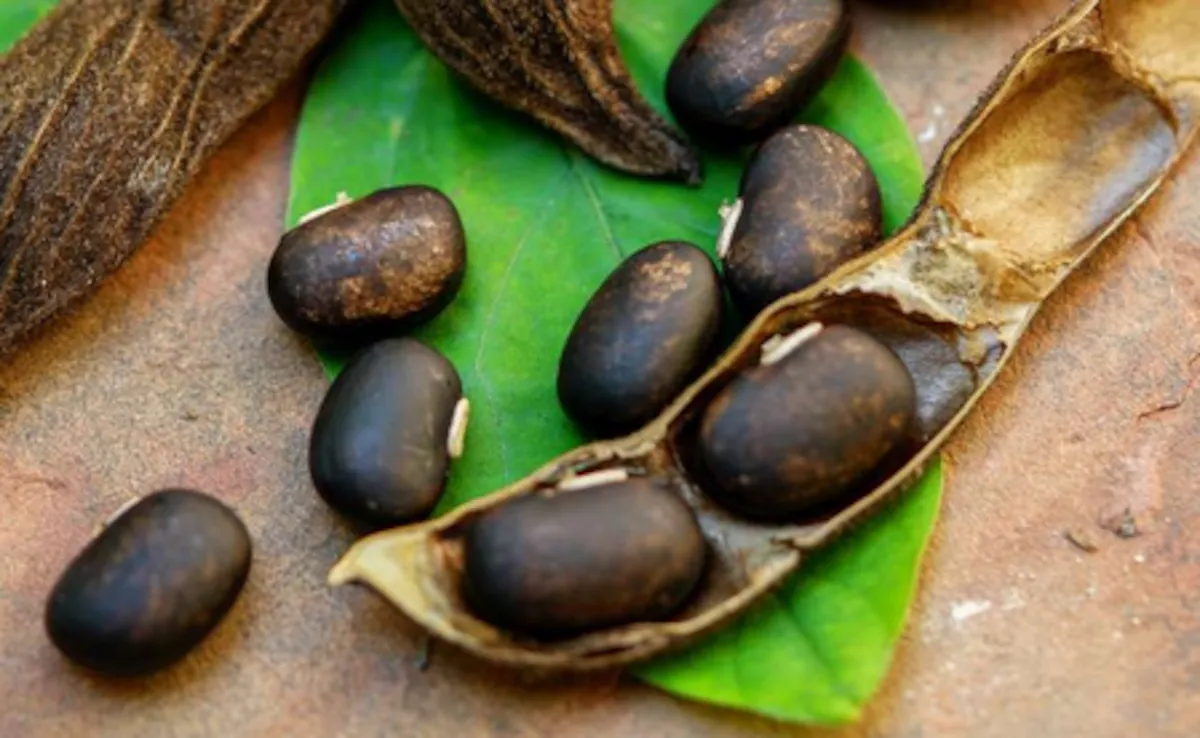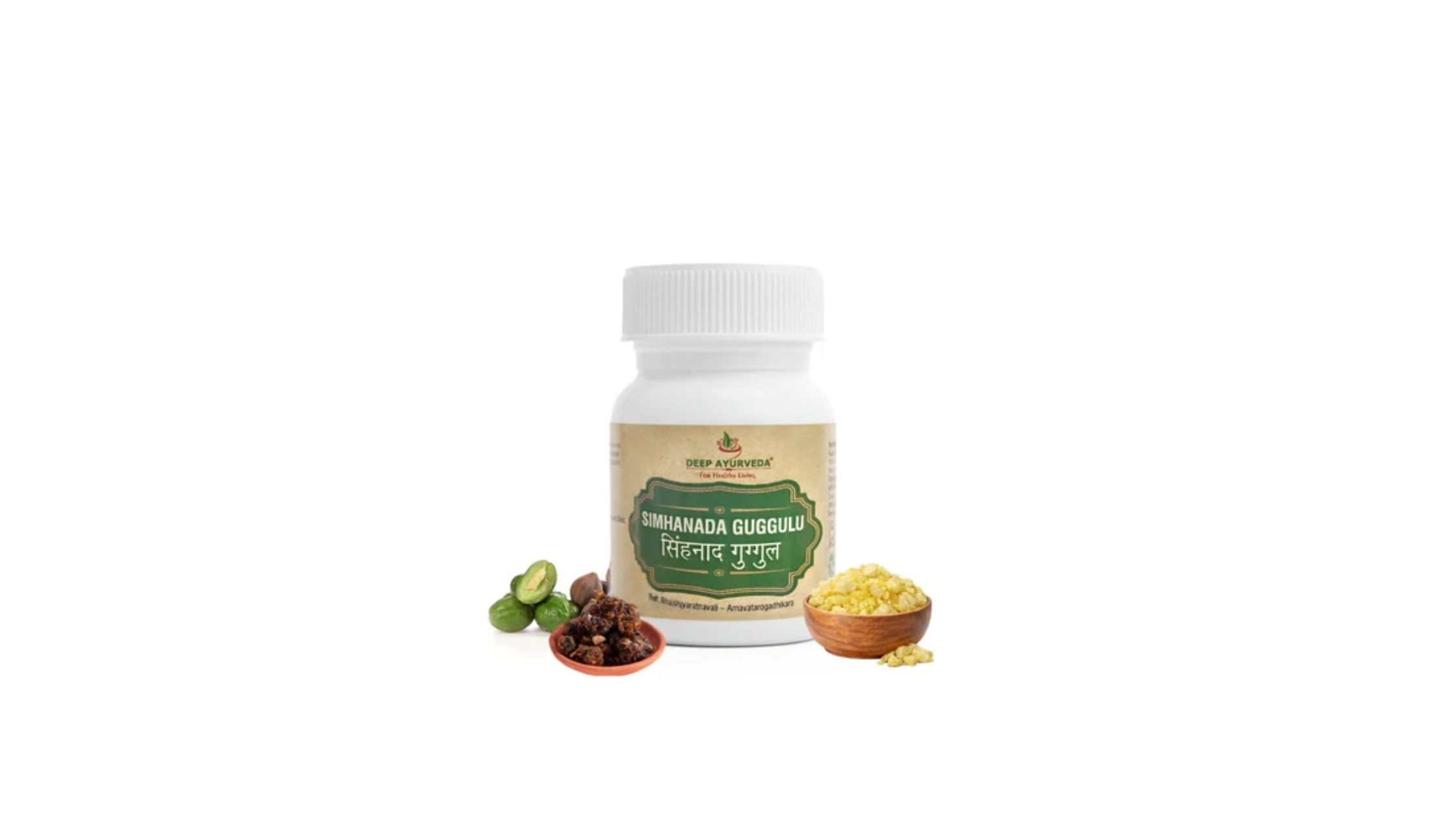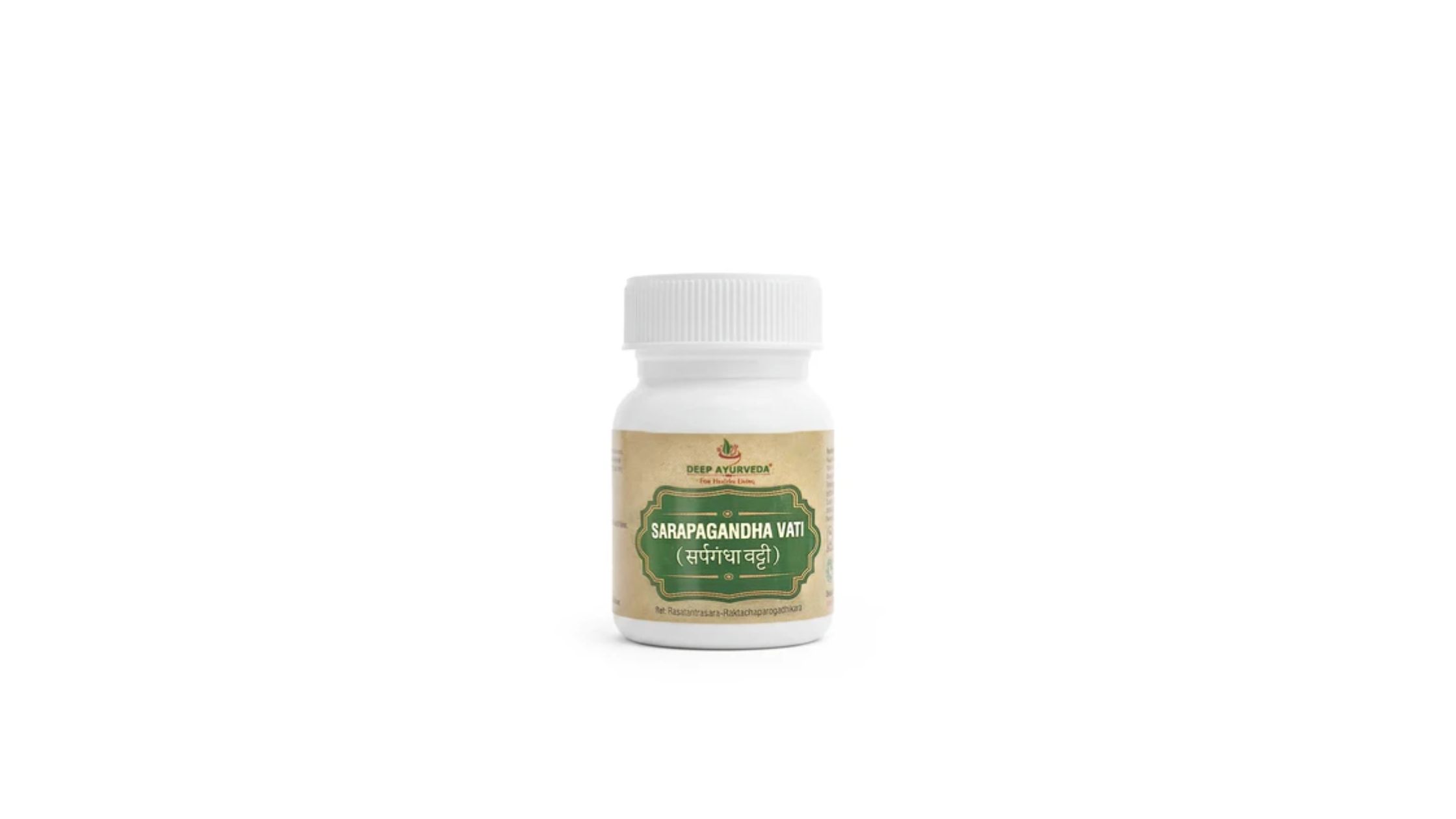
Sarpagandha Vati is an Ayurvedic formulation associated traditionally with conditions such as Anidra (sleep disturbance), Manodvega (mental restlessness/anxiety-related symptoms), and elevated blood pressure. It is prepared from Sarpagandha, botanically identified as Rauwolfia serpentina, a medicinal plant whose roots contain pharmacologically active alkaloids, including reserpine.
But there is an important point that is often missed in online articles: Sarpagandha and Sarpagandha Vati are not necessarily interchangeable terms. Sarpagandha refers to the medicinal plant/root, whereas Sarpagandha Vati refers to a tablet formulation. Different formulations can vary in ingredients, concentration and preparation method. For this reason, dosage and expected effects should not be assumed to be identical across every product sold under a similar name.
Ayurvedic literature and clinical research have explored Sarpagandha preparations particularly in relation to blood pressure and sleep. However, the available research varies considerably in study design and formulation, so traditional use should not automatically be presented as proof that Sarpagandha Vati can treat or cure every condition for which it has historically been used.
This guide explains what Sarpagandha Vati is, its traditional Ayurvedic uses, what research has found so far, dosage considerations, possible side effects, medicine interactions and the situations in which professional guidance is especially important.
What Is Sarpagandha Vati?
Sarpagandha Vati is a tablet-based Ayurvedic preparation made using Sarpagandha (Rauwolfia serpentina), traditionally valued for its effects on the nervous and cardiovascular systems.
The name Sarpagandha is commonly associated with the plant’s characteristic snake-like root. In modern botanical terminology, it is known as Rauwolfia serpentina. The root contains several indole alkaloids, with reserpine being one of the best-known constituents because of its historical pharmacological importance.
Sarpagandha vs Sarpagandha Vati: Are They the Same?
Not exactly.
Sarpagandha is the medicinal plant or its root material.
Sarpagandha Vati is a prepared dosage form in which Sarpagandha is processed into a tablet or pill.
There can also be formulations described as Sarpagandhaghan Vati or Sarpagandha Ghana Vati. These should not automatically be assumed to have exactly the same composition as every product labelled Sarpagandha Vati.
For example, a published clinical study used a Sarpagandha Ghana Vati formulation containing Sarpagandha along with other ingredients, including Jatamansi, Parasika Yavani, Pippalimula and Bhanga.
This is why checking the actual product label matters. The name alone may not tell you the complete composition or strength.
What Does Ayurveda Say About Sarpagandha?
In Ayurveda, an herb is not understood simply by listing its modern chemical constituents. Its traditional use is considered through concepts such as Rasa, Guna, Virya, Vipaka and Prabhava, along with the patient’s symptoms, constitution and clinical condition.
Sarpagandha has traditionally been associated with calming and sleep-promoting applications. Ayurvedic sources also describe its use in conditions corresponding to Anidra and Manodvega, while Sarpagandha preparations have been investigated for hypertension. Government Ayurvedic drug-list material also lists Anidra, Manodvega and hypertension among indications associated with Sarpagandhaghan Vati.
This traditional framework is important, but it should be kept separate from modern medical terminology. For example, an Ayurvedic term describing mental restlessness should not automatically be presented as identical to a specific psychiatric diagnosis.
That distinction makes health information more accurate—and prevents an Ayurvedic concept from being oversimplified into a modern medical claim.
Traditional Uses of Sarpagandha Vati
Sarpagandha Vati is traditionally associated with several areas of Ayurvedic practice, particularly those involving sleep, mental restlessness and blood-pressure-related complaints.
1. Traditional Use for Anidra
Anidra is the Ayurvedic term commonly used for disturbed or inadequate sleep.
Sarpagandha has traditionally been considered a calming and sleep-supportive herb. Clinical research has also investigated Sarpagandha Vati specifically for primary insomnia.
One study evaluated Sarpagandha Vati in 30 patients with primary insomnia using an open-label, uncontrolled design. The researchers reported improvements in sleep initiation, sleep maintenance and early-morning awakening. However, because the study did not include a control group, its findings should be interpreted as preliminary rather than definitive proof of effectiveness.
What this means for the reader: traditional use and preliminary clinical findings provide a reason for further research, but they do not mean that everyone with insomnia should self-medicate with Sarpagandha Vati.
2. Traditional Use in Manodvega and Mental Restlessness
Ayurvedic literature uses terms such as Manodvega to describe states involving mental agitation or restlessness.
Sarpagandha’s traditional calming properties are one reason it has been used in formulations concerned with sleep and mental restlessness.
Modern research has also investigated anxiety-related measures alongside hypertension in some Sarpagandha formulation studies. For example, a randomized clinical study of Sarpagandha Ghana Vati in essential hypertension assessed blood pressure as well as anxiety and sleep-related parameters.
However, Sarpagandha Vati should not be presented as a standalone treatment for an anxiety disorder or other psychiatric condition without appropriate clinical evaluation.
3. Traditional Use Related to Elevated Blood Pressure
The relationship between Sarpagandha and blood pressure is one of the most well-known aspects of the herb’s history.
Modern pharmacological research has linked Rauwolfia alkaloids, particularly reserpine, with effects on blood pressure and sympathetic nervous-system activity. Clinical studies have also examined Sarpagandha Vati/Ghana Vati in people with essential hypertension.
In one randomized clinical study involving 68 participants, Sarpagandha Ghana Vati was compared with Brahmi Vati for essential hypertension over 30 days. The study reported improvements in systolic and diastolic blood pressure along with changes in some sleep and anxiety measures.
This is useful evidence, but it does not mean that Sarpagandha Vati should replace prescribed antihypertensive treatment.
Potential Benefits of Sarpagandha Vati
The potential benefits of Sarpagandha Vati need to be understood from two perspectives: traditional Ayurvedic use and modern scientific evidence.
Supporting healthy blood pressure
Sarpagandha has a long history of use in relation to elevated blood pressure, and clinical research has investigated Sarpagandha-containing formulations in essential hypertension.
However, blood pressure is highly individual. A person already taking antihypertensive medicine could potentially experience an excessive fall in blood pressure if another active blood-pressure-lowering agent is added without supervision.
Therefore, the relevant question is not simply Does Sarpagandha lower BP? but Is this particular Sarpagandha formulation appropriate for this particular person?
That distinction is often missing from generic online content.
Supporting sleep
Sarpagandha is traditionally associated with Nidra, and clinical research has specifically examined Sarpagandha Vati in primary insomnia.
The available evidence is still limited, particularly compared with the amount of information available for conventional insomnia treatments.
A person experiencing persistent insomnia should therefore also consider the underlying cause—such as stress, medications, sleep schedule, caffeine use, medical conditions or another sleep disorder—rather than simply suppressing the symptom.
Calming effect
Sarpagandha has traditionally been used where calming or sedative effects are desired.
Modern pharmacology provides a possible explanation for some of these effects because Rauwolfia alkaloids influence neurotransmitter storage and sympathetic nervous-system activity.
But the same pharmacological activity that makes the herb clinically interesting also explains why natural does not automatically mean risk-free.
How Does Sarpagandha Vati Work?
This is where Ayurveda and modern pharmacology provide two different—but complementary—ways of understanding the herb.
From the Ayurvedic perspective
Ayurveda considers Sarpagandha according to its Rasa, Guna, Virya, Vipaka and Prabhava, and its therapeutic use is interpreted in relation to the patient’s symptoms and dosha involvement.
Its traditional application in sleep disturbance and mental restlessness reflects its perceived calming and stabilizing actions.
From the modern pharmacological perspective
Sarpagandha contains several alkaloids, including reserpine.
Reserpine has historically been important in the development of antihypertensive pharmacology. It affects the storage of certain neurotransmitters, including norepinephrine, which can influence sympathetic activity and blood pressure.
This also helps explain why Sarpagandha deserves more caution than an ordinary dietary herb.
Sarpagandha Vati and Blood Pressure: What Should You Know?
If you are considering Sarpagandha Vati specifically for blood pressure, this is the section you should read carefully.
Clinical research has reported reductions in blood pressure with Sarpagandha preparations. One clinical study of Sarpagandha Vati in essential hypertension reported reductions in both systolic and diastolic blood pressure.
Another randomized study involving Sarpagandha Ghana Vati reported improvements in systolic and diastolic blood pressure over a 30-day treatment period.
At the same time, these studies involved specific formulations, selected participants and defined treatment protocols. Their results cannot automatically be transferred to every Sarpagandha product available in the market.
Can Sarpagandha Vati replace BP medicine?
It should not be used to stop or replace prescribed blood-pressure medicine without medical supervision.
If you already take antihypertensive medicines, adding Sarpagandha can potentially alter your blood pressure. A clinician should assess the complete medication and health picture before combining treatments.
Sarpagandha Vati and Sleep: What Does Research Say?
Sarpagandha’s traditional connection with sleep is one of the more interesting areas of research.
In one open-label clinical study, 30 patients with primary insomnia received a particular 500 mg Sarpagandha Vati formulation for one month. The researchers reported improvements in several sleep parameters.
But there is an important limitation:
It was a single-group, open-label, uncontrolled study.
That means the results cannot establish with the same confidence as a well-designed randomized controlled trial that Sarpagandha Vati alone caused the improvements.
This is an important example of how responsible health content should present evidence:
Traditional use → clinical signal → study limitations → practical interpretation.
Rather than simply writing Sarpagandha Vati cures insomnia.
Sarpagandha Vati Dosage: Why One Dose Does Not Fit Everyone
One of the most frequently searched questions is:
How much Sarpagandha Vati should I take?
The safest answer is that there is no universal dose that can be applied to every Sarpagandha product or every individual.
Published sources report different doses depending on the formulation and clinical context. For example, a clinical study used 500 mg Sarpagandha Vati in a specific insomnia protocol, while another hypertension study used 500 mg Sarpagandha Ghana Vati twice daily.
That does not mean these doses should be copied for self-treatment.
Dosage can depend on:
- the exact formulation
- tablet strength
- ingredients
- reason for use
- age
- blood-pressure status
- other medicines
- individual clinical assessment
- duration of treatment
Always follow the dosage stated by the qualified practitioner or the specific product’s medically appropriate directions.
Important Safety Tips Before Taking Sarpagandha Vati
Sarpagandha deserves particular attention to safety because it contains biologically active compounds.
Possible adverse effects reported with Rauwolfia/Sarpagandha preparations include drowsiness, dizziness, low blood pressure and slower heart rate, among other effects.
Government Ayurvedic drug-list information also highlights concerns such as postural hypotension and bradycardia for Sarpagandhaghan Vati.
Take particular care if you:
- already have low blood pressure
- take medicines for hypertension
- take medicines that cause sedation
- take certain psychotropic medicines
- have a slow heart rate or relevant cardiovascular condition
- are pregnant or breastfeeding
- have another significant medical condition
The key principle is simple:
Ayurvedic does not mean pharmacologically inactive, and natural does not automatically mean suitable for everyone.
Sarpagandha Vati and Drug Interactions
This is one area where readers should not rely on generic internet dosage advice.
Sarpagandha may interact with medicines that influence:
- blood pressure
- heart rate
- central nervous system activity
- sedation
- mood or psychiatric symptoms
For someone already taking medicines, the question is therefore not just whether Sarpagandha is natural, but whether its pharmacological effects overlap with the medicines already being taken.
If you take regular medication, discuss Sarpagandha Vati with your doctor or qualified Ayurvedic physician before starting it.
Sarpagandha Vati vs Sarpagandha Churna vs Sarpagandha Capsule
These terms are often used interchangeably online, but the dosage form matters.
| Form | Basic description | Important consideration |
|---|---|---|
| Sarpagandha root | Raw medicinal plant material | Amount and preparation matter |
| Sarpagandha Churna | Powder form | Dose is expressed differently from tablets |
| Sarpagandha Vati | Tablet/pill formulation | Strength and formulation should be checked |
| Sarpagandha Ghana Vati | Concentrated/formulated preparation | Composition may include additional ingredients |
| Sarpagandha Capsule | Encapsulated preparation | Label strength and ingredients can vary |
So, one Sarpagandha product’s dosage should not automatically be applied to another.
This is particularly important when comparing products sold by different manufacturers.
What Does Scientific Research Say About Sarpagandha Vati?
The scientific evidence is interesting but formulation- and study-dependent.
Research has examined Sarpagandha and Sarpagandha-containing formulations in hypertension and sleep-related conditions. A randomized clinical study involving 68 participants investigated Sarpagandha Ghana Vati in essential hypertension and reported improvements in blood pressure and several associated parameters.
Another clinical study examined Sarpagandha Vati in primary insomnia and reported improvements in sleep-related outcomes, but it used an open-label, uncontrolled design with 30 participants.
Older clinical research has also evaluated Sarpagandha Vati in essential hypertension and reported reductions in systolic and diastolic pressure.
A more recent systematic review and meta-analysis of Ayurvedic interventions for essential hypertension included trials involving Sarpagandha preparations, indicating that the subject continues to be evaluated scientifically. At the same time, the review includes multiple Ayurvedic interventions and should not be interpreted as proof that every Sarpagandha Vati product has the same effect.
What can we reasonably conclude?
There is a traditional basis and clinical research supporting further investigation of Sarpagandha preparations, particularly for blood pressure and sleep-related applications. However, the evidence is not a justification for treating every Sarpagandha Vati product as interchangeable or for replacing individualized medical care.
7 Things to Know Before Taking Sarpagandha Vati
1. Sarpagandha and Sarpagandha Vati are not necessarily identical.
The plant is the source; Vati is a formulation.
2. Not every Sarpagandha Vati has the same composition.
Always check the actual label and formulation.
3. It is pharmacologically active.
Sarpagandha contains alkaloids such as reserpine.
4. Blood pressure effects matter.
People taking BP medicines need particular caution.
5. Sleepiness can be relevant.
Its calming effects may not be desirable in every situation.
6. Dosage should not simply be copied from another website.
Clinical studies use specific formulations and protocols.
7. Herbal does not mean suitable for everyone.
Pregnancy, breastfeeding, cardiovascular conditions and concurrent medicines can change the safety picture.
Final Takeaway
Sarpagandha Vati is a traditional Ayurvedic formulation with a particularly interesting history in relation to sleep, mental restlessness and blood-pressure-related conditions. Modern research has also investigated Sarpagandha preparations in hypertension and insomnia, although the strength of evidence varies by formulation and study design.
The most important point is not simply to ask What are the benefits of Sarpagandha Vati? but also to ask:
Which Sarpagandha formulation is being used, in what strength, for whom, and alongside which other medicines?
Because Sarpagandha contains active alkaloids, responsible use requires the same attention to dose, interactions and individual health status that would be given to any pharmacologically active medicine.
For anyone taking blood-pressure, heart, sedative or psychiatric medicines—or who is pregnant, breastfeeding, or has a significant medical condition—professional advice should be obtained before using Sarpagandha Vati.
Frequently Asked Questions About Sarpagandha Vati
Is Sarpagandha Vati used for high blood pressure?
Sarpagandha has a long history of use in relation to elevated blood pressure, and clinical studies have investigated Sarpagandha Vati and Sarpagandha Ghana Vati in essential hypertension. However, it should not be used to discontinue prescribed BP treatment without medical supervision.
Can Sarpagandha Vati help with sleep?
It has a traditional association with Anidra, and a small open-label clinical study reported improvements in sleep parameters. However, the available evidence is limited, so persistent insomnia should be properly evaluated rather than automatically self-treated.
How much Sarpagandha Vati should I take?
There is no single dose appropriate for every formulation and person. Published studies have used different formulations and doses. Follow the directions for the specific formulation and advice of a qualified healthcare professional.
Can Sarpagandha Vati be taken every day?
Whether it is appropriate for daily use depends on the formulation, indication, dose, duration and individual’s health status. Long-term self-medication is not advisable.
Can Sarpagandha Vati cause sleepiness?
Sarpagandha has sedative/calming effects, and drowsiness has been reported with Rauwolfia preparations.
Can I take Sarpagandha Vati with BP medicine?
Do not assume the combination is safe simply because Sarpagandha is Ayurvedic. Because both may influence blood pressure, combining them should be discussed with your treating healthcare professional.
Is Sarpagandha Vati safe for everyone?
No. Its suitability depends on the formulation and the person’s health status, medications and clinical needs.