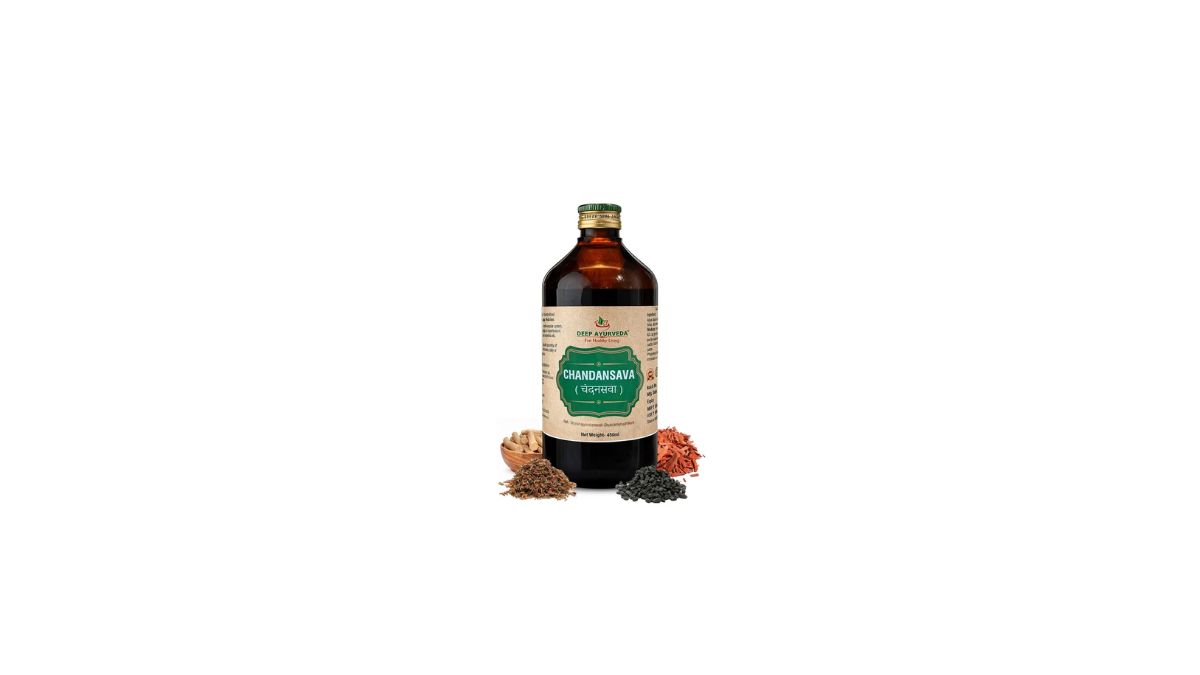
Chandanasava is a classical Ayurvedic fermented herbal formulation traditionally used to support urinary tract health and help maintain a balanced Pitta dosha. It contains cooling herbs such as Chandana (Sandalwood) along with other botanicals that are traditionally valued for promoting urinary comfort, aiding healthy fluid balance, and supporting overall wellness. It should be used under the guidance of a qualified Ayurvedic practitioner.
Introduction
Chandanasava is one of Ayurveda’s well-known fermented herbal formulations, traditionally valued for supporting urinary tract health and helping maintain the natural balance of Pitta Dosha. Prepared through a classical fermentation process using carefully selected herbs, it has been described in Ayurvedic texts as a formulation with cooling and soothing properties. Today, it continues to be used by Ayurvedic practitioners as part of an individualized treatment approach for people experiencing Pitta-related imbalances, particularly those affecting the urinary system.
Although Chandanasava has been used for generations, many people searching online still have questions such as: What exactly is Chandanasava? How does it work? What are its ingredients? Is it safe? When should it be taken? Unfortunately, much of the information available online is either too brief, overly technical, or focused only on product descriptions rather than helping readers understand the formulation from an Ayurvedic perspective.
As an Ayurvedic physician, I believe it’s important to look beyond a simple list of benefits. Every classical formulation in Ayurveda is selected according to an individual’s Prakriti (body constitution), Dosha imbalance, digestive strength, lifestyle, and overall health status. Chandanasava is no exception. Understanding these principles helps explain why the same formulation may be appropriate for one person while another may require a different approach.
In this comprehensive guide, you’ll learn:
- What Chandanasava is and how it is traditionally prepared.
- The key herbs used in the formulation and their Ayurvedic significance.
- How Chandanasava works according to Ayurvedic principles.
- Traditional uses and potential health benefits.
- Dosage, precautions, possible side effects, and safety considerations.
- Practical diet and lifestyle tips that may complement its use.
- Frequently asked questions answered in clear, reader-friendly language.
Whether you’re exploring Ayurveda for the first time or looking to understand Chandanasava in greater depth, this guide is designed to provide balanced, evidence-informed, and easy-to-understand information for readers around the world. Remember, while Ayurvedic formulations have a long history of traditional use, they should always be taken under the guidance of a qualified Ayurvedic practitioner to ensure they are appropriate for your individual needs.
Quick Facts About Chandanasava
| Feature | Details |
|---|---|
| Classical Name | Chandanasava |
| Ayurvedic Form | Fermented Herbal Formulation (Asava) |
| Primary Dosha | Traditionally used to help balance Pitta Dosha |
| Main System Supported | Urinary system and overall Pitta balance |
| Key Ingredient | Chandana (Sandalwood) along with other classical herbs |
| Traditional Taste (Rasa) | Predominantly Kashaya (Astringent) and Tikta (Bitter), depending on the formulation |
| Potency (Virya) | Cooling (Sheeta) |
| Typical Administration | Usually taken after meals with water, as advised by an Ayurvedic practitioner |
| Best Used Under | Professional Ayurvedic guidance |
What Is Chandanasava?
Chandanasava is a classical Ayurvedic fermented herbal preparation (Asava) traditionally formulated to support urinary health and help maintain the body’s natural cooling balance. The name comes from its principal ingredient, Chandana (Sandalwood), a herb highly regarded in Ayurveda for its Sheeta (cooling) and Pitta-pacifying properties.
Unlike herbal decoctions (Kwath), which are prepared by boiling herbs in water, an Asava is produced through a natural fermentation process. During this process, herbal ingredients are combined with sweetening agents such as jaggery or sugar and allowed to ferment under controlled conditions. This traditional method produces a small amount of naturally occurring self-generated alcohol, which helps preserve the formulation and enhances the extraction of certain herbal constituents. The alcohol content is typically low and forms naturally as part of the preparation process.
From an Ayurvedic perspective, Chandanasava is traditionally selected when there is an excess of Pitta Dosha, particularly when it manifests in the Mutravaha Srotas (urinary channels). Rather than targeting a single symptom, Ayurveda focuses on restoring internal balance. For this reason, Ayurvedic physicians evaluate the individual’s constitution, digestive strength, associated Dosha imbalances, and overall health before recommending Chandanasava.
Today, Chandanasava continues to be manufactured according to classical Ayurvedic principles, although slight variations in ingredient proportions may exist between reputable manufacturers while remaining aligned with traditional formulations.
Classical Ayurvedic Perspective
Ayurveda views health as a dynamic balance between the three Doshas—Vata, Pitta, and Kapha, the body’s tissues (Dhatus), metabolic fire (Agni), waste elimination (Malas), and the network of physiological channels known as Srotas. When these elements remain in harmony, the body functions efficiently. When one or more become imbalanced, symptoms and disease may develop.
Chandanasava is traditionally associated with supporting Pitta balance, particularly in conditions where excess internal heat affects the urinary system. In Ayurvedic terminology, this may involve disturbances in the Mutravaha Srotas, the channels responsible for the formation, transport, and elimination of urine. Classical Ayurvedic physicians describe herbs with Sheeta Virya (cooling potency) as helpful in pacifying aggravated Pitta and promoting comfort when excessive heat is a contributing factor.
The principal herb, Chandana (Santalum album), has long been valued in Ayurveda for its cooling qualities. When combined with other herbs in the classical formulation, Chandanasava is traditionally considered to work synergistically rather than relying on a single ingredient. This reflects a core Ayurvedic principle: carefully balanced combinations of herbs are often preferred because they aim to support multiple aspects of the body’s physiology while maintaining harmony among the Doshas.
Another important concept in Ayurveda is personalization. Two people experiencing similar symptoms may receive different recommendations depending on their constitution (Prakriti), current imbalance (Vikriti), digestive capacity (Agni), age, lifestyle, and seasonal influences. Therefore, Chandanasava is not viewed as a one-size-fits-all solution but as one of many classical formulations that may be selected as part of a broader, individualized Ayurvedic treatment plan.
Understanding this holistic perspective helps explain why Chandanasava has remained relevant for centuries. Rather than focusing only on symptoms, Ayurveda emphasizes restoring balance within the body so that its natural regulatory processes can function optimally.
Ingredients of Chandanasava
Chandanasava is a classical Ayurvedic fermented formulation prepared from a carefully selected blend of herbs that work together to help maintain Pitta balance, support the urinary system, and promote overall well-being. In Ayurveda, each herb contributes unique qualities, while the combination creates a synergistic effect that is often considered more effective than relying on a single ingredient.
Let’s explore the key ingredients and understand why they are traditionally included in this formulation.
1. Chandana (Santalum album) – The Cooling Heart of Chandanasava
As the principal ingredient, Chandana (Sandalwood) gives this classical formulation its name. In Ayurveda, it is traditionally known for its Sheeta Virya (cooling potency) and is widely used to help pacify aggravated Pitta Dosha, especially when excess heat affects the urinary system.
From an Ayurvedic perspective, Chandana is valued for supporting urinary comfort and promoting the body’s natural cooling mechanisms. Its soothing properties have made it an important herb in classical formulations designed to maintain urinary health and overall Pitta balance.
2. Amalaki (Emblica officinalis)
Amalaki (Indian Gooseberry) is one of Ayurveda’s most respected Rasayana (rejuvenative) herbs. It is traditionally used to support healthy digestion, nourish body tissues, and maintain the natural balance of Pitta Dosha.
In Chandanasava, Amalaki complements the cooling action of Chandana while contributing to overall vitality. It is also naturally rich in antioxidants, making it a valuable ingredient for supporting general wellness as part of a balanced lifestyle.
3. Guduchi (Tinospora cordifolia)
Known as Guduchi or Giloy, this herb is highly regarded in Ayurveda for promoting resilience and supporting the body’s natural defense mechanisms. It is traditionally considered Tridosha balancing, with a particular affinity for helping maintain healthy Pitta function.
Within Chandanasava, Guduchi works alongside other herbs to support overall physiological balance rather than addressing a single symptom, reflecting Ayurveda’s holistic approach to health.
4. Daruharidra (Berberis aristata)
Daruharidra, commonly known as Indian Barberry, is a well-recognized herb in Ayurveda that has traditionally been used to support liver function, skin health, and urinary wellness. Its naturally bitter taste (Tikta Rasa) and cooling nature make it particularly valuable in formulations designed to help balance aggravated Pitta Dosha.
In Chandanasava, Daruharidra complements the cooling herbs by supporting the body’s natural detoxification processes and helping maintain a healthy urinary system. Its inclusion reflects Ayurveda’s principle of addressing the underlying imbalance rather than focusing on a single symptom.
5. Musta (Cyperus rotundus)
Musta is an important Ayurvedic herb traditionally used to support healthy digestion and maintain the balance of Pitta and Kapha Dosha. Ayurveda considers a balanced digestive fire (Agni) essential for overall health, as proper digestion influences the nourishment of all body tissues.
Although Chandanasava is primarily known for urinary support, Musta plays a complementary role by promoting healthy digestion and fluid balance. This holistic approach ensures that the formulation supports the body’s internal harmony rather than targeting only one area.
6. Lodhra (Symplocos racemosa)
Lodhra is a classical Ayurvedic herb valued for its astringent (Kashaya Rasa) properties and its traditional role in supporting healthy body tissues. It has been used for centuries in various Ayurvedic formulations to help maintain tissue integrity and promote overall physiological balance.
In Chandanasava, Lodhra works in harmony with other herbs to enhance the formulation’s overall effectiveness. Its inclusion demonstrates Ayurveda’s emphasis on combining herbs that complement one another to provide comprehensive support.
7. Nagakesara (Mesua ferrea)
Nagakesara is a fragrant medicinal herb that has been described in classical Ayurvedic texts for its broad therapeutic applications. Traditionally, it is used to support digestive health, maintain healthy circulation, and help balance Pitta and Kapha Dosha.
Within Chandanasava, Nagakesara contributes to the formulation’s balanced herbal profile. Rather than acting independently, it works synergistically with the other ingredients to support overall wellness and reinforce the formulation’s traditional purpose.
8. Dhataki (Woodfordia fruticosa)
Dhataki flowers have a unique and essential role in many classical Asava and Arishta preparations. Besides their traditional therapeutic value, they naturally facilitate the fermentation process that distinguishes these Ayurvedic formulations from other dosage forms.
This natural fermentation helps extract beneficial plant constituents and contributes to the formulation’s stability without relying on artificial preservatives. It is one of the reasons why Asava preparations like Chandanasava have remained an important part of Ayurvedic pharmacy for centuries.
9. Jaggery (Guda) – The Natural Fermentation Base
Traditional Chandanasava is prepared using jaggery (Guda), which serves as a natural source of sugars required for the fermentation process. During fermentation, these sugars are gradually converted into a small amount of naturally occurring alcohol, which helps preserve the formulation and improves the extraction of herbal constituents.
It is important to understand that jaggery is not added simply as a sweetening agent. In classical Ayurveda, it plays a crucial role in creating the self-generated fermentation that gives Asava formulations their characteristic properties and long shelf life.
Why Are These Herbs Combined in Chandanasava?
One of the distinguishing features of Ayurveda is its emphasis on synergistic formulations rather than relying on a single herb. Each ingredient in Chandanasava has been carefully selected for its unique Ayurvedic properties, but the true strength of the formulation lies in how these herbs work together.
For example, Chandana provides the primary cooling effect, while Amalaki and Guduchi help maintain systemic balance. Musta supports healthy digestion, which Ayurveda considers essential for proper nourishment, and Dhataki enables the natural fermentation process that enhances the formulation’s stability and herbal extraction. Together, these ingredients create a balanced formulation designed to support the body’s natural functions according to Ayurvedic principles.
How Does Chandanasava Work According to Ayurveda?
Ayurveda does not view health through the lens of a single symptom or disease. Instead, it focuses on understanding the underlying imbalance that affects the body’s natural functions. This is why classical formulations like Chandanasava are traditionally selected after evaluating an individual’s Prakriti (body constitution), Vikriti (current Dosha imbalance), digestive strength (Agni), and the body systems involved.
From an Ayurvedic perspective, Chandanasava is primarily known for its ability to help pacify aggravated Pitta Dosha, particularly when excess internal heat influences the Mutravaha Srotas (urinary channels). Rather than suppressing symptoms, Ayurveda aims to restore harmony so that the body’s natural physiological processes can function more efficiently.
Supports the Balance of Pitta Dosha
According to Ayurveda, Pitta Dosha governs metabolism, body temperature, digestion, and various biochemical processes. When Pitta becomes aggravated, it may manifest as excessive internal heat, burning sensations, increased thirst, irritability, or discomfort associated with the urinary system.
The cooling herbs in Chandanasava are traditionally selected to help calm this excess heat and support the body’s natural balance. This is one of the primary reasons the formulation has been valued in Ayurvedic practice for centuries.
Helps Maintain Healthy Urinary Channels (Mutravaha Srotas)
Ayurveda describes the Mutravaha Srotas as the channels responsible for the formation, transport, and elimination of urine. Maintaining the proper function of these channels is considered essential for overall health and fluid balance.
Chandanasava is traditionally used to support the healthy functioning of the urinary system by helping maintain balance within these channels. Its carefully selected herbs are believed to work together to promote urinary comfort and support normal urinary function as part of an individualized Ayurvedic approach.
Promotes Natural Cooling Within the Body
One of the distinguishing characteristics of Chandanasava is the presence of herbs with Sheeta Virya (cooling potency). In Ayurveda, these herbs are traditionally valued for helping counteract excess heat without disturbing the body’s natural equilibrium.
This cooling action is not intended to lower body temperature in the modern medical sense. Instead, it refers to balancing the Ayurvedic qualities associated with aggravated Pitta, allowing the body to maintain its internal harmony more effectively.
Supports Healthy Digestion and Metabolic Balance
Although Chandanasava is widely recognized for urinary support, Ayurveda also emphasizes the importance of healthy digestion in maintaining overall wellness. A balanced Agni (digestive fire) helps ensure that nutrients are properly processed and that metabolic waste does not accumulate within the body.
Several herbs in Chandanasava traditionally support digestive function while complementing the formulation’s primary role. This reflects Ayurveda’s holistic philosophy that healthy digestion contributes to the proper functioning of all body systems.
Works Through the Synergy of Multiple Herbs
Unlike single-herb supplements, Chandanasava is a polyherbal formulation, meaning its benefits arise from the combined action of several herbs rather than one dominant ingredient.
Each herb contributes distinct Ayurvedic properties. For example, Chandana provides cooling support, Guduchi promotes systemic balance, Amalaki nourishes the body, and Musta supports digestive health. Together, these ingredients create a formulation designed to restore balance across multiple physiological functions rather than focusing on a single concern.
The Role of Natural Fermentation
Chandanasava belongs to the Asava category of Ayurvedic medicines, which are prepared through a traditional natural fermentation process. This method has been used in Ayurveda for centuries and is believed to enhance the extraction of beneficial plant constituents while helping preserve the formulation naturally.
The fermentation process also produces a small amount of self-generated alcohol, which acts as a natural carrier for herbal compounds. This is a characteristic feature of classical Asava preparations and distinguishes them from decoctions (Kwath) and tablets.
Why Personalization Matters in Ayurveda
One of the greatest strengths of Ayurveda is that it recognizes every individual as unique. Two people with similar symptoms may have different underlying Dosha imbalances and, therefore, may not receive the same herbal formulation.
As an Ayurvedic doctor, I always emphasize that Chandanasava should be selected based on a comprehensive assessment rather than self-diagnosis. Factors such as Prakriti, digestive strength, age, lifestyle, diet, seasonal influences, and existing health conditions all influence whether this formulation is appropriate for a particular individual. This personalized approach is central to classical Ayurvedic practice and supports both safety and effectiveness.
If you’re interested in learning more about another classical Ayurvedic formulation that is traditionally used for different health concerns, you can also explore our detailed guide on Mahamanjisthadi Kwath. While Chandanasava is commonly associated with supporting urinary health and Pitta balance, Mahamanjisthadi Kwath is traditionally discussed in Ayurveda for its role in supporting healthy blood circulation and skin health. Understanding the differences between these classical formulations can help you appreciate why Ayurvedic treatment is always individualized rather than based on symptoms alone.
Health Benefits of Chandanasava
For centuries, Chandanasava has been used in Ayurveda as a classical herbal formulation to support urinary health and help maintain the natural balance of Pitta Dosha. Rather than focusing on a single concern, Ayurveda views this formulation as part of a holistic approach that considers an individual’s constitution, digestion, lifestyle, and overall well-being.
Below are some of the traditional health benefits associated with Chandanasava.
1. Traditionally Supports Urinary Tract Health
One of the best-known traditional uses of Chandanasava is supporting the health of the Mutravaha Srotas, the urinary channels described in Ayurveda. When these channels function efficiently, they help maintain the normal formation and elimination of urine, which is considered important for overall physiological balance.
In Ayurvedic practice, Chandanasava is often selected when urinary discomfort is associated with an aggravated Pitta Dosha. Its cooling herbal ingredients are traditionally valued for promoting urinary comfort and supporting the healthy functioning of the urinary system as part of an individualized treatment plan.
2. Helps Maintain a Healthy Pitta Balance
According to Ayurveda, Pitta Dosha governs body heat, metabolism, digestion, and many biochemical activities. Excess Pitta may contribute to sensations of heat, irritability, increased thirst, or discomfort in different parts of the body.
Chandanasava contains herbs traditionally known for their Sheeta (cooling) properties, which may help restore the natural balance of Pitta. Maintaining this balance is considered essential for supporting overall health and promoting internal harmony.
3. Promotes the Body’s Natural Cooling Mechanisms
The herbs used in Chandanasava have long been appreciated in Ayurveda for their cooling qualities. Rather than artificially lowering body temperature, these herbs are traditionally used to help balance the Ayurvedic concept of excess internal heat.
This cooling action makes Chandanasava a valued classical formulation whenever an Ayurvedic assessment suggests that aggravated Pitta is influencing the body’s natural equilibrium.
4. Supports Healthy Fluid Balance
Maintaining proper fluid balance is an important aspect of Ayurvedic health. The urinary system plays a central role in eliminating metabolic waste while helping regulate the body’s internal environment.
Chandanasava is traditionally used to support the normal functioning of these natural processes. When combined with adequate hydration and a balanced lifestyle, it may contribute to overall urinary wellness according to Ayurvedic principles.
5. Supports Digestive Wellness as Part of Holistic Health
Although Chandanasava is primarily recognized for urinary support, several of its herbs also contribute to maintaining healthy digestion. Ayurveda considers a balanced Agni (digestive fire) to be the foundation of good health because digestion influences the nourishment of every tissue in the body.
By supporting digestive balance alongside urinary health, Chandanasava reflects Ayurveda’s holistic philosophy of treating the individual rather than focusing on isolated symptoms.
6. Provides the Benefits of a Synergistic Herbal Formulation
Unlike formulations based on a single herb, Chandanasava combines several botanicals that work together to create a balanced therapeutic profile. Ayurveda teaches that carefully selected herbal combinations often provide broader support than individual ingredients alone.
The cooling influence of Chandana, the rejuvenating qualities of Amalaki, the systemic support of Guduchi, and the digestive benefits of Musta complement one another, making Chandanasava a well-rounded classical formulation.
7. Supports Overall Wellness Through an Ayurvedic Approach
Ayurveda does not separate the health of one organ from the rest of the body. Instead, it emphasizes maintaining harmony among the Doshas, healthy digestion, proper tissue nourishment, and efficient elimination of waste.
Within this holistic framework, Chandanasava is traditionally used to support the body’s natural balance rather than simply addressing individual symptoms. This broader perspective is one of the reasons why classical Ayurvedic formulations continue to be valued today.
When Do Ayurvedic Doctors Traditionally Consider Chandanasava?
In clinical Ayurvedic practice, Chandanasava is not recommended solely because a person experiences urinary discomfort. Instead, an Ayurvedic physician evaluates the individual’s overall health, body constitution, digestive strength, lifestyle, and Dosha imbalance before deciding whether this formulation is appropriate.
For example, if an assessment indicates that Pitta aggravation is a significant contributing factor, Chandanasava may be considered as part of a personalized treatment plan. However, if the imbalance is primarily related to Vata or Kapha, another classical formulation may be more suitable. This individualized approach is a defining feature of Ayurveda and helps ensure that treatment is tailored to the person’s specific needs rather than based only on symptoms.
Traditional Uses of Chandanasava in Ayurveda
In Ayurveda, Chandanasava is traditionally used after evaluating an individual’s Prakriti (body constitution), Dosha imbalance, digestive strength (Agni), and overall health. Rather than being prescribed for a single symptom, it is selected when its properties align with the person’s unique Ayurvedic assessment.
Classical Ayurvedic texts describe Chandanasava as a formulation with cooling and Pitta-pacifying properties. Because of this, Ayurvedic practitioners have traditionally included it in personalized treatment plans where excess Pitta Dosha is believed to play a significant role. The following are some of its traditional applications in Ayurvedic practice.
Traditionally Used to Support Urinary Comfort
One of the most recognized traditional applications of Chandanasava is supporting urinary comfort when an Ayurvedic assessment indicates the involvement of aggravated Pitta Dosha. Its cooling herbal ingredients have long been valued for helping maintain the normal function of the urinary channels (Mutravaha Srotas) and promoting overall urinary wellness.
Rather than viewing urinary discomfort as an isolated issue, Ayurveda considers digestive health, hydration, diet, and Dosha balance to better understand the underlying cause. Chandanasava is therefore used as part of a broader, individualized approach rather than as a standalone solution.
Traditionally Used When Excess Pitta Is Present
According to Ayurveda, an increase in Pitta Dosha may contribute to sensations of excessive heat, increased thirst, irritability, or discomfort in different parts of the body. Herbs with Sheeta Virya (cooling potency) are traditionally chosen to help restore this balance.
Chandanasava is one such classical formulation. Its herbal combination is traditionally used to help calm aggravated Pitta while supporting the body’s natural cooling mechanisms and maintaining physiological harmony.
Traditionally Used to Support Healthy Urinary Elimination
Ayurveda places great importance on the body’s ability to eliminate waste efficiently. The proper functioning of the urinary system is considered essential for maintaining internal balance and overall well-being.
Chandanasava is traditionally used to support healthy urinary elimination as part of a personalized Ayurvedic treatment plan. Its role is not limited to the urinary tract alone but is considered within the broader context of digestive health, metabolism, and Dosha balance.
Traditionally Included in Holistic Pitta Management
Managing aggravated Pitta in Ayurveda extends beyond herbal formulations. Diet, hydration, sleep, stress management, and seasonal routines are all considered important factors.
When appropriate, Chandanasava may be recommended alongside lifestyle and dietary modifications that help reduce excess heat in the body. This integrated approach reflects Ayurveda’s emphasis on addressing the root cause of imbalance rather than focusing only on symptoms.
Traditionally Used as Part of an Individualized Ayurvedic Treatment Plan
Unlike conventional approaches that often focus on a diagnosis alone, Ayurveda tailors treatment to the individual. Two people with similar symptoms may receive different recommendations depending on their constitution, digestive strength, age, and overall health.
For this reason, Chandanasava is traditionally used as one component of a comprehensive treatment strategy that may also include dietary guidance, daily routines (Dinacharya), seasonal practices (Ritucharya), and other classical Ayurvedic formulations when appropriate.
Supporting Chandanasava with Diet and Lifestyle
Ayurveda emphasizes that herbal formulations work best when combined with healthy lifestyle practices. While Chandanasava is traditionally selected to help maintain Pitta balance, everyday habits can also influence how effectively the body restores equilibrium.
General Ayurvedic recommendations may include:
- Staying well hydrated throughout the day to support normal urinary function.
- Choosing freshly prepared, balanced meals and avoiding excessively spicy or heavily processed foods if Pitta aggravation is present.
- Maintaining regular sleep and meal timings to support healthy digestion (Agni).
- Managing stress through practices such as yoga, meditation, or mindful breathing, as emotional well-being is closely linked with Dosha balance in Ayurveda.
These measures are intended to complement—not replace—the advice of a qualified Ayurvedic practitioner.
What Does Modern Research Say About Chandanasava?
Ayurveda has a long history of using classical formulations such as Chandanasava, with their traditional applications documented in Ayurvedic texts for centuries. At the same time, many readers today want to understand how these traditional uses relate to modern scientific research.
Current research on Chandanasava as a complete formulation is relatively limited compared with some individual Ayurvedic herbs. While its traditional use is well established within Ayurveda, more high-quality clinical studies are needed to better understand its effectiveness, optimal dosage, and long-term safety in different populations.
This does not mean that the formulation lacks value. Instead, it highlights the need to distinguish between traditional Ayurvedic knowledge and modern clinical evidence. Ayurveda and modern medicine use different frameworks to evaluate health, and both perspectives can contribute to informed decision-making.
Research on Individual Herbs Used in Chandanasava
Although studies on the complete formulation remain limited, several herbs commonly found in Chandanasava have been investigated for their biological properties.
For example, Amalaki (Emblica officinalis) has been studied for its antioxidant activity and nutritional value. Likewise, Guduchi (Tinospora cordifolia) has been the subject of research exploring its role in immune function and inflammatory pathways. Chandana (Santalum album) has also been investigated for its aromatic compounds and traditional applications.
These studies provide useful insights into individual ingredients. However, they should not be interpreted as direct evidence for the effectiveness of Chandanasava itself, because the formulation combines multiple herbs that interact through a traditional fermentation process unique to Ayurveda.
Why Traditional Knowledge Still Matters
In Ayurveda, the value of a formulation is not determined by a single herb or isolated chemical compound. Classical formulations are designed using carefully balanced combinations of herbs that work together according to Ayurvedic principles of Rasa (taste), Guna (qualities), Virya (potency), Vipaka (post-digestive effect), and Dosha balance.
This holistic approach differs from the reductionist model commonly used in modern pharmacological research. As a result, evaluating an Ayurvedic formulation often requires research methods that consider the formulation as a whole rather than examining each ingredient separately.
A Balanced Perspective
For anyone considering Chandanasava, it is helpful to view traditional Ayurvedic knowledge and modern scientific research as complementary rather than competing sources of information. Ayurveda offers centuries of clinical experience and individualized treatment principles, while modern research continues to explore the safety and biological effects of herbal medicines using contemporary scientific methods.
Making healthcare decisions based on both reliable evidence and professional guidance can help ensure that herbal formulations are used appropriately and safely.
Who May Benefit from Chandanasava?
Chandanasava is a classical Ayurvedic formulation that is traditionally selected after a thorough assessment of an individual’s Prakriti (body constitution), Dosha imbalance, digestive health, and overall clinical picture. Rather than being suitable for everyone, it is generally considered when its Ayurvedic properties match the person’s unique health needs.
Below are some situations in which an Ayurvedic practitioner may consider Chandanasava as part of a personalised treatment plan.
Individuals with Pitta-Dominant Imbalances
People with signs of aggravated Pitta Dosha may be considered for Chandanasava after a proper Ayurvedic evaluation. From a traditional perspective, Pitta governs heat, metabolism, and transformation within the body. When this Dosha becomes imbalanced, an Ayurvedic practitioner may recommend cooling formulations that help restore equilibrium according to classical principles.
Since Chandanasava contains herbs traditionally known for their cooling nature, it is often selected when excess Pitta is believed to be influencing the urinary system or overall physiological balance.
People Seeking Ayurvedic Support for Urinary Wellness
Individuals looking to support their urinary health through Ayurveda may be advised to take Chandanasava if it aligns with their constitution and clinical assessment. Rather than focusing on a single symptom, Ayurvedic practitioners evaluate the broader pattern of imbalance before recommending any herbal formulation.
This personalised approach helps ensure that the selected medicine supports the individual’s overall health rather than addressing only one aspect of their condition.
Adults Looking to Maintain Pitta Balance
Some adults choose Ayurvedic formulations as part of a proactive wellness routine under professional guidance. When an Ayurvedic assessment identifies a tendency toward Pitta aggravation, Chandanasava may be considered alongside dietary changes, lifestyle modifications, and other supportive measures.
The emphasis is not only on herbal support but also on creating sustainable habits that help maintain long-term balance.
Individuals Following an Ayurvedic Treatment Plan
Chandanasava is often used as one component of a broader Ayurvedic care plan rather than as a standalone intervention. Depending on the individual’s needs, an Ayurvedic physician may combine it with dietary recommendations, daily routines, yoga, breathing practices, or other classical formulations to support overall well-being.
This holistic approach reflects Ayurveda’s philosophy of treating the whole person rather than focusing on isolated symptoms.
Those Who Prefer Traditional Herbal Formulations
Many people are interested in Ayurvedic medicines because of their long history of traditional use and their holistic philosophy. For individuals who wish to incorporate classical herbal formulations into their wellness journey, Chandanasava may be considered when it is appropriate for their constitution and health status.
However, traditional use does not replace professional evaluation. Choosing the right formulation is an important part of safe and effective Ayurvedic practice.
Who May Not Be an Ideal Candidate?
Although Chandanasava is a classical Ayurvedic formulation, it may not be appropriate for everyone. Factors such as age, pregnancy, breastfeeding, existing medical conditions, current medications, and an individual’s Dosha profile should all be considered before starting any herbal medicine.
Because Chandanasava is a naturally fermented preparation, it also contains a small amount of self-generated alcohol. This may be relevant for some individuals and should be discussed with a qualified Ayurvedic practitioner or healthcare professional before use.
Chandanasava Dosage: How to Take It Safely
One of the most common questions people ask is, “How should I take Chandanasava?” The answer depends on several factors, including your age, body constitution (Prakriti), current Dosha imbalance, digestive strength (Agni), and the reason it has been recommended.
In Ayurveda, there is no universal dosage that suits everyone. Although classical formulations have general dosage guidelines, Ayurvedic physicians often adjust the amount and duration according to an individual’s health needs. For this reason, Chandanasava should always be taken under the guidance of a qualified Ayurvedic practitioner.
General Adult Dosage
The general adult dosage of Chandanasava is 15–30 ml, usually diluted with an equal quantity of water, twice daily after meals, or as directed by an Ayurvedic physician.
The dosage may vary depending on factors such as the individual’s constitution, age, digestive capacity, and the overall treatment plan. Self-adjusting the dose without professional advice is not recommended.
Note: Always follow the dosage instructions provided on the product label or those given by your Ayurvedic practitioner, as formulations may vary slightly between manufacturers.
Best Time to Take Chandanasava
Chandanasava is traditionally taken after meals, as this timing is generally considered suitable for fermented Ayurvedic formulations (Asava and Arishta). Taking it after food may also help improve tolerance and supports its use within a broader Ayurvedic treatment plan.
If your Ayurvedic physician recommends a different schedule based on your individual condition, their advice should always take priority over general guidance.
Should Chandanasava Be Taken With Water?
Yes. Chandanasava is commonly taken after diluting it with an equal amount of water unless your Ayurvedic practitioner advises otherwise. Dilution is the traditional method of administration for many Asava and Arishta preparations and helps ensure the formulation is consumed as intended.
Avoid mixing Chandanasava with milk, carbonated drinks, or alcoholic beverages unless specifically recommended by a qualified healthcare professional.
How Long Should You Take Chandanasava?
The duration of use depends on the individual’s health status, Ayurvedic diagnosis, and treatment goals. Some people may require it for a shorter period, while others may be advised to continue for longer under regular professional review.
Rather than deciding the duration independently, it is best to follow the treatment plan provided by your Ayurvedic practitioner. Periodic follow-up allows the treatment to be adjusted as your condition and Dosha balance change over time.
What If You Miss a Dose?
If you forget to take a dose, take it when you remember, provided it is not close to the time of your next scheduled dose. If your next dose is due soon, skip the missed dose and continue with your regular schedule.
Avoid taking a double dose to make up for a missed one, as this does not improve effectiveness and is generally not recommended.
Can Chandanasava Be Taken Daily?
Whether Chandanasava should be taken daily depends on the purpose for which it has been recommended and your individual Ayurvedic assessment. Some people may be advised to take it daily for a specified period, while others may require a different schedule.
Because Ayurvedic treatment is personalised, daily use should always be based on professional guidance rather than self-medication.
Practical Tips for Taking Chandanasava
To get the most from Chandanasava, consistency is often just as important as the formulation itself. Taking it at the same time each day, following the recommended dosage, and combining it with appropriate dietary and lifestyle measures can help support your overall Ayurvedic treatment plan.
It is also important to store the bottle according to the manufacturer’s instructions and use the measuring cup or cap provided to ensure accurate dosing. Avoid estimating the quantity, as even traditional herbal formulations should be taken in the recommended amount.
Safety, Side Effects, and Precautions of Chandanasava
Chandanasava is a classical Ayurvedic formulation that has been used in traditional practice for generations. When prepared according to recognised Ayurvedic standards and taken in the recommended dosage under the guidance of a qualified Ayurvedic practitioner, it is generally considered suitable for its traditional use.
However, like any herbal or conventional medicine, Chandanasava may not be appropriate for everyone. Individual factors such as age, body constitution (Prakriti), existing health conditions, current medications, and overall treatment goals should always be considered before starting the formulation.
Understanding its safety profile and taking a few simple precautions can help ensure that Chandanasava is used responsibly.
Does Chandanasava Have Any Side Effects?
Most people tolerate Chandanasava well when it is used as directed. However, individual responses can vary, and some people may experience unwanted effects, particularly if the formulation is taken in excessive amounts or without professional guidance.
If you notice any unexpected symptoms after starting Chandanasava, discontinue its use and consult a qualified Ayurvedic practitioner or healthcare professional for further evaluation.
Can Everyone Take Chandanasava?
Although Chandanasava is a traditional herbal formulation, it should not be considered suitable for every individual. Ayurveda emphasises personalised treatment, which means the same medicine may be appropriate for one person but not for another.
A proper Ayurvedic assessment helps determine whether Chandanasava matches your body constitution, current Dosha imbalance, digestive strength, and overall health needs.
Important Precautions Before Using Chandanasava
Before taking Chandanasava, it is advisable to discuss its use with a qualified healthcare professional if you:
- are pregnant or planning a pregnancy.
- are breastfeeding.
- have a chronic medical condition such as liver, kidney, or heart disease.
- are living with diabetes or need to monitor your sugar intake.
- are taking prescription medicines or other herbal supplements.
- have previously experienced an allergic reaction to herbal products.
These precautions do not necessarily mean that Chandanasava cannot be used, but they highlight situations where professional guidance is particularly important.
Natural Fermentation and Alcohol Content
As a classical Asava, Chandanasava is prepared through a natural fermentation process. During this process, a small amount of self-generated alcohol is produced naturally, which helps preserve the formulation and supports the extraction of herbal constituents.
Although the alcohol content is generally low, some individuals may wish to discuss this with their healthcare provider before use, particularly if they have medical, religious, or personal considerations related to alcohol-containing products.
Can Chandanasava Interact with Other Medicines?
Research on interactions between Chandanasava and modern medicines is limited. Because of this, it is sensible to inform both your Ayurvedic practitioner and your primary healthcare provider about any prescription medicines, over-the-counter products, or dietary supplements you are currently taking.
This helps ensure that your treatment plan is coordinated and appropriate for your individual health needs.
When Should You Stop Taking Chandanasava?
If you experience any unexpected reaction after starting Chandanasava or if your symptoms persist or worsen, stop using the formulation and seek professional medical advice.
Similarly, if your health status changes or you begin taking new medications, it is advisable to review your Ayurvedic treatment plan with your practitioner before continuing the formulation.
Frequently Asked Questions About Chandanasava
What is Chandanasava used for?
Chandanasava is a classical Ayurvedic fermented formulation traditionally used to support urinary tract health and help maintain the natural balance of Pitta Dosha. Ayurvedic practitioners may recommend it as part of a personalised treatment plan after evaluating an individual’s constitution, digestive health, and overall clinical condition.
Can Chandanasava be taken daily?
The frequency of use depends on why it has been recommended and your individual Ayurvedic assessment. Some people may be advised to take it daily for a specific period, while others may require a different schedule. Always follow the dosage instructions provided by your Ayurvedic practitioner or the product label.
What is the best time to take Chandanasava?
Chandanasava is traditionally taken after meals, usually diluted with an equal quantity of water. However, the exact timing may vary depending on your treatment plan, so it is best to follow the advice of your Ayurvedic practitioner.
Is Chandanasava safe for long-term use?
The duration of use should be determined by a qualified Ayurvedic practitioner. Long-term use may be appropriate in some situations, but it should always be reviewed periodically to ensure that the formulation continues to match your current health needs and Dosha balance.
Does Chandanasava contain alcohol?
Yes. Like other classical Asava preparations, Chandanasava contains a small amount of naturally occurring alcohol that develops during the traditional fermentation process. It is not added separately but forms naturally as part of the preparation method described in Ayurveda.
Can Chandanasava be taken with modern medicines?
There is limited research on interactions between Chandanasava and conventional medicines. If you are taking prescription medications or have an ongoing medical condition, inform both your Ayurvedic practitioner and your healthcare provider before starting the formulation.
Can children take Chandanasava?
Children should only take Chandanasava if it has been specifically recommended by a qualified Ayurvedic practitioner or healthcare professional. The dosage and suitability depend on factors such as the child’s age, health status, and individual assessment.
Is Chandanasava suitable during pregnancy or breastfeeding?
If you are pregnant, planning a pregnancy, or breastfeeding, consult a qualified healthcare professional before taking Chandanasava. An individual assessment is important to determine whether it is appropriate for your specific situation.
Can I take Chandanasava on an empty stomach?
Chandanasava is generally taken after meals rather than on an empty stomach. Taking it after food is the traditional method of administration for Asava formulations and may also improve tolerance. Follow the instructions provided by your Ayurvedic practitioner.
How should Chandanasava be stored?
Store Chandanasava in a cool, dry place away from direct sunlight and excessive heat. Keep the bottle tightly closed after each use and always follow the storage instructions provided by the manufacturer.
Is Chandanasava the same as Chandan syrup?
No. Chandanasava is a classical fermented Ayurvedic formulation prepared using multiple herbs through a natural fermentation process. Products marketed simply as Chandan syrup may have a different composition, preparation method, and intended use. Always read the product label carefully before use.
Can I take Chandanasava without consulting an Ayurvedic doctor?
Although Chandanasava is available as an Ayurvedic medicine, self-medication is not always the best approach. Ayurveda emphasises personalised treatment, and a qualified practitioner can determine whether this formulation is suitable for your constitution, current Dosha imbalance, and overall health goals.
Final Thoughts
Chandanasava is a time-honoured Ayurvedic formulation traditionally used to support urinary health and help maintain Pitta Dosha balance. Its carefully selected herbal ingredients and classical fermentation process reflect Ayurveda’s holistic approach to promoting overall well-being.
While Chandanasava has been trusted in Ayurvedic practice for generations, it is most effective when used as part of a personalised treatment plan under the guidance of a qualified Ayurvedic practitioner. Along with the right herbal support, maintaining a balanced diet, healthy lifestyle, and proper hydration plays an important role in achieving long-term wellness.
If you’re considering Chandanasava, consult an experienced Ayurvedic practitioner to determine whether it is suitable for your individual health needs and constitution.