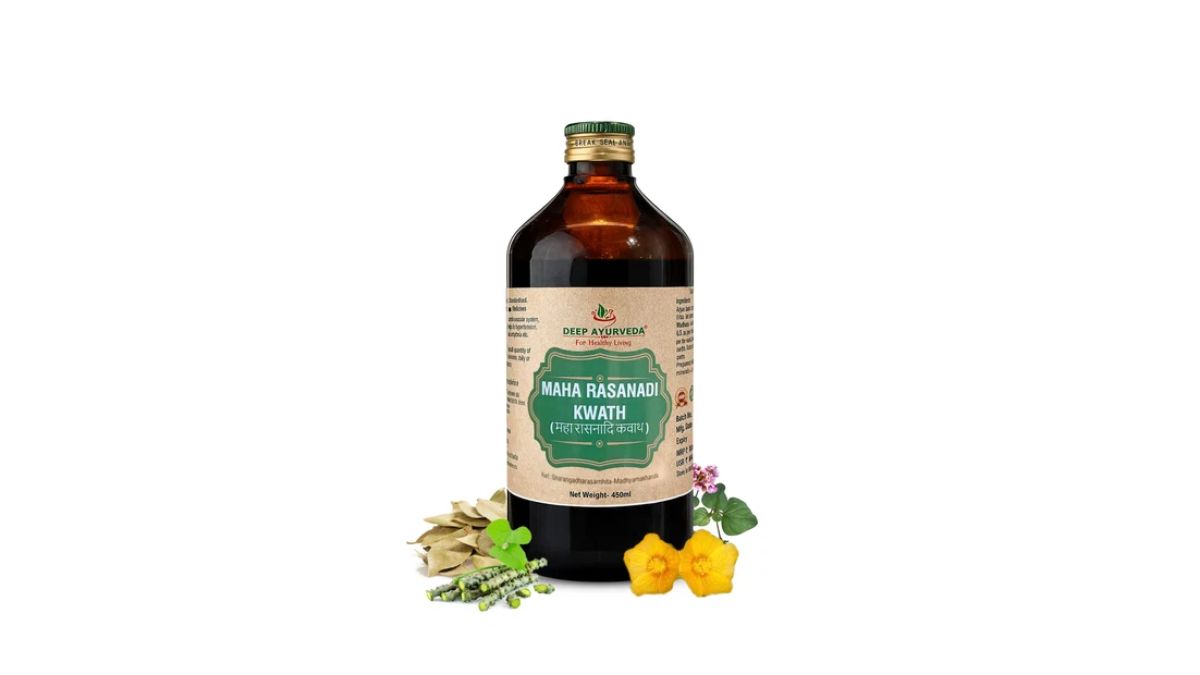
Maharasnadi Kwath is a classical Ayurvedic herbal decoction traditionally used to support joint health, muscle flexibility, and balanced Vata Dosha. It is commonly recommended in Ayurveda for individuals experiencing stiffness, reduced mobility, or musculoskeletal discomfort. The formulation should be used under the guidance of a qualified Ayurvedic physician, as the appropriate dosage and duration vary according to an individual’s health condition and body constitution (Prakriti).
Introduction
Joint stiffness, muscle discomfort, and reduced flexibility are common concerns that can affect people of all ages, especially those with sedentary lifestyles, physically demanding work, or age-related changes. In Ayurveda, these issues are often associated with an imbalance of Vata Dosha, sometimes accompanied by the accumulation of Ama (metabolic toxins), which can interfere with the healthy functioning of joints, muscles, and connective tissues.
Among the classical Ayurvedic formulations traditionally used for supporting musculoskeletal health, Maharasnadi Kwath holds a significant place. Prepared from a carefully selected combination of herbs, this traditional decoction has long been used by Ayurvedic physicians to support joint comfort, improve mobility, and help maintain balanced Vata.
Unlike many articles that simply list its benefits, understanding why Maharasnadi Kwath is prescribed requires looking at the Ayurvedic principles behind the formulation. Ayurveda focuses not only on relieving symptoms but also on identifying the underlying imbalance that may contribute to recurring discomfort.
In this comprehensive guide, you’ll learn:
- What Maharasnadi Kwath is and its classical Ayurvedic background.
- The traditional benefits and uses of Maharasnadi Kwath.
- How its ingredients work together from an Ayurvedic perspective.
- Recommended dosage and the best time to take it.
- Possible side effects and important precautions.
- Diet and lifestyle practices that complement its use.
- Frequently asked questions answered by an Ayurvedic perspective.
Whether you’re exploring Ayurvedic wellness options or simply want to understand this classical formulation better, this guide provides balanced, evidence-informed information to help you make informed decisions in consultation with a qualified Ayurvedic practitioner.
Quick Facts About Maharasnadi Kwath
| Feature | Details |
|---|---|
| Classical Formulation | Yes |
| Medicine Type | Herbal Ayurvedic Kwath (Decoction) |
| Main Purpose | Traditionally used to support joint, muscle, and nerve health while helping balance aggravated Vata Dosha |
| Primary Dosha | Vata |
| Traditional System | Ayurveda |
| Common Form | Kwath Churna (coarse powder), Ready-made Liquid Kwath |
| Best Time to Take | Usually as advised by an Ayurvedic physician, often before meals or as directed |
| Suitable For | Adults, based on individual assessment |
| Prescription | Should ideally be taken under professional Ayurvedic guidance |
What is Maharasnadi Kwath?
Maharasnadi Kwath is a classical Ayurvedic herbal decoction (Kwatha Kalpana) prepared using a combination of medicinal herbs that are traditionally valued for their ability to support healthy joints, muscles, nerves, and connective tissues. The formulation is primarily described in classical Ayurvedic literature for managing conditions associated with aggravated Vata Dosha, particularly when stiffness, restricted movement, or musculoskeletal discomfort are present.
The name itself reflects its composition:
Maha means great or comprehensive, indicating a broad-spectrum formulation.
Rasnadi refers to Rasna and associated herbs that are traditionally used in formulations aimed at supporting Vata balance and musculoskeletal health.
Kwath means a herbal decoction prepared by boiling coarse herbal powder in water until reduced to the prescribed quantity.
Unlike modern pain-relief approaches that often focus only on temporary symptom management, Ayurveda views Maharasnadi Kwath as a formulation intended to support the body’s natural balance. It is traditionally prescribed after assessing the individual’s Prakriti (body constitution), Vikriti (current imbalance), Agni (digestive strength), Ama (metabolic waste accumulation), and the affected body systems.
Another important aspect that distinguishes Maharasnadi Kwath is its multi-herb composition. Instead of relying on a single herb, Ayurveda combines ingredients with complementary actions so they work together to support healthy physiological functions while maintaining Doshic balance.
Today, Maharasnadi Kwath is available in different forms, including traditional Kwath Churna (coarse herbal powder for preparing a decoction at home) and ready-to-use liquid formulations. While both are based on the same Ayurvedic principles, the method of preparation and concentration may differ depending on the manufacturer.
Why Ayurvedic Doctors Recommend Maharasnadi Kwath: Understanding the Root Cause
One of the biggest differences between Ayurveda and symptom-based approaches is that Ayurveda aims to understand why discomfort develops rather than focusing only on where it occurs.
According to Ayurveda, healthy movement depends on the balanced functioning of Vata Dosha, efficient digestion (Agni), clear body channels (Srotas), and well-nourished tissues (Dhatus). When these systems become imbalanced, the body may gradually develop stiffness, restricted movement, or discomfort.
From an Ayurvedic perspective, Maharasnadi Kwath may be considered when:
- Aggravated Vata contributes to dryness and stiffness.
- Ama (undigested metabolic waste) obstructs the body’s channels.
- Poor circulation of nutrients affects muscles and joints.
- Natural flexibility declines due to age or lifestyle.
- Long-standing Vata imbalance impacts mobility and comfort.
Rather than targeting a single symptom, Maharasnadi Kwath is traditionally selected to help restore balance across these interconnected systems. This holistic approach is one of the reasons the formulation has remained relevant in Ayurvedic practice for generations.
Classical Ayurvedic Reference of Maharasnadi Kwath
Maharasnadi Kwath is a classical Ayurvedic formulation described in traditional Ayurvedic texts for supporting Vata-related disorders, particularly those affecting the musculoskeletal and neuromuscular systems. Over centuries, Ayurvedic physicians have prescribed this formulation after assessing an individual’s Dosha imbalance, Agni (digestive fire), Ama (metabolic toxins), Dhatu (body tissues), and Srotas (body channels) rather than treating symptoms alone.
Unlike many modern herbal blends developed for a single purpose, Maharasnadi Kwath follows the Ayurvedic principle of polyherbal synergy, where multiple herbs with complementary properties are combined to support the body’s natural healing processes.
Ayurvedic Perspective: A medicine is selected not only based on the disease name but also on the patient’s Prakriti (body constitution), Vikriti (current imbalance), digestive capacity, age, strength, and lifestyle. This personalized approach remains one of Ayurveda’s defining principles.
Understanding Maharasnadi Kwath Through Ayurveda
One of the most important questions patients ask is:
How does Maharasnadi Kwath actually work?
To answer this, we first need to understand how Ayurveda views joint and muscle health.
Ayurveda believes that healthy movement depends on the proper functioning of four key factors:
- Balanced Vata Dosha
- Strong Agni (digestive and metabolic fire)
- Clean and unobstructed Srotas (body channels)
- Well-nourished Dhatus (body tissues)
When these systems remain balanced, the joints, muscles, tendons, ligaments, and nerves function smoothly. However, disturbances in any of these can gradually lead to stiffness, reduced flexibility, discomfort, or restricted movement.
Maharasnadi Kwath is traditionally chosen to support the restoration of this balance rather than simply masking symptoms.
The Role of Vata Dosha
According to Ayurveda, Vata Dosha governs all types of movement in the body. It controls:
- Joint mobility
- Muscle coordination
- Nerve impulses
- Walking and physical activity
- Flexibility
- Blood circulation
- Communication between body tissues
When Vata becomes aggravated due to factors such as:
- Advancing age
- Irregular eating habits
- Excessive fasting
- Poor digestion
- Cold and dry foods
- Lack of sleep
- Physical overexertion
- Chronic stress
the body may begin showing signs like:
- Joint stiffness
- Cracking sounds in joints
- Dryness
- Muscle tightness
- Reduced flexibility
- Difficulty in movement
- General body discomfort
From an Ayurvedic perspective, Maharasnadi Kwath is traditionally used to help pacify aggravated Vata and support healthy movement.
What is Ama and Why Does It Matter?
Another important concept in Ayurveda is Ama, often described as incompletely digested metabolic waste that forms when digestion (Agni) is weak.
Rather than being a single toxin, Ama represents substances that the body has not properly processed or eliminated. Ayurveda suggests that Ama can circulate through the body and lodge in vulnerable tissues, particularly when combined with aggravated Vata.
Common Ayurvedic signs associated with Ama include:
- A feeling of heaviness
- Low digestive strength
- Poor appetite
- Lethargy
- Coated tongue
- Morning stiffness
- Sluggishness
When Ama accumulates in the joints or musculoskeletal tissues, Ayurveda believes it may interfere with normal movement and nourishment.
Many herbs used in Maharasnadi Kwath are traditionally valued for supporting healthy digestion and helping maintain clear body channels, making the formulation suitable when Vata imbalance is accompanied by signs of Ama—always after proper Ayurvedic assessment.
Importance of Agni (Digestive Fire)
Ayurveda considers Agni the foundation of good health.
Agni is responsible for:
- Digesting food
- Absorbing nutrients
- Supporting metabolism
- Nourishing body tissues
- Maintaining immunity
- Preventing Ama formation
Even the best herbal medicine may not deliver its full potential if digestion is weak.
This is why Ayurvedic physicians often evaluate digestive health before recommending formulations like Maharasnadi Kwath. In some cases, supportive measures to improve Agni are advised alongside the medicine to enhance overall outcomes.
Srotas: The Body’s Transport Network
Ayurveda describes Srotas as microscopic and macroscopic channels responsible for transporting nutrients, fluids, and waste products throughout the body.
Healthy Srotas help ensure that nourishment reaches the joints, muscles, bones, and nerves efficiently.
When these channels become obstructed—often due to Ama or Dosha imbalance—the movement of nutrients may be impaired, potentially affecting tissue health.
Maharasnadi Kwath is traditionally used as part of an Ayurvedic approach aimed at supporting clear Srotas and healthy circulation of nutrients within the body.
Dhatu Nourishment and Joint Health
According to Ayurveda, the body is sustained by seven Dhatus (body tissues).
Among these, the following are especially important for musculoskeletal health:
Asthi Dhatu (Bone Tissue)
Supports the structural framework of the body and contributes to healthy bones and joints.
Majja Dhatu (Bone Marrow and Nervous Tissue)
Associated with nervous system function, coordination, and overall vitality.
Mamsa Dhatu (Muscle Tissue)
Provides strength, stability, and support for movement.
When these tissues receive proper nourishment, movement tends to remain comfortable and efficient. If nourishment is compromised due to weak Agni, aggravated Vata, or blocked Srotas, Ayurveda suggests that stiffness and reduced mobility may gradually develop.
How Maharasnadi Kwath Works: Ayurvedic Mechanism
Rather than acting through a single pathway, Maharasnadi Kwath is traditionally understood to work through multiple complementary mechanisms.
Its herbal ingredients are selected to help:
- Balance aggravated Vata Dosha.
- Support healthy digestive fire (Agni).
- Reduce the accumulation of Ama.
- Promote unobstructed Srotas.
- Support nourishment of muscles, bones, and connective tissues.
- Maintain flexibility and ease of movement.
- Support overall musculoskeletal wellness.
This multi-dimensional approach reflects Ayurveda’s philosophy of addressing the underlying imbalance rather than focusing solely on symptoms.
Modern Scientific Perspective
While Maharasnadi Kwath has a long history of traditional use in Ayurveda, modern scientific research on the complete formulation is still evolving. Some individual herbs used in the formulation have been studied for their anti-inflammatory, antioxidant, analgesic, and immunomodulatory properties in laboratory or early clinical settings. However, more high-quality human clinical studies are needed to fully establish the efficacy and safety of the complete formulation for specific medical conditions.
Therefore, Maharasnadi Kwath should be viewed as a classical Ayurvedic formulation with a strong traditional basis, and its use is best guided by a qualified Ayurvedic physician who can tailor treatment to the individual’s constitution and health needs.
Complete Ingredients of Maharasnadi Kwath
The therapeutic strength of Maharasnadi Kwath lies not in a single herb but in the synergistic combination of multiple Ayurvedic ingredients. Each herb is selected for a specific purpose—some help balance Vata Dosha, some support healthy digestion (Agni), others help manage Ama, while several nourish muscles, joints, bones, and nerves.
This holistic formulation reflects a core Ayurvedic principle: well-chosen herbs working together often provide broader support than a single herb alone.
Doctor’s Insight: In Ayurveda, herbs are rarely combined randomly. Each ingredient is selected to complement the others, helping improve overall effectiveness while maintaining balance within the formulation.
Major Ingredients of Maharasnadi Kwath and Their Ayurvedic Role
Note: The exact composition may vary slightly depending on the classical reference followed by the manufacturer. Always check the ingredient list on the product label.
1. Rasna (Pluchea lanceolata)
Ayurvedic Properties
- Rasa (Taste): Tikta, Katu
- Guna (Qualities): Laghu, Snigdha
- Virya (Potency): Ushna
- Vipaka (Post-digestive Effect): Katu
Why It Is Included
Rasna is considered one of Ayurveda’s most important herbs for balancing Vata Dosha. Traditionally, it is used to support joint comfort, flexibility, and ease of movement.
Traditional Benefits
- Supports healthy joints
- Helps maintain flexibility
- Assists in balancing aggravated Vata
- Supports comfortable movement
2. Ashwagandha (Withania somnifera)
Ayurvedic Properties
- Rasa: Tikta, Kashaya, Madhura
- Virya: Ushna
- Vipaka: Madhura
Why It Is Included
Ashwagandha is regarded as a Rasayana (rejuvenative) herb in Ayurveda. It is traditionally used to support muscle strength, vitality, recovery, and nervous system health.
Traditional Benefits
- Supports muscle strength
- Promotes physical stamina
- Supports healthy nerve function
- Helps maintain overall vitality
3. Guduchi (Giloy) (Tinospora cordifolia)
Ayurvedic Properties
- Rasa: Tikta, Kashaya
- Virya: Ushna (according to many Ayurvedic texts)
- Vipaka: Madhura
Why It Is Included
Guduchi is traditionally valued for supporting healthy immunity, digestion, and metabolic balance. It is also commonly used in Ayurveda when Ama is believed to contribute to imbalance.
Traditional Benefits
- Supports digestive health
- Helps maintain healthy metabolism
- Supports immune function
- Traditionally used in managing Ama
4. Eranda Moola (Castor Root) (Ricinus communis)
Why It Is Included
Eranda Moola is widely used in Ayurvedic formulations intended to support Vata balance, particularly in the muscles and joints.
Traditional Benefits
- Supports comfortable joint movement
- Helps maintain flexibility
- Traditionally used for Vata-related discomfort
5. Devdaru (Cedrus deodara)
Ayurvedic Properties
- Ushna Virya
- Vata-Kapha balancing
Why It Is Included
Devdaru has traditionally been used to support healthy circulation and musculoskeletal comfort while helping maintain balanced Vata and Kapha.
Traditional Benefits
- Supports healthy circulation
- Helps maintain flexibility
- Traditionally used for stiffness
6. Punarnava (Boerhavia diffusa)
Why It Is Included
Punarnava is valued in Ayurveda for supporting fluid balance and healthy kidney function while also helping maintain tissue health.
Traditional Benefits
- Supports healthy fluid balance
- Promotes tissue nourishment
- Supports overall wellness
7. Bala (Sida cordifolia)
Why It Is Included
Bala literally means strength. It is traditionally used to support muscles, nerves, and physical endurance.
Traditional Benefits
- Supports muscle health
- Promotes physical strength
- Supports neuromuscular function
8. Gokshura (Tribulus terrestris)
Why It Is Included
Gokshura is traditionally known for supporting urinary health and nourishing body tissues.
Traditional Benefits
- Supports tissue nourishment
- Promotes overall vitality
- Supports urinary health
9. Shatavari (Asparagus racemosus)
Why It Is Included
Although often associated with women’s health, Shatavari is also valued for its nourishing and rejuvenating properties that help maintain healthy body tissues.
Traditional Benefits
- Supports tissue nourishment
- Promotes overall vitality
- Helps balance Pitta and Vata
10. Haritaki (Terminalia chebula)
Why It Is Included
Haritaki is one of Ayurveda’s most respected herbs for maintaining digestive health and supporting the natural elimination of waste.
Traditional Benefits
- Supports digestion
- Helps maintain healthy bowel function
- Traditionally used to reduce Ama
11. Bibhitaki (Terminalia bellirica)
Why It Is Included
Bibhitaki supports respiratory health, digestion, and metabolic balance while complementing the action of Haritaki and Amalaki.
Traditional Benefits
- Supports healthy digestion
- Promotes metabolic balance
- Supports respiratory wellness
12. Amalaki (Emblica officinalis)
Why It Is Included
Amalaki is a renowned Rasayana herb rich in natural antioxidants and traditionally used to nourish body tissues.
Traditional Benefits
- Supports immune health
- Promotes tissue nourishment
- Supports healthy ageing
13. Dry Ginger (Shunthi) (Zingiber officinale)
Why It Is Included
Dry ginger is widely used in Ayurveda to kindle Agni (digestive fire) and support the digestion of Ama.
Traditional Benefits
- Supports digestion
- Helps maintain healthy metabolism
- Traditionally used to reduce Ama
14. Pippali (Piper longum)
Why It Is Included
Pippali is known for improving the bioavailability of other herbs while supporting digestion and respiratory health.
Traditional Benefits
- Supports digestion
- Enhances herbal absorption
- Promotes respiratory wellness
15. Black Pepper (Maricha) (Piper nigrum)
Why It Is Included
Maricha complements Pippali and Dry Ginger, forming part of the classical Trikatu combination used to support digestion and metabolism.
Traditional Benefits
- Supports digestive health
- Helps maintain healthy metabolism
- Enhances herbal utilization
How These Herbs Work Together
One of the unique strengths of Maharasnadi Kwath is that its ingredients perform different but complementary roles.
Herbal Group Primary Ayurvedic Role Vata-balancing herbs Rasna, Eranda Moola, Devdaru help maintain joint mobility and flexibility. Digestive support herbs Shunthi, Pippali, Maricha help support Agni and reduce Ama. Rasayana (rejuvenative) herbs Ashwagandha, Guduchi, Amalaki, Shatavari nourish tissues and support overall vitality. Strength-supporting herbs Bala and Gokshura help maintain healthy muscles and physical endurance. Detoxification-supporting herbs Haritaki, Bibhitaki, and Punarnava support natural elimination and metabolic balance. This balanced combination allows the formulation to address multiple aspects of health simultaneously, rather than focusing on a single symptom.
What Makes Maharasnadi Kwath Different from Single-Herb Remedies?
Many people search for the “best herb” for joint health, but Ayurveda generally relies on polyherbal formulations because health conditions are often multifactorial.
Maharasnadi Kwath combines herbs that traditionally support:
- Balancing aggravated Vata
- Maintaining digestive efficiency (Agni)
- Managing Ama
- Nourishing muscles, bones, and connective tissues
- Supporting flexibility and mobility
- Promoting overall musculoskeletal wellness
This comprehensive approach is one reason why the formulation has remained part of classical Ayurvedic practice for generations.
Doctor’s Note: The effectiveness of a classical formulation depends not only on its ingredients but also on the quality of the raw herbs, authentic preparation methods, the individual’s constitution (Prakriti), and proper medical guidance. Self-medicating with Ayurvedic formulations without understanding the underlying imbalance may not provide the desired benefits.
Top 12 Benefits of Maharasnadi Kwath: Ayurvedic Perspective
Maharasnadi Kwath is one of the classical Ayurvedic formulations traditionally used to support Vata-related musculoskeletal health. Rather than targeting a single symptom, Ayurveda considers this formulation beneficial for restoring balance in the body’s systems involved in movement, flexibility, and tissue nourishment.
It is important to understand that the benefits of Maharasnadi Kwath depend on an individual’s Prakriti (body constitution), Vikriti (current imbalance), digestive strength (Agni), lifestyle, and overall health. Therefore, it should be used under the guidance of a qualified Ayurvedic physician.
Doctor’s Note: Ayurveda does not consider herbal formulations as “one medicine for everyone.” The same medicine may be appropriate for one person but not another, depending on the underlying Dosha imbalance.
1. Traditionally Supports Joint Health and Mobility
Healthy joints require balanced Vata Dosha, proper nourishment of Asthi Dhatu (bone tissue), and unobstructed Srotas (body channels). When these factors become imbalanced, Ayurveda suggests that movement may become restricted over time.
Maharasnadi Kwath is traditionally prescribed to support:
- Comfortable joint movement
- Flexibility during daily activities
- Healthy musculoskeletal function
- Long-term joint wellness
The formulation contains herbs such as Rasna, Eranda Moola, and Devdaru, which are traditionally valued for supporting joint comfort and balanced Vata.
Ayurvedic Insight
Ayurveda aims to restore the body’s natural movement rather than merely masking discomfort. For this reason, treatment often combines herbal formulations with dietary guidance, Panchakarma (when appropriate), and lifestyle modifications.
2. Helps Balance Aggravated Vata Dosha
According to Ayurveda, Vata Dosha governs every movement in the body, including:
- Walking
- Joint movement
- Muscle coordination
- Nervous system activity
- Flexibility
- Circulation
When Vata becomes aggravated, a person may experience:
- Dryness
- Cracking joints
- Stiffness
- Muscle tightness
- Restricted movement
Maharasnadi Kwath is traditionally formulated with herbs that help maintain balanced Vata and support healthy mobility.
Why This Matters
Simply reducing discomfort without addressing Vata imbalance may not provide lasting support. Ayurveda focuses on correcting the underlying imbalance to promote long-term wellness.
3. Traditionally Used to Support Healthy Muscle Function
Strong and healthy muscles contribute to better posture, balance, and joint stability.
Herbs such as Ashwagandha, Bala, and Shatavari are traditionally included to support:
- Muscle nourishment
- Physical strength
- Recovery after exertion
- Overall vitality
From an Ayurvedic perspective, properly nourished Mamsa Dhatu (muscle tissue) helps support healthy movement and endurance.
4. Supports Flexibility and Ease of Movement
Reduced flexibility can result from age-related changes, prolonged sitting, physical strain, or aggravated Vata.
Maharasnadi Kwath is traditionally used to help maintain:
- Natural flexibility
- Comfortable body movements
- Mobility during routine activities
- Healthy musculoskeletal function
Many Ayurvedic physicians recommend combining the formulation with gentle stretching, yoga, and appropriate exercise for optimal support.
5. Helps Maintain Healthy Digestion (Agni)
One unique feature of Maharasnadi Kwath is that it does not focus only on joints and muscles.
Ayurveda considers Agni (digestive fire) the foundation of health.
If digestion is weak:
- Nutrient absorption may decline.
- Ama (metabolic waste) may accumulate.
- Tissue nourishment may be compromised.
Ingredients like Shunthi (Dry Ginger), Pippali, and Maricha are traditionally included to support:
- Healthy digestion
- Efficient metabolism
- Better utilization of nutrients
Doctor’s Insight
In Ayurveda, supporting digestion is often considered an essential part of maintaining healthy joints and muscles because proper tissue nourishment begins with efficient digestion.
6. Traditionally Helps Manage Ama (Metabolic Toxins)
Ayurveda describes Ama as incompletely processed metabolic waste that forms when digestion is impaired.
Although Ama is not equivalent to toxins in modern medicine, Ayurveda considers it an important factor contributing to imbalance.
Signs traditionally associated with Ama include:
- Heaviness
- Poor appetite
- Sluggishness
- Coated tongue
- Morning stiffness
Several herbs in Maharasnadi Kwath are traditionally valued for supporting digestion and helping maintain metabolic balance, which may assist in reducing Ama over time.
7. Supports Healthy Nerve Function
Movement depends not only on muscles and joints but also on healthy nerve function.
Traditional Ayurvedic practice includes Maharasnadi Kwath in individualized treatment plans aimed at supporting:
- Neuromuscular coordination
- Healthy nerve function
- Comfortable movement
- Overall physical balance
Herbs such as Ashwagandha and Bala are traditionally recognized for their nourishing effects on the nervous system.
8. Traditionally Used for Vata-Related Musculoskeletal Conditions
Ayurvedic physicians have historically used Maharasnadi Kwath as part of a broader treatment approach for Vata-dominant musculoskeletal disorders after a complete clinical assessment.
Depending on the individual’s condition, it may be considered as part of Ayurvedic management for:
- Joint stiffness
- Muscle tightness
- Reduced mobility
- Neck discomfort
- Lower back discomfort
- Generalized body stiffness
Important: The formulation should not be viewed as a standalone treatment or a cure for specific diseases. An Ayurvedic physician determines its suitability based on the person’s constitution and diagnosis.
9. Helps Nourish Body Tissues (Dhatus)
According to Ayurveda, healthy movement depends on proper nourishment of several body tissues, including:
- Mamsa Dhatu (muscle tissue)
- Asthi Dhatu (bone tissue)
- Majja Dhatu (bone marrow and nervous tissue)
When these tissues receive adequate nourishment, they are better able to support normal movement and physical function.
The rejuvenating (Rasayana) herbs in Maharasnadi Kwath are traditionally included to promote overall tissue health and vitality.
10. Supports Overall Physical Strength and Recovery
Daily physical activity, exercise, and aging can place stress on the musculoskeletal system.
Ayurveda traditionally uses nourishing herbs like Ashwagandha, Bala, and Shatavari to help maintain:
- Physical strength
- Energy levels
- Healthy recovery
- Overall resilience
These herbs complement the Vata-balancing ingredients in the formulation, contributing to a more comprehensive approach to musculoskeletal wellness.
11. Supports Healthy Ageing
As people grow older, Ayurveda believes that Vata Dosha naturally increases, making older adults more susceptible to dryness, stiffness, and reduced flexibility.
Maharasnadi Kwath is traditionally used to support healthy ageing by helping maintain:
- Joint mobility
- Muscle function
- Tissue nourishment
- Overall physical comfort
When combined with a balanced diet, regular movement, adequate sleep, and physician-guided Ayurvedic care, it may contribute to maintaining an active lifestyle with advancing age.
12. Promotes Holistic Musculoskeletal Wellness
Unlike formulations that focus on a single aspect of health, Maharasnadi Kwath follows Ayurveda’s holistic philosophy.
Its ingredients are selected to work together in supporting:
- Balanced Vata Dosha
- Healthy digestion (Agni)
- Reduction of Ama
- Proper tissue nourishment
- Healthy circulation through Srotas
- Comfortable movement
- Overall musculoskeletal wellness
This comprehensive approach reflects Ayurveda’s emphasis on addressing the root imbalance rather than focusing solely on symptoms.
Traditional Uses of Maharasnadi Kwath in Ayurveda
In Ayurveda, Maharasnadi Kwath is not prescribed based on a disease name alone. Instead, an Ayurvedic physician evaluates the individual’s Prakriti (body constitution), Vikriti (current Dosha imbalance), Agni (digestive strength), Ama (metabolic waste), Dhatu (tissue health), and Srotas (body channels) before recommending any formulation.
This personalized approach makes Ayurveda different from a one-size-fits-all system. Two people experiencing similar symptoms may receive different medicines because the underlying imbalance can differ.
Maharasnadi Kwath is traditionally used when there is a predominance of Vata Dosha, especially when it affects the musculoskeletal or neuromuscular system.
Doctor’s Note: The following uses describe the traditional Ayurvedic indications of Maharasnadi Kwath. It should not be considered a replacement for medical diagnosis or treatment. Always consult a qualified Ayurvedic physician before using it for any health condition.
1. Traditionally Used for Joint Stiffness
Joint stiffness is one of the most common reasons Ayurvedic practitioners may consider Maharasnadi Kwath.
According to Ayurveda, stiffness often develops when:
- Vata Dosha becomes aggravated.
- Ama accumulates in the joints.
- Tissue nourishment is reduced.
- Natural lubrication decreases.
The formulation is traditionally included in treatment plans aimed at supporting comfortable joint movement and maintaining flexibility.
Ayurvedic Goal
- Support healthy joint function
- Promote ease of movement
- Help balance aggravated Vata
2. Traditionally Used for Back Discomfort
The lower back (Kati Pradesh) is considered one of the primary sites of Vata Dosha.
When Vata becomes aggravated, Ayurveda describes symptoms such as:
- Lower back stiffness
- Restricted movement
- Muscle tightness
- Difficulty bending
Maharasnadi Kwath is traditionally prescribed as part of a broader Ayurvedic treatment plan that may also include Abhyanga (oil massage), Swedana (therapeutic sudation), Basti therapy, dietary guidance, and lifestyle modifications.
3. Traditionally Used for Neck and Shoulder Stiffness
Modern lifestyles often involve prolonged sitting, computer work, and poor posture, which may contribute to neck and shoulder discomfort.
From an Ayurvedic perspective, these habits may aggravate Vata and reduce healthy circulation in the affected tissues.
Maharasnadi Kwath is traditionally used to support:
- Healthy neck mobility
- Comfortable shoulder movement
- Balanced Vata in the upper body
4. Traditionally Used in the Ayurvedic Management of Sciatica (Gridhrasi)
Gridhrasi is the Ayurvedic term commonly associated with a condition resembling sciatica.
Classical Ayurvedic texts describe Gridhrasi as a Vata-dominant disorder, sometimes involving Kapha.
Symptoms may include:
- Pain radiating from the lower back toward the leg
- Tightness
- Difficulty walking
- Restricted movement
Depending on the patient’s Dosha assessment, Maharasnadi Kwath may be included as part of a comprehensive Ayurvedic management plan that can also involve Panchakarma therapies and lifestyle changes.
Important: Sciatica can have several underlying causes. Persistent or severe symptoms should be evaluated by a qualified healthcare professional to determine the appropriate diagnosis and treatment.
5. Traditionally Used for Sandhigata Vata (Ayurvedic Description)
In Ayurveda, Sandhigata Vata refers to a condition where aggravated Vata affects the joints.
Common Ayurvedic features include:
- Joint stiffness
- Pain during movement
- Cracking sounds
- Reduced flexibility
- Difficulty performing daily activities
Maharasnadi Kwath is traditionally selected to help balance Vata and support healthy joint function as part of an individualized treatment plan.
6. Traditionally Used for Amavata (Ayurvedic Perspective)
Amavata is described in Ayurveda as a condition in which Ama (metabolic waste) combines with aggravated Vata and affects the joints.
Typical Ayurvedic features include:
- Morning stiffness
- Heaviness
- Swelling
- Reduced appetite
- Difficulty moving
Because Ama plays a central role, Ayurvedic management usually focuses on:
- Improving Agni (digestive fire)
- Reducing Ama
- Balancing Vata
- Supporting healthy joint function
Maharasnadi Kwath may be considered when appropriate, but the choice depends on the patient’s stage of disease, digestive strength, and overall clinical assessment.
7. Traditionally Used to Support Muscle Health
Healthy muscles (Mamsa Dhatu) are essential for maintaining posture, stability, and movement.
When muscle tissues are inadequately nourished, Ayurveda suggests that a person may experience:
- Weakness
- Fatigue
- Reduced endurance
- Tightness
- Difficulty with physical activity
The nourishing herbs in Maharasnadi Kwath, such as Ashwagandha and Bala, are traditionally included to support muscle strength and vitality.
8. Traditionally Used to Support Healthy Nerve Function
Ayurveda places significant importance on Majja Dhatu (bone marrow and nervous tissue) and the role of Vata in controlling nerve impulses.
When Vata becomes imbalanced, it may affect coordination and movement.
Maharasnadi Kwath is traditionally used to support:
- Healthy neuromuscular coordination
- Comfortable movement
- Overall nervous system balance
9. Traditionally Used During Recovery from Vata Imbalance
Following prolonged illness, physical exertion, or age-related decline, some individuals may develop signs of Vata aggravation, such as:
- General body stiffness
- Weakness
- Reduced flexibility
- Muscle tightness
After evaluating the individual’s condition, an Ayurvedic physician may include Maharasnadi Kwath as part of a broader recovery strategy alongside dietary recommendations and Rasayana (rejuvenative) therapies.
10. Traditionally Used to Support Healthy Ageing
Ayurveda teaches that Vata naturally increases with age, which may contribute to:
- Dryness
- Joint stiffness
- Reduced flexibility
- Slower recovery
- Muscle weakness
Maharasnadi Kwath is traditionally used to help maintain mobility and physical function in older adults when indicated by an Ayurvedic assessment.
Who May Benefit from Maharasnadi Kwath?
Depending on an individual’s health status and Ayurvedic evaluation, Maharasnadi Kwath may be considered for adults who:
- Experience occasional joint stiffness.
- Have reduced flexibility due to Vata imbalance.
- Perform physically demanding work.
- Spend long hours sitting or working at a desk.
- Wish to support musculoskeletal health as they age.
- Are following a physician-guided Ayurvedic plan for Vata-related concerns.
This does not mean the formulation is appropriate for everyone with these concerns. A personalized assessment remains essential.
When Do Ayurvedic Doctors Usually Recommend Maharasnadi Kwath?
An Ayurvedic physician may recommend Maharasnadi Kwath after assessing factors such as:
- Predominant Dosha imbalance
- Presence or absence of Ama
- Digestive strength (Agni)
- Stage and chronicity of the condition
- Age and physical strength
- Existing medical conditions
- Current medications
- Seasonal influences
- Daily routine and diet
This individualized decision-making helps ensure that the formulation is used appropriately and safely.
When Might Another Ayurvedic Formulation Be Preferred?
Maharasnadi Kwath is not always the first choice. Depending on the clinical picture, an Ayurvedic physician may recommend a different formulation if:
- Kapha is more dominant than Vata.
- Digestive weakness requires initial correction before Vata-balancing medicines.
- The patient has a primarily Pitta imbalance.
- The symptoms point toward a different Ayurvedic diagnosis.
- The patient is pregnant, breastfeeding, or has significant co-existing medical conditions requiring special consideration.
This highlights the importance of individualized treatment rather than self-selection based on internet searches.
Lifestyle Measures That Complement Maharasnadi Kwath
Ayurveda emphasizes that medicine works best when supported by healthy daily habits. Alongside Maharasnadi Kwath, practitioners often recommend:
- Eating freshly prepared, warm, and easy-to-digest meals.
- Avoiding excessive cold, dry, and processed foods if Vata is aggravated.
- Staying physically active with gentle, regular exercise.
- Practicing yoga or stretching suitable for your condition.
- Maintaining a consistent sleep schedule.
- Managing stress through meditation or breathing exercises (Pranayama).
- Following the diet and routine advised by your Ayurvedic physician.
Doctor’s Clinical Insight: In many cases, improving digestion, sleep quality, and daily routine can significantly enhance the overall effectiveness of Ayurvedic treatment. Medicine alone is only one part of the healing process; Ahara (diet) and Vihara (lifestyle) are considered equally important.
Maharasnadi Kwath Dosage: How to Take It Safely According to Ayurveda
The effectiveness of any Ayurvedic medicine depends not only on what you take, but also how, when, and for how long you take it. In Ayurveda, the dosage of Maharasnadi Kwath is individualized based on factors such as Prakriti (body constitution), age, digestive strength (Agni), Dosha imbalance, severity of symptoms, and overall health status.
Unlike over-the-counter supplements, Maharasnadi Kwath should ideally be taken under the supervision of a qualified Ayurvedic physician to ensure it is appropriate for your condition.
Doctor’s Note: There is no single “standard dose” suitable for everyone. The dosage and duration may vary depending on the individual’s health assessment and the form of the medicine (Kwath Churna or ready-made liquid).
Recommended Dosage of Maharasnadi Kwath
The dosage differs depending on the formulation being used.
Form General Adult Dosage* Ready-made Liquid Kwath Usually 15–30 ml, diluted with an equal quantity of lukewarm water, once or twice daily, or as directed by an Ayurvedic physician. Kwath Churna (Coarse Powder) Traditionally, 5–10 grams of coarse powder is used to prepare one dose of decoction. Concentrated Extract (if available) Follow the manufacturer’s instructions or your physician’s advice. *These are general educational guidelines and should not replace personalized medical advice.
How to Prepare Maharasnadi Kwath from Kwath Churna
If you are using the traditional Kwath Churna, preparing it correctly is important to obtain the intended therapeutic benefits.
Step-by-Step Preparation
Step 1: Take 5–10 grams of Maharasnadi Kwath Churna.
Step 2: Add it to approximately 200–400 ml of water.
Step 3: Boil the mixture on low heat.
Step 4: Continue boiling until the water reduces to about 50–100 ml (roughly one-fourth of the original volume).
Step 5: Strain the decoction using a clean strainer or muslin cloth.
Step 6: Consume it while it is lukewarm, unless your Ayurvedic physician advises otherwise.
Doctor’s Tip: Prepare a fresh decoction each day whenever possible. Freshly prepared Kwath is generally preferred in Ayurveda over storing it for extended periods.
Best Time to Take Maharasnadi Kwath
The timing of Ayurvedic medicines can influence their action.
In many cases, Maharasnadi Kwath is recommended:
- About 30 minutes before meals, or
- As specifically directed by an Ayurvedic physician.
However, timing may change depending on:
- The condition being managed
- Digestive strength (Agni)
- Presence of Ama
- Other medicines being taken
- Individual constitution (Prakriti)
Always follow the instructions provided by your healthcare professional.
Should Maharasnadi Kwath Be Taken with Warm Water?
Yes, in many Ayurvedic practices, lukewarm water is preferred because it may support digestion and complement Vata-balancing therapies.
Cold water is generally avoided alongside Vata-pacifying formulations unless specifically advised otherwise.
How Long Should You Take Maharasnadi Kwath?
This is one of the most common questions patients ask.
The duration of use depends on several factors, including:
- Whether the concern is acute or chronic
- Severity of symptoms
- Individual response to treatment
- Digestive health
- Associated therapies (such as Panchakarma)
Some individuals may use it for a short period, while others may require longer physician-supervised courses.
Important: Avoid continuing Maharasnadi Kwath for prolonged periods without periodic evaluation by an Ayurvedic physician.
What Should You Eat While Taking Maharasnadi Kwath?
Ayurveda emphasizes that medicines work best when supported by an appropriate diet.
During treatment, many Ayurvedic practitioners recommend:
Prefer
- Freshly cooked meals
- Warm and easily digestible foods
- Moong dal
- Seasonal vegetables
- Whole grains
- Homemade soups
- Warm water throughout the day
- Moderate use of healthy fats such as ghee, when appropriate
These foods generally align with a Vata-pacifying dietary approach and support healthy digestion.
Limit or Avoid
If Vata aggravation is the primary concern, your physician may advise limiting:
- Cold beverages
- Refrigerated foods
- Excessively dry foods
- Deep-fried foods
- Highly processed snacks
- Excessive refined sugar
- Heavy meals late at night
- Irregular meal timings
Dietary recommendations should always be tailored to your individual health needs.
Can Maharasnadi Kwath Be Taken Along with Other Medicines?
Maharasnadi Kwath may sometimes be prescribed alongside other Ayurvedic formulations as part of a comprehensive treatment plan.
If you are already taking:
- Prescription medicines
- Herbal supplements
- Nutritional supplements
- Medicines for diabetes, blood pressure, thyroid disorders, or other chronic conditions
inform both your Ayurvedic physician and your primary healthcare provider before starting Maharasnadi Kwath.
This helps ensure coordinated and safe care.
What If You Miss a Dose?
If you forget to take a scheduled dose:
- Take it when you remember if it is not close to your next scheduled dose.
- If your next dose is approaching, skip the missed dose and continue your regular schedule.
Do not take a double dose to make up for a missed one unless specifically instructed by your physician.
Storage Instructions
To maintain the quality of Maharasnadi Kwath:
- Store in a cool, dry place.
- Keep away from direct sunlight and moisture.
- Close the container tightly after use.
- Keep out of reach of children.
- Follow the expiry date printed on the product label.
For prepared decoction, consume it fresh whenever possible rather than storing it for long periods.
Common Mistakes to Avoid While Taking Maharasnadi Kwath
Many people unknowingly reduce the effectiveness of Ayurvedic medicines by making simple mistakes.
Avoid the following:
1. Self-Medicating Without Assessment
Choosing Maharasnadi Kwath based only on internet information without understanding your Dosha imbalance may not provide the desired results.
2. Ignoring Digestive Health
Weak digestion (Agni) can influence how well the body responds to Ayurvedic therapies. Addressing digestive health is often an important part of treatment.
3. Inconsistent Use
Skipping doses frequently or stopping the medicine prematurely may affect the overall treatment plan recommended by your physician.
4. Continuing Despite New Symptoms
If you experience unexpected symptoms or your condition worsens, stop self-treatment and seek medical advice promptly.
5. Depending Only on Medicine
Ayurveda emphasizes that herbal medicines work best when combined with:
- Appropriate diet (Ahara)
- Healthy lifestyle (Vihara)
- Adequate sleep
- Regular physical activity
- Stress management
- Panchakarma therapies, when indicated
Maharasnadi Kwath Side Effects, Safety & Precautions
Like any Ayurvedic or modern medicine, Maharasnadi Kwath should be used responsibly and under professional guidance. Although it is a classical Ayurvedic formulation with a long history of traditional use, this does not mean it is suitable for everyone or should be taken without an appropriate diagnosis.
When prescribed according to an individual’s Prakriti (body constitution), Dosha imbalance, digestive strength (Agni), and overall health, Maharasnadi Kwath is generally considered well tolerated. However, inappropriate self-medication, incorrect dosage, or prolonged use without supervision may increase the likelihood of unwanted effects.
Doctor’s Note: Ayurveda emphasizes that there is no universally “safe” medicine. The safety of a formulation depends on selecting the right medicine for the right person, in the right dose, for the right duration.
Does Maharasnadi Kwath Have Side Effects?
There are no widely reported serious side effects associated with Maharasnadi Kwath when it is taken as directed by a qualified Ayurvedic physician. However, because it contains multiple herbs with warming and digestive-stimulating properties, some individuals may experience mild discomfort, especially if the formulation is not appropriate for their constitution or is taken incorrectly.
Possible mild effects may include:
- Temporary stomach discomfort
- Acidity or a burning sensation in sensitive individuals
- Loose stools in some people
- Mild digestive upset
- Dryness if used without proper dietary support in Vata-predominant individuals
- Reduced appetite if taken inappropriately
These effects are generally uncommon and may resolve after adjusting the dosage or changing the treatment plan under medical supervision.
Who Should Avoid Self-Medicating with Maharasnadi Kwath?
Although Maharasnadi Kwath is a classical Ayurvedic medicine, certain individuals should avoid taking it without consulting a qualified Ayurvedic physician.
This includes people who:
- Are pregnant or planning pregnancy.
- Are breastfeeding.
- Have severe liver or kidney disease.
- Have chronic gastrointestinal disorders.
- Are taking multiple prescription medications.
- Have known allergies to herbal ingredients.
- Are scheduled for surgery.
- Have significant uncontrolled medical conditions.
Professional guidance helps ensure that the formulation is appropriate and that any potential interactions or precautions are considered.
Pregnancy and Breastfeeding
There is limited high-quality clinical research evaluating the safety of Maharasnadi Kwath during pregnancy or breastfeeding.
For this reason:
During Pregnancy
Maharasnadi Kwath should only be used if specifically prescribed by a qualified Ayurvedic physician or healthcare provider after carefully evaluating the expected benefits and potential risks.
Self-medication during pregnancy is not recommended.
During Breastfeeding
Similarly, breastfeeding mothers should consult their healthcare provider before using Maharasnadi Kwath, as safety data remain limited.
Doctor’s Advice: Pregnancy and lactation require individualized care. Even classical Ayurvedic medicines should only be used under professional supervision during these periods.
Can Children Take Maharasnadi Kwath?
Maharasnadi Kwath is not intended for routine self-use in children.
If an Ayurvedic physician believes the formulation is appropriate, the dosage and duration are carefully adjusted according to:
- Age
- Body weight
- Digestive capacity
- Overall health
- Nature of the condition
Parents should never administer Maharasnadi Kwath to children based solely on online information.
Is Maharasnadi Kwath Safe for Elderly Individuals?
Older adults often experience natural changes in digestion, metabolism, and medication tolerance.
Because Vata Dosha naturally increases with age, Maharasnadi Kwath may sometimes be included in an individualized Ayurvedic treatment plan. However, dosage and duration should always be tailored after assessing:
- Existing medical conditions
- Current medications
- Digestive strength
- Kidney and liver function
- Nutritional status
Regular follow-up is especially important in elderly individuals.
Can People with Diabetes Take Maharasnadi Kwath?
People living with diabetes should not start Maharasnadi Kwath without consulting both their treating physician and an Ayurvedic practitioner.
This is important because:
- Diabetes management should remain individualized.
- Some herbs may influence metabolism.
- Existing medications may require monitoring.
- Lifestyle and dietary recommendations should be coordinated.
Never discontinue prescribed diabetes medication in favor of Ayurvedic medicine without medical advice.
Can Maharasnadi Kwath Be Taken with Modern Medicines?
This is one of the most frequently asked questions.
In some cases, Ayurvedic formulations and conventional medicines may be used together as part of an integrated treatment plan. However, this should always be done under the guidance of qualified healthcare professionals.
Inform your doctor if you are taking medicines for:
- Blood pressure
- Diabetes
- Heart disease
- Thyroid disorders
- Autoimmune conditions
- Blood thinning (anticoagulant) therapy
- Chronic pain management
Providing a complete list of your medicines and supplements helps reduce the risk of unwanted interactions and ensures coordinated care.
Who Should Be Extra Cautious?
Extra medical supervision is advisable for individuals who:
- Have multiple chronic illnesses.
- Are above 65 years of age.
- Take five or more prescription medicines.
- Have weakened immunity.
- Have recently undergone surgery.
- Have a history of allergic reactions to herbal products.
These situations do not necessarily mean Maharasnadi Kwath cannot be used, but they do require individualized assessment.
Signs That Require Medical Attention
Stop taking Maharasnadi Kwath and seek medical advice promptly if you experience:
- Difficulty breathing
- Swelling of the lips, tongue, or face
- Severe skin rash
- Persistent vomiting
- Severe abdominal pain
- Continuous diarrhea
- Unusual dizziness or fainting
- Yellowing of the eyes or skin
- Any new or worsening symptoms after starting the medicine
While these reactions are uncommon, they should never be ignored.
How to Minimize the Risk of Side Effects
Following a few simple precautions can help improve the safe use of Maharasnadi Kwath.
✔ Use Only Under Professional Guidance
Always consult a qualified Ayurvedic physician before starting treatment.
✔ Follow the Recommended Dosage
Do not increase the dose in the hope of faster results.
Ayurvedic medicines work through gradual restoration of balance rather than immediate symptom suppression.
✔ Buy Quality Products
Choose products from reputable manufacturers that follow:
- Good Manufacturing Practices (GMP)
- Quality testing
- Authentic ingredient sourcing
- Proper labeling
Avoid purchasing herbal medicines from unreliable sources.
✔ Inform Your Doctor About All Medicines
Always tell your healthcare providers about:
- Prescription medicines
- Over-the-counter medicines
- Herbal supplements
- Vitamins
- Nutritional supplements
This helps ensure safe and coordinated care.
✔ Follow Dietary Advice
Supporting digestion with an appropriate diet and healthy lifestyle can enhance the effectiveness of Ayurvedic treatment and may reduce digestive discomfort.
Safety Checklist Before Starting Maharasnadi Kwath
Before beginning treatment, ask yourself these questions:
Question Why It Matters Have I consulted a qualified Ayurvedic physician? Ensures the medicine matches your Dosha imbalance and health needs. Do I know the correct dosage? Helps reduce the risk of inappropriate use. Am I taking prescription medicines? Your healthcare providers should assess possible interactions. Am I pregnant or breastfeeding? Professional advice is essential due to limited safety data. Do I have liver, kidney, or digestive disease? These conditions may influence treatment decisions. Am I buying from a trusted manufacturer? Product quality and authenticity are important for safety.
Common Myths vs Facts
Myth Fact Ayurvedic medicines are always safe because they are natural. Natural products can still have precautions, interactions, or side effects. Professional guidance is important. Taking a higher dose will give faster results. Increasing the dose without medical advice may increase the risk of unwanted effects and is not recommended. If it helped someone else, it will definitely help me. Ayurveda is personalized. The right medicine depends on your constitution, Dosha imbalance, and overall health. I can stop my prescribed medicines once I start Ayurveda. Never stop or change prescribed treatment without consulting your healthcare provider. Integrative care should be supervised.
Scientific Research and Clinical Evidence on Maharasnadi Kwath
Ayurveda has relied on classical formulations like Maharasnadi Kwath for centuries, based on principles documented in traditional Ayurvedic texts and refined through clinical practice. Today, with growing interest in evidence-based healthcare, many people also want to know what modern scientific research says about Maharasnadi Kwath.
The answer requires a balanced perspective.
While several individual herbs found in Maharasnadi Kwath have been studied in laboratory, animal, and human research, high-quality clinical studies evaluating the complete Maharasnadi Kwath formulation are still limited. Therefore, its traditional use should not be interpreted as conclusive proof of effectiveness for any specific medical condition.
Doctor’s Note: Ayurveda and modern medical research use different approaches to evaluating health. Classical Ayurvedic use reflects centuries of traditional practice, while modern evidence relies on controlled scientific studies. Both perspectives provide valuable insights but should not be considered identical.
What Does Current Research Tell Us?
The available scientific evidence can be divided into three categories:
1. Traditional Ayurvedic Evidence
Maharasnadi Kwath is described in classical Ayurvedic literature as a formulation primarily intended for Vata-related disorders, especially those affecting joints, muscles, nerves, and movement.
Its use is based on Ayurvedic principles such as:
- Balancing Vata Dosha
- Supporting Agni (digestive fire)
- Reducing Ama
- Nourishing Asthi, Mamsa, and Majja Dhatus
- Promoting healthy Srotas
These principles continue to guide Ayurvedic clinical practice today.
2. Research on Individual Herbs
Many herbs present in Maharasnadi Kwath have attracted scientific interest.
Research has explored their potential:
- Anti-inflammatory activity
- Antioxidant properties
- Immunomodulatory effects
- Neuroprotective potential
- Support for musculoskeletal health
- Adaptogenic effects
- Digestive support
However, these findings relate primarily to individual herbs, not necessarily the complete Maharasnadi Kwath formulation.
3. Research on the Complete Formulation
Compared with single herbs, published clinical studies on Maharasnadi Kwath as a whole remain relatively limited.
Some Ayurvedic clinical studies have reported encouraging observations when the formulation was used as part of comprehensive Ayurvedic treatment plans. However, many of these studies have limitations such as:
- Small sample sizes
- Single-center designs
- Lack of placebo comparison
- Short follow-up periods
- Differences in treatment protocols
- Combination with other Ayurvedic therapies
Because of these limitations, more rigorous clinical research is needed before firm conclusions can be drawn regarding its effectiveness for specific diseases.
Scientific Findings on Important Herbs
Although the entire formulation requires further study, several major ingredients have individually been investigated.
Ashwagandha (Withania somnifera)
Ashwagandha is among the most extensively researched Ayurvedic herbs.
Modern studies have explored its potential role in supporting:
- Physical performance
- Muscle strength
- Recovery from exercise
- Stress resilience
- Sleep quality
- General wellbeing
Its adaptogenic properties are believed to help the body respond more effectively to physical and mental stress.
Guduchi (Tinospora cordifolia)
Guduchi has been studied for its potential:
- Immunomodulatory activity
- Antioxidant effects
- Support for metabolic health
- Anti-inflammatory properties
Researchers continue investigating its possible role in supporting immune and inflammatory responses.
Dry Ginger (Zingiber officinale)
Ginger has been evaluated in numerous clinical studies for its potential to support:
- Digestive comfort
- Healthy inflammatory responses
- Joint comfort
- Nausea management
Its inclusion in Maharasnadi Kwath aligns with Ayurveda’s emphasis on maintaining strong digestion.
Pippali (Piper longum)
Experimental research suggests that Pippali may help support:
- Digestive function
- Respiratory health
- Bioavailability of certain herbal compounds
This traditional Ayurvedic concept of improving the effectiveness of other herbs continues to be an active area of research.
Amalaki (Emblica officinalis)
Amalaki is widely recognized for being naturally rich in vitamin C and plant polyphenols.
Research has examined its:
- Antioxidant activity
- Immune-supportive properties
- Potential contribution to healthy ageing
- Nutritional value
Why Polyherbal Formulations Are More Difficult to Study
One common question is:
If individual herbs are researched, why isn’t Maharasnadi Kwath itself extensively studied?
The answer is straightforward.
Polyherbal formulations are considerably more complex than single-herb products because:
- They contain numerous active phytochemicals.
- Herbs may interact synergistically.
- Traditional preparation methods influence composition.
- Individual patient characteristics vary.
- Ayurveda personalizes treatment rather than applying the same medicine universally.
Designing large, standardized clinical trials for such formulations is therefore more challenging than studying a single isolated compound.
Ayurvedic Clinical Experience vs Modern Clinical Trials
It is important to distinguish between these two forms of evidence.
| Ayurvedic Clinical Practice | Modern Clinical Research |
|---|---|
| Based on classical principles and individualized treatment | Based on standardized scientific protocols |
| Considers Prakriti, Dosha, Agni, and Ama | Focuses on measurable clinical outcomes |
| Personalized treatment | Uniform treatment across study participants |
| Holistic assessment | Disease-specific evaluation |
Both approaches have strengths and limitations, and they should be viewed as complementary rather than competing systems.
What Does This Mean for Patients?
Current evidence suggests that Maharasnadi Kwath has:
✔ Strong traditional Ayurvedic support
✔ A logical classical formulation based on Ayurvedic principles
✔ Several ingredients with encouraging scientific research
✔ A long history of clinical use within Ayurveda
However:
✘ More large-scale human clinical trials on the complete formulation are still needed.
Therefore, Maharasnadi Kwath should be viewed as a traditional Ayurvedic medicine supported by centuries of use, with emerging—but not definitive—modern scientific evidence.
How to Interpret Health Claims Responsibly
When reading about Ayurvedic medicines online, it is important to distinguish between:
Traditional Ayurvedic Use
Examples include:
- Traditionally used to support joint health
- Traditionally used for balancing Vata
- Traditionally used in Ayurvedic management
These statements describe historical and classical use.
Scientific Claims
Statements such as:
- Proven to cure arthritis
- Guaranteed to repair joints
- Works better than all modern medicines
are not supported by current high-quality scientific evidence and should be avoided.
Responsible health information should accurately represent the strength of the available evidence.
Future Research Directions
Researchers continue to explore several important areas related to Maharasnadi Kwath, including:
- Larger randomized controlled clinical trials.
- Long-term safety evaluations.
- Comparative studies with standard treatments.
- Mechanistic research on polyherbal synergy.
- Standardization of manufacturing and quality control.
- Pharmacological evaluation of the complete formulation.
These studies may provide a clearer understanding of its role in integrative healthcare.
Frequently Asked Questions
What is Maharasnadi Kwath used for?
Maharasnadi Kwath is a classical Ayurvedic herbal decoction traditionally used to support joint health, muscle flexibility, healthy movement, and Vata balance. Ayurvedic physicians may recommend it as part of a personalized treatment plan for Vata-related musculoskeletal concerns after assessing the individual’s Dosha imbalance and overall health.
Can Maharasnadi Kwath be taken daily?
Yes, it may be taken daily if prescribed by a qualified Ayurvedic physician. The dosage and duration depend on factors such as your body constitution (Prakriti), digestive strength (Agni), age, and the condition being addressed. Avoid long-term self-medication without professional supervision.
What is the best time to take Maharasnadi Kwath?
It is commonly advised to take Maharasnadi Kwath before meals, usually with an equal quantity of lukewarm water if using a ready-made liquid formulation. However, the exact timing may vary depending on your Ayurvedic treatment plan, so follow your physician’s instructions.
How long does Maharasnadi Kwath take to show results?
There is no fixed timeline because the response varies from person to person. Factors such as the nature of the condition, duration of symptoms, lifestyle, diet, digestive health, and adherence to the prescribed treatment all influence the outcome. Ayurveda focuses on gradual restoration of balance rather than immediate symptom relief.
Is Maharasnadi Kwath safe for long-term use?
When prescribed appropriately and monitored by a qualified Ayurvedic physician, Maharasnadi Kwath is generally considered well tolerated. However, long-term use should include periodic medical review to ensure it remains appropriate for your changing health needs.
Can Maharasnadi Kwath be taken with allopathic (modern) medicines?
In some situations, Maharasnadi Kwath may be used alongside conventional medicines as part of an integrative care plan. However, always inform both your Ayurvedic physician and your treating doctor about all medicines and supplements you are taking to reduce the risk of interactions and ensure coordinated care.
Does Maharasnadi Kwath have any side effects?
Most people tolerate Maharasnadi Kwath well when it is taken as directed. However, some individuals may experience mild digestive discomfort, acidity, or loose stools if the formulation is not suitable for their constitution or if taken incorrectly. Seek medical advice if you notice persistent or severe symptoms.
Can Maharasnadi Kwath cure arthritis?
No. It is not appropriate to claim that Maharasnadi Kwath cures arthritis. In Ayurveda, it is traditionally used as part of a comprehensive management plan for certain Vata-related joint conditions. Its role is to support overall musculoskeletal health within an individualized treatment approach, not to replace medical care or guarantee a cure.
Is Maharasnadi Kwath helpful for back pain and sciatica?
Ayurvedic physicians have traditionally included Maharasnadi Kwath in treatment plans for Vata-related lower back discomfort and Gridhrasi (the Ayurvedic condition commonly associated with sciatica) when clinically appropriate. Whether it is suitable depends on the individual’s diagnosis, Dosha imbalance, and overall health.
Can pregnant or breastfeeding women take Maharasnadi Kwath?
Pregnant and breastfeeding women should not take Maharasnadi Kwath without medical supervision. There is limited high-quality clinical evidence regarding its safety during these periods, so it should only be used if recommended by a qualified healthcare professional.
Can people with diabetes or high blood pressure take Maharasnadi Kwath?
People with diabetes, hypertension, or other chronic medical conditions should consult both their treating physician and an Ayurvedic practitioner before starting Maharasnadi Kwath. Your treatment plan may need to be individualized based on your medical history and current medications.
Is Maharasnadi Kwath better than other Ayurvedic formulations?
There is no single best Ayurvedic medicine for every person or condition. Maharasnadi Kwath is chosen when it matches the individual’s Dosha imbalance and clinical presentation. In some situations, an Ayurvedic physician may recommend a different classical formulation that is more appropriate for the patient’s needs.
Final Thoughts
Maharasnadi Kwath is a respected classical Ayurvedic polyherbal formulation traditionally used to support Vata balance, joint comfort, muscle health, and overall mobility. Its strength lies in Ayurveda’s holistic philosophy—addressing digestion, tissue nourishment, lifestyle, and Dosha balance rather than focusing only on symptoms.
While centuries of traditional use and research on many of its individual herbs are encouraging, modern scientific evidence for the complete formulation is still evolving. The most effective approach is to use Maharasnadi Kwath under the guidance of a qualified Ayurvedic physician, alongside a balanced diet, healthy daily routine, and appropriate physical activity.
By combining classical Ayurvedic wisdom with evidence-informed healthcare, you can make more confident, informed decisions about your musculoskeletal health and long-term well-being.