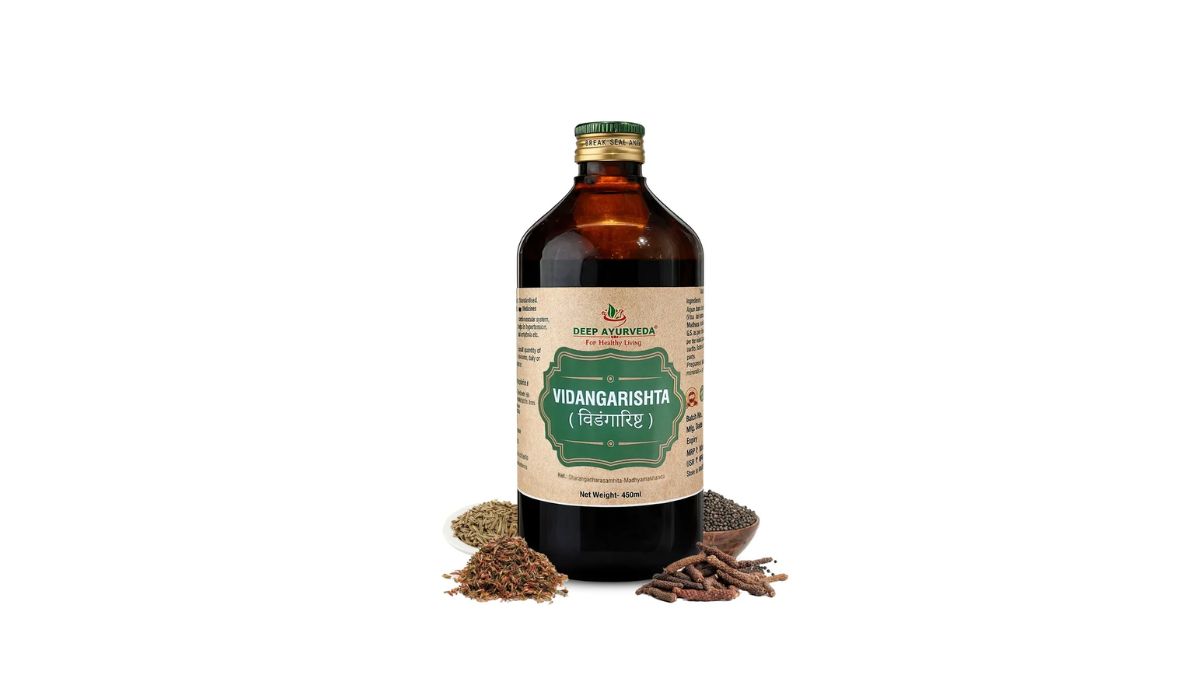
Vidangarishta is a classical Ayurvedic fermented herbal formulation prepared primarily with Vidanga (Embelia ribes) and other traditional herbs. In Ayurveda, it is traditionally used under the guidance of an Ayurvedic physician as part of a personalized treatment plan, particularly when addressing imbalances related to digestion, metabolism, and accumulated Ama (metabolic toxins). Its use depends on an individual’s Prakriti (constitution), Dosha imbalance, and overall health status.
Introduction
In Ayurveda, every herbal formulation is designed with a specific purpose rather than serving as a universal remedy. Vidangarishta is one such classical preparation that has been valued in traditional Ayurvedic practice for generations. Prepared through a natural fermentation process, it combines Vidanga (Embelia ribes) with several supportive herbs to create a formulation that is traditionally appreciated for promoting healthy digestion and supporting overall metabolic balance.
Unlike single-herb preparations, Vidangarishta is a carefully balanced combination of botanicals that work together according to Ayurvedic principles. Rather than focusing only on symptoms, Ayurveda emphasizes identifying the underlying imbalance in Agni (digestive fire), Ama (metabolic toxins), Doshas, and body channels (Srotas). The choice of Vidangarishta therefore depends on an individual’s constitution, digestive capacity, lifestyle, and overall clinical assessment by an Ayurvedic physician.
In my clinical practice, many people assume that every digestive concern requires the same Ayurvedic formulation. However, Ayurveda follows a personalized approach. Before recommending Vidangarishta, an Ayurvedic physician evaluates factors such as appetite, bowel habits, strength of digestion, seasonal influences, and constitutional tendencies. This individualized assessment helps determine whether Vidangarishta is an appropriate choice or whether another classical formulation may be more suitable.
Another common misconception is that Ayurvedic formulations work independently of diet and lifestyle. In reality, classical Ayurvedic texts consistently emphasize that herbal preparations deliver the best outcomes when combined with appropriate dietary habits, adequate sleep, regular physical activity, and mindful daily routines. This holistic approach remains one of Ayurveda’s greatest strengths.
In this comprehensive guide, we will explore Vidangarishta from an authentic Ayurvedic perspective, including its traditional ingredients, classical properties, dosage, safety considerations, and practical guidance. Where appropriate, we will also distinguish traditional Ayurvedic concepts from modern scientific understanding so that readers can make informed decisions in consultation with a qualified healthcare professional.
Quick Facts About Vidangarishta
| Feature | Details |
|---|---|
| Classical Formulation | Vidangarishta |
| Ayurvedic Category | Arishta (Naturally Fermented Herbal Preparation) |
| Primary Herb | Vidanga (Embelia ribes) |
| Traditional System | Ayurveda |
| Taste (Rasa) | Varies according to ingredients |
| Dosha Consideration | Determined by Ayurvedic assessment |
| Main Ayurvedic Focus | Supporting healthy digestion, metabolic balance, and reducing Ama according to Ayurvedic principles |
| Administration | As advised by an Ayurvedic physician |
| Suitable For | Individuals for whom it is considered appropriate after personalized Ayurvedic evaluation |
What is Vidangarishta?
Vidangarishta is a classical Ayurvedic fermented herbal formulation (Arishta) prepared using Vidanga (Embelia ribes) as the principal ingredient along with a carefully selected combination of herbs that undergo natural fermentation. This traditional process not only helps preserve the formulation but also enhances the extraction and assimilation of the herbal constituents according to Ayurvedic principles.
In Ayurveda, Vidangarishta is traditionally used as part of a personalized treatment approach to support digestive health, metabolic balance, and the reduction of Ama (metabolic toxins). Rather than being prescribed based solely on symptoms, an Ayurvedic physician evaluates an individual’s Prakriti (body constitution), Vikriti (current imbalance), Agni (digestive fire), Dosha status, and overall health before recommending the formulation.
Unlike many over-the-counter digestive tonics, Vidangarishta is not intended to be a one-size-fits-all solution. Its selection depends on a comprehensive Ayurvedic assessment, making it a formulation that reflects Ayurveda’s personalized approach to wellness.
What Does Vidangarishta Mean?
The name Vidangarishta combines two Sanskrit terms:
Vidanga – Refers to Embelia ribes, a well-known herb described in Ayurvedic literature.
Arishta – A naturally fermented liquid Ayurvedic formulation prepared using herbal decoctions and sweetening agents to facilitate fermentation.
This natural fermentation creates a self-preserving formulation with a small amount of naturally generated alcohol, which traditionally helps carry the herbal constituents throughout the body. It is not comparable to alcoholic beverages and is used in measured therapeutic doses under professional guidance.
Classical Ayurvedic Reference
Vidangarishta is described in several respected Ayurvedic texts, where it is included among classical Arishta Kalpana (fermented formulations). These formulations are prepared following traditional methods that have been preserved over centuries.
Classical Ayurvedic literature highlights the importance of selecting formulations based on an individual’s unique clinical presentation rather than solely on disease names. This principle remains central to Ayurvedic practice today.
Because formulations may vary slightly among classical references and manufacturers, ingredient proportions and preparation methods can differ while remaining consistent with Ayurvedic principles.
Understanding Vidangarishta from an Ayurvedic Perspective
One of the biggest misconceptions about Ayurveda is that a medicine is chosen simply because two people share similar symptoms. In reality, Ayurveda places greater importance on the underlying imbalance than on the symptom itself.
When considering Vidangarishta, an Ayurvedic physician evaluates factors such as:
- Strength of Agni (digestive fire)
- Presence of Ama (metabolic toxins)
- Dominant Dosha imbalance
- Digestive efficiency
- Bowel habits
- Appetite
- Lifestyle
- Seasonal influences
- Sleep quality
- Overall vitality
For example, two individuals may both complain of digestive discomfort, yet one may require Vidangarishta while the other may benefit more from a completely different classical formulation depending on their Ayurvedic assessment.
This individualized approach is one of Ayurveda’s defining strengths and helps explain why self-medication may not always provide the desired results.
How is Vidangarishta Prepared?
Vidangarishta is traditionally prepared using the Arishta Kalpana method described in Ayurvedic pharmaceutics.
The process generally includes:
- Preparing a herbal decoction from selected herbs.
- Filtering the decoction.
- Adding natural sweetening agents traditionally used to support fermentation.
- Incorporating aromatic and supportive herbal ingredients.
- Allowing controlled natural fermentation for the prescribed duration.
- Filtering and storing the finished formulation under appropriate conditions.
This slow fermentation process is considered important because it develops the formulation naturally without relying on artificial preservatives.
Ingredients of Vidangarishta
The exact composition may vary slightly among classical references and manufacturers, but Vidanga (Embelia ribes) remains the principal ingredient. Other herbs are included to complement its traditional Ayurvedic actions and to create a balanced formulation.
Commonly Used Ingredients
| Ayurvedic Name | Botanical Name | Traditional Ayurvedic Role* |
|---|---|---|
| Vidanga | Embelia ribes | Principal herb in the formulation |
| Haritaki | Terminalia chebula | Traditionally used to support digestive function |
| Bibhitaki | Terminalia bellirica | Traditionally included in classical digestive formulations |
| Amalaki | Phyllanthus emblica | Valued in Ayurveda for its rejuvenating properties |
| Musta | Cyperus rotundus | Traditionally used to support digestive balance |
| Pippali | Piper longum | Traditionally believed to support bioavailability and digestion |
| Maricha | Piper nigrum | Commonly included in Ayurvedic formulations |
| Shunthi | Zingiber officinale | Traditionally used to support healthy digestion |
| Dhataki Flowers | Woodfordia fruticosa | Natural fermentation catalyst in Arishta preparations |
| Jaggery or Sugar (as per classical method) | — | Supports the natural fermentation process |
Traditional Ayurvedic uses are based on classical Ayurvedic principles and should not be interpreted as proven therapeutic claims.
Note: Ingredient lists and proportions may vary between classical texts and manufacturers. Always refer to the product label for the exact composition.
Ayurvedic Properties of Vidanga (Embelia ribes)
Vidanga is regarded as one of the important herbs in Ayurvedic literature and is traditionally described using the following properties:
Ayurvedic Property Traditional Description Sanskrit Name Vidanga Botanical Name Embelia ribes Rasa (Taste) Katu (Pungent), Kashaya (Astringent) Guna (Qualities) Laghu (Light), Ruksha (Dry) Virya (Potency) Ushna (Hot) Vipaka (Post-digestive Effect) Katu Dosha Influence Traditionally considered to help balance Kapha and Vata in appropriate contexts, as determined by an Ayurvedic physician
Why Ingredients Matter More Than a Single Herb
In clinical practice, many patients focus only on the name Vidanga, assuming that the formulation’s effects come entirely from this one herb. However, Ayurveda emphasizes the synergy of multiple ingredients. Each herb in Vidangarishta is selected to complement the others, creating a balanced formulation rather than relying on a single botanical.
This holistic formulation philosophy is one reason classical Ayurvedic preparations have remained relevant for centuries. The interaction of the herbs, combined with the natural fermentation process, is considered an integral part of the formulation’s traditional design.
Related Reading: To understand how different classical Ayurvedic formulations are selected based on an individual’s condition, you may also find our detailed guide on Mahamanjisthadi helpful. While the formulations serve different traditional purposes, both illustrate Ayurveda’s personalized approach to selecting herbal preparations rather than using a single remedy for everyone.
Benefits of Vidangarishta
In Ayurveda, Vidangarishta is traditionally valued for supporting healthy digestion, maintaining balanced Agni (digestive fire), helping reduce Ama (metabolic toxins), and promoting overall gastrointestinal wellness as part of an individualized Ayurvedic treatment plan. The specific benefits depend on a person’s constitution (Prakriti), current imbalance (Vikriti), diet, lifestyle, and the guidance of a qualified Ayurvedic physician.
Unlike many health articles that simply list benefits, Ayurveda emphasizes why a formulation is chosen. An Ayurvedic physician does not recommend Vidangarishta merely because a person has digestive discomfort. Instead, the recommendation is based on a detailed assessment of Agni, Doshas, Srotas (body channels), Ama, strength, and overall health.
Below are the traditional Ayurvedic benefits of Vidangarishta explained from a clinical perspective.
1. Traditionally Supports Healthy Digestion
Healthy digestion is considered the cornerstone of good health in Ayurveda. When Agni (digestive fire) functions optimally, food is properly digested and nutrients are efficiently assimilated.
Vidangarishta is traditionally used in Ayurveda to support digestive function as part of a comprehensive wellness plan that may also include dietary and lifestyle recommendations.
Doctor’s Insight
In clinical practice, improving digestion often requires more than herbal formulations alone. Patients are commonly advised to maintain regular meal timings, avoid overeating, chew food thoroughly, and choose foods appropriate for their constitution. These supportive measures can complement the Ayurvedic treatment approach.
2. Helps Maintain Balanced Agni (Digestive Fire)
According to Ayurveda, weakened or irregular Agni may contribute to incomplete digestion and the accumulation of Ama.
Vidangarishta is traditionally included in Ayurvedic practice when supporting digestive balance is considered appropriate after a personalized assessment.
Why Agni Matters
Ayurveda regards balanced Agni as essential for:
- Proper digestion
- Efficient nutrient assimilation
- Healthy metabolism
- General well-being
Rather than focusing solely on relieving symptoms, Ayurvedic care aims to restore digestive balance over time.
3. Traditionally Supports the Reduction of Ama
One of Ayurveda’s foundational concepts is Ama, often described as incompletely processed metabolic waste that can accumulate when digestion is impaired.
Classical Ayurvedic formulations such as Vidangarishta are traditionally selected in appropriate contexts to help address this imbalance as part of a broader treatment strategy.
Doctor’s Perspective
Patients frequently ask whether Ama refers to a laboratory diagnosis. It does not. Ama is an Ayurvedic concept based on clinical observation, including factors such as appetite, digestion, bowel habits, tongue appearance, and overall constitutional assessment.
4. Supports Overall Digestive Comfort
A balanced digestive system contributes to overall health and daily comfort.
When recommended by an Ayurvedic physician, Vidangarishta may be included as part of a personalized plan to support digestive wellness alongside suitable dietary habits and lifestyle modifications.
Because digestive concerns can arise from different underlying imbalances, Ayurveda avoids assuming that one formulation is suitable for everyone.
5. Supports Healthy Metabolic Function
Ayurveda considers digestion and metabolism to be closely interconnected.
By supporting balanced digestive function according to Ayurvedic principles, Vidangarishta is traditionally believed to contribute to healthy metabolic processes.
Practical Advice
Patients are often encouraged to:
- Eat freshly prepared meals.
- Avoid excessive snacking.
- Stay physically active according to their capacity.
- Maintain consistent meal timings.
These measures are viewed as important components of digestive health in Ayurveda.
6. Traditionally Included in Holistic Wellness Programs
Ayurvedic treatment is never limited to herbal formulations alone.
An Ayurvedic physician may recommend Vidangarishta alongside:
- Personalized dietary guidance
- Daily routine (Dinacharya)
- Seasonal adjustments (Ritucharya)
- Stress management
- Appropriate physical activity
- Adequate sleep
This holistic approach reflects Ayurveda’s focus on addressing the root cause of imbalance rather than only managing symptoms.
7. Supports Digestive Health Through Herbal Synergy
Vidangarishta contains multiple herbs that are traditionally selected to complement one another.
Instead of relying on a single ingredient, Ayurveda combines herbs with different properties to create a balanced formulation. This concept of herbal synergy is a hallmark of many classical Ayurvedic preparations.
Why This Matters
The traditional formulation is designed so that the herbs work together rather than independently, supporting Ayurveda’s holistic philosophy.
8. Natural Fermentation Enhances the Traditional Formulation
Vidangarishta belongs to the Arishta category of Ayurvedic formulations, which are prepared through natural fermentation.
According to Ayurvedic pharmaceutics, this traditional process is valued because it helps preserve the formulation and facilitates the extraction of herbal constituents.
The naturally occurring alcohol produced during fermentation is present in small quantities and serves a pharmaceutical purpose within the formulation. It should not be confused with alcoholic beverages.
9. Supports Personalized Ayurvedic Care
Perhaps the greatest strength of Vidangarishta is not the formulation itself but the individualized approach behind its use.
Two people with similar digestive complaints may receive different Ayurvedic recommendations because their underlying constitutional imbalances differ.
Doctor’s Clinical Experience
In my Ayurvedic practice, one of the most common reasons people do not experience the expected results is self-selecting herbal formulations based on internet searches or someone else’s recommendation. A personalized Ayurvedic assessment helps identify whether Vidangarishta is appropriate or whether another classical preparation would better match the individual’s needs.
Why Lifestyle Matters as Much as the Medicine
Many patients expect herbal formulations alone to resolve digestive concerns. Ayurveda takes a broader view.
To support digestive wellness, an Ayurvedic physician may also recommend:
- Eating meals at regular times.
- Avoiding overeating.
- Limiting highly processed foods.
- Staying physically active.
- Managing stress.
- Sleeping adequately.
- Drinking sufficient water based on individual needs.
When these habits are combined with an appropriate Ayurvedic treatment plan, they may better support long-term digestive balance.
Traditional Uses of Vidangarishta in Ayurveda
One of the most important principles of Ayurveda is that a medicine is selected based on the person—not just the condition. While many online resources present Vidangarishta as a remedy for a fixed list of problems, classical Ayurveda emphasizes identifying the root cause of imbalance before choosing any formulation.
In clinical practice, an Ayurvedic physician evaluates factors such as digestive capacity, bowel habits, appetite, lifestyle, sleep, stress levels, and Dosha imbalance before recommending Vidangarishta. This personalized approach is one of the key reasons Ayurveda remains relevant in modern healthcare.
1. Traditionally Used to Support Digestive Wellness
Healthy digestion forms the foundation of Ayurvedic health philosophy. When Agni functions efficiently, food is properly digested and nourishes the body’s tissues.
Vidangarishta is traditionally used when an Ayurvedic assessment indicates that supporting digestive balance may be beneficial. Rather than masking symptoms, Ayurveda aims to improve digestive efficiency through a combination of herbal formulations, dietary guidance, and healthy lifestyle practices.
Doctor’s Clinical Insight
In my practice, many patients focus only on temporary relief from digestive discomfort. However, Ayurveda encourages us to ask deeper questions:
- Is digestion consistently strong?
- Is appetite regular?
- Are meals taken on time?
- Is the body efficiently utilizing nutrients?
Addressing these underlying factors is often more valuable than focusing on symptoms alone.
2. Traditionally Included in Ayurvedic Management of Ama
According to Ayurveda, Ama develops when digestion is incomplete, leading to the accumulation of improperly processed metabolic waste.
An Ayurvedic physician may consider Vidangarishta when the overall assessment suggests that supporting digestive function and addressing Ama is appropriate. This decision is always made in the context of the individual’s constitution and overall health.
How Ayurveda Assesses Ama
Unlike modern laboratory tests, Ama is evaluated through traditional clinical observation, including:
- Appetite quality
- Tongue coating
- Digestive patterns
- Energy levels
- Bowel habits
- General sense of heaviness or sluggishness
This holistic assessment helps determine the most appropriate Ayurvedic approach.
3. Traditionally Used to Promote Balanced Agni
Agni is often described as the body’s digestive and metabolic fire. Balanced Agni is considered essential for transforming food into nourishment and maintaining overall well-being.
Vidangarishta is one of several classical formulations that may be selected by an Ayurvedic physician to support healthy Agni when indicated.
Practical Lifestyle Support
To complement Ayurvedic care, patients are commonly encouraged to:
- Eat freshly prepared meals.
- Avoid overeating.
- Minimize highly processed foods.
- Maintain regular meal timings.
- Eat only after the previous meal has been digested.
These habits are regarded as important for preserving digestive balance.
4. Traditionally Used as Part of a Holistic Digestive Care Plan
Ayurveda rarely relies on herbal formulations alone. Vidangarishta is often recommended alongside:
- Individualized dietary advice (Pathya)
- Foods to avoid (Apathya)
- Daily routine (Dinacharya)
- Seasonal adaptations (Ritucharya)
- Stress management practices
- Appropriate physical activity
- Adequate sleep
This integrated approach reflects Ayurveda’s focus on supporting long-term wellness rather than short-term symptom management.
5. Traditionally Used According to Individual Constitution (Prakriti)
No two individuals are exactly alike in Ayurveda.
Two people with similar digestive complaints may receive different recommendations because their:
- Prakriti (natural constitution)
- Vikriti (current imbalance)
- Digestive strength
- Age
- Lifestyle
- Seasonal influences
may differ significantly.
Doctor’s Perspective
One of the most common misconceptions I encounter is that Ayurvedic medicines can be chosen solely based on internet searches. In reality, a formulation that is beneficial for one person may not be the most appropriate choice for another. A proper Ayurvedic consultation helps ensure that the selected formulation matches the individual’s unique needs.
6. Traditionally Used Alongside Dietary Modifications
Diet plays a central role in Ayurvedic healing.
Even the most carefully selected formulation may not provide the desired benefits if digestive health is continually challenged by poor eating habits.
Common Dietary Recommendations
Depending on the individual’s constitution, an Ayurvedic physician may advise:
✔ Warm, freshly cooked meals
✔ Regular meal timings
✔ Adequate hydration
✔ Mindful eating without distractions
✔ Avoiding excessive intake of fried, overly processed, or very heavy foods
These recommendations are tailored to the individual’s health status and are considered an essential part of Ayurvedic care.
7. Traditionally Used with Lifestyle Corrections
Lifestyle is regarded as equally important as herbal support.
Ayurvedic physicians often encourage patients to:
- Maintain consistent sleep schedules.
- Engage in suitable physical activity.
- Reduce prolonged mental stress.
- Spend time outdoors when appropriate.
- Follow a balanced daily routine.
Such measures help create an environment that supports overall health and complements individualized herbal recommendations.
Common Mistakes People Make While Using Vidangarishta
As an Ayurvedic doctor, I frequently observe the following mistakes:
Self-Medicating Without Proper Assessment
Many individuals purchase Ayurvedic formulations online without understanding whether they are appropriate for their constitution or health concerns.
Ignoring Dietary Guidance
Continuing unhealthy eating habits while expecting herbal formulations alone to resolve digestive issues may limit the overall effectiveness of treatment.
Expecting Immediate Results
Ayurveda emphasizes restoring balance gradually. Sustainable improvements often depend on consistent lifestyle changes in addition to herbal support.
Using Multiple Formulations Simultaneously
Combining several Ayurvedic products without professional guidance may not always be appropriate and can make it difficult to evaluate individual responses.
Dosage of Vidangarishta
One of the most common questions patients ask is, “How much Vidangarishta should I take?” The answer is not the same for everyone.
Unlike conventional medicines that often have a fixed dosage, Ayurveda follows an individualized approach. Before recommending the quantity and duration of Vidangarishta, an Ayurvedic physician considers several factors, including digestive capacity, age, overall strength (Bala), Dosha imbalance, and other ongoing treatments.
General Dosage of Vidangarishta
The following dosage is commonly mentioned in Ayurvedic practice. It is provided for educational purposes and should not replace professional medical advice.
Age Group Commonly Recommended Dosage* Adults 15–30 ml, diluted with an equal quantity of water, twice daily after meals Children Only under the supervision of a qualified Ayurvedic physician; dosage varies according to age and clinical assessment Older Adults Dosage may be adjusted based on digestive strength, overall health, and concurrent medical conditions The exact dosage may vary depending on the product, manufacturer’s instructions, and the individual’s health status.
How to Take Vidangarishta
For most adults, Vidangarishta is traditionally taken:
- Measure the prescribed quantity using a measuring cup.
- Dilute it with an equal amount of clean drinking water unless advised otherwise.
- Consume it after meals.
- Follow the dosage schedule recommended by your Ayurvedic physician.
- Avoid exceeding the recommended amount.
Taking the formulation consistently as advised is generally considered more important than increasing the quantity.
Why is Vidangarishta Usually Taken After Meals?
Many classical Ayurvedic formulations are recommended after meals because this timing may help support digestion and improve tolerability. The exact timing, however, can vary depending on the individual’s condition and the physician’s clinical judgment.
If your Ayurvedic doctor recommends a different schedule, follow their advice rather than relying on general recommendations.
How Long Should You Take Vidangarishta?
The duration of use depends on:
- Your health goals
- Ayurvedic diagnosis
- Digestive strength
- Response to treatment
- Lifestyle habits
- Dietary compliance
Some individuals may require only a short course, while others may benefit from longer use under regular medical supervision.
Doctor’s Perspective
One of the biggest mistakes I see is continuing an Ayurvedic formulation indefinitely without periodic review. Ayurveda encourages regular reassessment to determine whether the formulation is still appropriate or whether the treatment plan should be modified as the individual’s condition changes.
What If You Miss a Dose?
If you forget to take a dose:
- Take it when you remember if it is not close to the next scheduled dose.
- If it is almost time for the next dose, skip the missed dose and continue your regular schedule.
- Do not take a double dose to compensate for a missed one.
Consistency is important, but doubling the dose is not recommended unless specifically advised by your healthcare provider.
Can Vidangarishta Be Taken Daily?
This depends entirely on the individual’s health condition and the recommendation of an Ayurvedic physician.
Some people may be advised to take it daily for a defined period, while others may require a different formulation or a different duration of treatment. Self-prescribing long-term use without professional guidance is not advisable.
Can Vidangarishta Be Taken with Other Ayurvedic Medicines?
Vidangarishta may sometimes be prescribed alongside other Ayurvedic formulations as part of a comprehensive treatment plan. However, the choice of combinations depends on the individual’s diagnosis and should be made by a qualified Ayurvedic physician.
Avoid combining multiple herbal products on your own, as doing so may not always be appropriate.
Diet and Lifestyle While Taking Vidangarishta
Herbal formulations work best when supported by healthy daily habits.
Foods to Prefer
- Freshly prepared home-cooked meals
- Seasonal fruits and vegetables
- Light, balanced meals suited to your constitution
- Adequate hydration
- Easily digestible foods when advised
Foods to Limit
- Deep-fried foods
- Highly processed or packaged foods
- Excessively spicy or oily meals
- Overeating
- Irregular meal timings
These are general Ayurvedic principles. Your physician may recommend a more personalized diet based on your constitution and health status.
Who Should Consult a Healthcare Professional Before Using Vidangarishta?
Medical advice is especially important if you:
- Are pregnant or planning pregnancy.
- Are breastfeeding.
- Have diabetes or need to monitor sugar intake.
- Have liver or kidney disease.
- Are taking prescription medications.
- Have chronic gastrointestinal conditions.
- Are considering giving Vidangarishta to a child.
- Have a history of allergies to herbal ingredients.
A qualified healthcare professional can determine whether Vidangarishta is appropriate for your specific circumstances.
Storage Instructions
To help maintain product quality:
- Store in a cool, dry place.
- Keep the bottle tightly closed after use.
- Protect it from direct sunlight and excessive heat.
- Keep out of reach of children.
- Use only until the expiry date mentioned on the label.
Always follow the storage instructions provided by the manufacturer.
Side Effects, Precautions & Safety of Vidangarishta
One of the biggest myths about Ayurveda is that “natural means completely safe.” As an Ayurvedic doctor, I believe this is an oversimplification. Ayurvedic medicines are selected based on an individual’s Prakriti (constitution), Dosha imbalance, digestive strength, age, and overall health. A formulation that is appropriate for one person may not be the best choice for another.
This is why professional guidance is important, especially for people with chronic medical conditions or those taking prescription medicines.
Does Vidangarishta Have Any Side Effects?
When taken in the recommended dosage under professional supervision, many people tolerate Vidangarishta well. However, some individuals may experience mild digestive discomfort or ingredient-related sensitivity.
Possible effects can include:
- Mild stomach discomfort
- Temporary digestive changes
- Individual sensitivity or allergic reactions to specific herbal ingredients
If you notice any unusual or persistent symptoms after taking Vidangarishta, discontinue use and consult your Ayurvedic physician or healthcare provider.
Important: Scientific research on the frequency of side effects of Vidangarishta is limited. Therefore, safety should be assessed on an individual basis rather than assuming that adverse effects will or will not occur.
Who Should Take Extra Precaution?
Before using Vidangarishta, consult a qualified healthcare professional if you:
- Are pregnant or planning pregnancy.
- Are breastfeeding.
- Have diabetes or need to monitor sugar intake.
- Have liver or kidney disease.
- Have a chronic gastrointestinal disorder.
- Are taking prescription medicines.
- Have known allergies to herbal ingredients.
- Are planning surgery.
- Wish to give the formulation to a child.
An individualized assessment helps determine whether Vidangarishta is suitable and whether any dosage adjustments are needed.
Vidangarishta During Pregnancy
There is insufficient high-quality scientific evidence to establish the safety of Vidangarishta during pregnancy.
Because Ayurvedic treatment during pregnancy is highly individualized, pregnant women should only use Vidangarishta if specifically recommended by a qualified Ayurvedic physician or obstetric healthcare provider.
Self-medication during pregnancy is not recommended.
Vidangarishta During Breastfeeding
Information regarding the safety of Vidangarishta while breastfeeding is also limited.
If you are nursing a baby, consult your healthcare provider before using this formulation so that the potential benefits and risks can be evaluated in your specific situation.
Can People with Diabetes Take Vidangarishta?
Classical Arishta formulations are prepared through a natural fermentation process using sweetening agents such as jaggery or sugar. Although fermentation changes the final composition, people with diabetes should not assume that these formulations are suitable without medical advice.
If you have diabetes:
- Inform your Ayurvedic physician about your condition.
- Continue monitoring your blood glucose as advised by your healthcare provider.
- Never stop prescribed diabetes medication without professional guidance.
Can Vidangarishta Be Taken with Modern Medicines?
Some herbal formulations may interact with prescription medications, but well-designed studies specifically evaluating interactions involving Vidangarishta are limited.
If you take medicines for:
- Diabetes
- High blood pressure
- Heart disease
- Thyroid disorders
- Blood clotting
- Any long-term medical condition
consult your healthcare provider before combining them with Vidangarishta.
Can Children Take Vidangarishta?
Children should only receive Vidangarishta under the supervision of a qualified Ayurvedic physician.
The dosage, duration, and suitability depend on:
- Age
- Body weight
- Digestive capacity
- Overall health
- Individual Ayurvedic assessment
Never administer adult doses to children.
Can Older Adults Use Vidangarishta?
Older adults may have different digestive capacity, metabolism, and concurrent medical conditions.
An Ayurvedic physician may adjust the dosage or recommend an alternative formulation depending on the individual’s overall health and current medications.
When Should You Stop Taking Vidangarishta?
Stop taking Vidangarishta and seek medical advice if you experience:
- Persistent digestive discomfort
- Allergic symptoms such as rash, itching, or swelling
- Difficulty breathing (seek immediate emergency care)
- Symptoms that worsen rather than improve
- Any unexpected or concerning reaction
Prompt medical evaluation helps determine whether the symptoms are related to the formulation or another underlying condition.
Myths vs Facts About Vidangarishta
Myth Fact Natural medicines never have side effects. Natural products can also cause side effects or allergic reactions in some individuals. Everyone can take Vidangarishta safely. Suitability depends on individual health status, constitution, and medical history. If one dose helps, a larger dose will work better. Dosage should always follow professional advice. Ayurvedic medicines don’t interact with modern medicines. Some interactions are possible, so discuss all medicines and supplements with your healthcare provider. Diet doesn’t matter if I’m taking Ayurvedic medicine. Diet and lifestyle are fundamental components of Ayurvedic treatment.
Frequently Asked Questions
What is Vidangarishta used for?
Vidangarishta is traditionally used in Ayurveda to support healthy digestion, balanced Agni (digestive fire), and the management of Ama (metabolic toxins) as part of a personalized treatment plan. An Ayurvedic physician recommends it based on an individual’s constitution, digestive health, and overall clinical assessment rather than symptoms alone.
How should Vidangarishta be taken?
For many adults, Vidangarishta is commonly taken 15–30 ml, diluted with an equal amount of water, twice daily after meals, or as directed by an Ayurvedic physician. The exact dosage and duration may vary depending on the individual’s health status and the specific product being used.
Can I take Vidangarishta every day?
Daily use depends on your health condition and the advice of your Ayurvedic physician. While some individuals may be advised to use it daily for a specific duration, self-prescribing long-term use is not recommended.
Is Vidangarishta safe?
When used as directed under the supervision of a qualified Ayurvedic physician, Vidangarishta is generally well tolerated by many individuals. However, like any herbal formulation, it may not be suitable for everyone. If you have an underlying medical condition, are pregnant, breastfeeding, or taking prescription medicines, consult your healthcare provider before use.
Does Vidangarishta have any side effects?
Most people tolerate Vidangarishta well when used appropriately. However, some individuals may experience mild digestive discomfort or sensitivity to one or more ingredients. If you notice persistent or unusual symptoms, stop using the product and seek medical advice.
Can people with diabetes take Vidangarishta?
Because traditional Arishta formulations are prepared using sweetening agents during the fermentation process, people with diabetes should consult their healthcare provider before using Vidangarishta. They should also continue monitoring their blood glucose levels as recommended.
Can Vidangarishta be taken during pregnancy or breastfeeding?
There is currently insufficient high-quality scientific evidence to confirm the safety of Vidangarishta during pregnancy or breastfeeding. It should only be used if specifically recommended by a qualified healthcare professional who has assessed your individual circumstances.
Can Vidangarishta be taken with other Ayurvedic or modern medicines?
It may sometimes be prescribed alongside other Ayurvedic formulations as part of a personalized treatment plan. However, combining Vidangarishta with Ayurvedic products, dietary supplements, or prescription medicines should only be done under professional guidance, as individual factors and potential interactions need to be considered.
How long does it take to see results with Vidangarishta?
The response varies from person to person and depends on factors such as digestive health, constitution, lifestyle, dietary habits, and adherence to the treatment plan. Ayurveda focuses on restoring balance gradually rather than providing immediate symptomatic relief, so outcomes and timelines differ between individuals.
Conclusion
Vidangarishta is a classical Ayurvedic fermented formulation traditionally prepared with Vidanga (Embelia ribes) and other carefully selected herbs. In Ayurveda, it is used as part of an individualized approach to support digestive health, maintain balanced Agni (digestive fire), and promote overall wellness. Since every individual has a unique constitution and health profile, Vidangarishta should be used under the guidance of a qualified Ayurvedic physician. Combining appropriate Ayurvedic care with a balanced diet and healthy lifestyle can help support long-term well-being.