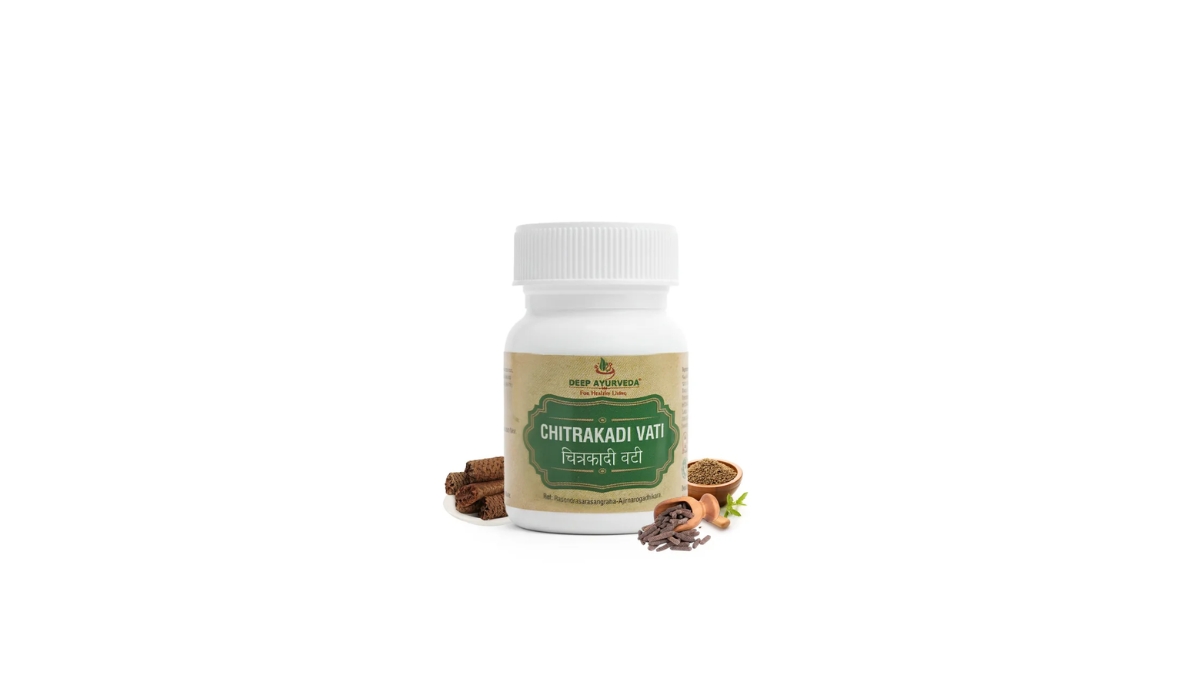

Deep Ayurveda Chitrakadi Vati
✅ Supports Healthy Digestion✅ Helps Reduce Gas and Bloating ✅ Supports Metabolism ✅ Supports Skin Health ✅ Supports Nutrient Absorption
Chitrakadi Vati is a classical Ayurvedic herbal formulation traditionally used to support healthy digestion and stimulate Agni (digestive fire). According to Ayurveda, it is commonly recommended when weakened digestion (Mandagni) leads to the accumulation of Ama (metabolic waste), which may contribute to symptoms such as occasional indigestion, reduced appetite, abdominal heaviness, gas, or bloating.
The formulation contains a combination of herbs and mineral ingredients that are traditionally valued for their Deepana (kindling digestive fire) and Pachana (supporting the digestion of Ama) properties. Rather than merely addressing digestive discomfort, Ayurveda views Chitrakadi Vati as a formulation that helps restore balanced digestive function by supporting the body’s natural digestive processes.
When taken under the guidance of a qualified Ayurvedic practitioner and alongside an appropriate diet and lifestyle, Chitrakadi Vati may help maintain digestive comfort. Since formulations can vary among manufacturers, always read the ingredient list and follow the recommended dosage.
Important: Chitrakadi Vati is a traditional Ayurvedic formulation. It should not be considered a substitute for medical diagnosis, treatment, or emergency care. If you have a medical condition, are pregnant, breastfeeding, or taking prescription medications, consult a qualified healthcare professional before use.
What is Chitrakadi Vati?
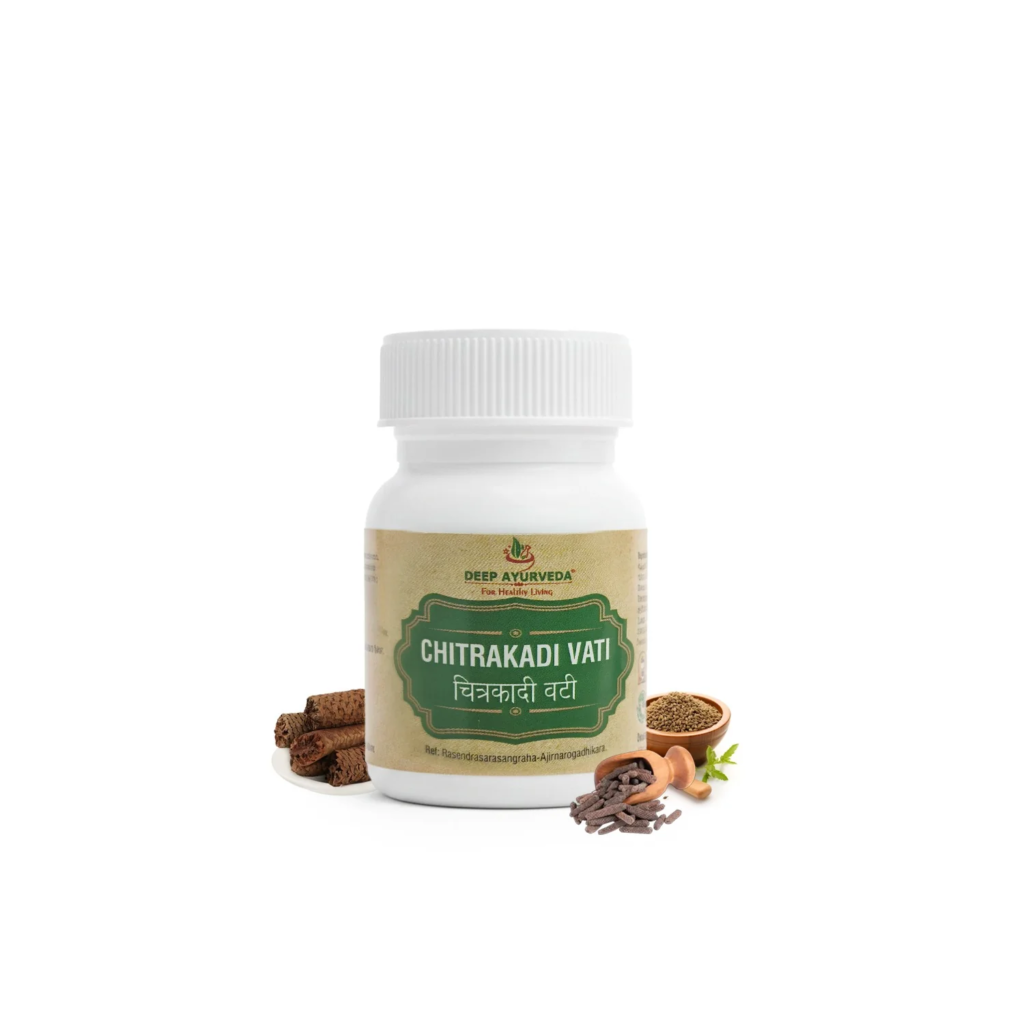
Chitrakadi Vati is a classical Ayurvedic formulation traditionally described in Ayurvedic literature for supporting healthy digestion. It is primarily known for its Deepana (stimulating digestive fire) and Pachana (supporting the digestion of Ama) actions, making it one of the formulations traditionally used when digestive strength is reduced.
According to Ayurveda, proper digestion begins with a balanced Agni, often translated as the digestive or metabolic fire. When Agni becomes weak (Mandagni), food may not be processed efficiently, leading to the formation of Ama, a concept in Ayurveda referring to incompletely digested metabolic by-products. Classical Ayurvedic texts associate Ama with impaired digestive function and overall imbalance.
Chitrakadi Vati is formulated with herbs that are traditionally recognized for their warming, digestive-supporting, and appetite-enhancing properties. These ingredients work together to help maintain balanced digestion rather than focusing on a single symptom.
Unlike many modern digestive supplements that are formulated for one specific complaint, Chitrakadi Vati is designed according to Ayurvedic principles, where the emphasis is on supporting the root cause of digestive imbalance by improving digestive capacity.
Another important point often overlooked is that Chitrakadi Vati refers to a classical formulation category rather than a single standardized product. While the core Ayurvedic concept remains the same, different manufacturers may use slightly different ingredient combinations, proportions, or processing methods depending on classical references or proprietary formulations. This is why reading the ingredient list and choosing products from reputable manufacturers is important.
What Does Chitrakadi Mean in Ayurveda?
The name Chitrakadi reflects the formulation’s primary ingredient and therapeutic intention.
The word Chitraka refers to Plumbago zeylanica, a herb that Ayurveda traditionally describes as having strong Deepana and Pachana properties. It has been valued for centuries in classical Ayurvedic practice for supporting digestive strength when used appropriately.
The suffix Adi means “and others,” indicating that Chitraka is combined with several complementary herbs and ingredients that work together to support digestion. Rather than relying on a single herb, Ayurveda often uses carefully balanced combinations to enhance effectiveness while maintaining harmony within the formulation.
This multi-herb approach is one of the defining characteristics of classical Ayurvedic formulations, where each ingredient contributes a specific role, creating a synergistic effect greater than any individual herb alone.
How Does Chitrakadi Vati Work According to Ayurveda?
One of the most common questions people ask is, “How does Chitrakadi Vati actually work?” While many articles simply list its traditional uses, Ayurveda explains its action through the concepts of Agni (digestive fire), Ama (metabolic waste), and the balance of the Doshas. Understanding these principles helps explain why Chitrakadi Vati has traditionally been valued for supporting healthy digestion.
According to Ayurveda, digestion is more than breaking down food in the stomach. It is a continuous metabolic process that transforms food into nutrients that nourish the body’s tissues (Dhatus) while eliminating waste products efficiently. When this process functions well, the body is better able to maintain energy, strength, and overall well-being.
However, when digestive strength weakens, food may not be processed completely. Ayurveda describes this condition as Mandagni (reduced digestive fire), which can lead to the formation of Ama—a concept referring to incompletely digested metabolic by-products. Traditional Ayurvedic texts associate the accumulation of Ama with digestive discomfort and systemic imbalance.
Chitrakadi Vati is traditionally formulated to address this imbalance by supporting the digestive process at its root rather than focusing only on occasional digestive symptoms.
Understanding Agni: The Foundation of Digestive Health
In Ayurveda, Agni is considered the foundation of healthy digestion and metabolism. It governs the transformation of food into nutrients that the body can absorb and utilize.
When Agni remains balanced, digestion is generally comfortable, appetite is appropriate, and nutrients are believed to be processed efficiently. On the other hand, weakened or irregular Agni may contribute to:
- Occasional indigestion
- Reduced appetite
- A feeling of heaviness after meals
- Gas and bloating
- Sluggish digestion
- A sense of incomplete digestion
Rather than viewing these concerns as isolated issues, Ayurveda considers them possible signs that digestive fire needs support.
What Is Ama According to Ayurveda?
Ama is a fundamental concept in Ayurveda and is often described as metabolic waste or incompletely processed material that forms when digestion is inefficient.
According to Ayurvedic principles, Ama may develop due to:
- Weak digestive fire (Mandagni)
- Overeating
- Eating before the previous meal is digested
- Heavy, oily, or difficult-to-digest foods
- Irregular meal timings
- Lack of physical activity
- Chronic stress and disturbed daily routines
Traditional Ayurvedic texts describe Ama as having qualities such as heaviness, stickiness, and sluggishness. These qualities are believed to interfere with the body’s normal physiological processes and digestive balance.
Chitrakadi Vati is traditionally used as a Deepana-Pachana formulation, meaning it supports digestive fire while helping the body process Ama more effectively according to Ayurvedic theory.
Deepana and Pachana: Two Complementary Ayurvedic Actions
One of the defining features of Chitrakadi Vati is that it combines herbs traditionally recognized for both Deepana and Pachana actions.
Deepana (Supporting Digestive Fire)
Deepana refers to herbs that traditionally help kindle or support Agni. Their role is not simply to increase appetite but to encourage efficient digestion so that food is processed properly.
According to Ayurveda, supporting Agni may contribute to:
- Healthy appetite
- Better digestive efficiency
- Improved assimilation of nutrients
- Reduced feeling of heaviness after meals
Pachana (Supporting the Digestion of Ama)
Pachana refers to the traditional Ayurvedic action of helping the body process Ama that has already formed due to weakened digestion.
Instead of merely stimulating appetite, Pachana herbs are traditionally used to support the body’s natural digestive processes and restore digestive balance.
When Deepana and Pachana actions work together, Ayurveda aims to strengthen digestion while reducing the likelihood of further Ama accumulation.
How the Ingredients Work Together
A unique aspect of Chitrakadi Vati is that it does not rely on a single herb. Instead, it combines multiple ingredients selected for their complementary Ayurvedic properties.
Some herbs traditionally stimulate digestive fire, while others help maintain digestive comfort, support the movement of Vata within the digestive tract, or enhance the overall effectiveness of the formulation. This balanced combination reflects a core Ayurvedic principle: carefully chosen herbs working together may provide broader support than any single ingredient alone.
This synergistic approach is one reason classical Ayurvedic formulations continue to be widely studied and used in traditional practice.
Chitrakadi Vati and Dosha Balance
From an Ayurvedic perspective, digestive imbalance often involves more than one Dosha. Chitrakadi Vati is traditionally used in situations where Vata and Kapha are associated with weakened digestive function.
For example:
- Increased Vata may be linked with irregular digestion, abdominal discomfort, and excessive gas.
- Increased Kapha may contribute to sluggish digestion, reduced appetite, and a feeling of heaviness after eating.
By supporting digestive fire, Chitrakadi Vati is traditionally believed to help restore digestive balance in such situations.
Because every individual has a unique constitution (Prakriti) and imbalance (Vikriti), Ayurvedic practitioners recommend selecting formulations based on a comprehensive assessment rather than symptoms alone.
Supporting Grahani Function in Ayurveda
Ayurveda places great importance on Grahani, a term used to describe the organ or functional system responsible for holding food until digestion is complete. Grahani is closely connected with the strength of Agni.
When Agni is balanced, Grahani is believed to function efficiently, allowing food to be properly digested before it moves through the digestive tract. When Agni weakens, Grahani may also become impaired, which classical texts associate with digestive irregularities.
By supporting Agni, Chitrakadi Vati is traditionally used to help maintain healthy Grahani function according to Ayurvedic principles.
Why Chitrakadi Vati Is Traditionally Used Before Focusing on Symptoms
One of Ayurveda’s distinguishing principles is that it seeks to understand the underlying functional imbalance rather than addressing symptoms in isolation.
For example, occasional gas, bloating, heaviness, or reduced appetite may all stem from weakened digestive fire. Instead of treating each symptom separately, Chitrakadi Vati is traditionally used to support digestive capacity itself.
This systems-based approach reflects Ayurveda’s emphasis on promoting balance and maintaining normal physiological function rather than focusing solely on symptom relief.
Chitrakadi Vati Ingredients: Understanding the Role of Each Herb According to Ayurveda
The effectiveness of Chitrakadi Vati lies not in a single herb but in the carefully balanced combination of ingredients. Classical Ayurvedic formulations are designed so that each ingredient performs a specific function, while also complementing the actions of the others. This principle of herbal synergy is one of the foundations of Ayurvedic pharmaceutics.
Unlike many modern supplements that rely on one or two active ingredients, Chitrakadi Vati traditionally combines herbs that support Deepana (kindling digestive fire), Pachana (supporting the digestion of Ama), Vata-Kapha balance, and digestive comfort. Together, these herbs aim to improve digestive efficiency rather than simply addressing individual symptoms.
Important: The exact composition of Chitrakadi Vati may vary depending on the manufacturer and the classical reference followed. Some brands prepare the formulation according to traditional Ayurvedic texts, while others may include proprietary modifications. Always read the product label before use.
Common Ingredients Found in Chitrakadi Vati
Ayurvedic Name Common Name Botanical Name Traditional Ayurvedic Role Chitraka Ceylon Leadwort Plumbago zeylanica Supports Agni (Deepana) and Pachana Pippali Long Pepper Piper longum Traditionally supports digestion and bioavailability Maricha Black Pepper Piper nigrum Helps maintain digestive efficiency Shunthi Dry Ginger Zingiber officinale Traditionally used to support digestion and balance Vata Chavya Java Long Pepper Piper retrofractum Supports healthy digestive function Hingu* Asafoetida Ferula asafoetida Traditionally used for digestive comfort and Vata balance Yavakshara* Alkali prepared from barley Classical Ayurvedic preparation Traditionally supports digestive processes Saindhava Lavana Rock Salt Natural Mineral Salt Supports appetite and digestion in Ayurveda Some classical and proprietary formulations may include or exclude certain ingredients. Always refer to the ingredient list on the product you are using.
Why Is Chitraka the Primary Ingredient?
The name Chitrakadi itself indicates the importance of Chitraka (Plumbago zeylanica), which is regarded in Ayurveda as one of the principal herbs for supporting digestive fire.
Classical Ayurvedic texts describe Chitraka as having Katu (pungent) taste, Laghu (light) and Tikshna (sharp) qualities, Ushna Virya (heating potency), and Katu Vipaka (post-digestive effect). These properties are traditionally associated with stimulating weakened digestion and supporting the body’s ability to process Ama.
Rather than simply increasing appetite, Chitraka is traditionally valued for helping restore balanced digestive function when Agni is diminished.
Because of its potent nature, Chitraka is typically combined with other herbs in carefully balanced formulations such as Chitrakadi Vati.
Pippali (Long Pepper): Supporting Digestion and Herbal Synergy
Pippali (Piper longum) is another important ingredient in Chitrakadi Vati. Ayurveda traditionally recognizes Pippali for its ability to support digestive fire while being gentler than many other heating herbs.
Pippali is also valued because it is traditionally believed to enhance the effectiveness of other herbs when used in combination. This concept of herbal synergy is widely applied in classical Ayurvedic formulations.
According to Ayurveda, Pippali may traditionally help support:
- Healthy appetite
- Digestive efficiency
- Comfortable digestion
- Balanced Vata and Kapha
Maricha (Black Pepper): Supporting Healthy Digestive Function
Maricha (Piper nigrum) has been used in Ayurveda for centuries as a digestive-supporting spice.
Its warming nature is traditionally associated with promoting efficient digestion and reducing sluggishness associated with weakened Agni. When combined with Pippali and Shunthi, Maricha forms part of the well-known Ayurvedic combination known as Trikatu, which is frequently included in digestive formulations.
Rather than acting alone, Maricha complements the actions of the other herbs, contributing to the formulation’s overall digestive-supporting properties.
Shunthi (Dry Ginger): Warming and Digestive Support
Shunthi (Zingiber officinale), or dry ginger, is one of the most widely used herbs in Ayurveda for digestive wellness.
Traditional Ayurvedic literature describes Shunthi as supporting:
- Digestive fire (Agni)
- Comfortable digestion
- Balanced Vata
- Healthy appetite
Its warming qualities make it a common ingredient in formulations intended for individuals experiencing sluggish digestion or feelings of heaviness after meals.
Chavya: Traditionally Used to Support Digestive Strength
Chavya (Piper retrofractum) is another pungent herb traditionally used in Ayurvedic digestive formulations.
According to Ayurveda, Chavya helps complement the actions of Chitraka and Trikatu by supporting digestive efficiency and maintaining balanced digestive function.
Although less widely recognized than ginger or black pepper, Chavya plays an important supporting role in many classical digestive preparations.
Hingu (Asafoetida): Traditionally Valued for Digestive Comfort
Hingu (Ferula asafoetida) has long been used in Ayurveda, particularly in formulations intended to support Vata balance within the digestive system.
It is traditionally included to promote digestive comfort and help maintain the normal movement of Vata in the gastrointestinal tract.
Because digestive discomfort in Ayurveda is often associated with Vata imbalance, Hingu complements the warming herbs by contributing to overall digestive harmony.
Yavakshara: A Classical Ayurvedic Preparation
Yavakshara is an alkaline preparation traditionally made from barley. Unlike herbal ingredients, it is prepared using classical Ayurvedic pharmaceutical methods.
In traditional practice, Yavakshara is included in certain digestive formulations to support digestive processes and complement the actions of other ingredients.
Its inclusion illustrates how Ayurvedic formulations may combine herbs with carefully prepared mineral or alkaline substances to achieve a balanced therapeutic effect.
Saindhava Lavana (Rock Salt): More Than Just Salt
In Ayurveda, Saindhava Lavana (Rock Salt) is considered different from ordinary table salt.
Classical texts describe it as one of the gentlest salts, traditionally valued for supporting:
- Healthy appetite
- Digestive function
- Palatability of formulations
Its inclusion in Chitrakadi Vati is not merely for taste—it also contributes to the formulation’s overall digestive-supporting properties according to Ayurvedic principles.
How These Ingredients Work Together
One of the defining strengths of Chitrakadi Vati is its synergistic formulation.
Instead of depending on a single ingredient, Ayurveda combines herbs with complementary actions:
- Some herbs traditionally kindle digestive fire (Deepana).
- Others support the digestion of Ama (Pachana).
- Some help maintain balanced Vata within the digestive tract.
- Others enhance the overall effectiveness of the formulation.
This holistic approach reflects Ayurveda’s philosophy that restoring digestive balance often requires multiple herbs working together rather than relying on one isolated ingredient.
Why Different Brands May Have Different Ingredients
Many people notice that the ingredient list of Chitrakadi Vati differs slightly from one manufacturer to another. This variation is common and does not necessarily indicate that one formulation is superior to another.
Several factors may contribute to these differences:
- The classical Ayurvedic text used as the reference.
- Proprietary manufacturing approaches.
- Standardization methods.
- Availability and sourcing of raw materials.
- Company-specific quality standards.
When choosing a Chitrakadi Vati product, consider more than just the ingredient list. Look for:
- Clearly declared ingredients
- GMP-certified manufacturing
- Proper labeling and dosage instructions
- Batch number and expiry date
- Reputable manufacturer
- Transparent quality practices
Selecting a well-manufactured product helps ensure consistency and quality while supporting safe and appropriate use.
Chitrakadi Vati Benefits: What Does Ayurveda Traditionally Say?
In Ayurveda, Chitrakadi Vati is valued not because it targets a single digestive complaint, but because it is traditionally formulated to support Agni (digestive fire) and help maintain healthy digestive function. Classical Ayurvedic texts describe digestion as the foundation of overall health, as efficient digestion is believed to influence nourishment, metabolism, and the body’s ability to maintain balance.
When Agni becomes weak (Mandagni), Ayurveda explains that food may not be processed efficiently, which can lead to the formation of Ama (incompletely digested metabolic by-products). Chitrakadi Vati is traditionally used to help strengthen digestive capacity and support the body’s natural digestive processes.
The following benefits are based on traditional Ayurvedic principles and should not be interpreted as claims to diagnose, treat, cure, or prevent diseases.
1. Traditionally Supports Healthy Digestion
One of the primary traditional uses of Chitrakadi Vati is to support healthy digestion. The formulation contains herbs that are recognized in Ayurveda for their Deepana (kindling digestive fire) and Pachana (supporting the digestion of Ama) properties.
By promoting balanced Agni, Chitrakadi Vati may help the body digest food more efficiently and maintain digestive comfort after meals.
People with occasional digestive sluggishness, feelings of heaviness after eating, or reduced digestive efficiency may traditionally be advised by an Ayurvedic practitioner to use formulations that support Agni, depending on their individual constitution and health status.
2. May Help Support a Healthy Appetite
According to Ayurveda, a reduced appetite is often considered a sign of weakened digestive fire rather than an isolated concern.
Chitrakadi Vati is traditionally used to help stimulate Agni, which may naturally encourage a healthy appetite. Rather than forcing hunger, Ayurveda aims to restore the body’s normal digestive rhythm so that appetite develops appropriately.
Supporting healthy eating habits, regular meal timings, and mindful eating remains equally important for maintaining digestive wellness.
3. Traditionally Used to Support the Digestion of Ama
Ama is a central concept in Ayurveda and refers to incompletely processed metabolic waste that may accumulate when digestion is weak.
Chitrakadi Vati is classified as a Deepana-Pachana formulation, meaning it is traditionally used to:
- Support digestive fire (Agni)
- Assist the body’s natural digestion of Ama
- Promote balanced digestive function
From an Ayurvedic perspective, reducing the formation of Ama is considered an important step in maintaining overall health and supporting normal physiological functions.
4. May Help Maintain Digestive Comfort After Meals
Many people occasionally experience a feeling of heaviness or discomfort after eating, particularly after large, oily, or difficult-to-digest meals.
According to Ayurveda, these sensations may indicate that digestive fire requires support.
The warming herbs present in Chitrakadi Vati are traditionally used to promote digestive efficiency, which may help maintain digestive comfort following meals when used appropriately and alongside a balanced diet.
5. Traditionally Used to Support Gas and Bloating Associated with Vata Imbalance
In Ayurveda, excessive Vata within the digestive system is traditionally associated with occasional gas, abdominal discomfort, and bloating.
Ingredients such as Hingu, Shunthi, Pippali, Maricha, and Chitraka have long been used in Ayurvedic formulations intended to support balanced digestion and maintain the normal movement of Vata in the gastrointestinal tract.
Rather than targeting isolated symptoms, Ayurveda focuses on restoring digestive balance through improved Agni and appropriate dietary practices.
6. Supports Deepana and Pachana Actions
One of the distinguishing features of Chitrakadi Vati is its dual Ayurvedic action.
Deepana
Deepana refers to supporting or kindling digestive fire. Healthy Agni is considered essential for efficient digestion, nutrient assimilation, and balanced metabolism.
Pachana
Pachana refers to supporting the body’s natural ability to process Ama that may have formed due to weakened digestion.
Together, these two actions represent the traditional Ayurvedic approach of improving digestive function rather than focusing solely on temporary digestive discomfort.
7. Traditionally Supports Balanced Vata and Kapha in the Digestive System
According to Ayurvedic principles, digestive sluggishness is often associated with an imbalance of Vata and Kapha Doshas.
The herbs in Chitrakadi Vati are traditionally selected to help maintain balance by:
- Supporting digestive warmth
- Encouraging healthy digestive movement
- Promoting efficient food processing
- Reducing the heaviness associated with weakened digestion
Ayurvedic practitioners evaluate each person’s Prakriti (constitution) and Vikriti (current imbalance) before recommending any formulation.
8. May Support Better Nutrient Assimilation Through Healthy Digestion
Ayurveda teaches that proper nourishment depends not only on the quality of food consumed but also on the body’s ability to digest and assimilate it.
When digestion functions efficiently, nutrients are believed to be processed more effectively before nourishing the body’s tissues (Dhatus).
By traditionally supporting Agni, Chitrakadi Vati may contribute to maintaining this natural digestive process.
9. Traditionally Used as Part of a Holistic Digestive Wellness Routine
Ayurvedic practitioners rarely rely on herbal formulations alone. Chitrakadi Vati is traditionally recommended as one component of a broader digestive wellness plan that may also include:
- Eating freshly prepared, warm meals
- Maintaining regular meal timings
- Avoiding overeating
- Drinking warm water when appropriate
- Practicing mindful eating
- Engaging in regular physical activity
- Managing stress through yoga, meditation, or breathing practices
This holistic approach reflects Ayurveda’s emphasis on supporting long-term balance rather than providing short-term symptom management.
10. Supports the Ayurvedic Goal of Maintaining Healthy Agni
Ultimately, the traditional purpose of Chitrakadi Vati is not simply to address occasional digestive discomfort but to help maintain balanced Agni, which Ayurveda considers the cornerstone of digestive health.
When Agni functions efficiently, digestion, nutrient assimilation, and the body’s natural metabolic processes are believed to work more harmoniously.
For this reason, Ayurvedic practitioners often focus first on restoring digestive strength before considering other aspects of health.
Chitrakadi Vati Uses: When Is It Traditionally Used in Ayurveda?
According to Ayurveda, Chitrakadi Vati is traditionally used to support digestive health when Agni (digestive fire) becomes weak and digestion is no longer functioning efficiently. Rather than being recommended for a single symptom, it is selected based on an individual’s overall digestive pattern, constitution (Prakriti), and current imbalance (Vikriti).
Ayurvedic practitioners assess factors such as appetite, digestion, bowel habits, food tolerance, and lifestyle before recommending digestive formulations. As a result, Chitrakadi Vati is generally considered part of a personalized Ayurvedic approach rather than a one-size-fits-all remedy.
Below are some of the traditional situations in which Chitrakadi Vati may be considered by Ayurvedic practitioners.
1. Traditionally Used for Mandagni (Weak Digestive Fire)
One of the most common traditional indications for Chitrakadi Vati is Mandagni, a condition described in Ayurveda as diminished digestive fire.
When Agni becomes weak, digestion may slow down, and food may not be processed efficiently. This can lead to feelings such as:
- Reduced appetite
- A sensation of heaviness after eating
- Sluggish digestion
- Occasional digestive discomfort
- A feeling that food remains undigested for a long time
Chitrakadi Vati is traditionally used to support the restoration of healthy digestive function by promoting balanced Agni.
2. Traditionally Used When Ama Is Believed to Accumulate
Ayurveda explains that weakened digestion may contribute to the formation of Ama, which refers to incompletely processed metabolic by-products.
Classical Ayurvedic texts describe Ama as a factor that may interfere with normal digestive function and overall balance.
When signs of Ama are identified during an Ayurvedic assessment, practitioners may recommend Deepana-Pachana formulations, including Chitrakadi Vati, together with appropriate dietary and lifestyle modifications.
3. Traditionally Used to Support a Healthy Appetite
Loss of appetite is not viewed in Ayurveda as an isolated concern. Instead, it is often considered a sign that digestive fire requires attention.
When appropriate for the individual, Chitrakadi Vati may be traditionally recommended to support healthy appetite by improving digestive efficiency rather than simply stimulating hunger.
Ayurveda also emphasizes eating only when the previous meal has been fully digested and genuine hunger is present.
4. Traditionally Used for Occasional Gas and Bloating Associated with Vata
According to Ayurvedic principles, digestive gas and abdominal bloating are commonly associated with Vata imbalance, particularly when digestion is irregular.
The warming and digestive-supporting herbs in Chitrakadi Vati are traditionally used to:
- Support balanced digestive movement
- Maintain digestive comfort
- Promote efficient digestion
- Help reduce the heaviness associated with sluggish digestion
At the same time, Ayurveda recommends avoiding overeating, eating too quickly, and consuming foods that are difficult to digest, as these habits may contribute to digestive imbalance.
5. Traditionally Used After Heavy or Difficult-to-Digest Meals
Occasionally consuming rich, oily, or heavy meals may temporarily challenge digestion.
In traditional Ayurvedic practice, digestive formulations such as Chitrakadi Vati may be considered when digestion appears sluggish after dietary indulgence, provided they are appropriate for the individual’s constitution and overall health.
However, Ayurveda places greater emphasis on preventing digestive imbalance through mindful eating rather than relying on herbal formulations after every heavy meal.
6. Traditionally Used to Support Digestive Comfort During Seasonal Changes
Ayurveda recognizes that digestive strength may naturally fluctuate with seasonal changes.
For example:
- Digestive fire may become weaker during certain seasons.
- Dietary habits often change with the weather.
- Daily routines may become irregular.
In such situations, Ayurvedic practitioners may recommend adjustments to diet, lifestyle, or herbal formulations based on the individual’s needs.
Chitrakadi Vati may be included as part of this broader digestive support strategy when appropriate.
7. Traditionally Used Alongside Dietary and Lifestyle Changes
A unique aspect of Ayurveda is that herbal formulations are rarely used in isolation.
When recommending Chitrakadi Vati, an Ayurvedic practitioner may also advise:
- Eating freshly prepared meals
- Maintaining consistent meal timings
- Avoiding overeating
- Chewing food thoroughly
- Drinking warm water when suitable
- Limiting excessive cold, processed, or oily foods
- Walking for a few minutes after meals
- Following a balanced daily routine (Dinacharya)
These lifestyle measures are considered essential for supporting digestive health and enhancing the traditional benefits of the formulation.
When Is Chitrakadi Vati Usually Not Recommended?
Although Chitrakadi Vati is traditionally valued for supporting digestion, it may not be suitable for everyone.
Because the formulation contains herbs with warming (Ushna) and stimulating properties, Ayurvedic practitioners generally evaluate whether it is appropriate before recommending it.
Professional guidance is especially important for individuals who:
- Are pregnant or breastfeeding
- Have persistent digestive symptoms
- Have chronic medical conditions
- Are taking prescription medications
- Have known sensitivities to any of the ingredients
Choosing an Ayurvedic formulation should always be based on individual assessment rather than self-selection.
Chitrakadi Vati Dosage: How and When to Take It
The appropriate dosage of Chitrakadi Vati depends on several factors, including the specific formulation, the individual’s age, digestive health, Prakriti (body constitution), and the recommendation of a qualified Ayurvedic practitioner.
Since different manufacturers may use slightly different ingredient combinations and tablet strengths, always follow the dosage instructions provided on the product label or those given by your healthcare professional.
Ayurveda does not follow a “one dosage fits all” approach. Instead, dosage is selected after considering the person’s digestive strength (Agni), current imbalance (Vikriti), lifestyle, and overall health status.
General Dosage Guidelines
The following information represents general traditional guidance and should not replace personalized medical advice.
Age Group General Traditional Guidance* Adults Commonly taken in divided doses as advised by an Ayurvedic practitioner or according to the manufacturer’s instructions. Older Adults Dosage may be adjusted based on digestive capacity and overall health. Children Should only be given under the supervision of a qualified Ayurvedic practitioner or pediatric healthcare professional. *The exact dosage varies between products. Always read the product label and consult a qualified practitioner for individualized recommendations.
When Should Chitrakadi Vati Be Taken?
The timing of Chitrakadi Vati depends on the purpose for which it is traditionally recommended and the practitioner’s assessment.
In many Ayurvedic practices, digestive formulations may be taken before meals, with meals, or after meals, depending on the individual’s digestive condition and the formulation being used.
For example:
- If the goal is to support digestive fire, the practitioner may recommend one timing.
- If the focus is digestive comfort after eating, another timing may be preferred.
Because these decisions are individualized, avoid changing the timing or dosage without professional guidance.
What Should You Take Chitrakadi Vati With?
The accompanying liquid (Anupana) is an important concept in Ayurveda because it may influence how a formulation is traditionally used.
Depending on the individual’s needs, an Ayurvedic practitioner may recommend taking Chitrakadi Vati with:
- Lukewarm water – commonly used to support digestion.
- Warm water – traditionally preferred when supporting Agni.
- Other Anupanas – in certain situations, practitioners may recommend different accompanying substances based on classical Ayurvedic principles and individual assessment.
The appropriate Anupana depends on the person’s constitution, digestive status, and the purpose of the formulation.
Can Chitrakadi Vati Be Taken Every Day?
This is one of the most frequently asked questions.
The answer depends on several factors, including:
- Your digestive health
- The reason for using the formulation
- The specific product
- Your body constitution (Prakriti)
- The duration recommended by your Ayurvedic practitioner
Some individuals may use Chitrakadi Vati for a short period to support digestion, while others may receive different recommendations depending on their overall treatment plan.
Long-term or routine use should always be guided by a qualified Ayurvedic practitioner rather than self-prescribed.
What If You Miss a Dose?
If you forget to take a scheduled dose:
- Take it when you remember if it is not close to the next scheduled dose.
- If it is almost time for your next dose, skip the missed dose and continue with your regular schedule.
- Do not take a double dose unless specifically advised by your healthcare professional.
Maintaining consistency is generally more beneficial than taking extra tablets to compensate for a missed dose.
Can You Take Chitrakadi Vati Along With Other Supplements or Medicines?
Because Chitrakadi Vati contains multiple herbs with active traditional properties, it is important to inform your healthcare provider if you are:
- Taking prescription medications
- Using other Ayurvedic formulations
- Taking herbal supplements
- Using over-the-counter digestive products
A qualified healthcare professional can determine whether the combination is appropriate for your individual situation.
Tips to Get the Best Results from Chitrakadi Vati
According to Ayurvedic principles, herbal formulations work best when combined with healthy daily habits.
To support digestive wellness:
- Eat meals at regular times each day.
- Avoid overeating or skipping meals.
- Chew food thoroughly.
- Prefer freshly prepared, warm meals whenever possible.
- Avoid lying down immediately after eating.
- Stay physically active with light movement, such as a short walk after meals.
- Drink adequate fluids throughout the day, unless otherwise advised by your healthcare provider.
These lifestyle practices are considered an important part of maintaining balanced digestion and complement the traditional use of digestive formulations.
When Should You Consult an Ayurvedic Practitioner?
Professional guidance is recommended if:
- Digestive symptoms persist despite dietary changes.
- You experience recurring digestive discomfort.
- You are pregnant or breastfeeding.
- You have a chronic medical condition.
- You are taking prescription medicines.
- You plan to use Chitrakadi Vati for an extended period.
- You are unsure whether the formulation is appropriate for your constitution.
Ayurveda emphasizes individualized care, and professional assessment helps ensure that the chosen formulation and dosage are suitable for your specific needs.
Chitrakadi Vati Side Effects, Safety & Precautions
When used according to the manufacturer’s instructions or under the guidance of a qualified Ayurvedic practitioner, Chitrakadi Vati is generally considered well tolerated by many adults. However, like any herbal or traditional formulation, it may not be suitable for everyone, and individual responses can vary.
The formulation contains herbs that are traditionally described in Ayurveda as having Ushna (warming) and Tikshna (penetrating or sharp) qualities. While these properties are valued for supporting Agni (digestive fire), they may not be appropriate for every individual or every stage of health.
Several factors can influence how a person responds to Chitrakadi Vati, including:
- Individual body constitution (Prakriti)
- Current Dosha imbalance (Vikriti)
- Digestive strength (Agni)
- Existing medical conditions
- Concurrent medications or supplements
- Duration of use
- The specific formulation and ingredient composition
For these reasons, Chitrakadi Vati should be selected based on an individual’s needs rather than self-prescribed for prolonged use.
Possible Side Effects of Chitrakadi Vati
Most people who use Chitrakadi Vati appropriately may not experience unwanted effects. However, because formulations differ and individuals respond differently, some people may experience mild digestive or heat-related symptoms.
Possible effects may include:
- A mild burning sensation in the stomach
- Increased body heat or warmth
- Temporary stomach irritation
- Mild nausea in sensitive individuals
- Loose stools if taken in excessive amounts
- Increased thirst
- Temporary abdominal discomfort
These effects are more likely if the formulation is taken in larger amounts than recommended, used for longer than advised, or taken by individuals for whom it is not appropriate.
If you notice persistent discomfort or unexpected symptoms after taking Chitrakadi Vati, discontinue use and consult a qualified healthcare professional.Why Some People May Experience Side Effects
One of the most overlooked aspects of Ayurvedic medicine is that the same formulation may not suit every person.
According to Ayurveda, herbs are selected after considering factors such as:
- Prakriti (natural body constitution)
- Vikriti (current imbalance)
- Agni (digestive strength)
- Ritu (season)
- Age
- Diet and lifestyle
For example, individuals with naturally strong digestive heat may require a different approach than those with sluggish digestion. This is why Ayurvedic practitioners emphasize individualized treatment instead of recommending the same formulation to everyone.
Who Should Use Chitrakadi Vati With Caution?
Although Chitrakadi Vati is traditionally used to support digestion, extra care is advisable in the following situations:
Pregnancy
The safety of Chitrakadi Vati during pregnancy has not been established for routine self-use.
Because the formulation contains herbs with warming properties, pregnant individuals should use it only if specifically recommended by a qualified healthcare professional.
Breastfeeding
There is limited scientific evidence regarding the routine use of Chitrakadi Vati while breastfeeding.
If you are nursing, consult your healthcare provider or an experienced Ayurvedic practitioner before taking the formulation.
Children
Children have different nutritional and digestive needs than adults.
Chitrakadi Vati should only be given to children when specifically recommended by a qualified healthcare professional who can determine whether it is appropriate.
Older Adults
Older adults may have different digestive requirements and may also be taking prescription medications.
A healthcare professional can help determine whether Chitrakadi Vati is appropriate and whether any dosage adjustments are needed.
Individuals With Chronic Medical Conditions
If you have a long-term medical condition—such as liver disease, kidney disease, gastrointestinal disorders, diabetes, or cardiovascular disease—consult your healthcare provider before using any Ayurvedic formulation, including Chitrakadi Vati.
Can Chitrakadi Vati Interact With Medicines?
Although many Ayurvedic formulations have a long history of traditional use, herbal ingredients may interact with prescription medicines or dietary supplements in some individuals.
Before taking Chitrakadi Vati, inform your healthcare provider if you are using:
- Prescription medications
- Over-the-counter medicines
- Other Ayurvedic formulations
- Herbal supplements
- Vitamin or mineral supplements
Sharing a complete list of everything you take helps your healthcare provider evaluate whether the combination is appropriate for you.
Can You Take Chitrakadi Vati for a Long Time?
The duration of use depends on:
- Your digestive condition
- The purpose of use
- Your overall health
- The specific formulation
- Professional guidance
Ayurveda generally recommends reviewing progress periodically rather than continuing any formulation indefinitely without reassessment.
If you find yourself relying on digestive formulations for an extended period, it is advisable to consult a qualified Ayurvedic practitioner to identify and address the underlying cause.
Safety Tips Before Taking Chitrakadi Vati
To support safe and appropriate use:
- Always read the ingredient list carefully.
- Follow the manufacturer’s dosage instructions.
- Avoid exceeding the recommended amount.
- Purchase products from reputable manufacturers that follow quality standards.
- Store the formulation according to the label instructions.
- Do not use expired products.
- Inform your healthcare provider about all herbal and prescription medicines you are taking.
- Seek professional advice if symptoms persist or worsen.
When Should You Stop Taking Chitrakadi Vati?
Discontinue use and seek medical advice if you experience:
- Persistent stomach pain
- Severe nausea or vomiting
- Allergic reactions such as rash, swelling, or difficulty breathing
- Worsening digestive symptoms
- Any unexpected reaction that concerns you
Prompt evaluation is especially important if symptoms are severe or do not improve.
Can You Take Chitrakadi Vati Every Day?
One of the most common questions people ask is whether Chitrakadi Vati can be taken every day. The answer is not the same for everyone.
According to Ayurveda, no herbal formulation is considered universally suitable for daily use by every individual. Whether Chitrakadi Vati should be taken regularly depends on several factors, including your digestive strength (Agni), body constitution (Prakriti), current health condition (Vikriti), the specific formulation being used, and the recommendation of a qualified Ayurvedic practitioner.
For some individuals, Chitrakadi Vati may be recommended for a limited duration to support digestive balance. Others may not require it at all if their digestive function is already healthy. The decision should always be individualized rather than based on a fixed schedule.
Why Ayurveda Does Not Recommend the Same Routine for Everyone
A unique principle of Ayurveda is that treatment is personalized.
Two people may experience similar digestive discomfort, yet the underlying cause can differ significantly.
For example:
- One person may have Mandagni (reduced digestive fire).
- Another may have digestive discomfort related to irregular eating habits.
- Someone else may experience digestive imbalance because of seasonal changes, stress, or dietary choices.
Although the symptoms may appear similar, Ayurveda may recommend different dietary measures, lifestyle changes, or herbal formulations depending on the individual’s assessment.
This personalized approach is one of the reasons Ayurvedic practitioners evaluate the person as a whole rather than focusing only on symptoms.
When Might an Ayurvedic Practitioner Recommend Daily Use?
Depending on an individual’s assessment, an Ayurvedic practitioner may recommend Chitrakadi Vati for a defined period when the goal is to support digestive function.
This decision may take into account factors such as:
- Digestive strength (Agni)
- Appetite
- Bowel habits
- Food tolerance
- Daily routine
- Seasonal influences
- Overall health status
The duration of use is generally reviewed over time rather than assumed to be indefinite.
Why Long-Term Self-Use Is Not Always Appropriate
Although Chitrakadi Vati is a classical Ayurvedic formulation, taking any digestive-supporting product continuously without understanding the underlying cause of persistent symptoms is not advisable.
If digestive discomfort continues despite dietary improvements and appropriate use of the formulation, further evaluation is important.
Persistent symptoms may require assessment by a qualified healthcare professional to identify any underlying condition that needs specific attention.
Supporting Digestion Naturally Alongside Chitrakadi Vati
Ayurveda emphasizes that herbal formulations work best when they are part of a broader lifestyle approach.
To help maintain healthy digestion:
Eat at Regular Times
Irregular meal timings may weaken digestive rhythm. Eating meals at consistent times each day helps support healthy digestive function.
Avoid Overeating
Even wholesome foods may become difficult to digest when consumed in excessive amounts.
Ayurveda recommends eating until comfortably satisfied rather than completely full.
Prefer Freshly Prepared Meals
Fresh, warm meals are traditionally considered easier to digest than heavily processed or repeatedly reheated foods.
Chew Food Thoroughly
Digestion begins in the mouth.
Taking time to chew food properly supports the body’s natural digestive process.
Stay Physically Active
Gentle physical activity, such as a short walk after meals, is traditionally recommended to support comfortable digestion.
Manage Stress
Ayurveda recognizes that emotional well-being can influence digestive health.
Practices such as:
- Yoga
- Meditation
- Deep breathing
- Adequate sleep
- Mindful eating
may help support overall digestive wellness as part of a healthy lifestyle.
Signs Your Digestive Health May Be Improving
According to Ayurvedic principles, improvements in digestive balance are not measured by a single symptom alone.
Healthy digestion is traditionally associated with:
- A comfortable appetite
- Efficient digestion after meals
- Reduced sensation of heaviness
- Comfortable bowel habits
- Sustained energy throughout the day
- A general sense of well-being
These observations should be interpreted in the context of an individual’s overall health rather than as guarantees of any specific outcome.
When Should You Reassess Its Use?
You should consider consulting your Ayurvedic practitioner if:
- Digestive symptoms persist.
- Your appetite changes significantly.
- You experience new or worsening symptoms.
- You are considering long-term use.
- Your health status or medications change.
Periodic reassessment helps ensure that your current regimen remains appropriate for your individual needs.
Diet and Lifestyle Tips While Taking Chitrakadi Vati
According to Ayurveda, herbal formulations work best when they are supported by appropriate diet (Ahara) and lifestyle (Vihara). While Chitrakadi Vati is traditionally used to support digestive function, long-term digestive wellness depends on daily habits, meal choices, sleep, physical activity, and stress management.
Ayurveda considers digestion to be influenced not only by what you eat, but also by when you eat, how you eat, and your overall lifestyle. Even the most carefully prepared herbal formulation cannot fully compensate for irregular eating habits or an unhealthy routine.
The following dietary and lifestyle recommendations are based on traditional Ayurvedic principles and are intended to complement—not replace—the advice of your healthcare provider.
Foods That May Support Healthy Digestion According to Ayurveda
1. Prefer Freshly Prepared, Warm Meals
Ayurveda traditionally recommends freshly cooked, warm meals because they are considered easier to digest than stale, refrigerated, or heavily processed foods.
Warm meals may help support balanced Agni (digestive fire) and contribute to comfortable digestion.
Examples include:
- Fresh vegetable soups
- Moong dal preparations
- Light khichdi
- Steamed vegetables
- Freshly cooked whole grains
2. Eat at Regular Meal Times
Irregular meal timings may disrupt the body’s natural digestive rhythm.
Try to:
- Eat breakfast, lunch, and dinner at consistent times.
- Allow enough time for the previous meal to digest before eating again.
- Avoid frequent snacking unless recommended by your healthcare provider.
Consistency is considered an important part of maintaining healthy digestion.
3. Eat Mindfully
Ayurveda places great importance on how food is consumed.
To encourage comfortable digestion:
- Eat slowly.
- Chew food thoroughly.
- Avoid eating while distracted by television or mobile devices.
- Focus on your meal and stop eating when comfortably satisfied.
Mindful eating may help support the body’s natural digestive processes.
4. Stay Hydrated
Adequate hydration is important for overall health and digestion.
Many Ayurvedic practitioners recommend sipping lukewarm or warm water throughout the day, particularly during cooler seasons or when digestion feels sluggish.
Avoid drinking large quantities of very cold beverages immediately before or after meals, as traditional Ayurvedic teachings suggest they may temporarily weaken digestive fire.
Foods That May Be Better Limited
Ayurveda does not classify foods as universally “good” or “bad,” but some foods may be more difficult to digest for certain individuals.
Depending on your constitution and digestive health, it may be helpful to limit:
- Deep-fried foods
- Excessively oily meals
- Highly processed snacks
- Refined sugary foods
- Large, heavy meals late at night
- Excessive cold foods and beverages
- Eating before the previous meal has been digested
Moderation and individual tolerance are key principles.
Lifestyle Habits That Complement Chitrakadi Vati
Maintain a Consistent Daily Routine (Dinacharya)
Ayurveda emphasizes the importance of a regular daily routine.
Simple habits such as waking up, eating meals, exercising, and going to bed at similar times each day may help support overall digestive balance.
Include Gentle Physical Activity
Regular movement supports overall health and may contribute to comfortable digestion.
Examples include:
- Walking
- Yoga
- Stretching
- Light exercise appropriate for your fitness level
Even a short walk after meals is traditionally recommended in Ayurveda.
Get Adequate Sleep
Sleep plays an important role in maintaining overall well-being.
Irregular sleep schedules or insufficient sleep may affect appetite, digestion, and daily energy levels.
Aim for a consistent sleep routine that allows enough time for restorative rest.
Manage Stress
Ayurveda recognizes a close relationship between emotional well-being and digestive health.
Long-term stress may influence eating habits and digestive comfort.
Supportive practices include:
- Meditation
- Deep breathing exercises (Pranayama)
- Yoga
- Mindfulness
- Spending time in nature
- Relaxation techniques
These practices may contribute to overall wellness as part of a balanced lifestyle.
Healthy Eating Habits to Remember
Small daily habits can make a meaningful difference in digestive health.
✔ Eat only when genuinely hungry.
✔ Avoid skipping meals regularly.
✔ Chew food thoroughly.
✔ Eat in a calm environment.
✔ Avoid lying down immediately after meals.
✔ Take a gentle walk after eating if appropriate.
✔ Maintain regular sleep and meal schedules.
These recommendations reflect traditional Ayurvedic guidance for supporting healthy digestion.
Lifestyle Mistakes That May Reduce Digestive Efficiency
According to Ayurveda, some common habits may weaken digestive fire over time.
These include:
- Frequently overeating
- Eating too quickly
- Constant snacking throughout the day
- Sleeping immediately after meals
- Consuming heavy meals late at night
- Chronic stress
- Sedentary lifestyle
- Irregular meal timings
Improving these habits may provide greater long-term benefits than relying on herbal formulations alone.
Why Do Different Brands Have Different Chitrakadi Vati Ingredients?
If you compare the labels of different Chitrakadi Vati products, you may notice that the ingredient lists are not always identical. Some brands include additional herbs or mineral preparations, while others closely follow a classical Ayurvedic reference.
This often leads to an important question:
“If Chitrakadi Vati is a classical Ayurvedic formulation, why do the ingredients differ between brands?”
The answer lies in the way Ayurvedic medicines have been prepared and interpreted over centuries.
Although the therapeutic objective remains the same—to traditionally support healthy digestion by promoting Agni (digestive fire) and Deepana-Pachana actions—the exact composition may vary depending on several factors.
Understanding these differences can help you make a more informed choice when selecting an Ayurvedic product.
1. Different Classical Ayurvedic References
Ayurveda has evolved through numerous classical texts, and some formulations are described with slight variations.
Manufacturers may prepare Chitrakadi Vati according to different classical references, depending on their tradition, lineage, or pharmacopoeial interpretation.
As a result:
- The core digestive concept generally remains consistent.
- Some ingredients may vary.
- Ingredient proportions may differ.
- Certain supporting herbs may be added or omitted.
This does not necessarily mean that one formulation is superior to another—it reflects the diversity within classical Ayurvedic practice.
2. Proprietary Formulations
In addition to classical preparations, some manufacturers produce proprietary Ayurvedic formulations.
These products may:
- Include additional digestive-supporting herbs.
- Modify ingredient proportions.
- Standardize specific herbal extracts.
- Combine traditional knowledge with modern manufacturing practices.
Because proprietary formulations are not identical to classical recipes, reading the ingredient label becomes especially important.
3. Regional Manufacturing Traditions
Ayurveda has been practiced across different regions of India for centuries.
Regional traditions sometimes influence:
- Herb selection
- Ingredient availability
- Processing methods
- Manufacturing preferences
Although these differences may appear small, they contribute to the variation seen between manufacturers.
4. Quality of Raw Herbs Matters as Much as the Ingredient List
Many people focus only on which herbs are listed, but Ayurvedic practitioners also consider the quality of the raw materials.
The therapeutic value of a formulation depends not only on the names of the ingredients but also on factors such as:
- Correct botanical identification
- Proper harvesting practices
- Appropriate drying and storage
- Freedom from contaminants
- Good manufacturing practices
Two products with the same ingredient list may differ in quality if the raw materials are not sourced or processed consistently.
5. Manufacturing Process Can Influence the Final Product
Ayurvedic formulations require carefully controlled preparation methods.
Manufacturing quality includes:
- Proper purification processes (where applicable)
- Correct processing techniques
- Standardized manufacturing procedures
- Hygienic production facilities
- Quality testing
Reputable manufacturers generally follow recognized quality standards to help ensure consistency from batch to batch.
How to Choose a Good Quality Chitrakadi Vati
When selecting a Chitrakadi Vati product, avoid choosing solely based on price or marketing claims.
Instead, look for products that provide clear and transparent information.
✔ Clearly Declared Ingredients
The product label should list all ingredients in a transparent and easy-to-understand manner.
✔ Manufactured According to Quality Standards
Choose products manufactured in facilities that follow recognized quality standards, such as Good Manufacturing Practices (GMP) where applicable.
✔ Proper Packaging
Quality packaging helps protect herbal ingredients from excess moisture, heat, and contamination.
Always ensure that:
- The seal is intact.
- The container is undamaged.
- Storage instructions are clearly provided.
✔ Batch Number and Expiry Date
A reputable product should clearly display:
- Batch number
- Manufacturing date
- Expiry date
This information helps ensure traceability and product quality.
✔ Reputable Manufacturer
Selecting products from manufacturers with transparent quality practices and a history of producing Ayurvedic formulations may provide greater confidence in product consistency.
Rather than relying solely on advertisements, consider:
- Company transparency
- Quality certifications
- Ingredient disclosure
- Manufacturing standards
Does More Ingredients Mean a Better Product?
Not necessarily.
A longer ingredient list does not automatically indicate a better formulation.
In Ayurveda, effectiveness depends on:
- Appropriate herb selection
- Proper proportions
- Classical formulation principles
- Manufacturing quality
- Suitability for the individual
A carefully balanced formulation with fewer ingredients may be more appropriate than a complex formulation that is not matched to an individual’s needs.
Should You Switch Brands Frequently?
If your healthcare provider has recommended a particular formulation and you are satisfied with its quality, there is generally no need to switch brands frequently without a valid reason.
If you are considering changing products:
- Compare ingredient lists.
- Review dosage instructions.
- Check manufacturing quality.
- Discuss the change with your Ayurvedic practitioner if appropriate.
Consistency and professional guidance are often more important than changing products based on marketing claims.
Final Thoughts
Chitrakadi Vati is a classical Ayurvedic formulation that has traditionally been used to support healthy digestion by promoting Agni, assisting the digestion of Ama, and maintaining digestive balance. Rather than focusing on a single symptom, Ayurveda views digestive wellness as the result of a healthy relationship between diet, lifestyle, daily routine, and individualized herbal support.
While Chitrakadi Vati may be a valuable part of a digestive wellness plan when used appropriately, it is not a substitute for professional medical care or a balanced lifestyle. Lasting digestive health depends on regular meal timings, nutritious food, physical activity, adequate sleep, and guidance from a qualified healthcare professional whenever needed.
If you are considering Chitrakadi Vati, choose a quality product, follow the recommended dosage, and seek personalized advice from a qualified Ayurvedic practitioner—especially if you have a chronic medical condition, are pregnant or breastfeeding, or are taking prescription medications.
Frequently Asked Safety Questions
Is Chitrakadi Vati safe for daily use?
It may be appropriate for some individuals when recommended by a qualified Ayurvedic practitioner. Routine long-term self-use is not advisable without professional guidance.
Can Chitrakadi Vati cause acidity?
Some individuals who are sensitive to warming herbs or who take higher-than-recommended amounts may experience stomach irritation or a burning sensation. Individual responses vary.
Can I take Chitrakadi Vati on an empty stomach?
The appropriate timing depends on the formulation and the reason for use. Follow the product instructions or the advice of your healthcare provider.
Is Chitrakadi Vati habit-forming?
There is no evidence that Chitrakadi Vati is habit-forming. However, if digestive symptoms persist, it is important to seek professional evaluation rather than relying on long-term self-treatment.