Deep Ayurveda Khadiradi Vati
✅ Supports Oral Health ✅ Helps Reduce Cough ✅ Freshens Breath Naturally ✅ Supports Respiratory Wellness ✅ Made with Traditional Ayurvedic Herbs
If you have ever experienced mouth ulcers, sore throat, bad breath, bleeding gums, or frequent throat irritation, you may have heard about Khadiradi Vati. It is one of the well-known Ayurvedic formulations traditionally used to support oral hygiene and throat wellness.
Unlike ordinary throat lozenges that mainly provide temporary soothing, Khadiradi Vati is a classical Ayurvedic preparation designed to support the health of the mouth (Mukha) and throat (Kantha) while addressing the underlying imbalance described in Ayurveda.
However, many articles available online simply list its benefits without explaining how it works according to Ayurveda, who should take it, how to use it correctly, and when it may not be appropriate.
This comprehensive guide explains Khadiradi Vati from the perspective of an Ayurvedic practitioner while also discussing what modern research currently suggests. Wherever scientific evidence is limited, we clearly mention it so you can make informed decisions.
Important: This article is for educational purposes only and should not replace professional medical advice. If you have persistent mouth ulcers, severe throat pain, fever, difficulty swallowing, or any chronic oral condition, consult a qualified healthcare professional or registered Ayurvedic practitioner.
Khadiradi Vati at a Glance
| Feature | Details |
|---|---|
| Classical Name | Khadiradi Vati |
| Dosage Form | Vati (Tablet/Lozenge) |
| System of Medicine | Ayurveda |
| Primary Action | Supports oral and throat health |
| Taste | Predominantly Kashaya (Astringent) |
| Traditional Use | Mukha Roga and Kantha Roga |
| Method of Use | Slowly dissolve in the mouth unless advised otherwise |
| Primary Dosha | Helps balance Kapha and Pitta according to Ayurvedic principles |
What is Khadiradi Vati?
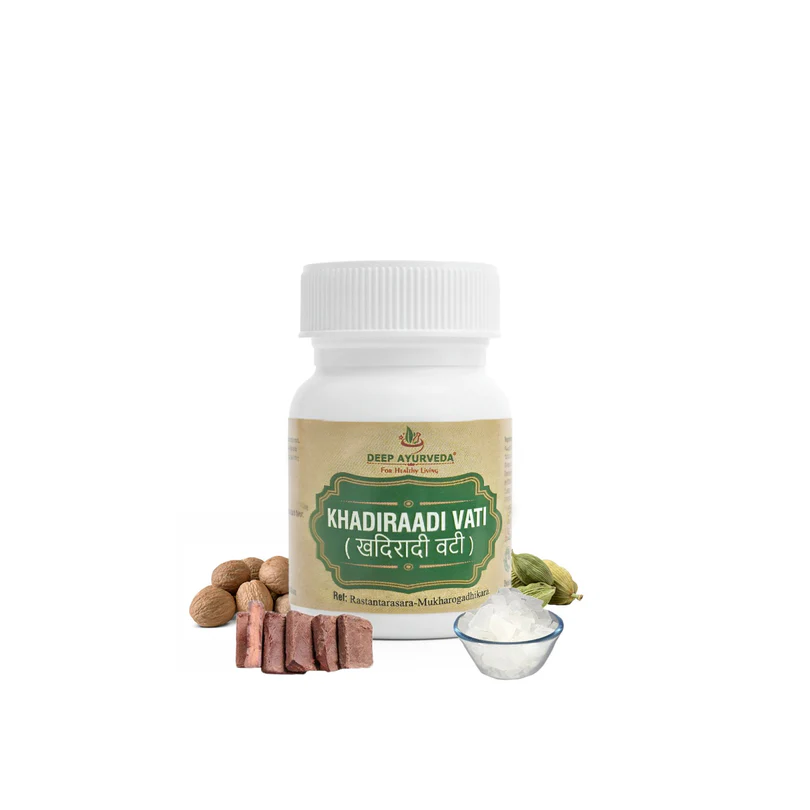
Khadiradi Vati is a classical Ayurvedic herbal formulation traditionally used to support the health of the mouth, gums, tongue, throat, and voice.
The formulation derives its name from Khadira, one of its principal herbs. In Ayurveda, Khadira has long been valued for promoting oral cleanliness and maintaining healthy mucous membranes.
Traditionally, Ayurvedic physicians recommend Khadiradi Vati in conditions such as:
- Mouth ulcers
- Bad breath
- Gum discomfort
- Sore throat
- Hoarseness of voice
- Mild throat irritation
- Excess salivation
- Oral inflammation
Rather than being swallowed immediately, Khadiradi Vati is usually allowed to dissolve slowly in the mouth, enabling prolonged contact with the oral tissues.
This method of administration is considered important because Ayurveda emphasizes local action on the affected tissues in addition to systemic effects.
What Makes Khadiradi Vati Different from Regular Throat Lozenges?
Many people assume Khadiradi Vati is simply an Ayurvedic throat candy. In reality, its traditional purpose is much broader.
Most conventional lozenges are designed primarily to provide temporary soothing. Khadiradi Vati, on the other hand, is traditionally formulated with herbs chosen to support oral hygiene and throat comfort while helping maintain the balance of Kapha and Pitta in the oral cavity.
From an Ayurvedic perspective, recurrent mouth ulcers, sticky saliva, unpleasant breath, and throat discomfort may arise due to imbalances in digestion (Agni), accumulation of Ama (metabolic waste), and disturbances in the oral tissues (Mukha).
For this reason, Ayurvedic management often includes dietary advice, lifestyle measures, and appropriate herbal formulations rather than relying on symptomatic relief alone.
How Does Khadiradi Vati Work?
This is one aspect that many online articles overlook.
According to Ayurveda, the mouth and throat are continuously exposed to food, microbes, environmental irritants, and changes in digestion. When digestive fire (Agni) becomes weak or Kapha and Pitta become aggravated, symptoms such as ulcers, inflammation, coating on the tongue, foul breath, and throat discomfort may develop.
Khadiradi Vati is traditionally selected because many of its herbs possess properties described in Ayurveda as:
- Kashaya (Astringent)
- Krimighna (Supports healthy microbial balance)
- Ropana (Supports tissue healing)
- Shothahara (Helps reduce swelling)
- Mukhashodhaka (Supports oral cleanliness)
- Kandughna (Helps reduce irritation)
Instead of acting through a single mechanism, the formulation is traditionally intended to support the oral environment through multiple complementary actions.
It is important to understand that these concepts come from Ayurvedic theory and should not be interpreted as equivalent to proven clinical outcomes in modern medicine. Scientific evidence on Khadiradi Vati as a complete formulation remains limited, although some individual herbs have been studied for antimicrobial, anti-inflammatory, or antioxidant properties.
Khadiradi Vati Ingredients: What Makes This Classical Formula Effective?
One of the biggest reasons behind the popularity of Khadiradi Vati is its well-balanced combination of Ayurvedic herbs. Each ingredient has been selected not only for its individual properties but also for how it works together to support the health of the mouth, gums, and throat.
Unlike many modern throat lozenges that focus only on providing temporary soothing, Khadiradi Vati follows the Ayurvedic principle of combining herbs with complementary actions. This balanced formulation aims to support oral tissues while helping maintain the natural balance of Kapha and Pitta Doshas in the mouth and throat.
Although the exact composition may vary slightly from one manufacturer to another, the classical formulation generally contains the following important ingredients.
1. Khadira (Acacia catechu)
Khadira is the principal herb from which the formulation gets its name. In Ayurveda, it is considered one of the most valued herbs for supporting the health of the mouth, gums, skin, and Rakta Dhatu (blood tissue). Because of its naturally astringent properties, it has traditionally been used in several Ayurvedic formulations intended for oral care.
Traditional Ayurvedic Properties
- Rasa (Taste): Kashaya (Astringent), which is traditionally associated with supporting gum firmness and maintaining healthy oral tissues.
- Guna (Qualities): Laghu (Light) and Ruksha (Dry), properties that are believed to help reduce excess moisture and Kapha in the oral cavity.
- Virya (Potency): Sheeta (Cooling), which may help soothe tissues affected by excess Pitta according to Ayurvedic principles.
- Dosha Action: Traditionally regarded as beneficial for balancing aggravated Kapha and Pitta Doshas, especially in conditions affecting the mouth and throat.
Why is Khadira Included?
According to Ayurvedic texts, Khadira is included in the formulation because it is traditionally believed to:
- Support healthy gums by helping maintain their natural firmness and overall condition as part of regular oral care.
- Promote oral cleanliness through its traditional cleansing properties, making it a commonly used herb in Ayurvedic dental preparations.
- Help maintain fresh breath by supporting a cleaner oral environment rather than simply masking unpleasant odour.
- Support healthy mucous membranes and contribute to the normal condition of the soft tissues inside the mouth.
- Assist the natural healing process of minor oral irritation, which is one of the reasons it has been traditionally used in formulations for mouth ulcers and sore throat.
Its naturally astringent nature is traditionally believed to tone oral tissues while supporting overall gum and mouth health.
2. Javitri (Mace)
Javitri, the outer covering of nutmeg, is an aromatic spice widely used in Ayurveda. Besides enhancing the flavour of the formulation, it is traditionally valued for supporting digestion, which Ayurveda considers closely connected with overall oral health.
Traditional Role
Traditionally, Javitri is included because it may help:
- Reduce unpleasant mouth odour by supporting a fresher oral environment through its aromatic nature.
- Support healthy digestion (Agni), as Ayurveda considers impaired digestion to be one of the contributing factors behind recurrent oral problems.
- Improve the taste and aroma of the formulation, making it easier to keep the tablet in the mouth until it dissolves completely.
- Promote a feeling of freshness in the mouth after use while complementing the actions of the other herbs.
Ayurveda explains that healthy digestion and healthy oral tissues are interconnected, which is why digestive-supporting herbs are often included in oral formulations.
3. Kankola (Cubeb Pepper)
Kankola is an aromatic herb traditionally used in Ayurvedic formulations prepared for the throat, respiratory passages, and oral cavity. Its warming nature complements the cooling herbs present in Khadiradi Vati.
Traditional Benefits
Traditionally, Kankola is believed to:
- Support throat comfort, particularly during mild irritation or seasonal throat discomfort.
- Help maintain a healthy voice, making it a commonly included herb in formulations used by people who rely heavily on speaking or singing.
- Contribute to oral hygiene by supporting a cleaner and healthier oral environment.
- Help balance excess Kapha, which Ayurveda associates with heaviness, excessive mucus, and throat congestion.
The inclusion of Kankola helps create a balanced formulation where warming and cooling herbs work together instead of acting independently.
4. Karpura (Natural Camphor)
Natural camphor has been used in Ayurveda for centuries because of its cooling, aromatic, and refreshing qualities. Only a small quantity is generally used in classical formulations to enhance both the therapeutic experience and the taste.
Why It Is Added
Traditionally, Karpura is included to:
- Provide a cooling sensation that may help soothe the mouth and throat when there is a feeling of heat or irritation.
- Refresh the mouth naturally, leaving a clean and pleasant feeling after the tablet dissolves.
- Support oral cleanliness as part of the overall herbal combination used for maintaining oral hygiene.
- Improve the overall palatability of the formulation through its distinctive aroma and cooling effect.
Although present in a relatively small amount, Karpura contributes significantly to the refreshing experience associated with Khadiradi Vati.
5. Supari (Processed Areca Nut)
Processed Supari is included in certain classical Ayurvedic formulations after undergoing traditional purification methods (Shodhana). Its use in Ayurveda differs from the commercial areca nut products commonly associated with harmful chewing habits.
Traditional Role
According to Ayurvedic principles, processed Supari is traditionally used to:
- Support the firmness of gums and contribute to maintaining healthy oral tissues through its astringent properties.
- Complement the action of Khadira, helping strengthen the overall formulation designed for oral care.
- Assist in maintaining oral tissue health, particularly when used in classical formulations under proper guidance.
It is important to note that this traditional use should not be confused with chewing processed commercial supari products containing tobacco or other harmful additives, which are associated with significant health risks.
How Do These Ingredients Work Together?
One feature that is often overlooked is that Khadiradi Vati is not simply a collection of individual herbs. Ayurveda places great importance on combining ingredients that complement each other so the formulation works as a balanced whole rather than relying on a single herb.
When used as traditionally directed, these ingredients are intended to work together to:
- Support healthy gums and oral tissues by combining herbs with astringent, soothing, and cleansing properties that have been valued in Ayurveda for centuries.
- Help maintain long-lasting oral freshness by supporting the natural cleanliness of the mouth instead of only masking unpleasant breath.
- Provide soothing support for minor throat discomfort while the tablet slowly dissolves and remains in contact with the affected tissues.
- Promote comfortable swallowing by helping maintain the normal condition of the mouth and throat according to Ayurvedic principles.
- Support vocal comfort and clarity, which is why the formulation has traditionally been used by people who speak or sing for extended periods.
- Help maintain the natural balance of Kapha and Pitta Doshas in the oral cavity, an important Ayurvedic concept for supporting the health of the mouth and throat.
This multi-herb approach reflects Ayurveda’s philosophy of restoring balance within the body rather than focusing on a single symptom. Each herb contributes its own traditional qualities while complementing the actions of the others, making Khadiradi Vati a well-rounded formulation for oral and throat wellness.
Practitioner’s Note: The exact ingredient composition may differ slightly depending on the manufacturer. Always read the product label carefully and use the product according to the directions provided or as advised by a qualified Ayurvedic practitioner.
Khadiradi Vati Uses: When Is It Traditionally Recommended?
Khadiradi Vati has been used in Ayurveda for centuries to support the health of the mouth (Mukha) and throat (Kantha). Rather than being prescribed for just one symptom, Ayurvedic practitioners traditionally recommend it in a variety of oral and throat conditions where Kapha and Pitta doshas are believed to be aggravated.
It is important to remember that Khadiradi Vati is not a substitute for appropriate medical treatment. Persistent ulcers, severe throat pain, high fever, difficulty swallowing, or unexplained oral lesions require evaluation by a qualified healthcare professional.
Below are the most common traditional uses of Khadiradi Vati and what current evidence suggests.
1. Khadiradi Vati for Mouth Ulcers
Mouth ulcers are among the most common reasons people use Khadiradi Vati.
In Ayurveda, recurrent mouth ulcers are often associated with Pitta aggravation, impaired digestion (Mandagni), or irritation of the oral tissues.
Because Khadiradi Vati is traditionally allowed to dissolve slowly in the mouth, it provides prolonged contact with the affected area, allowing the herbal ingredients to remain in contact with the affected tissues for a longer duration.
Traditionally, it is used to support:
- Comfort while eating and drinking: Mouth ulcers often cause burning or pain during meals. Traditionally, Khadiradi Vati is used to soothe the affected area, making it easier to eat and drink comfortably.
- Natural healing of minor oral ulcers: Herbs such as Khadira are traditionally valued for supporting healthy tissue repair and maintaining the integrity of the oral mucosa during the healing process.
- Reduction of irritation and burning sensation: Ayurveda considers its cooling and astringent properties helpful in calming irritated oral tissues, particularly when symptoms are linked to aggravated Pitta.
- Maintaining oral hygiene during recovery: By helping keep the mouth clean and fresh, Khadiradi Vati may support a healthier environment for the natural healing of minor oral lesions.
While several herbs in the formulation have demonstrated antimicrobial or anti-inflammatory properties in laboratory studies, high-quality clinical research on Khadiradi Vati for recurrent mouth ulcers remains limited. Therefore, it should be viewed as a traditional supportive remedy rather than a proven cure.
When to see a doctor: If mouth ulcers last longer than two weeks, recur frequently, are unusually large, or are associated with fever, weight loss, or difficulty eating, seek medical evaluation.
2. Khadiradi Vati for Sore Throat
One of the best-known traditional uses of Khadiradi Vati is supporting throat comfort.
Ayurveda describes sore throat under different conditions depending on the dominant dosha involved. When throat irritation is associated with excess Kapha or mild Pitta imbalance, Khadiradi Vati may be recommended as part of a broader treatment plan.
Traditionally, it is used to help:
- Soothe throat discomfort: Allowing the tablet to dissolve slowly in the mouth may provide a soothing effect on irritated throat tissues and help improve day-to-day comfort.
- Reduce the feeling of throat dryness: The gradual dissolution of the tablet helps keep the throat moist for a short period, which may be beneficial when dryness contributes to irritation.
- Support comfortable swallowing: Mild throat irritation can make swallowing unpleasant. Traditionally, Khadiradi Vati is used to help reduce this discomfort as part of supportive care.
- Maintain throat hygiene: Several herbs in the formulation are traditionally used to support cleanliness of the oral cavity and throat, which is considered important in Ayurvedic management.
However, a sore throat caused by bacterial infections, viral illnesses, allergies, or other medical conditions may require different treatment. If symptoms are severe or persist, consult a healthcare professional.
3. Khadiradi Vati for Bad Breath (Halitosis)
Persistent bad breath often indicates that simply masking the odor is not enough. Ayurveda considers factors such as poor oral hygiene, coating on the tongue, digestive imbalance, and certain gum conditions as possible contributors.
Khadiradi Vati is traditionally used to:
- Promote long-lasting oral freshness: Aromatic herbs present in the formulation help leave the mouth feeling fresh while supporting overall oral cleanliness.
- Support healthy gums: Healthy gums play an important role in maintaining fresh breath. Traditionally, the formulation is used to support normal gum health as part of daily oral care.
- Help maintain a cleaner oral environment: Slowly dissolving the tablet allows the herbal ingredients to come into contact with different areas of the mouth, supporting oral hygiene practices.
- Reduce unpleasant mouth odor associated with poor oral hygiene: When combined with proper brushing, tongue cleaning, and flossing, Khadiradi Vati may help improve breath freshness in individuals with mild oral hygiene-related odor.
For long-term improvement, Ayurvedic practitioners generally recommend combining herbal support with regular tongue cleaning, brushing, flossing, and proper hydration.
4. Khadiradi Vati for Gum Health
Healthy gums are essential for maintaining overall oral health.
Because Khadira and several accompanying herbs possess naturally astringent properties, Khadiradi Vati has traditionally been used to support:
- Healthy gum tissues: The herbs are traditionally used to help maintain the strength and normal condition of the gums as part of routine oral care.
- Natural gum firmness: Ayurveda values astringent herbs for supporting healthy gum tone, especially in individuals experiencing mild gum discomfort.
- Daily oral cleanliness: Good oral hygiene remains the foundation of healthy gums, and Khadiradi Vati is traditionally used as a supportive addition rather than a replacement for brushing and flossing.
- Minor gum discomfort: It may help provide temporary soothing support in cases of mild irritation, but persistent symptoms should always be evaluated by a dentist.
It should not be considered a treatment for advanced gum disease. Bleeding gums, loose teeth, swelling, or persistent pain require dental evaluation.
5. Khadiradi Vati for Hoarseness of Voice
Teachers, singers, public speakers, customer service professionals, and others who use their voice extensively often experience temporary hoarseness after prolonged speaking.
Traditionally, Khadiradi Vati is used to:
- Soothe the throat after prolonged voice use: It is commonly used to provide comfort when the throat feels tired after speaking or singing for long periods.
- Support vocal comfort: Ayurveda traditionally recommends it for maintaining throat wellness, which may help people who depend on their voice professionally.
- Maintain clear voice quality: By supporting throat comfort and oral hygiene, it may help promote clearer speech in individuals experiencing mild throat irritation.
- Reduce minor throat irritation associated with voice strain: It is often used alongside adequate rest and hydration rather than as a standalone solution.
For the best results, Ayurveda also recommends adequate hydration, avoiding excessive shouting, and limiting very cold foods and beverages during periods of vocal strain.
6. Khadiradi Vati for Mild Throat Irritation
Environmental pollution, dust exposure, seasonal weather changes, and prolonged speaking may contribute to occasional throat irritation.
In such situations, Khadiradi Vati is traditionally used as a supportive measure to:
- Provide a refreshing sensation in the throat: The herbal ingredients create a pleasant cooling effect that many people find soothing during mild irritation.
- Help keep the mouth and throat comfortable while dissolving: Because the tablet remains in the mouth for several minutes, it provides prolonged contact with the throat tissues.
- Support everyday throat wellness: It is traditionally used during seasonal changes or after exposure to dust and pollution as part of routine throat care.
- Promote a soothing feeling without replacing medical treatment: It may provide temporary comfort for mild irritation, but persistent symptoms should always be medically evaluated.
If throat irritation is accompanied by persistent cough, breathing difficulty, or lasts for more than a week, medical evaluation is recommended.
Benefits of Khadiradi Vati
The benefits of Khadiradi Vati go beyond simply relieving a sore throat. In Ayurveda, it is considered a multi-herb formulation that supports the overall health of the oral cavity by helping maintain the balance of Kapha and Pitta doshas, promoting tissue health, and supporting proper oral hygiene.
It is important to understand that many of these benefits are based on traditional Ayurvedic knowledge and the known properties of its individual herbs. While some ingredients have shown promising biological activities in laboratory or preliminary studies, robust clinical evidence for the complete formulation is still limited.
Below are the key traditional benefits of Khadiradi Vati and how they may contribute to oral and throat wellness.
1. Supports Healthy Oral Hygiene
Maintaining good oral hygiene is the foundation of healthy teeth, gums, and fresh breath.
Khadiradi Vati is traditionally used to support oral cleanliness by allowing the herbal ingredients to remain in contact with the mouth as the tablet slowly dissolves. This prolonged contact is believed in Ayurveda to help maintain a healthy oral environment.
When combined with regular brushing, tongue cleaning, flossing, and dental check-ups, it may serve as a useful addition to an overall oral care routine.
2. Helps Soothe Minor Throat Discomfort
One of the most recognized benefits of Khadiradi Vati is its traditional use for mild throat irritation and discomfort.
As the tablet dissolves slowly, it provides a soothing sensation to the throat. Ayurvedic practitioners often recommend it for people who experience occasional throat dryness, irritation after prolonged speaking, or seasonal throat discomfort.
However, persistent throat pain, fever, or difficulty swallowing should always be evaluated by a healthcare professional, as these symptoms may indicate an underlying medical condition.
3. Supports Healthy Gums
Healthy gums play an important role in maintaining strong teeth and overall oral health.
The astringent herbs present in Khadiradi Vati are traditionally believed to support:
- Helps maintain gum firmness: Herbs such as Khadira possess natural astringent (Kashaya) properties that are traditionally believed to support the firmness and integrity of healthy gum tissues.
- Supports healthy gum tissues: The formulation is commonly used in Ayurveda to help maintain the normal condition of the gums and provide supportive care for minor gum irritation.
- Promotes oral tissue health: By supporting the natural health of the oral mucosa, Khadiradi Vati is traditionally considered helpful in maintaining healthy tissues inside the mouth.
- Complements everyday gum care: When combined with regular brushing, flossing, and professional dental care, it may contribute to maintaining good gum hygiene as part of a daily oral care routine.
While it may support minor gum discomfort, it is not a replacement for professional dental treatment in cases of advanced gum disease or persistent bleeding.
4. Promotes Fresh Breath
Unpleasant breath can result from poor oral hygiene, tongue coating, dry mouth, gum problems, or digestive disturbances.
Ayurveda views fresh breath as a reflection of both oral cleanliness and healthy digestion (Agni).
Khadiradi Vati is traditionally used to:
- Helps freshen the mouth naturally: Aromatic herbs in the formulation provide a refreshing sensation while the tablet slowly dissolves, leaving the mouth feeling cleaner.
- Supports a healthy oral environment: The herbal ingredients are traditionally valued for helping maintain oral cleanliness, which may contribute to fresher breath when used alongside good oral hygiene.
- May help reduce unpleasant mouth odor: In Ayurveda, improving oral hygiene and supporting digestive balance are considered important steps in managing mild bad breath associated with everyday causes.
For lasting results, practitioners usually recommend combining herbal support with proper brushing, tongue scraping, adequate hydration, and addressing digestive health where needed.
5. Supports Comfortable Speaking
Professionals who rely heavily on their voice—such as teachers, singers, lecturers, and public speakers—often experience temporary throat fatigue.
Traditionally, Khadiradi Vati is used to support:
- Supports vocal comfort during prolonged speaking: Slowly dissolving the tablet may provide a soothing effect that helps reduce temporary throat discomfort caused by excessive voice use.
- Helps keep the throat comfortable: Traditional Ayurvedic practice recommends Khadiradi Vati to support throat comfort during periods of increased vocal activity.
- Promotes a clear speaking voice: By supporting overall throat wellness, it may help individuals maintain vocal clarity during daily communication.
- Provides supportive care for temporary throat strain: It is commonly used as part of an Ayurvedic routine for people whose professions involve frequent speaking.
It should not be viewed as a treatment for chronic voice disorders or persistent hoarseness, which require medical assessment.6. Supports Natural Healing of Minor Oral Irritation
The herbs in Khadiradi Vati have traditionally been valued for their Ropana (tissue-supporting) properties.
From an Ayurvedic perspective, these herbs help maintain the health of the delicate lining of the mouth and throat, especially when minor irritation is present.
This is one reason why Ayurvedic practitioners may recommend the formulation for occasional mouth discomfort or minor oral lesions, alongside appropriate dietary and lifestyle advice.
7. Helps Maintain Kapha–Pitta Balance in the Oral Cavity
This is one of the unique concepts that distinguishes Ayurveda from conventional approaches.
According to Ayurveda:
- Helps balance excess Kapha: Kapha imbalance may present as excessive mucus, heaviness, sticky saliva, or coating on the tongue. Khadiradi Vati is traditionally used to help maintain a healthy Kapha balance in the oral cavity.
- Supports healthy Pitta balance: Pitta aggravation is traditionally associated with burning sensations, redness, inflammation, and recurrent mouth ulcers. The formulation is selected to support normal Pitta balance in these situations.
- Encourages overall oral harmony: Rather than focusing on a single symptom, Ayurveda aims to restore the natural balance of the oral tissues, which is considered essential for long-term oral health.
8. May Complement Daily Oral Care
Khadiradi Vati works best when it is part of a broader oral care routine rather than being relied upon as a standalone solution.
For better long-term oral health, Ayurvedic practitioners often recommend combining it with:
- Brush your teeth twice daily: Regular brushing helps remove plaque and food particles, while Khadiradi Vati serves as supportive care rather than a substitute for brushing.
- Clean your tongue every morning: Tongue scraping is an important Ayurvedic daily practice that helps remove tongue coating and supports fresher breath.
- Stay well hydrated: Drinking enough water helps prevent dry mouth and supports the natural cleansing action of saliva.
- Limit sugary foods and beverages: Reducing excess sugar intake helps lower the risk of tooth decay and supports better oral hygiene.
- Eat a balanced diet: A nutritious diet that supports healthy digestion (Agni) is considered essential in Ayurveda for maintaining healthy teeth, gums, and oral tissues.
- Visit your dentist regularly: Routine dental examinations help detect oral health problems early and should remain an important part of your overall oral care plan.
This holistic approach reflects Ayurveda’s emphasis on preventing disease through healthy daily habits (Dinacharya).
Khadiradi Vati Dosage: How to Take It Correctly
Taking Khadiradi Vati correctly is just as important as choosing the right medicine. Many people swallow the tablet immediately with water, but this is not the traditional Ayurvedic method.
Since Khadiradi Vati is primarily intended to support the health of the mouth and throat, Ayurvedic practitioners generally recommend allowing the tablet to dissolve slowly in the mouth. This gives the herbal ingredients more time to come into contact with the oral tissues and throat.
The exact dosage depends on factors such as age, overall health, the nature of the symptoms, and the specific product being used. Always follow the instructions on the product label or the advice of a qualified Ayurvedic practitioner.
Recommended Dosage for Adults
The following table provides general guidance commonly followed in Ayurvedic practice. Individual recommendations may vary.
Age Group General Dosage* Method of Use Adults 1–2 tablets, 2–3 times daily Allow the tablet to dissolve slowly in the mouth Children Only under medical supervision Follow the practitioner’s advice *Dosage may vary depending on the manufacturer and your healthcare provider’s recommendation.
Should You Chew or Swallow Khadiradi Vati?
This is one of the most common questions people ask.
The traditional method is to:
✔ Place the tablet in the mouth.
✔ Let it dissolve slowly.
✔ Avoid chewing it quickly.
✔ Avoid swallowing it whole.
Allowing the tablet to dissolve gradually helps the herbal ingredients remain in contact with the mouth and throat for a longer period, which is the intended mode of use in traditional Ayurvedic practice.
When Is the Best Time to Take Khadiradi Vati?
In many cases, Ayurvedic practitioners recommend taking Khadiradi Vati after meals or between meals, depending on the individual’s condition and treatment plan.
For throat discomfort or oral irritation, allowing the tablet to dissolve after meals may help maintain prolonged contact with the affected tissues.
After taking the tablet, it is generally advisable to avoid eating or drinking immediately for a short period so the herbs can remain in contact with the oral cavity.
Because individual recommendations may differ, follow the instructions provided by your practitioner or the product manufacturer.
How Long Should You Take Khadiradi Vati?
The duration of use depends on the reason it is being taken.
For occasional throat discomfort or minor oral irritation, it is typically used for a short period as advised.
If symptoms persist beyond a few days, recur frequently, or worsen despite using the formulation, it is important to seek medical or dental evaluation rather than continuing self-treatment.
Long-term use should only be undertaken under the guidance of a qualified Ayurvedic practitioner.
Common Mistakes People Make While Taking Khadiradi Vati
Many people do not get the expected results because they use the medicine incorrectly.
Here are some common mistakes to avoid:
❌ Swallowing the tablet immediately
Khadiradi Vati is designed to dissolve slowly in the mouth. Swallowing it whole may reduce its intended local action on the mouth and throat.
❌ Chewing the tablet quickly
Chewing and swallowing the tablet within a few seconds limits the time the herbal ingredients remain in contact with the oral tissues.
❌ Using it as a substitute for oral hygiene
Khadiradi Vati should complement—not replace—daily oral care practices such as brushing, flossing, tongue cleaning, and regular dental check-ups.
❌ Continuing self-treatment despite persistent symptoms
If mouth ulcers, sore throat, gum bleeding, or hoarseness continue for an extended period or keep recurring, consult a healthcare professional to identify the underlying cause.
Khadiradi Vati Side Effects: Is It Safe for Everyone?
One of the most frequently asked questions is whether Khadiradi Vati has any side effects.
Traditionally, Khadiradi Vati has been used in Ayurveda for many years to support oral and throat health. When taken in the recommended dosage and under the guidance of a qualified Ayurvedic practitioner, it is generally considered well tolerated by most healthy adults.
However, like any herbal or conventional medicine, Khadiradi Vati may not be suitable for everyone. Individual health conditions, allergies, age, pregnancy, and the use of other medications can all influence whether this formulation is appropriate.
It is also important to remember that natural does not automatically mean risk-free. Responsible use and proper medical guidance remain essential.
Possible Side Effects of Khadiradi Vati
Most people do not experience significant adverse effects when the medicine is used correctly. However, some individuals may experience mild discomfort, especially if the tablets are taken in excessive amounts or without proper medical advice.
Possible side effects may include:
- Mild stomach discomfort: Some people with a sensitive digestive system may notice mild stomach upset or abdominal discomfort, particularly if the tablets are taken on an empty stomach or in larger-than-recommended doses.
- Temporary dryness of the mouth: Since several herbs in Khadiradi Vati possess astringent (Kashaya) properties, a few users may experience a temporary feeling of dryness inside the mouth after prolonged use.
- Minor irritation in the mouth: Chewing the tablet quickly instead of allowing it to dissolve slowly may cause mild irritation or reduce its intended soothing effect on the mouth and throat.
- Allergic reactions (rare): Although uncommon, individuals who are allergic to any ingredient in the formulation may develop symptoms such as skin rash, itching, swelling, or irritation after use.
These side effects are not commonly reported, and most healthy adults tolerate Khadiradi Vati well when it is used according to the recommended dosage.
If you experience symptoms such as swelling of the lips or tongue, difficulty breathing, severe allergic reactions, or persistent discomfort after taking the medicine, stop using it immediately and seek prompt medical attention.
Who Should Avoid Khadiradi Vati?
Although Khadiradi Vati is widely used in Ayurvedic practice, it may not be suitable for everyone. The following groups should avoid self-medication or consult a qualified healthcare professional before using it.
1. Pregnant Women
There is limited high-quality clinical research regarding the safety of Khadiradi Vati during pregnancy.
Pregnant women should avoid taking this medicine unless it has been specifically recommended by a qualified Ayurvedic practitioner or obstetrician who understands their medical history and pregnancy-related needs.
2. Breastfeeding Mothers
Scientific evidence regarding the safety of Khadiradi Vati during breastfeeding is currently limited.
If you are breastfeeding, it is advisable to consult your doctor or Ayurvedic practitioner before using this formulation to ensure it is appropriate for both mother and baby.
3. Children
Children should not receive Khadiradi Vati without medical supervision, even if the symptoms appear mild.
The appropriate dosage depends on several factors, including the child’s age, body weight, overall health, and the underlying reason for treatment. Parents should avoid giving adult doses to children.
4. People with Chronic Medical Conditions
Individuals living with long-term medical conditions should consult their healthcare provider before using Khadiradi Vati. This is particularly important for people diagnosed with:
- Diabetes: If you have diabetes, discuss the formulation with your doctor, especially if you are already taking medications to control blood sugar levels.
- Liver disease: People with liver disorders should seek professional advice before starting any herbal medicine to ensure it is suitable for their condition.
- Kidney disease: Since kidney function can influence how the body handles different medicines, individuals with kidney disease should use herbal formulations only under medical supervision.
- Autoimmune disorders: If you have an autoimmune condition and are receiving ongoing treatment, your healthcare provider can help determine whether Khadiradi Vati is appropriate for you.
- Cancer or immune deficiencies: People undergoing cancer treatment or living with weakened immunity should avoid self-medication and always consult their treating physician before taking herbal supplements.
5. People Taking Prescription Medicines
Although no major drug interactions have been conclusively established for Khadiradi Vati, scientific research in this area remains limited.
Before starting the medicine, consult your healthcare provider if you regularly take:
- Blood-thinning medicines: Herbal products may influence treatment plans in some individuals, so professional advice is recommended before combining them.
- Diabetes medications: If you are taking medicines to control blood sugar, your doctor can advise whether Khadiradi Vati is appropriate for your treatment plan.
- High blood pressure medicines: Individuals receiving treatment for hypertension should discuss any herbal medicine with their physician to avoid unexpected issues.
- Immunosuppressive medicines: People taking medicines that affect the immune system should avoid combining herbal formulations without medical supervision.
- Other long-term prescription medicines: If you are taking medicines for chronic health conditions, it is always a good practice to inform your healthcare provider before starting any Ayurvedic formulation.
Can Khadiradi Vati Be Taken Daily?
This is one of the most common questions patients ask.
For short-term support of minor oral or throat discomfort, Khadiradi Vati is commonly used for a limited period as advised by an Ayurvedic practitioner or according to the product instructions.
Long-term daily use should not become a habit without professional supervision, particularly if symptoms keep returning.
Recurring mouth ulcers, persistent bad breath, chronic sore throat, or frequent hoarseness may indicate an underlying dental, digestive, nutritional, or medical condition that requires proper diagnosis.
Ayurveda emphasizes identifying and correcting the root cause rather than relying indefinitely on any single medicine.
When Should You Stop Taking Khadiradi Vati?
Discontinue use and seek professional medical advice if you notice any of the following:
- Mouth ulcers that do not heal within two weeks: Persistent ulcers may require medical or dental evaluation to identify the underlying cause.
- Severe throat pain or difficulty swallowing: These symptoms could indicate an infection or another condition that needs prompt medical attention.
- High fever along with throat symptoms: Fever associated with severe throat discomfort should not be treated with self-medication alone.
- Persistent gum bleeding: Ongoing bleeding may be a sign of gum disease or another dental problem that requires professional treatment.
- Unexplained white patches, lumps, or sores inside the mouth: These changes should always be evaluated by a healthcare professional, particularly if they persist.
- Symptoms continue to worsen despite treatment: If your condition does not improve after using Khadiradi Vati as directed, consult your doctor instead of continuing self-treatment.
- Signs of an allergic reaction: Stop taking the medicine immediately if you develop rash, itching, swelling, or difficulty breathing, and seek urgent medical care.
Tips for Safe Use
To get the best results while using Khadiradi Vati safely, follow these practical recommendations:
✔ Follow the recommended dosage: Always take the medicine according to the product label or the advice of your Ayurvedic practitioner. Avoid increasing the dose on your own.
✔ Allow the tablet to dissolve slowly: Instead of swallowing or chewing it immediately, let the tablet dissolve gradually in the mouth so the herbs can remain in contact with the oral tissues.
✔ Store it properly: Keep the tablets in a cool, dry place away from direct sunlight and moisture to preserve their quality and effectiveness.
✔ Check the expiry date: Never use expired herbal medicines, as their quality and effectiveness may decline over time.
✔ Avoid excessive use: Taking more tablets than recommended will not necessarily improve the results and may increase the risk of unwanted effects.
✔ Maintain good oral hygiene: Continue brushing, flossing, cleaning your tongue, and scheduling regular dental check-ups, as Khadiradi Vati is intended to complement—not replace—good oral care.
✔ Inform your healthcare provider: If you are taking prescription medicines or other herbal supplements, let your doctor know before starting Khadiradi Vati.
Diet & Lifestyle Tips While Taking Khadiradi Vati
According to Ayurveda, medicines work best when they are combined with an appropriate diet (Pathya) and healthy daily habits (Vihara). Simply taking Khadiradi Vati without addressing dietary and lifestyle factors may reduce its overall effectiveness, especially if oral or throat problems are recurring.
Many conditions such as mouth ulcers, bad breath, gum discomfort, and sore throat are believed in Ayurveda to be influenced by poor digestion (Mandagni), excess Pitta, aggravated Kapha, and unhealthy daily routines. Therefore, improving your eating habits and maintaining proper oral hygiene are considered just as important as taking the medicine itself.
Below are some practical Ayurvedic recommendations that may help support oral and throat health while using Khadiradi Vati.
Foods to Eat
Choosing the right foods may help maintain healthy oral tissues and support recovery from minor throat discomfort.
Eat freshly prepared, home-cooked meals
Freshly cooked meals are generally easier to digest than heavily processed or packaged foods. Ayurveda considers proper digestion (Agni) essential for maintaining overall health, including the health of the mouth and throat.
Include seasonal fruits and vegetables
Seasonal fruits and vegetables provide important vitamins, minerals, and antioxidants that support normal tissue repair and overall well-being. Soft fruits and cooked vegetables may also be more comfortable to eat if you have mouth ulcers.
Stay well hydrated
Drinking enough water throughout the day helps prevent dryness of the mouth and supports natural saliva production, which plays an important role in maintaining oral hygiene.
Consume warm liquids when appropriate
Warm water, light soups, or other warm beverages may provide comfort during mild throat irritation. Extremely hot drinks, however, should be avoided as they may further irritate sensitive oral tissues.
Eat a balanced diet
Include whole grains, pulses, healthy fats, and protein-rich foods as part of your daily meals. A balanced diet supports the body’s natural healing processes and helps maintain overall health.
Practice mindful eating
Ayurveda recommends eating meals at regular times, chewing food thoroughly, and avoiding overeating. Good eating habits support healthy digestion, which is considered closely linked to oral health.
Foods to Limit or Avoid
Certain foods and habits may worsen mouth or throat irritation in some individuals. While everyone’s tolerance is different, the following are commonly advised in Ayurvedic practice.
Very spicy foods
Highly spicy meals may aggravate Pitta and increase the burning sensation associated with mouth ulcers or throat irritation.
Extremely hot foods and beverages
Very hot tea, coffee, or freshly cooked foods can irritate already sensitive oral tissues. Allow food and beverages to cool slightly before consuming them.
Excessively sugary foods
Frequent consumption of sweets, candies, sugary beverages, and desserts may contribute to poor oral hygiene and increase the risk of dental problems if oral care is inadequate.
Tobacco products
Smoking and chewing tobacco are harmful to oral and overall health. They can worsen gum disease, delay healing of oral tissues, and significantly increase the risk of serious oral diseases.
Alcohol
Alcohol may contribute to dryness and irritation of the mouth in some individuals. If you have active mouth ulcers or throat discomfort, limiting alcohol intake may be beneficial.
Highly processed foods
Foods high in refined sugar, unhealthy fats, and artificial additives should be consumed in moderation as part of an overall healthy diet.
Lifestyle Tips for Better Results
Along with Khadiradi Vati, adopting healthy daily habits can help maintain long-term oral and throat health.
✔ Brush your teeth twice daily
Regular brushing helps remove food particles and plaque, reducing the risk of dental problems and supporting overall oral hygiene.
✔ Clean your tongue every morning
Tongue cleaning (Jihva Nirlekhana) is a traditional Ayurvedic practice that helps remove coating from the tongue and promotes fresh breath.
✔ Floss regularly
Flossing helps clean areas between the teeth that a toothbrush cannot easily reach, supporting healthy gums and reducing plaque buildup.
✔ Stay hydrated throughout the day
Adequate hydration supports saliva production, which naturally helps cleanse the mouth and protect oral tissues.
✔ Get adequate sleep
Poor sleep may affect overall health and immune function. Maintaining a regular sleep schedule supports the body’s natural recovery processes.
✔ Manage stress
Stress may contribute to habits such as teeth grinding, poor oral hygiene, or recurrent mouth ulcers in some individuals. Yoga, meditation, breathing exercises, or other relaxation techniques may help manage stress as part of a healthy lifestyle.
✔ Visit your dentist regularly
Routine dental check-ups help identify oral health problems early and complement the benefits of maintaining good daily oral hygiene.
Daily Oral Care Routine Recommended in Ayurveda
For people who experience frequent mouth or throat problems, Ayurvedic practitioners often recommend a consistent daily oral care routine.
A simple routine may include:
- Brush your teeth twice daily.
- Clean your tongue every morning.
- Drink sufficient water throughout the day.
- Eat freshly prepared, balanced meals.
- Take Khadiradi Vati only as advised.
- Avoid tobacco and excessive alcohol.
- Schedule regular dental examinations.
Following these habits consistently may contribute more to long-term oral health than relying on any single medicine alone.
Scientific Research on Khadiradi Vati: What Does Modern Evidence Say?
Many people wonder whether the benefits of Khadiradi Vati are supported by scientific research. This is an important question because Ayurveda is based on centuries of traditional clinical practice, while modern medicine relies on laboratory studies, clinical trials, and systematic scientific evaluation.
At present, high-quality clinical research specifically evaluating Khadiradi Vati as a complete formulation is limited. Most of the available evidence comes from traditional Ayurvedic literature, laboratory research on individual herbs, and a small number of observational or clinical studies.
This does not necessarily mean that the medicine is ineffective. Rather, it means that more well-designed human clinical trials are needed to better understand its safety and effectiveness for different oral and throat conditions.
What Do Studies on Individual Ingredients Suggest?
Although research on the complete formulation is still evolving, several herbs commonly used in Khadiradi Vati have been investigated for their biological properties. Much of this research has focused on individual ingredients rather than the finished Ayurvedic formulation.
Khadira (Acacia catechu)
Khadira is one of the most extensively studied herbs used in Khadiradi Vati and has attracted scientific interest because of its traditional use in maintaining oral health.
Laboratory and experimental studies suggest that Khadira may possess the following properties:
- Antioxidant activity: Khadira contains naturally occurring plant compounds that have shown antioxidant effects in laboratory studies. These compounds may help protect cells from oxidative stress, although more human research is needed to confirm these effects.
- Antimicrobial properties: Some laboratory studies suggest that Khadira extracts may inhibit the growth of certain bacteria and microorganisms under controlled conditions. However, these findings should not be interpreted as proof that Khadiradi Vati can treat oral infections in humans.
- Anti-inflammatory effects: Experimental studies indicate that Khadira may help reduce inflammatory responses in laboratory models. Whether these effects produce meaningful clinical benefits in people requires further investigation through well-designed clinical trials.
- Natural astringent properties: Khadira has traditionally been valued in Ayurveda for its astringent (Kashaya) nature, which is believed to support healthy gums, oral tissues, and overall oral hygiene. This traditional use has contributed to its inclusion in many classical Ayurvedic formulations.
Most of these findings come from laboratory or animal studies, and additional human clinical research is required before drawing firm conclusions about therapeutic effectiveness.
Aromatic Herbs Used in the Formulation
Besides Khadira, ingredients such as Javitri (Mace), Kankola (Cubeb), and Natural Camphor have also been investigated individually for their biological activities.
Preliminary studies suggest that these herbs may exhibit the following characteristics:
- Antioxidant properties: Certain plant compounds present in these herbs have demonstrated antioxidant activity in laboratory research, which may contribute to protecting cells from oxidative damage.
- Antimicrobial activity: Experimental studies have reported that some of these herbs may inhibit the growth of selected microorganisms under laboratory conditions. More clinical studies are required to determine whether these findings translate into measurable benefits for oral health.
- Mild anti-inflammatory effects: Early research indicates that some ingredients may possess compounds capable of influencing inflammatory responses. However, current evidence is not sufficient to establish their effectiveness in treating oral or throat diseases.
- Support for oral freshness: Their naturally aromatic compounds contribute to the refreshing taste and pleasant mouthfeel of Khadiradi Vati, which is one reason the formulation has traditionally been used to support oral hygiene and fresh breath.
Although these findings are encouraging, it is important to remember that results from laboratory studies do not always reflect what happens in the human body. Well-designed clinical trials remain necessary to evaluate the complete Ayurvedic formulation.
What Does Modern Research Say About Oral Health?
Modern dental research consistently shows that maintaining good oral hygiene is one of the most effective ways to reduce the risk of common oral problems.
Healthcare professionals generally recommend the following practices as the foundation of good oral health:
- Brush your teeth twice daily: Brushing with an appropriate toothpaste helps remove plaque and food debris, reducing the risk of tooth decay and gum disease.
- Clean your tongue regularly: Tongue cleaning helps remove accumulated debris and bacteria that may contribute to bad breath and poor oral hygiene.
- Floss between the teeth: Flossing reaches areas that a toothbrush cannot easily clean, helping to maintain healthy gums and reduce plaque buildup.
- Drink adequate water: Staying well hydrated supports saliva production, which naturally helps cleanse the mouth and maintain a healthy oral environment.
- Limit sugary foods and beverages: Reducing excess sugar intake lowers the risk of dental cavities and supports long-term oral health.
- Visit your dentist regularly: Routine dental examinations help detect oral problems early and provide timely treatment before they become more serious.
Ayurvedic formulations such as Khadiradi Vati may be used as supportive measures alongside these healthy habits, but they should not replace professional dental care or evidence-based medical treatment when required.
Current Limitations of the Available Research
Although Khadiradi Vati has a long history of traditional use in Ayurveda, there are still important limitations in the available scientific evidence.
Some of the main research gaps include:
- Limited high-quality clinical trials: Only a relatively small number of well-designed human studies have evaluated the complete Khadiradi Vati formulation, making it difficult to draw strong clinical conclusions.
- Small study populations: Several published studies include a limited number of participants, which reduces the ability to generalize the findings to larger populations.
- Differences between manufacturers: The exact composition and preparation of Khadiradi Vati may vary slightly among manufacturers, making it challenging to compare research findings across different products.
- Need for long-term safety research: Additional studies are needed to better understand the long-term safety and effectiveness of Khadiradi Vati in different age groups and in people with chronic health conditions.
Because of these limitations, current scientific evidence should be interpreted carefully and should be considered alongside traditional Ayurvedic knowledge rather than as definitive proof of effectiveness.
Traditional Knowledge and Scientific Research Can Complement Each Other
Ayurveda and modern medical science approach health from different perspectives, but both aim to improve patient well-being.
Ayurveda focuses on understanding an individual’s Prakriti (body constitution), Vikriti (current imbalance), Agni (digestive strength), lifestyle, and diet before selecting an appropriate treatment.
Modern research, on the other hand, evaluates medicines using standardized clinical methods to determine their safety, effectiveness, and possible risks across larger populations.
Rather than viewing these approaches as conflicting systems, many healthcare professionals believe they can complement each other. Traditional Ayurvedic knowledge provides valuable historical clinical experience, while scientific research helps validate herbal medicines through modern evidence-based methods.
What Should Patients Take Away?
Based on the evidence currently available, Khadiradi Vati can be regarded as a traditional Ayurvedic formulation that has been used for generations to support oral and throat health. Research on several of its individual herbs is encouraging, but high-quality clinical evidence for the complete formulation remains limited.
For this reason, Khadiradi Vati should be considered a supportive Ayurvedic medicine rather than a scientifically proven cure for oral or throat diseases. It is most beneficial when used alongside good oral hygiene, a balanced diet, healthy lifestyle habits, and appropriate medical or dental care whenever necessary.
Evidence-Based Perspective: The greatest strength of Khadiradi Vati lies in its long-standing traditional Ayurvedic use and the promising research available on several of its individual herbs. However, readers should clearly understand the difference between traditional evidence and high-quality clinical evidence. Making informed healthcare decisions involves combining scientific research, professional medical advice, and individualized Ayurvedic guidance where appropriate.
Scientific Research on Khadiradi Vati: What Does Modern Evidence Say?
Many people wonder whether the benefits of Khadiradi Vati are supported by scientific research. This is an important question because Ayurveda is based on centuries of traditional clinical practice, while modern medicine relies on laboratory studies, clinical trials, and systematic scientific evaluation.
At present, high-quality clinical research specifically evaluating Khadiradi Vati as a complete formulation is limited. Most of the available evidence comes from traditional Ayurvedic literature, laboratory research on individual herbs, and a small number of observational or clinical studies.
This does not necessarily mean that the medicine is ineffective. Rather, it means that more well-designed human clinical trials are needed to better understand its safety and effectiveness for different oral and throat conditions.
What Do Studies on Individual Ingredients Suggest?
Although research on the complete formulation is still evolving, several herbs commonly used in Khadiradi Vati have been investigated for their biological properties. Much of this research has focused on individual ingredients rather than the finished Ayurvedic formulation.
Khadira (Acacia catechu)
Khadira is one of the most extensively studied herbs used in Khadiradi Vati and has attracted scientific interest because of its traditional use in maintaining oral health.
Laboratory and experimental studies suggest that Khadira may possess the following properties:
- Antioxidant activity: Khadira contains naturally occurring plant compounds that have shown antioxidant effects in laboratory studies. These compounds may help protect cells from oxidative stress, although more human research is needed to confirm these effects.
- Antimicrobial properties: Some laboratory studies suggest that Khadira extracts may inhibit the growth of certain bacteria and microorganisms under controlled conditions. However, these findings should not be interpreted as proof that Khadiradi Vati can treat oral infections in humans.
- Anti-inflammatory effects: Experimental studies indicate that Khadira may help reduce inflammatory responses in laboratory models. Whether these effects produce meaningful clinical benefits in people requires further investigation through well-designed clinical trials.
- Natural astringent properties: Khadira has traditionally been valued in Ayurveda for its astringent (Kashaya) nature, which is believed to support healthy gums, oral tissues, and overall oral hygiene. This traditional use has contributed to its inclusion in many classical Ayurvedic formulations.
Most of these findings come from laboratory or animal studies, and additional human clinical research is required before drawing firm conclusions about therapeutic effectiveness.
Aromatic Herbs Used in the Formulation
Besides Khadira, ingredients such as Javitri (Mace), Kankola (Cubeb), and Natural Camphor have also been investigated individually for their biological activities.
Preliminary studies suggest that these herbs may exhibit the following characteristics:
- Antioxidant properties: Certain plant compounds present in these herbs have demonstrated antioxidant activity in laboratory research, which may contribute to protecting cells from oxidative damage.
- Antimicrobial activity: Experimental studies have reported that some of these herbs may inhibit the growth of selected microorganisms under laboratory conditions. More clinical studies are required to determine whether these findings translate into measurable benefits for oral health.
- Mild anti-inflammatory effects: Early research indicates that some ingredients may possess compounds capable of influencing inflammatory responses. However, current evidence is not sufficient to establish their effectiveness in treating oral or throat diseases.
- Support for oral freshness: Their naturally aromatic compounds contribute to the refreshing taste and pleasant mouthfeel of Khadiradi Vati, which is one reason the formulation has traditionally been used to support oral hygiene and fresh breath.
Although these findings are encouraging, it is important to remember that results from laboratory studies do not always reflect what happens in the human body. Well-designed clinical trials remain necessary to evaluate the complete Ayurvedic formulation.
What Does Modern Research Say About Oral Health?
Modern dental research consistently shows that maintaining good oral hygiene is one of the most effective ways to reduce the risk of common oral problems.
Healthcare professionals generally recommend the following practices as the foundation of good oral health:
- Brush your teeth twice daily: Brushing with an appropriate toothpaste helps remove plaque and food debris, reducing the risk of tooth decay and gum disease.
- Clean your tongue regularly: Tongue cleaning helps remove accumulated debris and bacteria that may contribute to bad breath and poor oral hygiene.
- Floss between the teeth: Flossing reaches areas that a toothbrush cannot easily clean, helping to maintain healthy gums and reduce plaque buildup.
- Drink adequate water: Staying well hydrated supports saliva production, which naturally helps cleanse the mouth and maintain a healthy oral environment.
- Limit sugary foods and beverages: Reducing excess sugar intake lowers the risk of dental cavities and supports long-term oral health.
- Visit your dentist regularly: Routine dental examinations help detect oral problems early and provide timely treatment before they become more serious.
Ayurvedic formulations such as Khadiradi Vati may be used as supportive measures alongside these healthy habits, but they should not replace professional dental care or evidence-based medical treatment when required.
Current Limitations of the Available Research
Although Khadiradi Vati has a long history of traditional use in Ayurveda, there are still important limitations in the available scientific evidence.
Some of the main research gaps include:
- Limited high-quality clinical trials: Only a relatively small number of well-designed human studies have evaluated the complete Khadiradi Vati formulation, making it difficult to draw strong clinical conclusions.
- Small study populations: Several published studies include a limited number of participants, which reduces the ability to generalize the findings to larger populations.
- Differences between manufacturers: The exact composition and preparation of Khadiradi Vati may vary slightly among manufacturers, making it challenging to compare research findings across different products.
- Need for long-term safety research: Additional studies are needed to better understand the long-term safety and effectiveness of Khadiradi Vati in different age groups and in people with chronic health conditions.
Because of these limitations, current scientific evidence should be interpreted carefully and should be considered alongside traditional Ayurvedic knowledge rather than as definitive proof of effectiveness.
Traditional Knowledge and Scientific Research Can Complement Each Other
Ayurveda and modern medical science approach health from different perspectives, but both aim to improve patient well-being.
Ayurveda focuses on understanding an individual’s Prakriti (body constitution), Vikriti (current imbalance), Agni (digestive strength), lifestyle, and diet before selecting an appropriate treatment.
Modern research, on the other hand, evaluates medicines using standardized clinical methods to determine their safety, effectiveness, and possible risks across larger populations.
Rather than viewing these approaches as conflicting systems, many healthcare professionals believe they can complement each other. Traditional Ayurvedic knowledge provides valuable historical clinical experience, while scientific research helps validate herbal medicines through modern evidence-based methods.
What Should Patients Take Away?
Based on the evidence currently available, Khadiradi Vati can be regarded as a traditional Ayurvedic formulation that has been used for generations to support oral and throat health. Research on several of its individual herbs is encouraging, but high-quality clinical evidence for the complete formulation remains limited.
For this reason, Khadiradi Vati should be considered a supportive Ayurvedic medicine rather than a scientifically proven cure for oral or throat diseases. It is most beneficial when used alongside good oral hygiene, a balanced diet, healthy lifestyle habits, and appropriate medical or dental care whenever necessary.
Evidence-Based Perspective: The greatest strength of Khadiradi Vati lies in its long-standing traditional Ayurvedic use and the promising research available on several of its individual herbs. However, readers should clearly understand the difference between traditional evidence and high-quality clinical evidence. Making informed healthcare decisions involves combining scientific research, professional medical advice, and individualized Ayurvedic guidance where appropriate.
Who Can Benefit Most from Khadiradi Vati?
Khadiradi Vati is not intended for everyone experiencing mouth or throat discomfort. In Ayurveda, medicines are selected after considering an individual’s Prakriti (body constitution), Vikriti (current imbalance), age, digestive strength (Agni), lifestyle, and the nature of the symptoms.
Rather than recommending the same medicine to every patient, Ayurvedic practitioners focus on identifying the underlying cause before choosing an appropriate formulation.
The following groups may benefit from Khadiradi Vati when it is used under the guidance of a qualified healthcare professional.
1. People with Recurrent Mouth Ulcers
Individuals who frequently develop minor mouth ulcers may be advised to use Khadiradi Vati as part of a broader Ayurvedic treatment plan.
In traditional Ayurvedic practice, recurrent ulcers are often associated with Pitta aggravation, digestive imbalance, or irritation of the oral tissues. Along with herbal medicines, dietary changes and proper oral hygiene are usually recommended to support recovery and reduce recurrence.
If mouth ulcers occur repeatedly or do not heal within two weeks, medical evaluation is important to rule out nutritional deficiencies, infections, autoimmune conditions, or other underlying health problems.
2. People with Mild Sore Throat or Throat Irritation
Occasional throat irritation caused by seasonal changes, prolonged speaking, or minor throat discomfort is another situation where Khadiradi Vati is traditionally used.
Because the tablet dissolves slowly in the mouth, it provides prolonged contact with the throat and oral tissues, offering a soothing effect. However, it should not be considered a replacement for appropriate medical treatment in cases of severe infection, high fever, or persistent throat pain.
3. Teachers, Singers, Public Speakers, and Voice Professionals
People who use their voice extensively throughout the day may occasionally experience throat fatigue or temporary hoarseness.
Teachers, singers, lecturers, customer support professionals, lawyers, and public speakers sometimes use Khadiradi Vati as supportive Ayurvedic care to help maintain throat comfort during periods of increased vocal demand. Adequate hydration and proper voice care remain equally important.
4. Individuals Concerned About Bad Breath
Persistent bad breath can affect confidence and may sometimes indicate poor oral hygiene, gum disease, tongue coating, or digestive issues.
Khadiradi Vati may help support oral freshness as part of a complete oral hygiene routine. However, chronic bad breath should always be evaluated by a dentist or healthcare professional to identify and treat the underlying cause.
5. People Looking to Support Gum Health
Individuals experiencing minor gum discomfort may use Khadiradi Vati as a supportive Ayurvedic formulation alongside regular brushing, flossing, and professional dental care.
It is important to remember that herbal medicines should not replace treatment for advanced gum disease, loose teeth, or persistent bleeding gums.
6. Individuals Seeking Ayurvedic Oral Care
Some people prefer incorporating traditional Ayurvedic practices into their daily wellness routine.
When recommended by a qualified practitioner, Khadiradi Vati may be used alongside healthy habits such as tongue cleaning, proper brushing, balanced nutrition, and regular dental check-ups to support overall oral hygiene.
Who May Not Be the Right Candidate?
Although Khadiradi Vati is widely used, it may not be appropriate for everyone.
You should seek medical advice before using it if you:
- Are pregnant or breastfeeding, as safety data in these groups remains limited.
- Have persistent mouth ulcers or throat symptoms that do not improve with time or recur frequently.
- Are taking long-term prescription medications, especially for chronic medical conditions.
- Have known allergies to any ingredient present in the formulation.
- Are considering giving it to a child, as the dosage and suitability should be determined by a qualified healthcare professional.
Signs That You Should Consult a Doctor Instead of Self-Medicating
While Khadiradi Vati may be suitable for minor oral or throat discomfort, certain symptoms should never be ignored.
Seek prompt medical or dental care if you experience:
- Mouth ulcers lasting longer than two weeks, especially if they continue to enlarge or recur frequently.
- Persistent sore throat with fever, difficulty swallowing, or swelling of the neck.
- Unexplained white or red patches inside the mouth, as these require professional evaluation.
- Bleeding gums that continue despite good oral hygiene, which may indicate underlying dental disease.
- Severe pain, facial swelling, or pus formation, as these symptoms may require urgent medical or dental treatment.
Early diagnosis is essential because many oral conditions respond better to treatment when identified at an early stage.
How to Choose the Best Khadiradi Vati
Today, Khadiradi Vati is available from many Ayurvedic manufacturers, both online and in local medical stores. Although the formulation carries the same classical name, the quality of ingredients, manufacturing standards, and product consistency may vary from one brand to another.
Choosing a high-quality product is important because the effectiveness of any Ayurvedic medicine depends not only on the classical formulation but also on the quality of raw herbs, proper processing, and good manufacturing practices.
Before purchasing Khadiradi Vati, consider the following factors.
1. Choose a Reputed Ayurvedic Brand
A well-established manufacturer is more likely to follow standardized production methods and quality control procedures.
When selecting a product, look for brands that have a long-standing reputation in Ayurvedic medicine and maintain transparent manufacturing practices.
2. Check the Ingredient List
Always read the product label carefully before purchasing.
The ingredient list should clearly mention the herbal components used in the formulation. If you have known allergies to any herbal ingredient, consult your healthcare provider before using the product.
3. Look for Good Manufacturing Practices (GMP)
Choose products manufactured in facilities that follow Good Manufacturing Practices (GMP) or other recognized quality standards.
These certifications indicate that the manufacturer follows established procedures for quality, hygiene, and consistency during production.
4. Check the Manufacturing and Expiry Date
Herbal medicines should always be used within their recommended shelf life.
Before purchasing, verify the manufacturing date, expiry date, and packaging condition. Avoid products with damaged packaging or unclear labeling.
5. Buy from Trusted Sellers
Purchase Khadiradi Vati from reliable pharmacies, licensed Ayurvedic stores, or reputable online platforms.
Buying from trusted sources reduces the risk of receiving counterfeit, expired, or improperly stored products.
6. Don’t Choose Only Based on Price
A lower price does not always mean better value, and a higher price does not automatically guarantee superior quality.
Instead of focusing only on cost, consider the manufacturer’s reputation, ingredient transparency, quality certifications, and storage conditions before making your decision.
7. Consult a Qualified Practitioner if You’re Unsure
If you are unsure which product is most suitable for your needs, seek advice from a qualified Ayurvedic practitioner.
They can recommend a formulation based on your symptoms, body constitution (Prakriti), current health condition, and any medicines you may already be taking.
Common Mistakes to Avoid While Using Khadiradi Vati
Although Khadiradi Vati is a classical Ayurvedic formulation that has been used for generations to support oral and throat health, its effectiveness depends not only on the medicine itself but also on how it is used.
In clinical practice, many people expect quick results but unknowingly make small mistakes that may reduce the potential benefits of the formulation. Understanding these common errors can help you use Khadiradi Vati more effectively while supporting better oral hygiene and overall throat care.
1. Swallowing the Tablet Immediately
One of the most common mistakes is swallowing Khadiradi Vati with water like an ordinary tablet.
Traditionally, the tablet is meant to dissolve slowly in the mouth. This allows the herbal ingredients to remain in contact with the mouth, gums, tongue, and throat for a longer time, which is considered important in Ayurvedic practice.
2. Chewing the Tablet Too Quickly
Some people chew the tablet within a few seconds and swallow it immediately.
Doing so reduces the amount of time the herbs remain in contact with the oral tissues. For the intended traditional use, it is generally recommended to let the tablet dissolve gradually instead of chewing it quickly.
3. Ignoring Daily Oral Hygiene
Khadiradi Vati should support your oral care routine—not replace it.
Brushing your teeth twice a day, cleaning your tongue, flossing regularly, and visiting your dentist for routine check-ups remain essential for maintaining healthy teeth and gums.
4. Expecting Instant Results
Ayurvedic medicines are generally designed to support the body’s natural balance rather than provide immediate symptom suppression.
Some individuals may notice improvement within a few days for mild throat discomfort, while others with recurring oral problems may require additional dietary changes, lifestyle modifications, or professional treatment. Patience and consistency are important.
5. Continuing Self-Treatment for Persistent Symptoms
Many people continue taking Khadiradi Vati for weeks without seeking medical advice, even when symptoms do not improve.
If mouth ulcers, sore throat, gum bleeding, or bad breath continue despite appropriate use, it is important to consult a doctor or dentist to identify the underlying cause instead of relying solely on self-medication.
6. Ignoring the Root Cause
Ayurveda emphasizes treating the cause of the problem, not just the symptoms.
Recurring mouth ulcers, frequent throat irritation, or persistent bad breath may be associated with poor oral hygiene, nutritional deficiencies, digestive disorders, smoking, stress, or underlying medical conditions. Addressing these factors is often just as important as taking the medicine itself.
7. Not Following Dietary Advice
Continuing to consume very spicy foods, tobacco products, excessive alcohol, or large amounts of sugary foods may reduce the overall benefits of Khadiradi Vati.
Following a balanced diet, staying hydrated, and maintaining healthy daily habits can help support both oral health and general well-being.
8. Taking More Than the Recommended Dose
Some people believe that taking extra tablets will provide faster relief.
Using more than the recommended dosage does not necessarily improve results and may increase the likelihood of unwanted effects. Always follow the dosage instructions provided by your healthcare professional or the product manufacturer.
9. Using Expired or Poor-Quality Products
The quality of an Ayurvedic medicine plays an important role in its effectiveness.
Always check the expiry date, inspect the packaging for damage, and purchase Khadiradi Vati from a trusted manufacturer or reliable pharmacy to help ensure product quality.
10. Using Khadiradi Vati Without Professional Advice in Special Situations
Certain groups, including pregnant women, breastfeeding mothers, children, older adults with multiple medical conditions, and people taking long-term prescription medicines, should avoid self-medication.
Consulting a qualified healthcare professional helps ensure that the formulation is appropriate for your individual health needs.
Final Advice
Khadiradi Vati is most beneficial when it is used as part of a comprehensive approach to oral and throat health, rather than as a quick solution for every symptom. Good oral hygiene, a balanced diet, adequate hydration, healthy lifestyle habits, and timely medical or dental evaluation all play an equally important role in achieving lasting results.
Using the medicine correctly—and understanding when professional care is needed—can help you make safer, more informed decisions about your oral health.
Frequently Asked Questions
What is Khadiradi Vati used for?
Khadiradi Vati is a classical Ayurvedic formulation traditionally used to support oral and throat health. It is commonly recommended for minor mouth ulcers, sore throat, bad breath, gum discomfort, hoarseness of voice, and maintaining oral hygiene. It should be viewed as a supportive Ayurvedic medicine rather than a replacement for professional medical or dental treatment.
Can Khadiradi Vati help with mouth ulcers?
Yes, Khadiradi Vati is traditionally used in Ayurveda to support the healing of minor mouth ulcers. The tablet is usually allowed to dissolve slowly in the mouth so that the herbal ingredients remain in contact with the affected area. If ulcers persist for more than two weeks or recur frequently, consult a healthcare professional.
Is Khadiradi Vati effective for a sore throat?
Khadiradi Vati is traditionally used to soothe mild throat irritation and provide comfort during occasional sore throat. However, if throat pain is severe, accompanied by fever, or causes difficulty swallowing, it is important to seek medical evaluation instead of relying solely on self-treatment.
Should Khadiradi Vati be chewed or swallowed?
No. Traditionally, Khadiradi Vati is not chewed or swallowed immediately. It is generally allowed to dissolve slowly in the mouth so the herbal ingredients can remain in contact with the mouth and throat for a longer duration.
When is the best time to take Khadiradi Vati?
Khadiradi Vati is commonly taken after meals or as advised by an Ayurvedic practitioner. After allowing the tablet to dissolve, it is generally recommended to avoid eating or drinking for a short time so the herbs can continue acting on the oral tissues.
Can Khadiradi Vati be taken daily?
Short-term daily use is common when recommended by an Ayurvedic practitioner or according to the product instructions. Long-term daily use should only be continued under professional supervision, particularly if symptoms continue to recur.