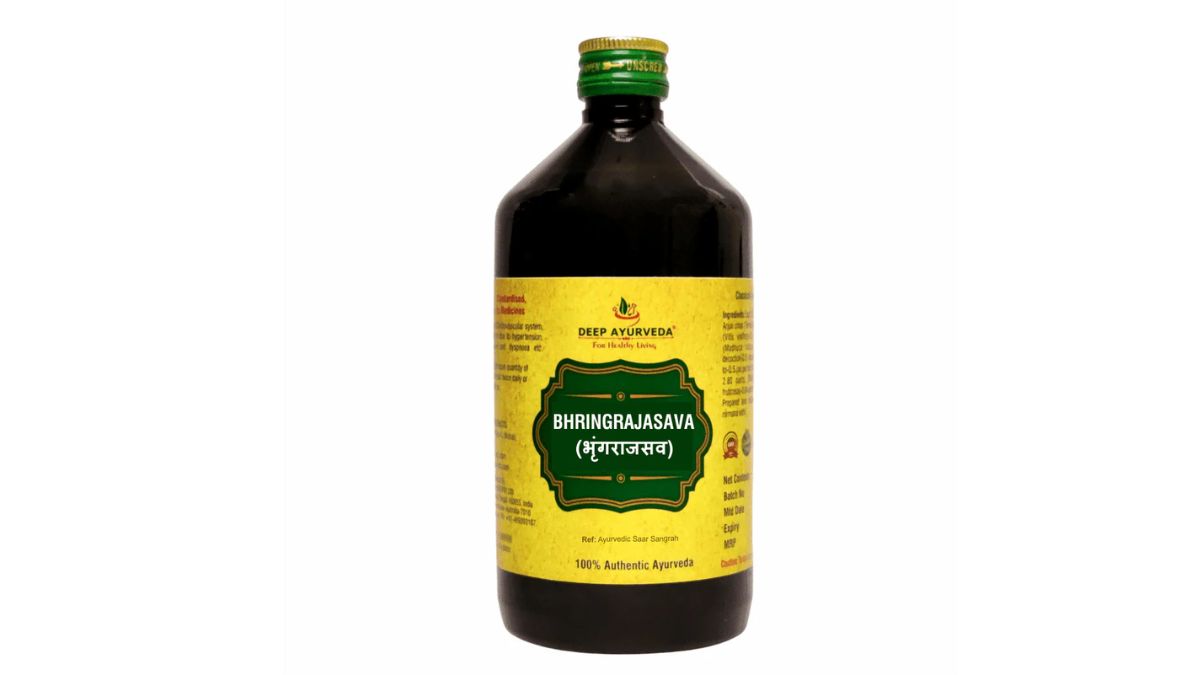
Bhringrajasava is a traditional Ayurvedic fermented herbal formulation (Asava) prepared primarily with Bhringraj (Eclipta alba) and other herbs. In Ayurveda, it is traditionally used to support liver function, healthy digestion, respiratory wellness, and overall vitality. Due to natural fermentation, the formulation is believed to improve the extraction and absorption of herbal constituents. It should be used under the guidance of a qualified Ayurvedic practitioner.
Quick Facts About Bhringrajasava
| Feature | Details |
|---|---|
| Ayurvedic Form | Asava (Naturally Fermented Herbal Preparation) |
| Main Herb | Bhringraj (Eclipta alba) |
| Primary Actions | Traditionally used to support liver health, digestion, respiratory wellness, and vitality |
| Taste | Sweet, mildly astringent, and herbal |
| Suitable For | Adults, when advised by a qualified practitioner |
| Best Time to Take | Usually after meals or as directed by an Ayurvedic practitioner |
| Classical Category | Fermented Ayurvedic formulation (Asava) |
Introduction
Ayurveda has long relied on thoughtfully prepared herbal formulations that combine multiple botanicals to support the body’s natural balance rather than simply addressing isolated symptoms. Among these traditional preparations, Bhringrajasava is valued for its use in supporting liver health, digestive function, respiratory wellness, and general strength.
Many people recognize Bhringraj as the King of Hair because of its traditional association with healthy hair. However, in classical Ayurveda, the herb has a much broader role. It is also traditionally associated with maintaining liver function, supporting digestion, and promoting overall well-being. Bhringrajasava brings these properties together in a fermented liquid formulation designed to enhance the extraction and assimilation of herbal constituents.
Unlike powders or tablets, Asava preparations undergo a natural fermentation process. This creates a small amount of self-generated alcohol that acts as a natural solvent, helping extract phytochemicals from the herbs. In Ayurvedic pharmaceutics, this process is traditionally believed to improve the formulation’s stability and support absorption when used appropriately.
Today, Bhringrajasava continues to be used in Ayurvedic practice as part of a personalized treatment plan. Its selection depends on an individual’s constitution (Prakriti), current imbalance (Vikriti), digestive strength (Agni), and overall clinical assessment. Because every person is different, it should not be viewed as a one-size-fits-all remedy.
This guide explores the traditional uses, ingredients, dosage, precautions, and Ayurvedic perspective on Bhringrajasava while clearly distinguishing traditional knowledge from modern scientific understanding.
What Does the Name Bhringrajasava Mean?
The name Bhringrajasava combines two Sanskrit terms:
- Bhringraja – the herb Eclipta alba (also known as False Daisy), traditionally valued in Ayurveda for supporting healthy hair, liver function, and overall vitality.
- Asava – a class of naturally fermented liquid herbal formulations prepared according to Ayurvedic pharmaceutics.
Together, Bhringrajasava refers to a fermented Ayurvedic preparation in which Bhringraj is the principal herb, supported by a blend of complementary ingredients.
Understanding Asava in Ayurveda
One of the most overlooked aspects of Bhringrajasava is that it belongs to the Asava category of Ayurvedic medicines.
An Asava is prepared by fermenting herbal ingredients with a natural source of sugar, traditionally allowing naturally occurring microorganisms to produce a small amount of alcohol during fermentation. This alcohol is not added separately; it is generated as part of the preparation process.
From an Ayurvedic perspective, this method is traditionally believed to:
- Improve extraction of herbal constituents.
- Enhance shelf stability.
- Support absorption when used appropriately.
- Preserve the qualities of the herbs over time.
This makes Asava formulations different from powders (Churna), tablets (Vati), or fresh juices (Swarasa), each of which has its own traditional indications.
Ayurvedic Perspective: How Bhringrajasava Works
In Ayurveda, health is understood as a dynamic balance of the Doshas (Vata, Pitta, and Kapha), healthy digestive fire (Agni), proper tissue nourishment (Dhatus), efficient transport through body channels (Srotas), and effective elimination of waste.
Bhringrajasava is traditionally selected by Ayurvedic practitioners based on an individual’s overall assessment rather than for a single symptom.
From this perspective, the formulation is traditionally believed to:
- Support balanced digestive function (Agni).
- Help maintain healthy liver function as part of overall metabolism.
- Promote proper nourishment of body tissues (Dhatus).
- Support healthy respiratory function.
- Contribute to overall vitality and recovery during convalescence.
Its use is individualized, taking into account a person’s constitution, current imbalance, age, digestive capacity, and other health considerations.
Why the Fermented Form Matters
The fermentation process is one of the defining characteristics of Bhringrajasava.
Rather than relying solely on boiling or drying, fermentation helps create a stable liquid formulation in which herbal constituents are traditionally considered easier to assimilate. This is one reason Ayurvedic practitioners may choose an Asava over other dosage forms in appropriate situations.
However, because the formulation contains naturally generated alcohol from fermentation, it may not be suitable for everyone. People who are pregnant, breastfeeding, have certain medical conditions, or are taking specific medications should consult a qualified healthcare professional before use.
Ingredients of Bhringrajasava
The exact composition of Bhringrajasava may vary slightly among manufacturers because different Ayurvedic pharmacies may follow different classical references or proprietary formulations. However, the primary ingredient remains Bhringraj (Eclipta alba), supported by herbs traditionally selected to complement its actions.
Some commonly used ingredients include:
| Ingredient | Botanical Name | Traditional Ayurvedic Role |
|---|---|---|
| Bhringraj | Eclipta alba / Eclipta prostrata | Principal herb traditionally used to support liver health, hair nourishment, and overall vitality. |
| Haritaki | Terminalia chebula | Supports healthy digestion and elimination. |
| Bibhitaki | Terminalia bellirica | Traditionally used to maintain respiratory and digestive health. |
| Amalaki | Phyllanthus emblica | Known for its Rasayana (rejuvenative) properties and antioxidant content. |
| Pippali | Piper longum | Traditionally used to kindle digestive fire (Agni) and improve bioavailability. |
| Maricha | Piper nigrum | Supports digestion and metabolism. |
| Shunthi | Zingiber officinale | Helps maintain digestive comfort and healthy circulation. |
| Dhataki Flowers | Woodfordia fruticosa | Traditionally used to facilitate natural fermentation in Asava formulations. |
| Jaggery or Sugar Source | — | Provides the substrate required for natural fermentation. |
Note: Ingredient lists may differ depending on the manufacturer and the classical text followed. Always refer to the product label for the exact composition.
The Hero Herb: Bhringraj (Eclipta alba)
Among all the ingredients, Bhringraj is the defining herb of this formulation.
In Ayurveda, Bhringraj is traditionally valued for supporting:
- Healthy liver function.
- Hair and scalp nourishment.
- Overall vitality and rejuvenation.
- Digestive health.
- Respiratory wellness.
Unlike many herbs known for a single benefit, Bhringraj is regarded as a versatile plant whose traditional applications extend across multiple body systems.
Modern research has also explored its phytochemicals, including wedelolactone and flavonoids, for potential antioxidant and hepatoprotective properties. While these findings are promising, more high-quality human studies are needed before firm clinical conclusions can be drawn.
Ayurvedic Properties of Bhringraj
Ayurveda describes herbs using qualities that help practitioners understand how they may influence the body’s balance.
| Ayurvedic Property | Traditional Description |
|---|---|
| Rasa (Taste) | Bitter (Tikta), Pungent (Katu) |
| Guna (Qualities) | Light (Laghu), Dry (Ruksha) |
| Virya (Potency) | Traditionally described as cooling (Sheeta) in many Ayurvedic references. |
| Vipaka (Post-digestive Effect) | Traditionally described as pungent (Katu) in many references. |
| Dosha Influence | Traditionally used to help balance Pitta and Kapha when appropriately prescribed. |
These classical descriptors guide Ayurvedic practitioners in selecting herbs based on an individual’s constitution and presenting imbalance.
Why Does Bhringrajasava Contain Multiple Herbs?
One of the strengths of Ayurveda is its emphasis on polyherbal formulations. Rather than relying on a single herb, classical formulations often combine herbs with complementary properties.
The rationale behind this approach includes:
- Supporting multiple physiological processes simultaneously.
- Improving digestibility of the formulation.
- Enhancing the absorption of herbal constituents.
- Balancing the overall energetic properties of the formulation.
- Reducing the likelihood of excessive effects from any one herb.
This holistic design reflects Ayurveda’s goal of restoring balance rather than targeting a single symptom.
Understanding the Supporting Ingredients
Haritaki
Haritaki is one of the three fruits in the well-known Triphala combination.
Traditionally, it is used to:
- Support healthy bowel function.
- Promote proper digestion.
- Assist natural detoxification processes.
- Maintain healthy metabolism.
From an Ayurvedic perspective, Haritaki is valued for helping maintain balanced digestion, which is considered essential for overall health.
Bibhitaki
Bibhitaki is another component of Triphala and has traditionally been associated with maintaining healthy respiratory and digestive function.
It is commonly included in formulations intended to support:
- Respiratory wellness.
- Digestive balance.
- Healthy elimination.
Amalaki
Amalaki (Indian Gooseberry) is one of Ayurveda’s most respected Rasayana herbs.
Traditionally, it is valued for:
- Supporting tissue nourishment.
- Maintaining digestive health.
- Providing rejuvenative support.
- Promoting overall vitality.
It is also a natural source of vitamin C and other antioxidant compounds, although its traditional Ayurvedic role extends beyond individual nutrients.
Pippali
Pippali (Long Pepper) is often described in Ayurveda as a Deepana-Pachana herb—traditionally used to kindle digestive fire (Agni) and support the digestion of food.
It is also believed to help improve the utilization of other herbs within a formulation, which is one reason it appears in many classical combinations.
Maricha
Maricha (Black Pepper) is traditionally included to support:
- Digestive efficiency.
- Metabolic function.
- Proper assimilation of nutrients.
Its inclusion reflects Ayurveda’s emphasis on ensuring that herbal formulations are well digested and utilized by the body.
Shunthi
Dry Ginger (Shunthi) is widely used in Ayurvedic practice for its warming qualities.
Traditionally, it is used to:
- Support comfortable digestion.
- Help maintain healthy circulation.
- Balance digestive function.
When combined with cooling herbs like Bhringraj, it contributes to a more balanced formulation.
Dhataki Flowers
Dhataki flowers play a unique role in many Asava and Arishta preparations.
Rather than contributing primarily for their own therapeutic effects, they are traditionally used to facilitate the natural fermentation process that defines these formulations.
This natural fermentation helps create the characteristic properties of an Asava.
Why Fermentation Matters
Unlike herbal powders or tablets, Bhringrajasava undergoes a carefully controlled natural fermentation process.
During this process:
- Herbal constituents are extracted into the liquid medium.
- Naturally occurring fermentation produces a small amount of self-generated alcohol.
- The formulation develops its characteristic stability and taste.
In Ayurvedic pharmaceutics, this method is traditionally believed to enhance the assimilation of herbal constituents. It is one of the reasons Asava preparations remain an important dosage form in classical Ayurveda.
Ayurvedic Formulation Logic
From an Ayurvedic practitioner’s perspective, the ingredients of Bhringrajasava work together with distinct but complementary roles:
- Bhringraj serves as the principal herb.
- Digestive-supporting herbs such as Pippali, Maricha, and Shunthi help maintain healthy Agni.
- Rasayana herbs like Amalaki contribute to overall nourishment and rejuvenation.
- Supporting botanicals help maintain digestive and respiratory balance.
- Dhataki flowers enable the traditional fermentation process.
This combination reflects the Ayurvedic principle that a well-designed formulation should address both the primary concern and the body’s overall functional balance.
Health Benefits of Bhringrajasava
Bhringrajasava is a classical Ayurvedic fermented formulation traditionally used to support overall health by promoting balanced digestion, healthy liver function, tissue nourishment, and vitality. Instead of targeting a single symptom, Ayurveda views this formulation as a holistic preparation that helps maintain the body’s natural physiological balance when prescribed according to an individual’s constitution (Prakriti), digestive strength (Agni), and health condition.
The following are some of the traditionally recognized benefits of Bhringrajasava in Ayurvedic practice.
Key Health Benefits of Bhringrajasava
- Supports Healthy Liver Function: Traditionally used to maintain normal liver function and healthy metabolism, making it one of the well-known Ayurvedic formulations for liver wellness.
- Promotes Digestive Wellness: Contains herbs that help support digestive fire (Agni), improve digestion, and assist the body in utilizing nutrients more efficiently.
- Supports Respiratory Health: Traditionally valued for maintaining respiratory comfort and supporting healthy lung function as part of a balanced Ayurvedic lifestyle.
- Enhances Energy and Vitality: Helps nourish body tissues and supports natural energy levels, especially during periods of weakness or post-illness recovery.
- Nourishes Body Tissues (Dhatus): Ayurveda considers proper tissue nourishment essential for overall health, and Bhringrajasava is traditionally used to support this natural process.
- Promotes Healthy Hair from Within: Rather than acting only externally, it is traditionally believed to support internal nourishment that contributes to healthy hair growth and scalp health.
- Supports Recovery After Illness: Traditionally recommended under Ayurvedic supervision to help restore digestive strength, appetite, and overall well-being during recovery.
- Helps Maintain Healthy Metabolism: Supports balanced digestion and nutrient assimilation, which are considered essential for healthy metabolic function in Ayurveda.
Traditional Uses of Bhringrajasava in Ayurveda
Bhringrajasava has traditionally been used in Ayurvedic practice to support individuals experiencing imbalances that affect multiple body systems. Instead of focusing on a single symptom, Ayurvedic practitioners evaluate the person’s Prakriti (body constitution), Vikriti (current imbalance), Agni (digestive fire), and overall health before recommending this formulation.
Traditionally, Bhringrajasava has been used to support:
- Liver and hepatobiliary health: It is traditionally valued for supporting healthy liver function and maintaining the body’s natural metabolic processes, which are essential for overall well-being.
- Digestive function: The formulation contains herbs that help support healthy digestion, proper nutrient assimilation, and balanced digestive fire (Agni), which is considered the foundation of health in Ayurveda.
- Appetite and metabolism: Bhringrajasava is traditionally used when poor appetite or sluggish metabolism is associated with weakened digestive strength and impaired nutrient utilization.
- General debility and weakness: It may be recommended as part of a broader Ayurvedic approach to help restore strength and vitality during periods of physical weakness or convalescence.
- Respiratory wellness: Certain herbs in the formulation are traditionally used to support respiratory comfort and maintain healthy functioning of the respiratory system.
- Tissue nourishment: Ayurveda considers proper nourishment of the body’s tissues (Dhatus) essential for long-term health, and Bhringrajasava is traditionally used to support this natural process.
- Hair and scalp health: Since healthy hair reflects balanced nutrition and metabolism in Ayurveda, the formulation is traditionally used to promote internal nourishment that supports healthy hair.
- Recovery after prolonged illness: During recovery, when digestion and vitality may be compromised, Bhringrajasava may be considered as part of a personalized Ayurvedic care plan.
Dosage of Bhringrajasava: How to Take It Correctly
The effectiveness of any Ayurvedic formulation depends not only on its ingredients but also on the right dosage, timing, and the individual’s constitution. Unlike over-the-counter supplements that are often taken without guidance, Bhringrajasava is traditionally prescribed after evaluating factors such as Prakriti (body constitution), age, digestive strength (Agni), current health condition, and the purpose of use.
For this reason, the dosage of Bhringrajasava may vary from person to person, and it should ideally be taken under the supervision of a qualified Ayurvedic practitioner.
Recommended Dosage of Bhringrajasava
The following dosage is commonly recommended by Ayurvedic practitioners for adults. However, individual requirements may differ depending on clinical assessment.
| Age Group | Recommended Dosage* |
|---|---|
| Adults | 15–30 ml, usually diluted with an equal quantity of lukewarm water after meals, or as directed by an Ayurvedic physician. |
| Children | Only under the guidance of a qualified Ayurvedic practitioner. Self-medication is not recommended. |
| Elderly Individuals | The dosage may be adjusted based on digestive capacity, overall health, and existing medical conditions. |
Note: The exact dosage may vary depending on the manufacturer, formulation, and the individual’s health status. Always follow the directions provided by your healthcare professional or the product label.
Best Time to Take Bhringrajasava
Timing plays an important role in Ayurveda because it influences digestion, absorption, and the therapeutic action of herbal formulations.
In most cases, Bhringrajasava is traditionally taken after meals, as this helps support digestion while reducing the likelihood of gastric discomfort in sensitive individuals.
General Timing Recommendations
- After lunch: Taking the formulation after lunch may support digestion during one of the day’s strongest digestive phases according to Ayurvedic principles.
- After dinner: Some practitioners may also recommend taking it after the evening meal when appropriate for the individual’s treatment plan.
- With an equal quantity of water: Bhringrajasava is commonly diluted with an equal amount of lukewarm or room-temperature water to improve palatability and support comfortable digestion.
The timing and frequency should always be personalized according to the practitioner’s assessment.
How to Take Bhringrajasava Correctly
Using Ayurvedic formulations correctly can help maximize their traditional benefits while supporting safe use.
For best results, Ayurvedic practitioners generally recommend the following:
- Measure the recommended quantity: Use the measuring cup provided with the bottle or a medicine measuring spoon to ensure consistent dosing.
- Dilute before consumption: Unless otherwise directed, mix the prescribed amount with an equal quantity of water before taking it.
- Take it after meals: Consuming the formulation after food is commonly recommended to support digestion and improve tolerability.
- Follow the prescribed duration: Continue the formulation only for the period advised by your Ayurvedic practitioner instead of extending its use on your own.
- Store the bottle properly: Keep the bottle tightly closed and store it in a cool, dry place away from direct sunlight to maintain product quality.
How Long Should You Take Bhringrajasava?
One of the most common questions people ask is, “How long should I continue taking Bhringrajasava?”
The answer depends on several individual factors, including the reason for use, overall health, digestive strength, and the response to treatment.
Factors That Influence the Duration of Use
- Purpose of use: The recommended duration may differ depending on whether the formulation is being used to support digestion, recovery, liver health, or general vitality.
- Individual constitution (Prakriti): Every person responds differently to herbal formulations, so treatment duration is often personalized.
- Clinical progress: Ayurvedic practitioners regularly evaluate improvements in digestion, appetite, energy levels, and overall well-being before deciding whether to continue or modify the treatment.
- Concurrent therapies: If Bhringrajasava is used alongside Panchakarma, dietary modifications, or other Ayurvedic medicines, the duration may be adjusted accordingly.
It is advisable to consult your Ayurvedic physician before continuing the formulation for an extended period.
Can Bhringrajasava Be Taken Daily?
When recommended by a qualified Ayurvedic practitioner, Bhringrajasava may be taken daily for a specified duration as part of an individualized treatment plan.
However, it should not be viewed as a daily wellness drink or a general health tonic for lifelong use without professional advice.
Daily use should always consider factors such as:
- Current health status: Existing medical conditions may influence whether the formulation is appropriate.
- Digestive capacity: Healthy digestion is essential for obtaining the intended benefits of Ayurvedic medicines.
- Other medications: Individuals taking prescription medicines should discuss potential interactions with their healthcare provider.
- Overall treatment goals: The formulation should be used within the context of a comprehensive Ayurvedic management plan rather than in isolation.
Dietary Guidelines (Pathya) While Taking Bhringrajasava
Ayurveda emphasizes that medicines work best when combined with a balanced diet and healthy lifestyle. Following appropriate dietary practices may help support digestion and overall treatment outcomes.
Foods Traditionally Encouraged
- Freshly prepared meals: Warm, freshly cooked foods are generally easier to digest and help support healthy digestive fire (Agni).
- Seasonal fruits and vegetables: A balanced diet rich in seasonal produce provides natural nourishment and complements Ayurvedic treatment.
- Whole grains: Easily digestible grains may help maintain steady energy levels while supporting digestive comfort.
- Adequate hydration: Drinking sufficient water throughout the day supports normal physiological functions and overall well-being.
- Moderate use of healthy fats: Traditional fats such as ghee, when appropriate for the individual, may support digestion and tissue nourishment.
Foods Traditionally Limited (Apathya)
Depending on the individual’s condition, Ayurvedic practitioners may advise limiting certain foods that are considered difficult to digest or likely to aggravate Dosha imbalance.
These may include:
- Deep-fried foods: Heavy, oily foods may burden digestion and contribute to sluggish digestive function.
- Highly processed foods: Foods high in refined ingredients may provide limited nutritional value and may not support digestive health.
- Excessive sugary foods: Overconsumption of sweets may affect digestive balance and overall dietary quality.
- Alcoholic beverages: Since Bhringrajasava already contains a small amount of naturally generated alcohol from fermentation, additional alcohol may not be appropriate for some individuals.
- Irregular eating habits: Skipping meals or overeating may disturb digestive rhythm and reduce the effectiveness of an Ayurvedic treatment plan.
Common Mistakes People Make While Taking Bhringrajasava
Although Bhringrajasava is a classical Ayurvedic formulation, its benefits depend on correct use. Some common mistakes may reduce its effectiveness or increase the likelihood of unwanted effects.
Avoid These Common Errors
- Taking more than the recommended dose: Increasing the dosage does not necessarily improve results and should only be done under professional supervision.
- Using it without a proper diagnosis: Self-medicating based solely on internet information may not address the underlying cause of the health concern.
- Ignoring dietary advice: Ayurveda considers diet an essential part of treatment, so overlooking dietary recommendations may limit the overall benefits.
- Stopping treatment prematurely: Some individuals discontinue herbal formulations before adequate time has been allowed for evaluation, which may affect treatment outcomes.
- Expecting immediate results: Ayurvedic formulations generally work by supporting the body’s natural balance over time rather than providing instant symptomatic relief.
Bhringrajasava Side Effects: Is It Safe?
Bhringrajasava is a classical Ayurvedic formulation that has been traditionally used for generations under the supervision of qualified Ayurvedic practitioners. When taken in the recommended dosage and according to professional advice, it is generally considered well tolerated by most healthy adults.
However, like any herbal or conventional medicine, Bhringrajasava may not be suitable for everyone. Its safety depends on several factors, including the individual’s age, digestive capacity, medical history, existing health conditions, and any medications they may already be taking.
It is also important to remember that “natural” does not always mean “risk-free.” Responsible use, proper dosage, and professional guidance are essential for achieving the intended benefits while minimizing the risk of unwanted effects.
Does Bhringrajasava Have Any Side Effects?
There is limited high-quality clinical research evaluating the safety profile of the complete Bhringrajasava formulation. Based on traditional Ayurvedic use and clinical practice, it is generally well tolerated when used appropriately. However, some individuals may experience mild digestive discomfort or may need additional precautions depending on their health status.
Possible effects that may occur in sensitive individuals include:
- Mild digestive discomfort: Some people with sensitive stomachs may notice temporary bloating, acidity, or mild abdominal discomfort, particularly if the formulation is taken on an empty stomach or in larger-than-recommended amounts.
- Changes in bowel habits: As digestive function begins to adapt, a few individuals may experience temporary changes in bowel movements. These effects are usually mild and should be discussed with a healthcare professional if they persist.
- Individual sensitivity to herbs: Since Bhringrajasava contains multiple herbal ingredients, people who are sensitive or allergic to any of its components should avoid using it without medical advice.
If you notice persistent discomfort, allergic symptoms, or any unusual reaction after taking Bhringrajasava, discontinue use and consult a qualified healthcare professional promptly.
Who Should Take Bhringrajasava With Caution?
Although Bhringrajasava is widely used in Ayurvedic practice, certain individuals should seek professional guidance before using it.
These include:
- People with chronic liver, kidney, or heart disease: Individuals with long-term medical conditions should consult both their physician and an Ayurvedic practitioner before starting any herbal formulation.
- Individuals taking prescription medicines: Herbal medicines may interact with certain medications. A healthcare professional can help determine whether Bhringrajasava is appropriate alongside existing treatment.
- Older adults: Age-related changes in digestion, metabolism, and medication use may require adjustments in dosage or closer monitoring.
- People with a history of allergies to herbal products: Those who have experienced allergic reactions to herbal medicines should review the ingredient list carefully before use.
Who Should Avoid Bhringrajasava?
In some situations, Bhringrajasava may not be appropriate unless specifically recommended by a qualified healthcare professional.
This may include:
- Pregnant women: There is insufficient scientific evidence to confirm the safety of Bhringrajasava during pregnancy. It should only be used if recommended by a qualified healthcare provider.
- Breastfeeding mothers: Because adequate safety data are lacking, breastfeeding women should seek medical advice before taking the formulation.
- Young children: Bhringrajasava should not be given to children without supervision from a qualified Ayurvedic practitioner or pediatric healthcare professional.
- Individuals advised to avoid alcohol: As an Asava, Bhringrajasava contains a small amount of naturally generated alcohol formed during fermentation. People who must avoid alcohol for medical, religious, or personal reasons should discuss suitable alternatives with their healthcare provider.
Can People With Diabetes Take Bhringrajasava?
This is one of the most frequently asked questions.
Traditional Asava formulations are prepared using natural sweetening agents that support fermentation. Although much of the sugar is utilized during the fermentation process, the finished product may still contain residual sugars, and the exact amount can vary depending on the manufacturer.
If you have diabetes or prediabetes:
- Do not start the formulation on your own: Your healthcare provider can determine whether it is suitable for your condition and current treatment plan.
- Monitor blood glucose regularly: If your practitioner recommends Bhringrajasava, continue monitoring your blood sugar as advised.
- Review the product label: Different manufacturers may have different formulations, so always check the ingredient information and nutritional details where available.
Does Bhringrajasava Contain Alcohol?
Yes. As a classical Asava, Bhringrajasava contains a small amount of self-generated alcohol that develops naturally during the fermentation process.
It is important to understand that:
- The alcohol is not added separately: It is produced naturally during fermentation, which is a traditional method of preparing Asava formulations.
- It helps extract herbal constituents: Ayurveda considers this process beneficial for preparing stable liquid formulations and supporting the extraction of active plant compounds.
- This may not suit everyone: Individuals who are advised to avoid alcohol should consult a healthcare professional before using Bhringrajasava.
Can Bhringrajasava Be Taken Along With Modern Medicines?
Research on interactions between Bhringrajasava and modern medicines is limited. For this reason, caution is advisable.
If you are taking prescription medicines, particularly for chronic conditions, it is best to:
- Inform your healthcare providers: Make sure both your physician and Ayurvedic practitioner know about all medicines and supplements you are taking.
- Avoid self-combining treatments: Even natural products may influence how the body responds to certain medications.
- Follow individualized advice: The timing and suitability of combining herbal and conventional medicines should be determined by a qualified healthcare professional.
Safety Tips for Responsible Use
Using Bhringrajasava responsibly can help support its traditional benefits while reducing unnecessary risks.
Keep the following points in mind:
- Follow the recommended dosage: More is not always better. Taking higher amounts without guidance does not improve effectiveness and may increase the likelihood of unwanted effects.
- Purchase from trusted manufacturers: Choose products from reputable Ayurvedic companies that follow recognized quality standards and clearly list their ingredients.
- Store the formulation correctly: Keep the bottle tightly closed in a cool, dry place away from direct sunlight to preserve its quality.
- Check the expiry date: Do not consume products that are expired or show signs of contamination or damage.
- Attend follow-up consultations: Regular review by your practitioner helps ensure that the formulation remains appropriate as your health needs change.
When Should You Stop Taking Bhringrajasava?
Although many people tolerate the formulation well, discontinue use and seek medical advice if you experience:
- Persistent digestive discomfort: Ongoing nausea, vomiting, abdominal pain, or severe digestive symptoms should be evaluated by a healthcare professional.
- Signs of an allergic reaction: Symptoms such as skin rash, itching, swelling, or difficulty breathing require immediate medical attention.
- Unexpected health changes: If you notice any unusual or concerning symptoms after starting the formulation, consult your healthcare provider before continuing its use.
What Does Scientific Research Say About Bhringrajasava?
Although Bhringrajasava has been used in Ayurveda for generations, high-quality clinical studies on the complete formulation remain limited. However, researchers have investigated several of its major ingredients to better understand their pharmacological properties.
Current evidence suggests that some herbs used in Bhringrajasava contain naturally occurring plant compounds with antioxidant and other biological activities. These findings are encouraging but should not be interpreted as proof that the formulation can prevent, treat, or cure any specific disease.
Research on Bhringraj (Eclipta alba)
Bhringraj is one of the most extensively studied herbs used in classical Ayurveda.
Modern research has explored several of its naturally occurring compounds, including wedelolactone, demethylwedelolactone, flavonoids, and polyphenols.
Experimental studies have investigated Bhringraj for its potential:
- Antioxidant activity: Laboratory studies suggest that compounds in Bhringraj may help protect cells from oxidative stress, although more human research is needed.
- Hepatoprotective potential: Animal and preclinical studies have explored its role in supporting normal liver function. These findings are promising but cannot replace evidence from well-designed clinical trials.
- Hair-related research: Experimental studies have examined Bhringraj extracts for their potential role in supporting healthy hair follicles. However, results from laboratory models should not be interpreted as guaranteed clinical outcomes in humans.
- Anti-inflammatory properties: Some phytochemicals present in Bhringraj have demonstrated anti-inflammatory activity in experimental settings, but further clinical validation is required.
Research on Supporting Ingredients
Bhringrajasava also contains several herbs that have individually attracted scientific interest.
Amalaki (Phyllanthus emblica)
Modern studies have investigated Amalaki for:
- Natural antioxidant compounds: It contains vitamin C and other phytochemicals that contribute to its antioxidant activity.
- General wellness support: Research has explored its role in supporting normal immune and metabolic functions, although more clinical evidence is still needed.
Pippali (Piper longum)
Research has examined Pippali for:
- Digestive support: Traditionally used in Ayurveda as a Deepana-Pachana herb, modern studies have explored its effects on digestive function.
- Bioavailability enhancement: Piperine and related compounds have been studied for their potential to influence the absorption of certain substances.
Ginger (Zingiber officinale)
Modern scientific research has investigated ginger for:
- Digestive comfort: Several clinical studies have evaluated ginger’s role in supporting normal digestive function.
- General anti-inflammatory properties: Bioactive compounds such as gingerols have been studied extensively, although therapeutic use depends on the specific condition.
Bridging Ayurveda and Modern Science
Ayurveda and modern biomedical research often approach health from different perspectives.
Ayurveda focuses on:
- Restoring functional balance.
- Supporting digestion (Agni).
- Maintaining healthy tissue nourishment (Dhatus).
- Balancing Doshas.
- Individualized treatment.
Modern research generally evaluates:
- Individual active compounds.
- Biological mechanisms.
- Standardized clinical outcomes.
- Safety and efficacy under controlled conditions.
Rather than viewing these approaches as competing systems, many integrative healthcare professionals consider them complementary when used responsibly and under appropriate medical guidance.
Bhringrajasava vs. Bhringraj Juice vs. Churna vs. Capsules
Many people are unsure which Bhringraj preparation best suits their needs. Each dosage form has its own traditional role in Ayurveda.
| Feature | Bhringrajasava | Bhringraj Juice | Bhringraj Churna | Bhringraj Capsules |
|---|---|---|---|---|
| Form | Naturally fermented liquid (Asava) | Fresh herbal juice | Powder | Standardized capsule |
| Main Composition | Polyherbal formulation | Single herb | Single herb | Single herb extract or powder |
| Traditional Focus | Digestion, liver support, vitality, tissue nourishment | General herbal support | Flexible traditional use | Convenience and portability |
| Contains Natural Fermentation | Yes | No | No | No |
| Taste | Sweet-herbal with mild fermented character | Bitter | Bitter | Tasteless when swallowed |
| Best For | Individuals advised to use a classical Asava formulation | Those preferring fresh herbal preparations | People who prefer traditional powders | Those seeking a convenient dosage form |
Practitioner’s Tip: The “best” preparation depends on the individual’s constitution, health concerns, digestive strength, and treatment goals. There is no single formulation that is ideal for everyone.
How to Choose a Good Quality Bhringrajasava
The effectiveness of any Ayurvedic formulation depends not only on the herbs it contains but also on the quality of its ingredients, manufacturing process, storage conditions, and adherence to traditional Ayurvedic preparation methods. Since several brands offer Bhringrajasava, choosing a high-quality product is essential to ensure safety, consistency, and the intended therapeutic benefits.
When selecting a Bhringrajasava product, consider the following factors:
1. Choose a Reputable Manufacturer
A reliable manufacturer plays an important role in maintaining the authenticity and quality of Ayurvedic medicines. Reputable Ayurvedic companies generally follow standardized manufacturing practices while ensuring that raw herbs are carefully selected, processed, and tested before the final product reaches consumers.
When evaluating a brand, look for manufacturers that:
- Clearly list all ingredients: A trustworthy manufacturer provides a complete and transparent ingredient list, allowing consumers and healthcare professionals to understand exactly what the formulation contains.
- Provide clear dosage instructions: Reliable products include easy-to-follow dosage recommendations, storage instructions, and important precautions to help users take the formulation safely.
- Display manufacturing and expiry details: Batch number, manufacturing date, expiry date, and manufacturer information should be clearly printed on the label, reflecting transparency and product traceability.
- Follow recognized quality standards: Look for manufacturers that follow Good Manufacturing Practices (GMP) or other recognized quality-control systems to help ensure consistency, hygiene, and product quality.
2. Check the Ingredient List Carefully
Before purchasing Bhringrajasava, take a few moments to carefully read the product label. Different manufacturers may follow slightly different classical references or proprietary formulations, making it important to understand what the product contains.
Choose products that:
- Clearly identify the primary herbal ingredients: The label should mention Bhringraj along with the supporting herbs used in the formulation, allowing you to verify that it follows a traditional Ayurvedic composition.
- Mention formulation details whenever available: Information about the preparation method, herbal composition, or classical reference helps users better understand the authenticity of the product.
- Avoid unnecessary artificial additives: While certain ingredients may be required to maintain product quality or stability, it is generally advisable to choose formulations that do not contain unnecessary artificial colours, flavours, or preservatives.
3. Verify Product Quality Before Buying
Even a well-formulated Ayurvedic medicine should be stored and handled correctly to maintain its quality throughout its shelf life. A quick inspection before purchase can help you avoid products that may have been damaged during storage or transportation.
Before buying, make sure the product is:
- Properly sealed and unopened: The bottle should have an intact seal without signs of leakage, tampering, or damage, indicating that the product has been stored appropriately.
- Stored according to the manufacturer’s recommendations: Products should be kept in suitable storage conditions to preserve their quality and maintain the stability of the herbal formulation.
- Purchased from reliable sources: Buying from authorized pharmacies, reputable Ayurvedic stores, or trusted online retailers helps reduce the risk of counterfeit or improperly stored products.
Avoid purchasing products that have damaged packaging, an unusual smell, visible contamination, or labels that appear altered or incomplete.
4. Purchase According to Your Individual Health Needs
Selecting an Ayurvedic medicine should never be based solely on popularity, online reviews, or price. Ayurveda emphasizes personalized healthcare, meaning the most suitable formulation depends on the individual’s constitution, health concerns, digestive capacity, and overall treatment goals.
Before choosing Bhringrajasava, consider the following:
- Your health goals: Think about why you are considering Bhringrajasava and discuss whether it is appropriate for your specific health needs rather than assuming it is suitable for every condition.
- Existing medical conditions: If you have chronic health conditions such as diabetes, liver disease, kidney disease, or heart disease, seek professional guidance before starting any Ayurvedic medicine.
- Current medications or supplements: Herbal formulations may need to be coordinated with prescription medicines or dietary supplements to ensure safe and appropriate use.
- Advice from a qualified Ayurvedic practitioner: An experienced Ayurvedic physician can evaluate your Prakriti, digestive strength, and current health status before recommending the most appropriate formulation and dosage.
Personalized selection is one of the core principles of Ayurveda. A formulation that works well for one individual may not always be the best choice for someone else with different health needs or constitutional characteristics.
Final Thoughts
Bhringrajasava is more than a traditional herbal tonic—it represents Ayurveda’s holistic philosophy of supporting the body’s natural balance through carefully selected herbs, proper digestion, and individualized care. Rather than targeting a single organ or symptom, the formulation is traditionally used to promote overall physiological harmony by supporting healthy metabolism, tissue nourishment, and digestive function.
Although classical Ayurvedic texts have described the traditional uses of Bhringrajasava for centuries, it should always be used responsibly and under the guidance of a qualified Ayurvedic practitioner. Combining the formulation with a balanced diet, healthy lifestyle, and regular medical follow-up can help individuals make informed decisions about their wellness while respecting both traditional knowledge and modern healthcare principles.
Medical Disclaimer
The information provided in this article is intended for educational and informational purposes only and should not be considered medical advice, diagnosis, or treatment. Bhringrajasava is a traditional Ayurvedic formulation, and its suitability may vary depending on an individual’s age, constitution, medical history, and current health condition.
Frequently Asked Questions
What is Bhringrajasava used for?
Bhringrajasava is a classical Ayurvedic Asava (fermented herbal formulation) traditionally used to support healthy liver function, digestion, appetite, respiratory wellness, tissue nourishment, and overall vitality. Ayurvedic practitioners prescribe it based on an individual’s constitution, digestive strength, and overall health rather than for a single symptom or disease.
Can Bhringrajasava help improve hair health?
Bhringraj is widely known in Ayurveda for supporting healthy hair. Since Bhringrajasava contains Bhringraj as its principal ingredient, it is traditionally used to promote internal nourishment that contributes to healthy hair. However, hair health depends on several factors, including nutrition, hormonal balance, stress, sleep quality, and overall health, so results may vary from person to person.
Is Bhringrajasava good for liver health?
Traditionally, Bhringrajasava has been used in Ayurveda to support healthy liver function and metabolic balance. Modern research has also investigated Bhringraj for its potential hepatoprotective properties, although most evidence comes from laboratory and animal studies. More high-quality human clinical research is needed to confirm these effects.
When should Bhringrajasava be taken?
Bhringrajasava is commonly taken after meals, usually diluted with an equal quantity of water, or as directed by a qualified Ayurvedic practitioner. The exact timing and dosage may vary depending on the individual’s constitution, digestive capacity, and treatment goals.
Can Bhringrajasava be taken daily?
Yes, Bhringrajasava may be taken daily if recommended by a qualified Ayurvedic practitioner. The duration of use should always be individualized based on the person’s health condition, response to treatment, and overall Ayurvedic assessment. It should not be used as a lifelong health tonic without professional guidance.
Does Bhringrajasava contain alcohol?
Yes. Like other classical Asava formulations, Bhringrajasava contains a small amount of naturally generated alcohol produced during the fermentation process. This alcohol is not added separately; it develops naturally and plays a role in extracting and preserving the herbal constituents. Individuals who must avoid alcohol should consult their healthcare provider before using it.
Can people with diabetes take Bhringrajasava?
People with diabetes should consult their healthcare provider before using Bhringrajasava. Although part of the sugar used during preparation is consumed during fermentation, the final formulation may still contain residual sugars. Regular blood glucose monitoring and professional guidance are recommended.
Are there any side effects of Bhringrajasava?
When taken in the recommended dosage under professional supervision, Bhringrajasava is generally considered well tolerated. However, some individuals may experience mild digestive discomfort or may require special precautions depending on their health conditions. If any unusual symptoms occur, discontinue use and seek medical advice.
Can Bhringrajasava be taken with allopathic medicines?
There is limited scientific evidence regarding interactions between Bhringrajasava and conventional medicines. Therefore, individuals taking prescription medications should consult both their physician and an Ayurvedic practitioner before combining treatments to ensure safe and appropriate use.
Who should avoid taking Bhringrajasava?
Pregnant women, breastfeeding mothers, young children, individuals with serious chronic illnesses, and people who need to avoid alcohol should use Bhringrajasava only under professional medical supervision. A qualified healthcare provider can determine whether the formulation is appropriate based on individual circumstances.