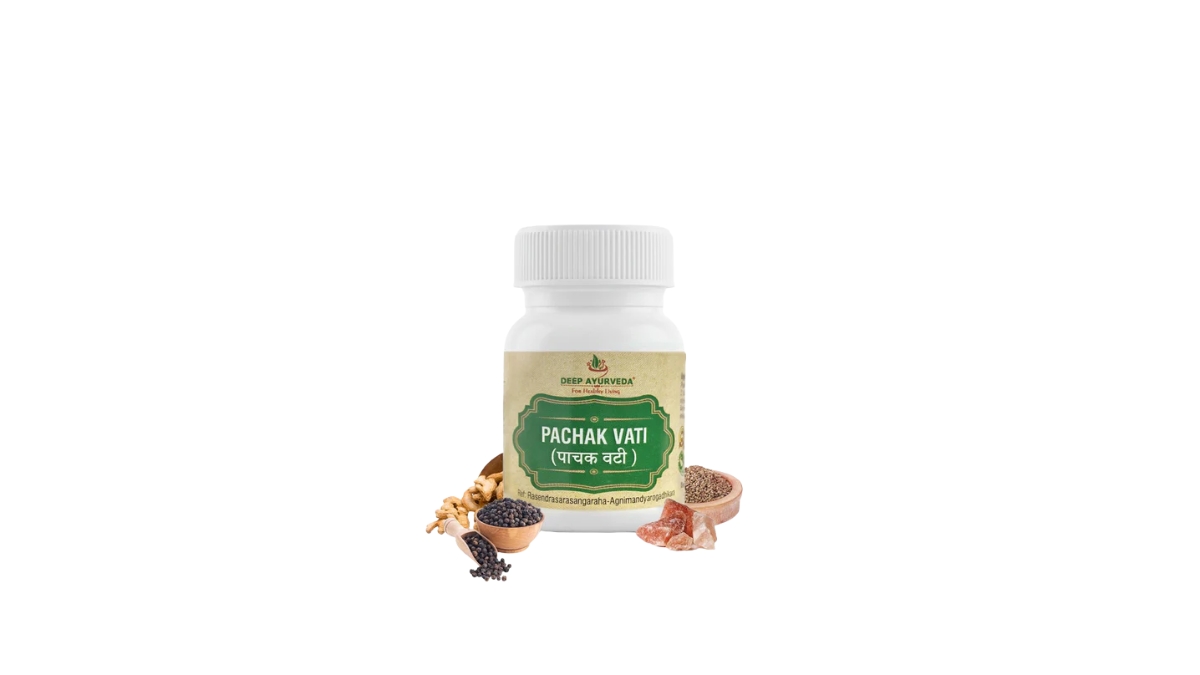

Deep Ayurveda Pachak Vati
✅ Supports Healthy Digestion✅ Helps Reduce Gas and Bloating ✅ Supports Metabolism ✅ Supports Overall Gut Health ✅ Promotes Regular Bowel Movements
Have you ever felt heaviness after eating, frequent bloating, excessive gas, or a loss of appetite despite eating healthy food? These digestive complaints are among the most common reasons people turn to Ayurvedic digestive formulations such as Pachak Vati.
In Ayurveda, healthy digestion is not just about breaking down food. It begins with maintaining a balanced Agni (digestive fire). When Agni becomes weak, food may not be digested properly, which can lead to the formation of Ama—a term used in Ayurveda to describe incompletely processed metabolic waste. Traditionally, Ama is considered a contributing factor in many digestive complaints.
Pachak Vati is an Ayurvedic formulation traditionally used to support digestion, improve appetite, and help manage symptoms such as gas, bloating, and indigestion. Depending on the manufacturer, its ingredients may vary, but the formulation generally combines herbs and spices known in Ayurveda for their digestive properties.
In this guide, you’ll learn:
- What Pachak Vati is
- How it works according to Ayurveda
- Potential benefits
- Common ingredients
- Recommended dosage
- Possible side effects
- Safety precautions
- Frequently asked questions
Whether you’re considering Pachak Vati for occasional digestive discomfort or simply want to understand how it fits into Ayurvedic digestive care, this guide will help you make an informed decision.
What Is Pachak Vati?
Pachak Vati is an Ayurvedic digestive tablet traditionally formulated to support Agni (digestive fire) and promote comfortable digestion. It is commonly used for symptoms such as:
- Occasional indigestion
- Gas
- Bloating
- Heaviness after meals
- Reduced appetite
- Mild digestive discomfort
Unlike antacids that primarily neutralize stomach acid, Ayurvedic digestive formulations aim to improve the body’s digestive capacity. The exact ingredient list varies by manufacturer, so always read the product label before use.
Expert Tip: Not every digestive problem has the same underlying cause. Ayurveda emphasizes understanding an individual’s constitution (Prakriti), digestive strength (Agni), and imbalance (Dosha) before recommending a formulation.
Pachak Vati at a Glance
Feature Details Medicine Type Ayurvedic digestive formulation Dosage Form Tablet (Vati) Primary Purpose Supports healthy digestion Traditionally Used For Gas, bloating, indigestion, reduced appetite Main Ayurvedic Focus Supporting Agni and reducing Ama Best Taken As directed on the product label or by an Ayurvedic practitioner
How Does Pachak Vati Work According to Ayurveda?
Ayurveda places great importance on Agni, the body’s digestive and metabolic “fire.” When Agni functions efficiently, the food you eat is properly digested, absorbed, and converted into nourishment for the body’s tissues. However, when Agni becomes weak—a condition known as Mandagni—digestion may slow down, which can lead to symptoms such as heaviness after meals, bloating, gas, loss of appetite, and a feeling of incomplete digestion.
From an Ayurvedic perspective, Pachak Vati is traditionally formulated with herbs and spices that are valued for supporting healthy digestion and maintaining balanced digestive function. Depending on its ingredients, it may work in the following ways:
Supports Digestive Fire (Deepana): Herbs traditionally classified as Deepana are used to help kindle Agni, which may improve the body’s natural ability to digest food and reduce the feeling of sluggish digestion after meals.
Promotes Healthy Digestion (Pachana): Ingredients with Pachana properties are traditionally used to assist in the digestion of partially processed food and support comfortable digestion, especially after consuming heavy or rich meals.
May Help Reduce Gas and Bloating: Many digestive herbs included in Pachak Vati are traditionally known for their Vata-balancing properties, which may help reduce occasional gas formation, abdominal fullness, and bloating.
Helps Relieve Heaviness After Eating: A feeling of heaviness after meals is often associated with weak digestion in Ayurveda. Pachak Vati is traditionally used to support smoother digestion, which may help reduce post-meal discomfort.
Supports a Healthy Appetite: When digestive fire becomes weak, appetite may naturally decrease. Ayurvedic digestive formulations are traditionally used to encourage a healthy appetite by supporting normal digestive function.
Encourages Comfortable Digestion After Meals: Pachak Vati is commonly taken after meals as part of traditional digestive care. It may help support the digestive process and promote a feeling of comfort following food intake.
Rather than focusing on just one symptom, Ayurveda aims to improve overall digestive efficiency by addressing the root cause of digestive imbalance through a combination of herbal formulations, a balanced diet, mindful eating habits, and a healthy lifestyle. Pachak Vati is generally considered one part of this broader approach to digestive wellness rather than a standalone solution.
Did You Know? According to Ayurveda, the quality of your digestion is just as important as the quality of the food you eat. Even nutritious meals may not provide their full benefits if Agni (digestive fire) is weak, which is why maintaining healthy digestion is considered essential for overall well-being.
Pachak Vati Ingredients: Common Herbs and Their Ayurvedic Benefits
One of the reasons Pachak Vati remains a popular Ayurvedic digestive formulation is its combination of herbs and mineral salts that have traditionally been used to support healthy digestion. However, it’s important to know that the exact ingredients may differ from one manufacturer to another. Some brands include more herbs, while others use a simpler formulation.
Despite these differences, most Pachak Vati products contain herbs and spices that are traditionally valued in Ayurveda for improving digestion (Deepana), aiding the digestive process (Pachana), reducing gas (Vata Anulomana), and supporting appetite.
Common Ingredients Found in Pachak Vati
Ingredient Ayurvedic Name Traditional Role in Ayurveda Dry Ginger Shunthi Supports digestive fire (Agni), helps reduce heaviness after meals Black Pepper Maricha Traditionally used to improve digestion and support nutrient absorption Long Pepper Pippali Helps maintain healthy digestion and is commonly used in digestive formulations Asafoetida Hingu Traditionally used to help reduce gas and abdominal discomfort Ajwain Yavani Known in Ayurveda for supporting digestion and relieving occasional bloating Cumin Jeera Traditionally used to promote comfortable digestion after meals Black Salt Kala Namak Often included to improve taste and support digestive comfort Rock Salt Saindhava Lavana Considered the preferred salt in Ayurveda due to its mild digestive properties Lemon Nimbu Adds a pleasant taste and may support digestive secretions Amla Amalaki Traditionally used to support digestion while also providing antioxidant compounds Ayurvedic Insight: These ingredients are selected not only for their individual actions but also because they work together. Ayurveda often combines herbs to create balanced formulations where one ingredient supports or complements the action of another.
How These Ingredients Work Together
Rather than relying on a single herb, Pachak Vati is designed as a combination formula. According to Ayurvedic principles, this allows multiple aspects of digestion to be supported at the same time.
For example:
- Dry Ginger, Black Pepper, and Long Pepper—often referred to collectively as Trikatu when combined—are traditionally used to kindle digestive fire (Agni) and support efficient digestion.
- Hing (Asafoetida) and Ajwain are commonly included to help maintain digestive comfort and reduce occasional gas after meals.
- Rock Salt and Black Salt are traditionally believed to stimulate taste and aid the digestive process.
- Amla provides a balancing effect in many formulations and is valued in Ayurveda for its broad health-supporting properties.
Together, these ingredients aim to support digestion from different angles rather than focusing on a single symptom.
Why Do Different Brands Have Different Ingredients?
Many people are surprised to find that two bottles labeled “Pachak Vati” may not contain exactly the same ingredients.
This is because Pachak Vati is not a single standardized Ayurvedic formulation described with one universal recipe. Instead, it is a category of digestive formulations that different Ayurvedic manufacturers prepare using their own herbal combinations while aiming to support healthy digestion. As a result, the ingredient list, taste, aroma, and even the recommended dosage may vary from one brand to another.
Here are some common reasons why these formulations differ:
Traditional manufacturing practices: Many Ayurvedic companies follow their own time-tested manufacturing methods or family traditions that have been developed over decades. These practices often influence the selection and proportion of herbs used in their Pachak Vati formulation.
Intended digestive purpose: Some brands formulate Pachak Vati mainly to support appetite, while others focus on helping with occasional gas, bloating, or a feeling of heaviness after meals. The ingredient combination may be adjusted depending on the primary digestive concern the product is designed to address.
Regional preferences: Ayurveda has evolved across different parts of India, and local food habits, climate, and traditional practices can influence the herbs commonly used in digestive formulations. This is why products from different regions may have slightly different compositions.
Proprietary herbal combinations: Many manufacturers develop their own unique formulations by combining herbs in specific proportions. These proprietary blends are often based on in-house research, traditional knowledge, or the company’s formulation philosophy, which makes one brand different from another.
As a result, two Pachak Vati products may look similar on the shelf but contain different herbs or mineral salts. For this reason, it is always a good idea to compare the ingredient list before choosing a product.
Practical Tip: Before purchasing Pachak Vati, carefully read the ingredient label, dosage instructions, and safety information provided by the manufacturer. If you have food allergies, are pregnant or breastfeeding, have an underlying medical condition, or take prescription medicines regularly, consult an Ayurvedic practitioner or your healthcare provider before using the product.
Why Ingredient Quality Matters
The effectiveness of any Ayurvedic formulation depends not only on the herbs it contains but also on the quality of the raw materials, manufacturing process, and quality control standards followed during production. Even if two products contain similar ingredients, differences in sourcing and manufacturing can affect their overall consistency.
When selecting a Pachak Vati product, keep the following points in mind:
Clearly listed ingredients and dosage: A trustworthy manufacturer should provide a complete list of ingredients along with clear dosage instructions. Transparent labeling helps you understand what the product contains and allows you to make an informed choice.
Manufactured under recognized quality standards: Look for products made in facilities that follow recognized manufacturing practices, such as Good Manufacturing Practices (GMP). These standards are designed to promote consistency, quality, and hygiene throughout the production process.
Proper packaging and expiry information: Always check that the product is sealed properly and includes a clearly printed manufacturing date, batch number, and expiry date. Proper packaging helps protect the formulation from moisture, contamination, and loss of quality over time.
Reputable manufacturer with transparent information: Choosing products from well-established Ayurvedic companies that openly share details about their ingredients, manufacturing practices, and customer support can provide greater confidence in the product’s quality and authenticity.
Choosing a high-quality Pachak Vati from a reputable manufacturer can help ensure better consistency and a more reliable product. However, even quality Ayurvedic formulations should be used according to the label instructions or under the guidance of a qualified Ayurvedic practitioner, especially if you have ongoing health concerns or take other medications.
Top 10 Potential Benefits of Pachak Vati
Pachak Vati has been used in Ayurveda for generations as a digestive support formulation. Its carefully selected herbs and digestive salts are traditionally believed to kindle Agni (digestive fire), improve appetite, and support the body’s natural digestive process.
However, it’s important to understand that Pachak Vati is not a cure for digestive diseases. While many people use it for occasional digestive discomfort, persistent or severe symptoms should always be evaluated by a qualified healthcare professional.
Let’s explore its potential benefits in detail.
1. May Support Healthy Digestion
One of the primary reasons people choose Pachak Vati is to support smoother and more comfortable digestion. In Ayurveda, healthy digestion depends on the strength of Agni (digestive fire). When Agni becomes weak (Mandagni), food may not be digested efficiently, which can lead to heaviness, sluggish digestion, and the formation of Ama (incompletely digested metabolic waste).
Herbs such as Shunthi (Dry Ginger), Pippali (Long Pepper), Maricha (Black Pepper), Ajwain, and Hing are commonly included in Pachak Vati because they are traditionally used to stimulate digestion and support the body’s natural digestive functions.
People experiencing the following digestive concerns may traditionally use Pachak Vati as part of an Ayurvedic digestive care routine:
Feeling of heaviness after meals: If you often feel overly full or uncomfortable even after eating a normal portion, it may indicate sluggish digestion according to Ayurvedic principles.
Slow or delayed digestion: Some people notice that food takes a long time to digest, leaving them feeling lethargic or uncomfortable for several hours after meals.
A sensation that food remains in the stomach: When digestion feels incomplete or meals seem to “sit” in the stomach, Ayurvedic digestive herbs are traditionally used to support digestive efficiency.
Ayurvedic Perspective: A balanced digestive fire is considered the foundation of good health. Rather than suppressing symptoms alone, Ayurveda focuses on improving the body’s natural digestive capacity.
2. Traditionally Used to Reduce Gas and Bloating
Gas and bloating are among the most common digestive complaints, especially after consuming oily, spicy, fried, or difficult-to-digest foods. Ayurveda associates excessive gas with an imbalance in Vata Dosha, particularly within the digestive tract.
Pachak Vati commonly contains herbs and digestive salts that have traditionally been used to promote digestive comfort and reduce occasional gas formation.
These ingredients may support digestion in the following ways:
Hing (Asafoetida): Traditionally valued in Ayurveda for helping reduce occasional gas and supporting comfortable digestion after meals.
Ajwain: Commonly used to support proper digestion and relieve the feeling of abdominal fullness that may occur after eating heavy foods.
Black Salt and Rock Salt: Traditionally included to stimulate taste, encourage digestive secretions, and support the digestive process.
Dry Ginger: Known in Ayurveda for its warming properties, which may help maintain healthy digestive fire and reduce digestive sluggishness.
Many people choose to take Pachak Vati after heavy meals, although it should always be used according to the product label or the advice of an Ayurvedic practitioner.
3. May Help Improve Appetite
A reduced appetite may develop due to irregular meal timings, stress, sluggish digestion, seasonal changes, or recovery after illness. Ayurveda considers poor appetite to be one of the common signs of weakened Agni.
The digestive herbs used in Pachak Vati are traditionally believed to prepare the digestive system for food and support a healthy appetite.
They may help by:
Stimulating digestive activity: Certain herbs are traditionally used to kindle digestive fire before or after meals, depending on the individual’s needs.
Enhancing taste perception: Ingredients such as digestive salts and spices may help improve the perception of taste, making meals more enjoyable.
Preparing the digestive system for food: By supporting healthy digestion, these herbs may encourage the body to process meals more efficiently.
For this reason, Ayurvedic practitioners may recommend Pachak Vati before or after meals depending on the formulation and the individual’s digestive condition.
Expert Tip: If poor appetite continues for several weeks, is associated with unexplained weight loss, or occurs alongside persistent abdominal pain, consult a qualified healthcare professional rather than relying solely on digestive supplements.
4. May Help Relieve Heaviness After Meals
Feeling excessively full or heavy after eating is a common digestive concern, especially after consuming large portions or foods that are rich in oil, spices, or refined ingredients. According to Ayurveda, this sensation may occur when Agni (digestive fire) is unable to process food efficiently.
Pachak Vati contains digestive herbs that are traditionally used to support healthy digestion and reduce the feeling of post-meal heaviness.
These herbs may help by:
Supporting digestive fire (Agni): Warming herbs like Dry Ginger and Long Pepper are traditionally used to kindle Agni, which may help the body process food more efficiently.
Promoting the natural movement of food through the digestive tract: Certain digestive herbs are believed to support healthy gastrointestinal motility, helping food move smoothly after meals.
Reducing the feeling of fullness and discomfort: Digestive spices may help relieve the sensation of heaviness that some people experience after eating rich or large meals.
Encouraging better digestion of oily and heavy foods: Ayurvedic formulations containing digestive herbs are traditionally used after festive meals or special occasions when digestion may feel sluggish.
For the best results, Pachak Vati should be combined with mindful eating habits, such as chewing food thoroughly, avoiding overeating, and giving the body enough time to digest before eating again.
Ayurveda advises that even the healthiest foods can become difficult to digest when consumed in excess or when Agni is weak. Supporting digestion through balanced eating habits is just as important as taking digestive formulations.
5. May Support Better Digestive Comfort During Travel
Travel often disrupts normal eating patterns. Irregular meal timings, unfamiliar foods, dehydration, and changes in daily routine can temporarily affect digestion, leading to bloating, gas, or a feeling of discomfort after meals.
Because Pachak Vati is available in tablet form, many people prefer carrying it while traveling as a convenient digestive support option.
It may be traditionally used to:
Support digestion when meal timings change: Traveling often leads to skipped or delayed meals, which may temporarily affect digestive comfort.
Help the body adjust to unfamiliar foods: Eating cuisines that are different from your usual diet can sometimes cause mild digestive discomfort, and digestive herbs are traditionally used to support adaptation.
Reduce occasional gas or bloating after restaurant meals: Rich, spicy, or oily foods consumed during travel may lead to temporary digestive discomfort in some individuals.
Provide convenient digestive support on the go: Unlike powders or decoctions, tablets are easy to carry and can be taken according to the product instructions whenever needed.
Although Pachak Vati may help support digestion during travel, it should not be considered a substitute for food safety practices. Drinking clean water, eating freshly prepared meals, and maintaining proper hygiene remain essential for preventing foodborne illnesses.
Expert Tip: If you develop persistent vomiting, severe diarrhea, fever, blood in the stool, or signs of dehydration while traveling, seek medical attention promptly instead of relying on digestive supplements.
6. May Help Maintain Comfortable Digestion After Heavy Meals
Festivals, weddings, family celebrations, and buffet-style meals often include rich, fried, sweet, or spicy foods that can temporarily overwhelm the digestive system. As a result, many people experience bloating, heaviness, or reduced digestive comfort afterward.
In Ayurveda, digestive formulations like Pachak Vati have traditionally been used after occasional indulgence to help support the body’s natural digestive process.
It may contribute to digestive comfort by:
Supporting digestion after rich or oily meals: Digestive herbs are traditionally used to help the body process foods that may feel heavy or difficult to digest.
Reducing occasional post-meal bloating: Ingredients such as Hing, Ajwain, and Ginger are commonly included in Ayurvedic digestive formulations for their traditional role in supporting digestive comfort.
Helping maintain appetite for the next meal: When digestion becomes sluggish after overeating, digestive herbs may help restore a normal feeling of hunger over time.
Encouraging digestive balance after festive eating: Rather than viewing occasional overeating as a reason for restrictive dieting, Ayurveda emphasizes returning to balanced eating habits and supporting healthy digestion.
For additional digestive support after a heavy meal, Ayurvedic practitioners often recommend simple lifestyle measures such as drinking warm water, taking a gentle walk for 10–15 minutes, eating a lighter meal next time, and avoiding lying down immediately after eating.
Ayurvedic Perspective: Digestive formulations work best when they complement healthy dietary habits. They are intended to support digestion—not to compensate for frequent overeating or an unhealthy lifestyle.
Pachak Vati Uses: When Is It Traditionally Used in Ayurveda?
Pachak Vati is primarily known as an Ayurvedic digestive formulation. Traditionally, it is used to support healthy digestion (Pachana), stimulate digestive fire (Deepana), and help maintain digestive comfort after meals.
However, Ayurveda does not recommend one medicine for every digestive problem. An Ayurvedic practitioner considers the person’s Prakriti (body constitution), Agni (digestive strength), Dosha imbalance, diet, and lifestyle before suggesting a formulation.
Below are some of the common situations in which Pachak Vati is traditionally used.
1. Occasional Indigestion (Ajirna)
One of the most common uses of Pachak Vati is for occasional indigestion, especially after consuming heavy, oily, fried, or difficult-to-digest foods.
Common Symptoms
- Feeling unusually full after eating: You may feel as though your stomach remains full for a long time even after eating a normal-sized meal, making you uncomfortable or sluggish.
- Slow digestion: Food may seem to take longer than usual to digest, often leaving you with a lingering sense of heaviness for several hours after eating.
- Mild stomach discomfort: Some people experience slight discomfort, uneasiness, or pressure in the stomach after meals without severe pain.
- Belching after meals: Frequent burping or repeated belching soon after eating may occur when digestion is not functioning efficiently.
- A sensation that food remains in the stomach: Many people describe this as feeling that their meal has “not settled” or that digestion has not properly started.
According to Ayurveda, these symptoms may indicate Mandagni (low digestive fire). Digestive herbs in Pachak Vati are traditionally used to support Agni and promote more efficient digestion.
Remember: Frequent or persistent indigestion should always be evaluated by a qualified healthcare professional, as it may sometimes indicate an underlying digestive condition that requires medical attention.
2. Gas and Flatulence
Gas formation is a normal part of digestion, but excessive gas can become uncomfortable and interfere with daily life.
Ayurveda often associates excessive gas with an imbalance of Vata Dosha.
Pachak Vati is traditionally used to support digestive comfort in people who experience occasional:
- Excessive gas: Passing gas more frequently than usual, especially after meals, may indicate temporary digestive imbalance.
- Burping: Repeated burping after eating can sometimes occur when food is not being digested comfortably or excess air is swallowed during meals.
- Abdominal fullness: The stomach may feel stretched or tight, even if only a moderate amount of food has been eaten.
- Bloating after meals: Some individuals notice visible abdominal swelling or a feeling of pressure that develops shortly after eating.
Ingredients such as Hing (Asafoetida), Ajwain, Dry Ginger, and digestive salts have long been used in Ayurvedic formulations to support digestive comfort.
3. Abdominal Bloating
Bloating is often described as a feeling of tightness or swelling in the abdomen, particularly after eating.
Possible contributing factors include:
- Eating too quickly: Eating in a hurry may cause you to swallow more air and reduce proper chewing, which can make digestion less comfortable.
- Overeating: Large meals can place additional workload on the digestive system and may contribute to a feeling of fullness or bloating.
- Carbonated drinks: Soft drinks and other fizzy beverages may increase gas inside the digestive tract, leading to abdominal discomfort.
- High-fat meals: Foods that are rich in fat often take longer to digest and may leave some people feeling heavy after eating.
- Irregular meal timings: Frequently skipping meals or eating at inconsistent times can affect normal digestive rhythm.
- Reduced digestive efficiency: Temporary sluggish digestion may make food remain in the stomach longer than usual, contributing to bloating.
In Ayurveda, supporting digestive fire and reducing the accumulation of Ama are considered important for maintaining digestive comfort.
Pachak Vati may be used as part of a broader digestive care plan that also includes:
- Eating freshly prepared meals: Freshly cooked foods are generally considered easier to digest than stale or highly processed foods.
- Avoiding overeating: Eating until comfortably satisfied instead of overly full may help reduce unnecessary strain on digestion.
- Drinking adequate water: Staying well hydrated supports overall digestive function throughout the day.
- Regular physical activity: Simple activities like walking after meals can encourage healthy digestion and improve overall well-being.
- Mindful eating habits: Eating slowly, chewing food properly, and avoiding distractions during meals can support better digestion.
4. Loss of Appetite
Reduced appetite may occur temporarily due to stress, seasonal changes, irregular meal timings, or sluggish digestion.
Ayurveda views appetite as an important indicator of digestive strength.
Digestive herbs traditionally used in Pachak Vati may help prepare the digestive system before meals by supporting digestive secretions and stimulating appetite.
However, persistent loss of appetite, unexplained weight loss, or difficulty swallowing should always be medically evaluated.
5. Heaviness After Meals
Many people experience a feeling of heaviness after eating rich or large meals.
This may happen because of:
- Large portion sizes: Consuming more food than your body comfortably requires may slow digestion and increase post-meal heaviness.
- High-fat foods: Fried and fatty foods generally take longer to digest, which can contribute to prolonged fullness.
- Eating late at night: Having heavy meals close to bedtime may interfere with normal digestion and leave you feeling uncomfortable.
- Eating too quickly: Poor chewing and rapid eating may reduce digestive efficiency and increase the sensation of heaviness.
- Reduced digestive capacity: Temporary weakness in digestive function may make even normal meals feel difficult to digest.
Ayurvedic digestive formulations like Pachak Vati are traditionally taken to support digestion after such meals, but they should not be used as a substitute for healthy eating habits.
Practitioner’s Advice: If you regularly feel heavy after every meal, focus first on improving your eating routine. Eat smaller portions, chew your food well, and avoid lying down immediately after eating.
6. Digestive Discomfort During Travel
Travel often disrupts normal eating schedules and introduces unfamiliar foods, which can affect digestion.
Many people keep Pachak Vati in their travel kit because it is portable and easy to use after heavy meals.
Along with digestive support, remember to:
- Drink safe, clean water: Choosing safe drinking water helps reduce the risk of stomach infections while travelling.
- Choose freshly prepared food: Freshly cooked meals are generally a safer choice than food that has been stored for long periods.
- Avoid overeating during travel: Eating lighter meals may help reduce digestive discomfort during long journeys.
- Maintain regular meal timings whenever possible: Following a consistent eating schedule may help your digestive system function more smoothly.
7. Supporting Digestion During Festivals and Celebrations
Indian festivals, weddings, and family gatherings frequently include rich, spicy, and fried foods.
Occasional overeating can lead to:
- Fullness: Eating multiple dishes or large portions can make the stomach feel unusually heavy.
- Gas: Rich meals may increase gas formation in some individuals, especially when eaten in excess.
- Mild bloating: Temporary bloating is common after festive meals that include fried or difficult-to-digest foods.
- Digestive discomfort: Some people experience mild uneasiness or sluggish digestion after celebrations.
Pachak Vati is traditionally used by some people after such meals as part of their digestive routine. Pairing it with lighter meals the following day and staying physically active may also help support digestion.
8. Supporting a Healthy Digestive Routine
Ayurveda places greater emphasis on preventing digestive imbalance than on treating symptoms after they appear.
Some practitioners recommend digestive formulations like Pachak Vati only when needed, while encouraging long-term habits such as:
- Eating at consistent times: Following a regular meal schedule helps maintain a healthy digestive rhythm.
- Avoiding frequent snacking: Giving your digestive system enough time between meals may support better digestion.
- Consuming freshly cooked meals: Fresh foods are traditionally preferred in Ayurveda for maintaining digestive health.
- Limiting ultra-processed foods: Highly processed foods may not provide the same digestive support as balanced, home-cooked meals.
- Managing stress: Chronic stress can influence digestion, making relaxation techniques and adequate rest important for digestive wellness.
- Getting adequate sleep: Good-quality sleep supports many body functions, including healthy digestion.
These lifestyle practices remain the foundation of digestive health.
Situations Where Pachak Vati May Not Be the Right Choice
Although Pachak Vati is widely used for digestive support, it is not appropriate for every digestive complaint.
Avoid self-treating and seek medical advice if you experience:
- Severe or persistent abdominal pain: Ongoing or intense abdominal pain should never be ignored, as it may require prompt medical evaluation.
- Vomiting blood: This is a medical emergency and requires immediate attention from a healthcare professional.
- Blood in the stool or black, tarry stools: These symptoms may indicate bleeding within the digestive tract and should be assessed urgently.
- Persistent vomiting: Repeated vomiting can lead to dehydration and may signal an underlying medical condition.
- Difficulty swallowing: Trouble swallowing food or liquids should always be evaluated by a doctor.
- Unexplained weight loss: Losing weight without trying may be a sign of an underlying health problem that requires investigation.
- Fever with abdominal pain: Fever together with stomach pain may indicate an infection or another condition that needs medical treatment.
- Symptoms lasting for several weeks despite self-care: If digestive complaints continue despite dietary changes and supportive care, seek professional medical advice rather than relying on self-treatment.
These symptoms may indicate conditions that require prompt medical evaluation.
Pachak Vati Dosage: How to Take It for the Best Results
Taking Pachak Vati correctly is just as important as choosing the right formulation. While it is commonly used as an Ayurvedic digestive support, the ideal dosage depends on factors such as your age, digestive concerns, overall health, and the specific product you are using.
Since different brands may contain different ingredient combinations and strengths, always follow the dosage instructions on the product label or the advice of a qualified Ayurvedic practitioner.
Important: More tablets do not mean better or faster results. Taking more than the recommended amount may increase the risk of digestive discomfort or other unwanted effects.
Recommended Dosage for Adults
Although the exact dosage varies by brand, many manufacturers generally recommend:
Age Group Typical Usage* Adults 1–2 tablets after meals, once or twice daily Older Adults As advised by a healthcare professional or Ayurvedic practitioner Children Only under medical or Ayurvedic supervision *This is a general example. Always read your product label, as recommendations may differ between manufacturers.
Best Time to Take Pachak Vati
The timing of Pachak Vati depends on why it is being used and the manufacturer’s instructions.
1. After Meals (Most Common)
Many people take Pachak Vati after meals to support digestion, especially after heavy, oily, or spicy foods.
This timing is commonly preferred for:
- Feeling of heaviness after eating
- Occasional gas
- Mild bloating
- Digestive discomfort after meals
2. Before Meals (Only If Advised)
In some situations, an Ayurvedic practitioner may recommend taking Pachak Vati before meals to support appetite or digestive fire.
However, this approach should only be followed if it matches the product instructions or professional guidance.
3. During Travel
Some people carry Pachak Vati while traveling and use it after eating unfamiliar or rich foods as part of their digestive routine.
Remember that it should complement—not replace—safe food choices, adequate hydration, and good hygiene practices.
How Long Can You Take Pachak Vati?
The duration of use depends on why you are taking it.
Occasional Digestive Discomfort
For temporary issues such as heaviness after a large meal or occasional gas, some people use Pachak Vati only when needed.
Recurrent Digestive Complaints
If digestive symptoms occur frequently or continue for several weeks, it is important to identify the underlying cause rather than relying on long-term self-medication.
An Ayurvedic practitioner may recommend dietary changes, lifestyle modifications, or a different formulation based on your individual needs.
Practitioner’s Advice: If you find yourself needing Pachak Vati every day for months, it may be time to review your eating habits and seek professional guidance to understand the root cause of your symptoms.
Can You Take Pachak Vati Every Day?
This is one of the most frequently asked questions about Pachak Vati, especially among people who regularly experience digestive issues such as gas, bloating, or heaviness after meals.
The answer is not the same for everyone. Whether Pachak Vati can be taken daily depends on several factors, including your digestive health, the formulation you are using, and the advice of a qualified healthcare professional or Ayurvedic practitioner.
Factors That Determine Daily Use
- Your digestive health: If your digestive discomfort is occasional, Pachak Vati may only be needed when symptoms arise. However, if digestive issues are frequent, it’s important to identify and address the underlying cause instead of relying on long-term self-medication.
- The specific formulation: Different brands of Pachak Vati contain different ingredients and strengths. Always follow the dosage instructions provided on the product label, as recommendations can vary from one formulation to another.
- The recommended dosage: Taking more than the suggested amount does not improve results and may increase the risk of unwanted digestive discomfort. Use only the recommended dose unless advised otherwise by a healthcare professional.
- Advice from your healthcare provider or Ayurvedic practitioner: If you have an existing medical condition, are taking other medicines, or plan to use Pachak Vati for an extended period, consult a qualified practitioner to ensure it is appropriate for your individual needs.
Some people may use Pachak Vati for a short duration as part of an Ayurvedic treatment plan, while others may only take it occasionally after eating heavy or difficult-to-digest meals.
Instead of depending on any digestive supplement every day, Ayurveda encourages improving digestive strength through healthy daily habits.
Lifestyle Habits That Support Healthy Digestion
- Follow regular meal timings: Eating meals at consistent times each day helps your digestive system function more efficiently and supports a healthy digestive rhythm.
- Eat a balanced and nutritious diet: Include fresh vegetables, fruits, whole grains, and other nutrient-rich foods while limiting excessive fried, processed, or highly sugary foods that may burden digestion.
- Stay well hydrated: Drinking enough water throughout the day supports normal digestive function. However, Ayurveda generally recommends avoiding excessive amounts of water during meals.
- Stay physically active: Simple activities such as a 15–20 minute walk after meals can support healthy digestion and help reduce the feeling of heaviness.
- Manage stress effectively: Emotional stress can influence digestive health. Practicing relaxation techniques, yoga, meditation, or deep breathing may help maintain digestive balance.
- Get sufficient sleep: A consistent sleep schedule allows the body to recover and supports overall digestive and metabolic health.
These lifestyle measures remain the foundation of good digestive health and often provide greater long-term benefits than relying solely on supplements.
What If You Miss a Dose?
If you are taking Pachak Vati on a regular schedule and happen to miss a dose, there is usually no need to worry.
- Take the missed dose when you remember: If there is still enough time before your next scheduled dose, you may take it as soon as you remember.
- Skip it if your next dose is near: If it is almost time for your next scheduled dose, simply skip the missed one and continue with your regular routine.
- Do not take a double dose: Taking two doses together to make up for a missed one is generally not recommended, as it may increase the likelihood of unwanted digestive discomfort.
Can Pachak Vati Be Taken With Water?
Yes, most manufacturers recommend taking Pachak Vati with water. Some formulations, however, are designed to be chewed before swallowing.
To use the medicine correctly, always read the instructions on the product packaging or follow the advice of your Ayurvedic practitioner.
Can You Take Pachak Vati on an Empty Stomach?
Unless the product label or an Ayurvedic practitioner specifically recommends otherwise, Pachak Vati is commonly taken after meals, as this is consistent with its traditional use for supporting digestion.
If you have a sensitive stomach or notice discomfort when taking herbal supplements on an empty stomach, it may be more comfortable to take Pachak Vati after food. Always follow the dosage instructions provided with the product.
Foods and Habits That May Support Better Results
While Pachak Vati may support healthy digestion, its effectiveness is often enhanced when combined with balanced eating habits and a healthy lifestyle.
Include
- Freshly prepared home-cooked meals: Fresh foods are generally easier to digest than heavily processed or packaged foods and are preferred in Ayurvedic dietary practices.
- Seasonal fruits and vegetables: Including a variety of seasonal produce helps provide essential nutrients and dietary fiber that support overall digestive health.
- Adequate water intake: Drinking enough water throughout the day supports normal digestion and helps maintain overall hydration.
- Light physical activity after meals: A short walk after eating may help promote comfortable digestion and reduce the feeling of heaviness.
- Regular meal timings: Eating meals at similar times each day helps maintain a healthy digestive routine and supports digestive efficiency.
- Chew your food thoroughly: Proper chewing is the first step of digestion and allows food to be broken down more effectively before reaching the stomach.
Limit
- Frequent overeating: Eating more than your body comfortably requires can place extra strain on digestion and increase the likelihood of bloating or heaviness.
- Excessively oily or fried foods: These foods may take longer to digest and can contribute to digestive discomfort in some individuals.
- Highly processed snacks: Foods that are high in refined ingredients and low in fiber may not support healthy digestion when consumed regularly.
- Sugary beverages: Excessive intake of sweetened drinks may negatively affect overall dietary quality and digestive wellness.
- Eating very late at night: Late-night meals may interfere with comfortable digestion for some people, particularly when large portions are consumed.
- Smoking and excessive alcohol consumption: Both habits may negatively affect digestive health and overall well-being, making it harder to maintain healthy digestion.
Ayurveda emphasizes that even the most carefully prepared herbal formulation cannot replace the benefits of a balanced diet and healthy lifestyle.
Common Mistakes to Avoid
Many people unintentionally reduce the effectiveness of Pachak Vati by making avoidable mistakes during its use.
- Taking more than the recommended dose: Increasing the dosage without professional advice is unlikely to improve results and may increase the risk of digestive discomfort.
- Using Pachak Vati as a substitute for healthy eating: Herbal supplements work best when combined with a balanced diet rather than replacing healthy food choices.
- Ignoring persistent digestive symptoms: If digestive complaints continue for several weeks or become more severe, consult a qualified healthcare professional instead of relying on self-treatment.
- Combining multiple digestive supplements without guidance: Taking several digestive products together may not provide additional benefits and should only be done under professional supervision.
- Continuing long-term self-treatment without identifying the cause: Ongoing digestive problems may have an underlying medical or dietary cause that requires proper evaluation and targeted management.
Pachak Vati Side Effects, Safety & Precautions
Pachak Vati is an Ayurvedic formulation that has traditionally been used to support healthy digestion. When taken according to the product label or under the guidance of a qualified Ayurvedic practitioner, it is generally well tolerated by many people.
However, “natural” does not always mean “risk-free.” Like any herbal or dietary product, Pachak Vati may not be suitable for everyone, and its safety depends on factors such as the ingredients, dosage, duration of use, existing health conditions, and other medications you may be taking.
Understanding the possible side effects and precautions can help you use Pachak Vati more responsibly and reduce the chances of unwanted reactions.
Does Pachak Vati Have Side Effects?
Most people who use Pachak Vati as directed do not experience significant problems. However, because different brands contain different herbal ingredients and digestive salts, side effects can vary depending on the formulation and the individual.
Some people may experience mild digestive symptoms, especially if they take more than the recommended amount or have a sensitive stomach.
Possible side effects may include:
- Mild stomach irritation: Some individuals may notice slight stomach discomfort, particularly when taking Pachak Vati on an empty stomach or in higher-than-recommended amounts.
- Burning sensation in sensitive individuals: Formulations containing warming herbs such as dry ginger, black pepper, or long pepper may occasionally cause a temporary burning sensation in people who are sensitive to spicy ingredients.
- Loose stools: Certain digestive herbs may stimulate bowel movements. In some cases, this can result in mild loose stools, especially if the product is taken in excess.
- Temporary abdominal discomfort: As the digestive system adjusts to the herbal ingredients, a few people may experience mild cramping or abdominal discomfort, which usually settles on its own.
- Increased thirst: Some Pachak Vati formulations contain digestive salts that may leave you feeling thirstier than usual. Drinking adequate water throughout the day can help maintain hydration.
- Nausea: Although uncommon, a small number of people may experience mild nausea, particularly if they take the tablets without food or if the formulation does not suit their digestive system.
These side effects are generally mild and often improve after reducing the dose or discontinuing use. However, if symptoms persist, worsen, or become severe, stop using the product and consult a qualified healthcare professional.
Expert Tip: If you notice any unexpected reaction after starting Pachak Vati, make a note of when the symptoms began, whether they occur after each dose, and if anything improves them. This information can help your healthcare provider assess whether the supplement may be contributing to your symptoms.
Can Pachak Vati Cause Acidity?
Many people wonder whether Pachak Vati itself can lead to acidity or heartburn.
The answer depends on the formulation, the dosage, and your individual digestive sensitivity.
Some Pachak Vati products contain warming herbs such as:
- Dry Ginger (Shunthi): Traditionally used to stimulate digestion, but people with a very sensitive stomach may occasionally notice a mild burning sensation.
- Black Pepper (Maricha): Known in Ayurveda for supporting digestion and nutrient absorption.
However, excessive intake may not suit everyone, particularly those prone to acid-related discomfort.- Long Pepper (Pippali): Commonly used in digestive formulations to support Agni (digestive fire), though individuals with existing acid reflux should use it only after professional advice.
If you already experience frequent heartburn, gastroesophageal reflux disease (GERD), stomach ulcers, or severe acidity, speak with your doctor or Ayurvedic practitioner before using Pachak Vati.
Who Should Avoid Pachak Vati?
Although Pachak Vati is widely used as a digestive support formulation, it may not be appropriate for everyone.
You should seek medical or Ayurvedic advice before using it if you:
- Are pregnant or planning pregnancy: Some herbal ingredients may not be suitable during pregnancy, and their safety has not been adequately studied.
- Are breastfeeding: Since there is limited information about the transfer of herbal constituents into breast milk, professional guidance is recommended.
- Have chronic liver disease: Existing liver conditions may require careful evaluation before using any herbal formulation.
- Have kidney disease: Certain formulations may contain mineral salts that require caution in individuals with impaired kidney function.
- Have stomach ulcers: Warming herbs may aggravate symptoms in some people with active gastric or duodenal ulcers.
- Have inflammatory bowel disease (IBD): Digestive supplements may not be suitable during active flare-ups unless recommended by your treating physician.
- Have severe acid reflux or GERD: People with chronic reflux symptoms should avoid self-medicating and seek medical advice before using digestive herbal products.
- Have uncontrolled high blood pressure: Some formulations contain digestive salts, so individuals with hypertension should check the ingredients carefully and consult their healthcare provider.
- Have allergies to any listed ingredients: Always review the product label to ensure you are not allergic to any herb, spice, or additive included in the formulation.
Because ingredients differ between manufacturers, reading the label before use is always recommended.
Is Pachak Vati Safe During Pregnancy?
There is limited high-quality clinical research on the safety of Pachak Vati during pregnancy.
Since different brands use different herbal combinations, it should not be taken during pregnancy unless specifically recommended by your obstetrician or a qualified Ayurvedic practitioner who is familiar with your medical history.
Digestive discomfort is common during pregnancy, but self-medicating with herbal products is not advisable without professional guidance.
Can Breastfeeding Mothers Take Pachak Vati?
The safety of Pachak Vati while breastfeeding has not been clearly established through well-designed clinical studies.
If you are breastfeeding, consult your doctor or an Ayurvedic practitioner before using any herbal supplement to ensure it is appropriate for both you and your baby.
Is Pachak Vati Safe for Children?
Some parents consider giving digestive tablets to children for occasional digestive discomfort.
However, children have different nutritional requirements and respond differently to herbal ingredients than adults.
Pachak Vati should only be given to children if:
- It is specifically formulated for pediatric use: Always choose products designed for children and follow the recommended age-specific dosage.
- It has been prescribed by a qualified healthcare professional or Ayurvedic practitioner: Professional guidance helps ensure that the formulation and dosage are appropriate for the child’s age and health condition.
Never reduce an adult dose and assume it is safe for a child without medical advice.
Can Older Adults Take Pachak Vati?
Older adults often experience changes in digestion and may also have multiple medical conditions or take several medications.
For this reason, they should consult a healthcare professional before starting Pachak Vati, especially if they have chronic illnesses or regularly take prescription medicines.
Common considerations include:
- Slower digestion: Digestive function naturally changes with age, so dosage and timing may require adjustment.
- Multiple health conditions: Conditions such as diabetes, hypertension, or kidney disease may influence whether a digestive supplement is appropriate.
- Several prescription medications: Herbal products can sometimes interact with medicines, making professional advice especially important for older adults.
Can Pachak Vati Interact With Medicines?
Although herbal supplements are widely used, they may sometimes interact with prescription medicines or over-the-counter treatments.
Extra caution is recommended if you take medications for:
- Diabetes: Herbal products may influence appetite or digestion, so your healthcare provider should assess whether they fit safely into your treatment plan.
- High blood pressure: Some formulations contain digestive salts, which may not be suitable for everyone with hypertension.
- Blood-thinning medicines: If you take anticoagulants or antiplatelet medicines, consult your doctor before starting any herbal supplement.
- Heart disease: Individuals with cardiovascular conditions should discuss new supplements with their treating physician to avoid possible interactions.
- Chronic digestive disorders: If you have ongoing digestive diseases such as GERD, ulcers, or inflammatory bowel disease, seek professional advice before self-treating.
Keeping an up-to-date list of all your medicines and supplements can help healthcare providers identify possible interactions more effectively.
Signs That Require Immediate Medical Attention
Stop using Pachak Vati and seek urgent medical care if you experience any of the following:
- Difficulty breathing: Sudden breathing difficulty could indicate a serious allergic reaction and requires immediate emergency care.
- Swelling of the face, lips, tongue, or throat: This may be a sign of a severe allergic response that should never be ignored.
- Severe allergic rash: A widespread rash, itching, or hives appearing soon after taking the product should be assessed urgently.
- Persistent vomiting: Repeated vomiting can lead to dehydration and may indicate a more serious underlying condition.
- Blood in vomit: Vomiting blood always requires prompt medical evaluation, regardless of the suspected cause.
- Black or bloody stools: These symptoms may indicate bleeding within the digestive tract and should be treated as a medical emergency.
- Severe abdominal pain: Intense or worsening abdominal pain should never be managed with self-medication alone.
- High fever with digestive symptoms: Fever accompanied by abdominal pain, vomiting, or diarrhea may indicate an infection requiring medical treatment.
- Fainting or severe dizziness: These symptoms may suggest dehydration, low blood pressure, or another medical condition that needs urgent attention.
These symptoms may not necessarily be caused by Pachak Vati itself, but they always require prompt medical assessment.
Tips for Using Pachak Vati Safely
To use Pachak Vati responsibly and reduce the likelihood of unwanted effects, follow these practical precautions:
- Follow the dosage instructions: Always take the product exactly as recommended on the label or by your Ayurvedic practitioner. Avoid increasing the dose on your own.
- Choose products from reputable manufacturers: Buy formulations from trusted companies that clearly list their ingredients, manufacturing standards, and expiry details.
- Check the expiry date: Using expired herbal products may reduce their quality and effectiveness, so always verify the packaging before use.
- Store it correctly: Keep the tablets in a cool, dry place away from heat, moisture, and direct sunlight to maintain product quality.
- Keep the container tightly closed: Proper storage helps protect the tablets from moisture and contamination.
- Store out of children’s reach: Like any supplement or medicine, Pachak Vati should be kept safely away from young children.
- Avoid expired products: If the product has expired or shows signs of damage, discoloration, or moisture, do not use it.
- Do not exceed the recommended dose: Taking extra tablets is unlikely to improve results and may increase the risk of side effects.
When Should You Consult a Doctor Instead of Self-Treating?
Occasional digestive discomfort is common, but some symptoms should never be ignored.
Consult a healthcare professional if you experience:
- Digestive symptoms lasting more than two weeks: Persistent symptoms may indicate an underlying condition that requires proper diagnosis.
- Frequent or worsening acidity: Ongoing heartburn or acid reflux should be medically evaluated instead of repeatedly self-treating.
- Persistent bloating that does not improve: Long-lasting bloating may be related to food intolerance, gastrointestinal disorders, or other health conditions.
- Ongoing loss of appetite: A reduced appetite lasting for several weeks should always be investigated.
- Unexplained weight loss: Losing weight without trying may be a warning sign of a more serious medical condition.
- Difficulty swallowing: Persistent trouble swallowing requires prompt medical assessment.
- Severe abdominal pain: Intense or recurring abdominal pain should never be ignored or treated only with digestive supplements.
- Repeated vomiting: Frequent vomiting can lead to dehydration and may indicate a condition that requires urgent treatment.
- Blood in the stool or black stools: These symptoms can be signs of gastrointestinal bleeding and require immediate medical attention.
- A family history of gastrointestinal diseases with new digestive symptoms: If digestive diseases run in your family, discuss persistent symptoms with your healthcare provider sooner rather than later.
Simple Lifestyle Tips to Improve Digestion Naturally
While Pachak Vati may support digestive health, Ayurveda emphasizes that daily habits have a much greater influence on long-term digestion than any single herbal formulation.
Here are some practical recommendations that Ayurvedic practitioners commonly suggest:
✔ Eat at Regular Times
Irregular meal schedules can affect digestive rhythm. Try to eat your main meals at consistent times each day.
✔ Chew Your Food Thoroughly
Digestion begins in the mouth. Eating slowly and chewing well may improve digestion and reduce overeating.
✔ Avoid Overeating
Leave a little space in the stomach after meals rather than eating until you feel overly full. Ayurveda traditionally encourages moderation at every meal.
✔ Drink Water Mindfully
Stay well hydrated throughout the day, but avoid drinking excessive amounts of water during meals if it causes discomfort. Small sips are often more comfortable for many people.
✔ Include Digestive Spices in Your Meals
Traditional spices such as cumin, coriander, fennel, ginger, and ajwain are commonly used in Indian kitchens to support digestion as part of a balanced diet.
✔ Stay Physically Active
A short walk after meals and regular physical activity can support overall digestive health and help maintain normal bowel function.
✔ Prioritize Good Sleep
Poor sleep may affect appetite, digestion, and overall well-being. Aim for a consistent sleep schedule and sufficient rest each night.
✔ Manage Stress
Stress can influence digestive function. Yoga, meditation, deep breathing exercises, and mindfulness practices may help improve overall digestive comfort.
Final Thoughts
Pachak Vati has a long history of use in Ayurvedic digestive care and continues to be a popular choice for people seeking support for occasional indigestion, gas, bloating, and heaviness after meals. Its blend of traditional herbs and digestive salts is intended to support Agni (digestive fire) and promote comfortable digestion.
However, no herbal formulation can replace healthy eating habits, regular physical activity, quality sleep, and appropriate medical care when needed. If digestive symptoms are persistent, severe, or accompanied by warning signs such as unexplained weight loss, blood in the stool, severe abdominal pain, or repeated vomiting, seek prompt evaluation from a qualified healthcare professional.
Used thoughtfully and as directed, Pachak Vati can be part of a broader approach to digestive wellness—one that combines traditional Ayurvedic principles with informed, responsible health decisions.
Frequently Asked Questions
What is Pachak Vati used for?
Pachak Vati is traditionally used in Ayurveda to support healthy digestion and help manage occasional gas, bloating, indigestion, heaviness after meals, and reduced appetite.
What are the benefits of Pachak Vati?
Pachak Vati may help improve digestion, support appetite, reduce occasional gas and bloating, and promote digestive comfort when used as directed.
What is the best time to take Pachak Vati?
Pachak Vati is generally taken after meals to support digestion, but always follow the dosage instructions on the product label or your practitioner’s advice.
Can I take Pachak Vati every day?
Pachak Vati should be taken daily only if recommended by a qualified Ayurvedic practitioner or healthcare professional.
Does Pachak Vati have any side effects?
When used as directed, Pachak Vati is generally well tolerated, but some people may experience mild stomach discomfort or loose stools depending on the formulation and individual sensitivity.